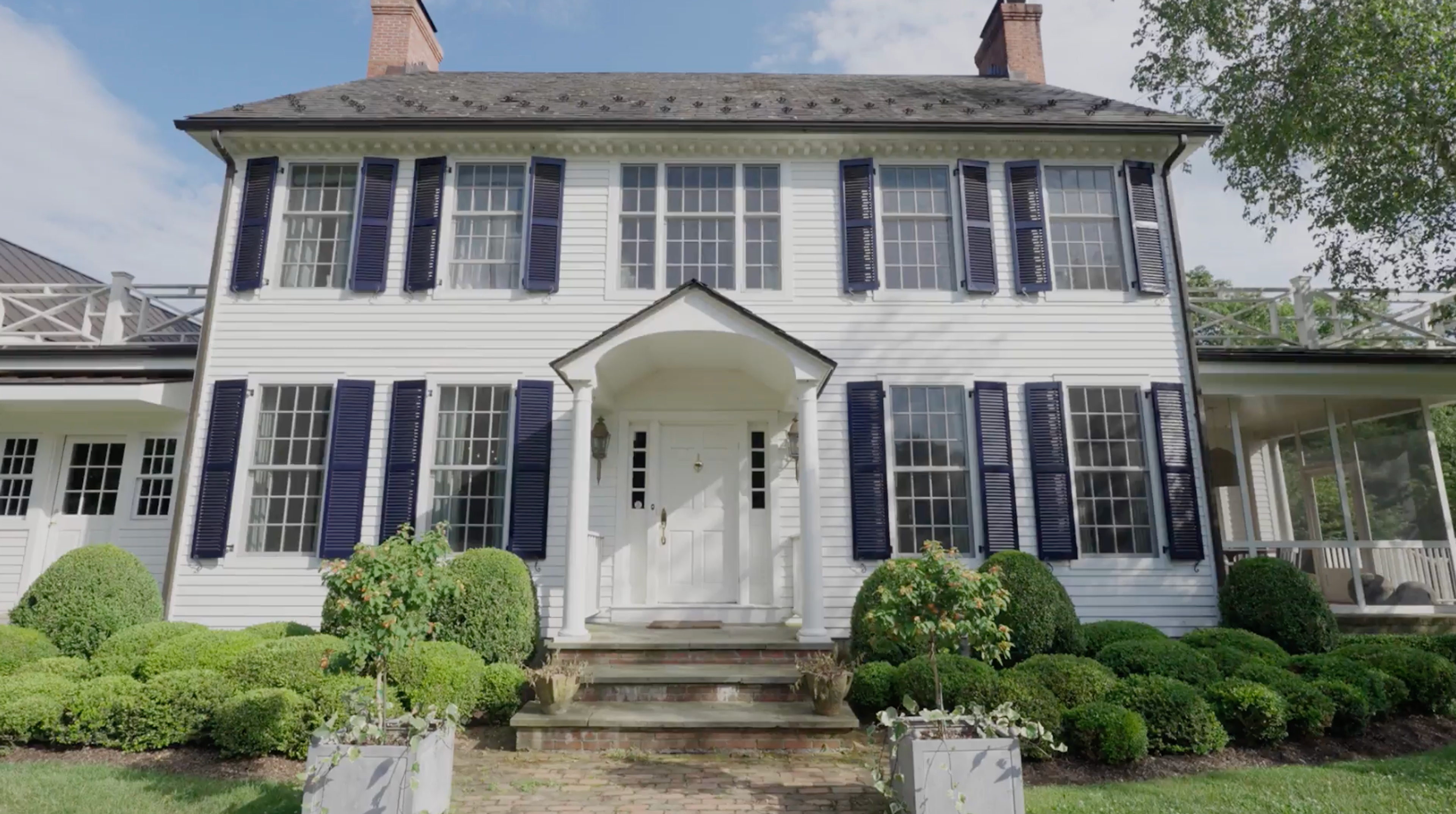
If you have ever dreamt of escaping the relentless hum of the city for a sanctuary that feels both grounded and whimsically unscripted, you are not alone. The Hudson Valley has long been the North Star for creatives seeking breathing room, but few have mastered the art of the "creative retreat" quite like Julia Brown. As the Creative Director of the fashion-favorite brand Cara Cara, Brown’s eye for print, texture, and effortless elegance is legendary. However, it is her 4,000-square-foot Millbrook home that serves as the ultimate masterclass in intentional living.
This property isn't just a house; it’s a nine-year evolution of architectural patience and decorative soul. Unlike many modern renovations that aim for a "finished" look in six months, Brown’s retreat has been layered over nearly a decade, resulting in what she calls a "creative playground." It avoids the common trap of the cookie-cutter farmhouse, opting instead for a narrative-driven aesthetic where every textile and vintage find tells a story of travel, family, and artistic risk.
1. Master the 'Party Porch' as a Social Anchor
In the Hudson Valley, the transition between the lush outdoors and the cozy indoors is where the magic happens. Julia Brown’s design centers on the concept of the "party porch"—a dedicated outdoor sanctuary that functions as the home’s true social heart. This isn't just a deck with a few chairs; it is a meticulously planned environment designed to facilitate effortless socializing from morning coffee to late-night digestifs.
Drawing inspiration from the iconic Dunmore Hotel in the Bahamas, Brown leans into deep, comfortable seating and textures that invite guests to linger. The porch is anchored by large custom dining tables, which are essential for those long, legendary Hudson Valley lunches that bleed into sunset.
Expert Tip: To achieve the "Party Porch" look, prioritize scale. Tiny bistro sets often get lost in vast landscapes. Instead, opt for oversized tables and wrap-around couches that mirror the proportions of your indoor living room.
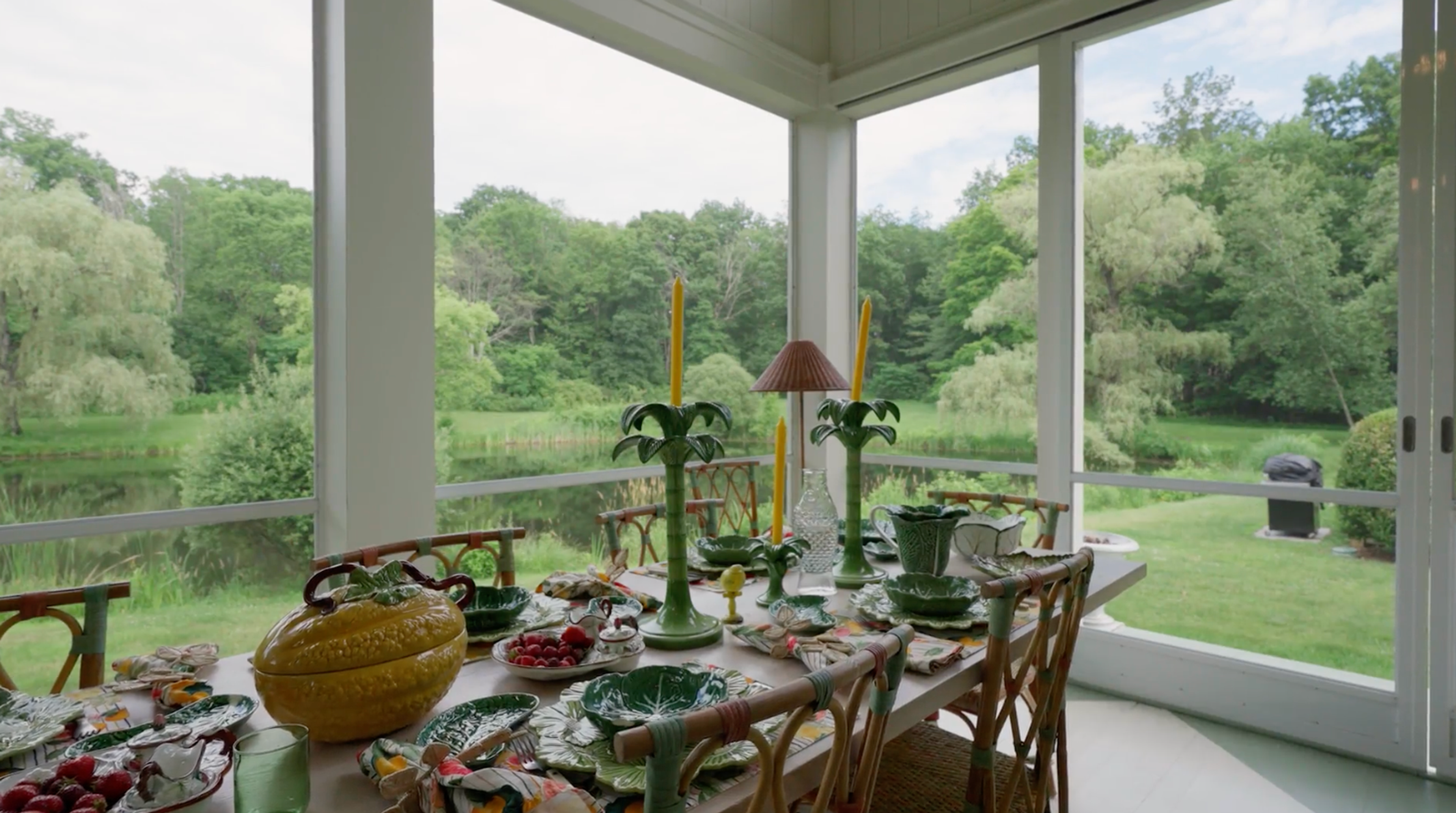
The layout emphasizes "easy chaos"—a state where the furniture arrangement feels natural rather than stiff. By incorporating Moroccan rattan chairs and durable yet chic outdoor fabrics, the space becomes weather-resistant without sacrificing the sophisticated "interior" feel.
The Essential Elements of a Hudson Valley 'Party Porch'
To recreate Julia Brown's social sanctuary, focus on these three pillars:
- Custom Oversized Dining Tables: The foundation for communal meals and long-form entertaining.
- Moroccan Rattan Chairs: Adds a global, artisanal texture that feels lighter than traditional wood.
- Wrap-Around Couches: Inspired by boutique hotels, these encourage guests to sprawl and stay for hours.
The importance of these outdoor spaces is backed by industry data. According to the National Association of Realtors, 97% of members identify curb appeal and functional outdoor living as critical factors in attracting interest and value. In a post-pandemic design world, the "outdoor room" is no longer a luxury—it is a requirement for a modern family retreat.
2. Layering vs. Staging: The Art of the Collected Home
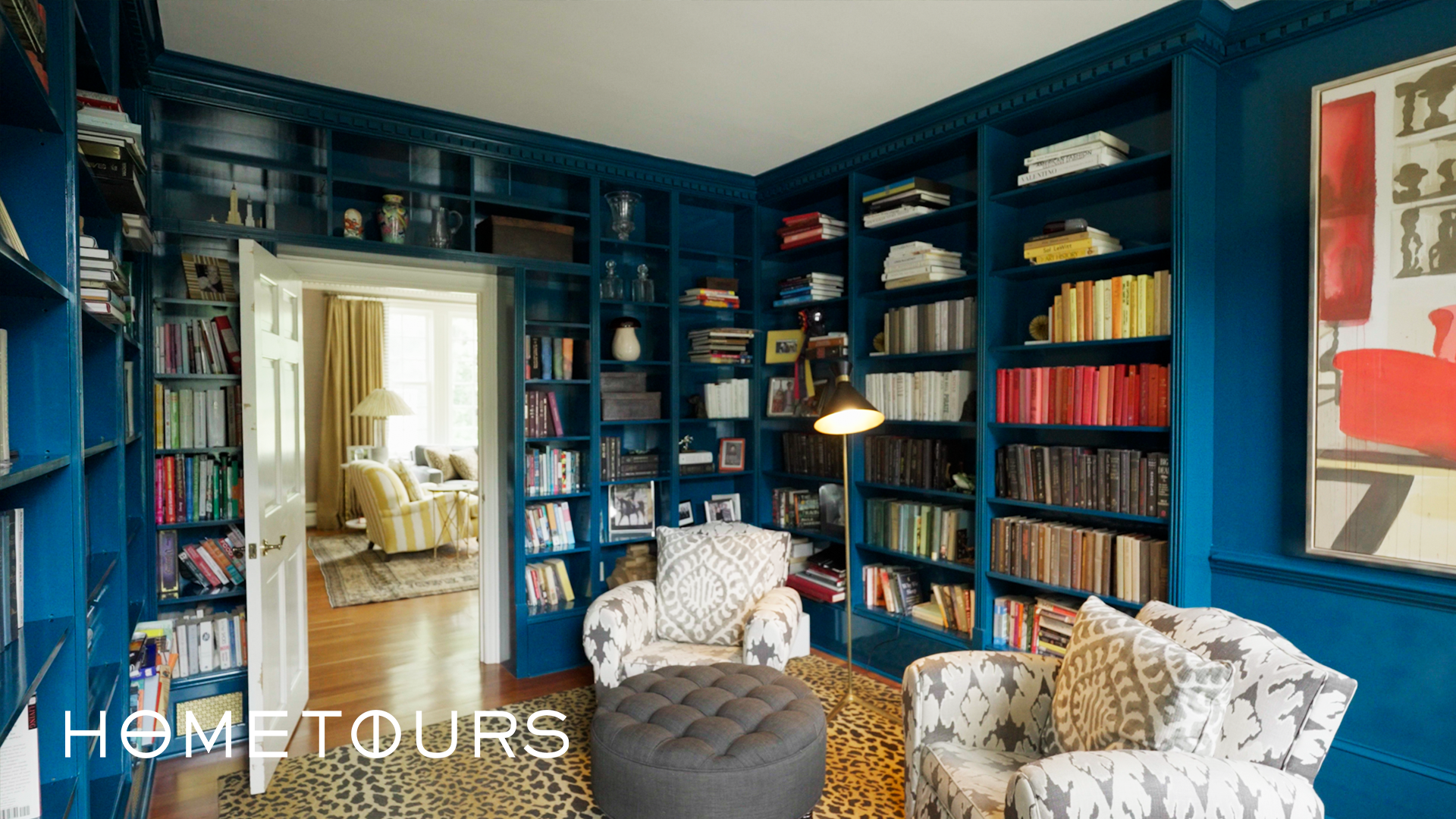
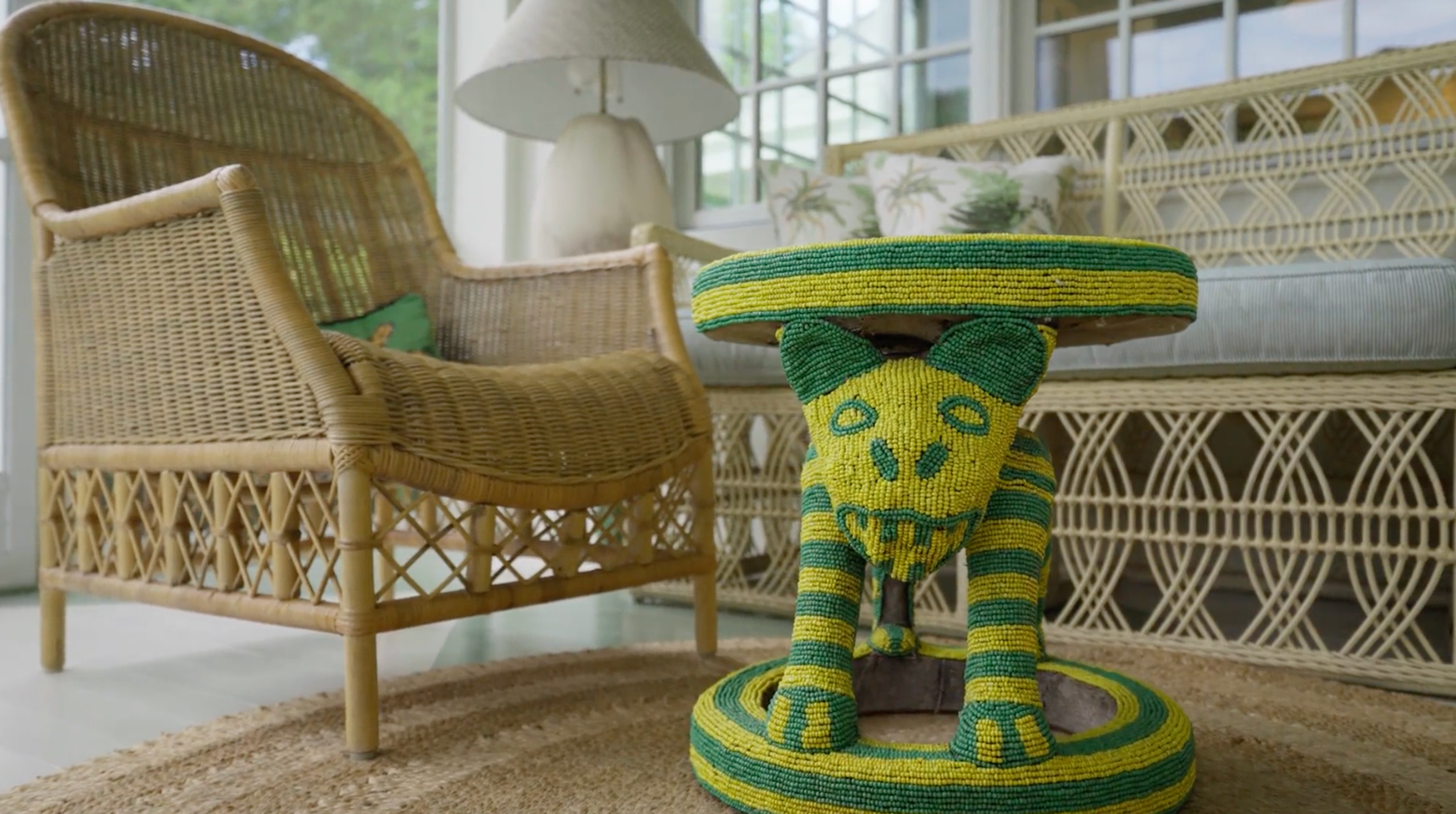
One of the most striking aspects of Julia Brown’s Millbrook interior design secrets is her refusal to "stage" a room. In an era of Instagram-minimalism, Brown advocates for the "collected" look. She defines her Hudson Valley home’s aesthetic as a "creative playground"—a space that evolves with its inhabitants.
How does Julia Brown define her Hudson Valley home's aesthetic?
The home is described as a 'creative playground' that avoids cookie-cutter charm by layering artwork, textiles, and vintage finds to feel perfectly collected rather than staged. It celebrates a mix of high-end design with personal travel treasures.
This philosophy requires a certain level of decorative bravery. It’s about mixing a contemporary photograph with a vintage textile found at a Parisian flea market, or placing a high-end lamp from a local boutique like Creel & Gow next to a stack of well-loved gardening books. This layering creates a sense of history that a single-brand furniture showroom simply cannot replicate.
| Feature | Staged (The "Showroom" Look) | Collected (The "Julia Brown" Look) |
|---|---|---|
| Furniture | Matching sets from one retailer | A mix of vintage, custom, and modern |
| Color Palette | Safe, neutral, and monochromatic | Bold pivots and varied textures |
| Art | "Fill-the-wall" mass-produced prints | Personal gallery walls and travel finds |
| Atmosphere | Untouched and sterile | Lived-in, warm, and evolving |
3. The Power of the Bold Pivot: The Diamond-Patterned Floor
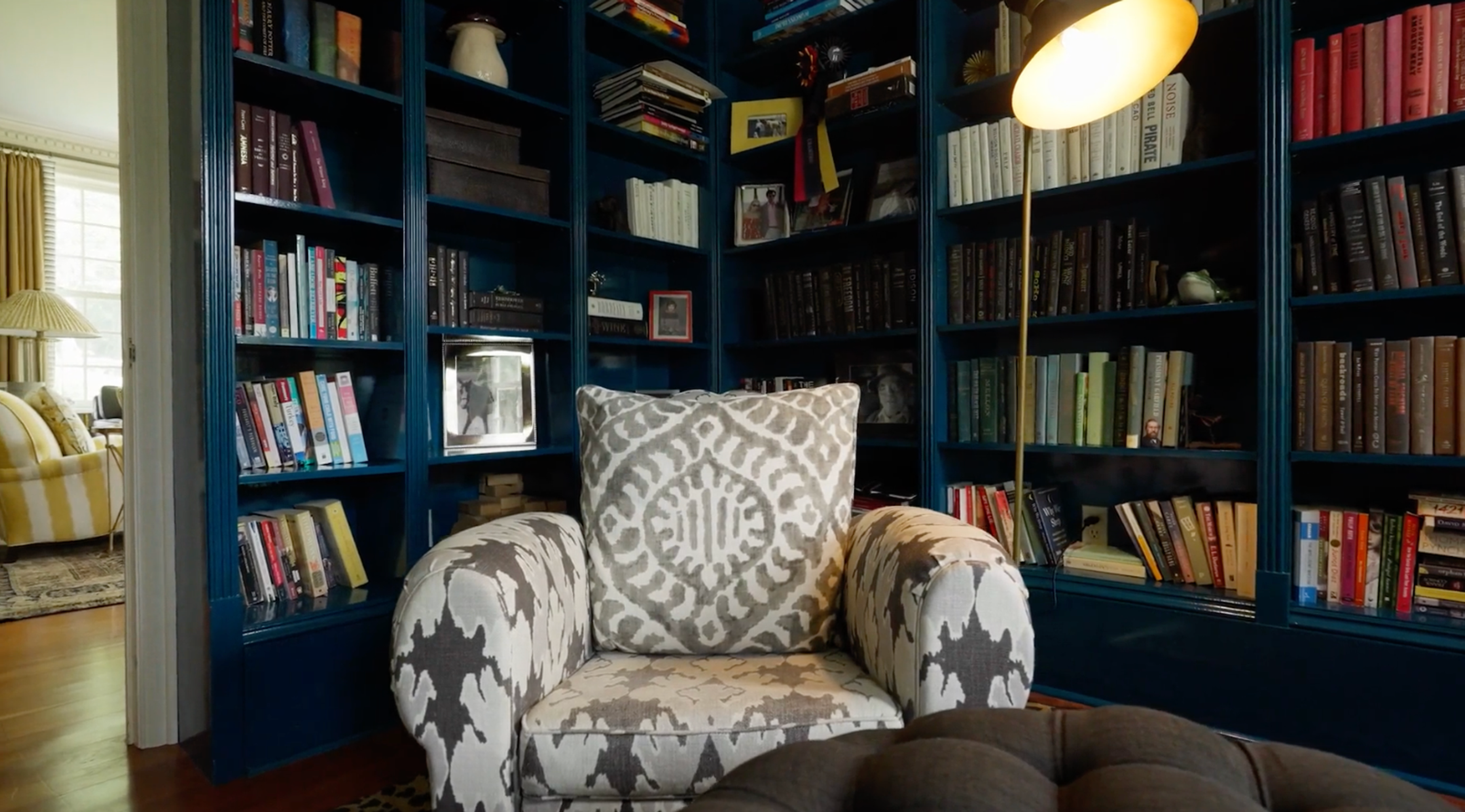
Every great home has a "hero" moment—a design choice that felt risky at the time but ultimately defined the space. In Brown’s home, that moment happened on the floor. While traditional wood finishes are the standard in Millbrook, Brown opted for a last-minute pivot that completely transformed the interior's energy.
What is the most transformative design choice in Julia Brown's home?
Julia Brown cites a last-minute pivot to a diamond-patterned painted floor as a transformative decision that added an unexpected, playful punch to the interior, breaking up the traditional architectural elements.
This choice serves as a reminder that design is allowed to be fun. The diamond pattern adds a graphic, rhythmic quality to the room, making the transition between spaces feel like a deliberate journey. It’s an "unexpected punch" that prevents the 4,000-square-foot property from feeling too precious or overly serious. For readers on a budget, a painted floor is one of the most cost-effective ways to radically change a room's personality without a full-scale renovation.
4. Seamless Flow: Connecting Interior Rooms with the Landscape
In the Hudson Valley, the landscape is the ultimate art piece. Brown’s home utilizes "journey backyards"—a concept where the outdoor space isn't just a backyard, but a series of interconnected "rooms" navigated via integrated walkways. This blurs the lines between the interior and the exterior, making the 4,000-square-foot home feel even more expansive.
One of the standout features is the kitchen’s "magic pond view." By positioning functional spaces toward natural landmarks, the home fosters a sense of tranquility during even the most mundane daily tasks. As we look toward the design trends for 2026, this biophilic transition is becoming a major focus for homeowners.
2026 Design Forecast: Indoor-Outdoor Transitions
- Porcelain Pavers: The rise of high-durability porcelain that mimics natural stone, allowing for a seamless floor material transition from the living room to the patio.
- Frameless Glass Doors: Expanding the visual "envelope" of the home to bring the seasonal changes of the Hudson Valley indoors.
- Path Lighting as Art: Moving away from standard "path lights" toward sculptural lighting that guides the "journey" through the property.
5. Designing for Rituals: Pockets of Peace and Wellness
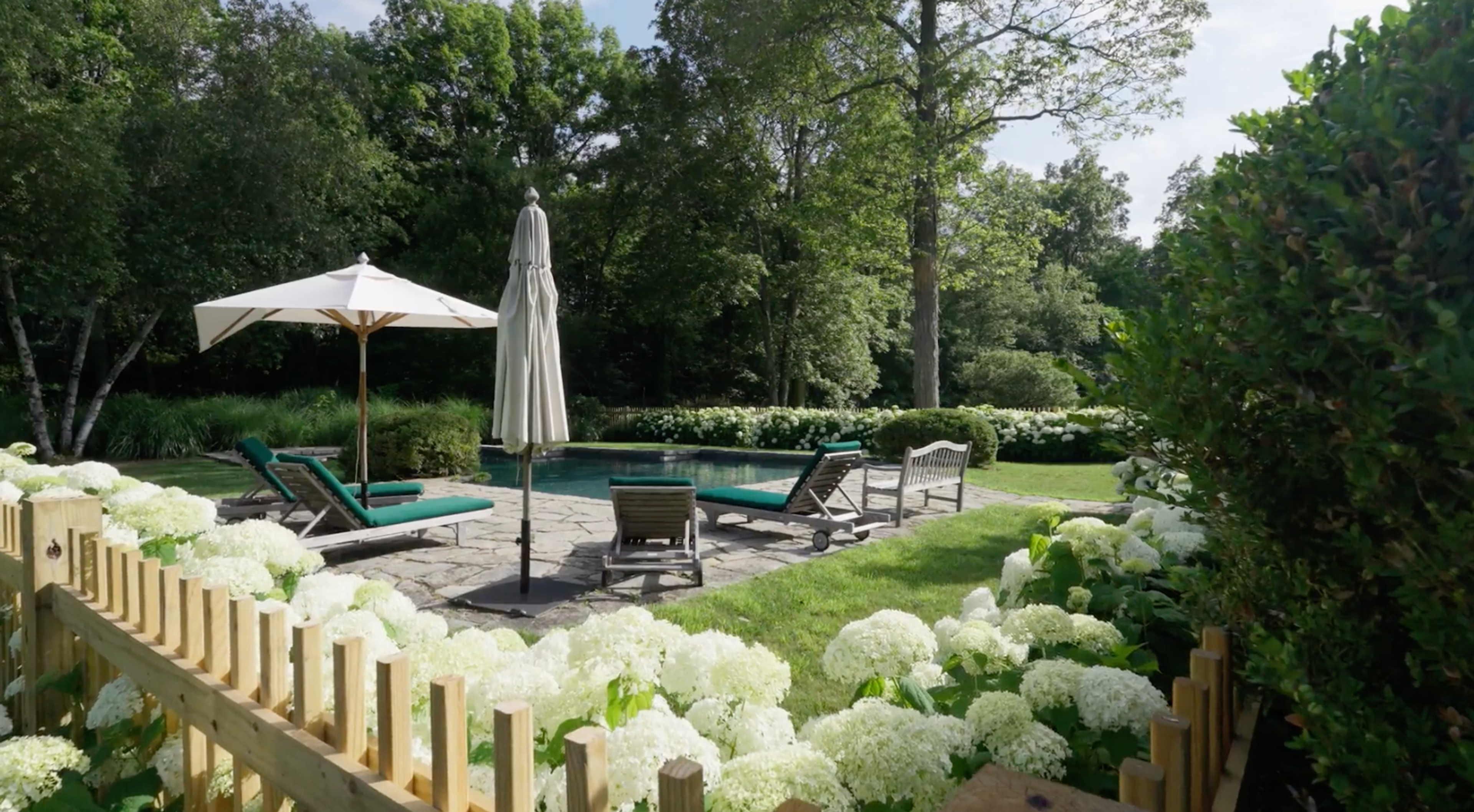
The final design secret from Julia Brown’s retreat is the choreography of the weekend. A home should not just be a place to sleep; it should be a place that supports your rituals. Brown has created specific "pockets of peace" throughout the home—sun-drenched corners for the family pets, a screened-in porch for morning tea, and meditation decks that offer privacy.
These "sanctuaries" are essential for balancing a busy life. Whether it’s a weekend of equestrian adventures in Millbrook or a quiet afternoon of reading, the home is designed to accommodate the rhythm of life. It’s about creating a "wellness choreography" where the architecture guides you toward rest.
"A home is successful when it knows when to be loud and when to be quiet," Brown’s philosophy suggests. "The party porch is for the 'loud' moments of connection, while the sun-filled corners are for the 'quiet' moments of reflection."
FAQ
Q: How can I achieve the "collected" look without spending a fortune? A: Start with "the hunt." Visit local estate sales, thrift stores, and flea markets. The key is to look for pieces with character—a unique patina, an interesting silhouette, or a textile that speaks to you. Avoid buying everything at once; the "collected" look requires the patience to let a room grow over time.
Q: Are painted floors practical for a family home? A: Yes, provided you use high-quality porch and floor enamel. In many ways, a painted floor is more forgiving than high-polish hardwood, as it can be easily touched up or even repainted if you want to change the room's vibe in the future.
Q: What is the best way to start designing an outdoor 'party porch'? A: Focus on the "anchor" piece first—usually a large dining table. Once you have the dining area set, build out "conversation pockets" around it using comfortable seating like rattan chairs and outdoor rugs to define the space.
Bring the Hudson Valley Home
You don't need 4,000 square feet in Millbrook to apply Julia Brown’s design secrets. Whether it's a bold pivot with a painted floor, the intentional layering of your favorite travel finds, or simply carving out a small "pocket of peace" on your balcony, the essence of a creative retreat is making a space that feels uniquely like you.