Hangzhou is often cited as the Silicon Valley of the East, a shimmering metropolis where the digital economy isn't just a sector—it’s the city’s lifeblood. As the global capital of e-commerce, home to over 55,000 online retail and e-commerce companies, the city demands a physical infrastructure that can keep pace with its kinetic digital energy. When the Ippolito Fleitz Group took on the challenge of designing a new headquarters within the MAX Technology Park, they weren't just building an office; they were drafting a manifesto for the future of work.
This 2,200-square-meter (approximately 27,300 square feet) facility is a masterful exercise in balancing high-tech requirements with high-touch human needs. By blending specialized R&D labs and live-streaming studios with hospitality-inspired lounges, the design caters specifically to a younger, content-driven workforce. The result is a frictionless environment where innovation is made visible through glass-walled laboratories and leadership is symbolized by a striking, tree-like architectural anchor.
Quick Facts: The MAX Technology Park Project
- Location: Hangzhou, China (MAX Technology Park)
- Designer: Ippolito Fleitz Group
- Total Area: 2,200 Square Meters / 27,300 Square Feet
- Key Features: 7.5-meter multifunctional lobby, specialized live-streaming studios, biophilic executive suite.
- Design Philosophy: "Jù" (Gathering) — connecting people, technology, and creativity.
The Ground Floor: A High-Volume Statement
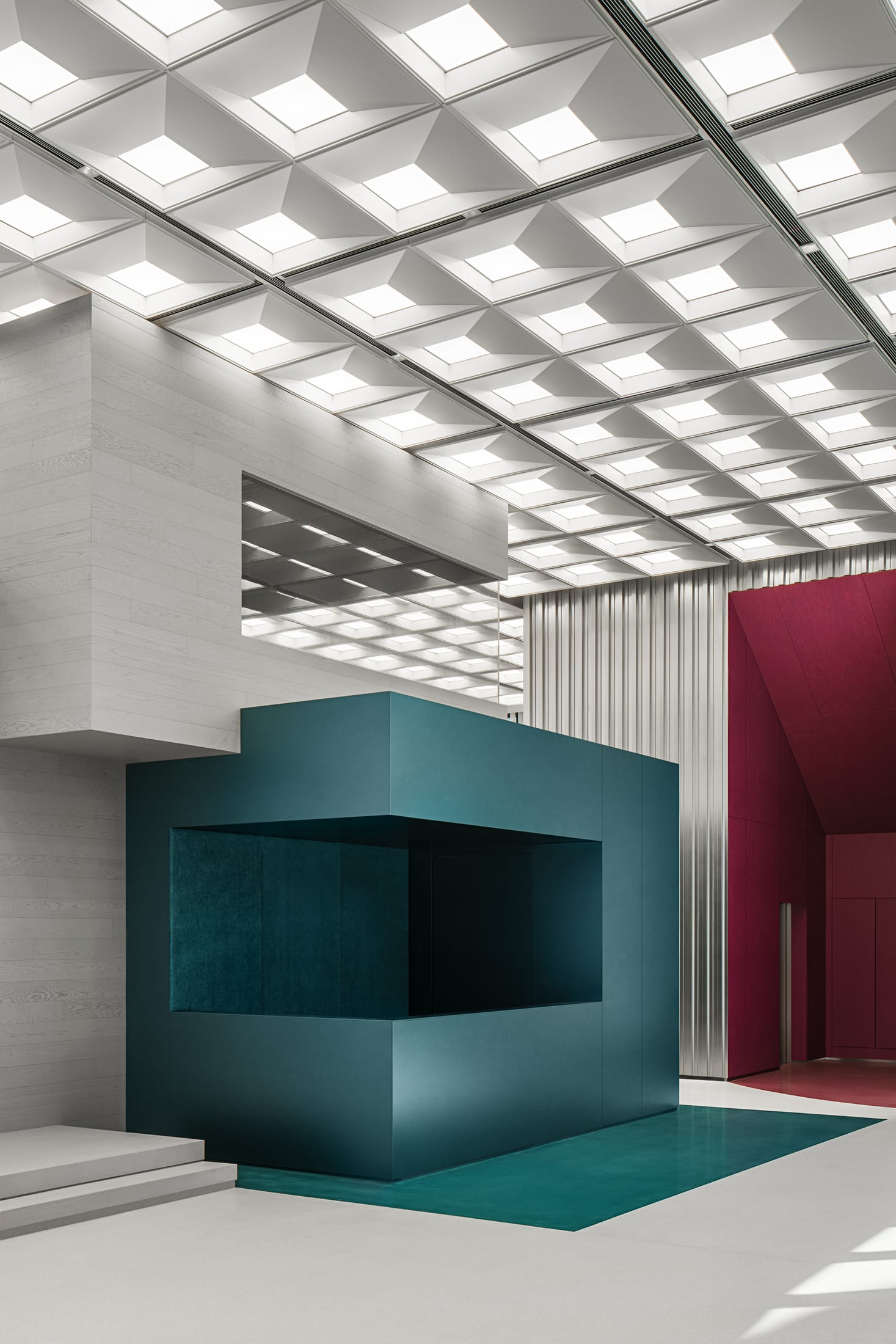
The ground floor of the Ippolito Fleitz Group’s Hangzhou project hits hard. In an industry defined by rapid-fire transactions and digital noise, the entrance offers a sense of monumental calm mixed with playful confidence. Standing at a staggering 7.5 meters (25 feet) high, the lobby is less of a waiting room and more of a multifunctional stage.
The designers utilized a concept of "building blocks"—massive, sculptural volumes that stack and interlock to define different functional zones. By avoiding traditional partitions, the space maintains its soaring volume while housing a reception area, a lounge, an exhibition space, and even an auditorium. This "stacked" aesthetic serves a dual purpose: it creates intimate niches for conversation while maintaining the grand scale required to impress visiting partners and stakeholders. For the younger workforce, this isn't just an office entry; it’s a confident brand statement that says they have arrived.
Specialized Zones: Designing for Content and Innovation
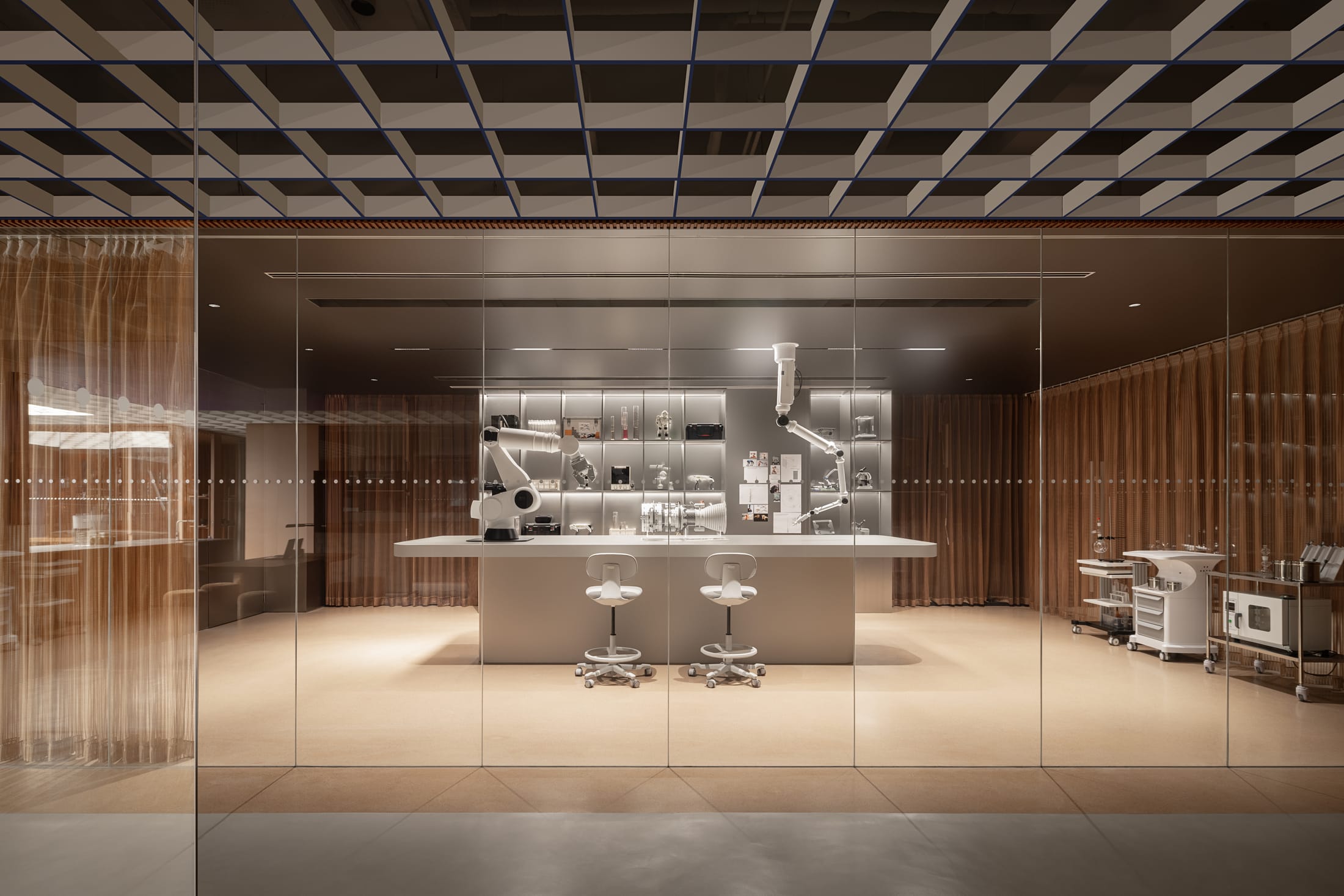
Moving beyond the lobby, the second floor shifts focus toward the core of e-commerce: the creation of value and content. In traditional office design, R&D labs are often tucked away in windowless basements or sterile backrooms. Here, they are the stars of the show.
The Ippolito Fleitz Group utilized glass walls to create "innovation vitrines." This transparency serves a psychological purpose, making the rigor of research and development a visible part of the company culture. Furthermore, the floor is equipped with specialized studios specifically designed for the high-octane world of live streaming, video production, and audio recording. These aren't just rooms with cameras; they are acoustically treated, tech-integrated environments that allow creators to pivot from a brainstorming session to a global broadcast in minutes.
"In the e-commerce world, the boundary between 'office' and 'studio' has evaporated. We are designing for a generation that views content creation as a fundamental work task, not a side project." — Design Insight
Flexibility in the Middle Floors: Workpoints vs. Desks
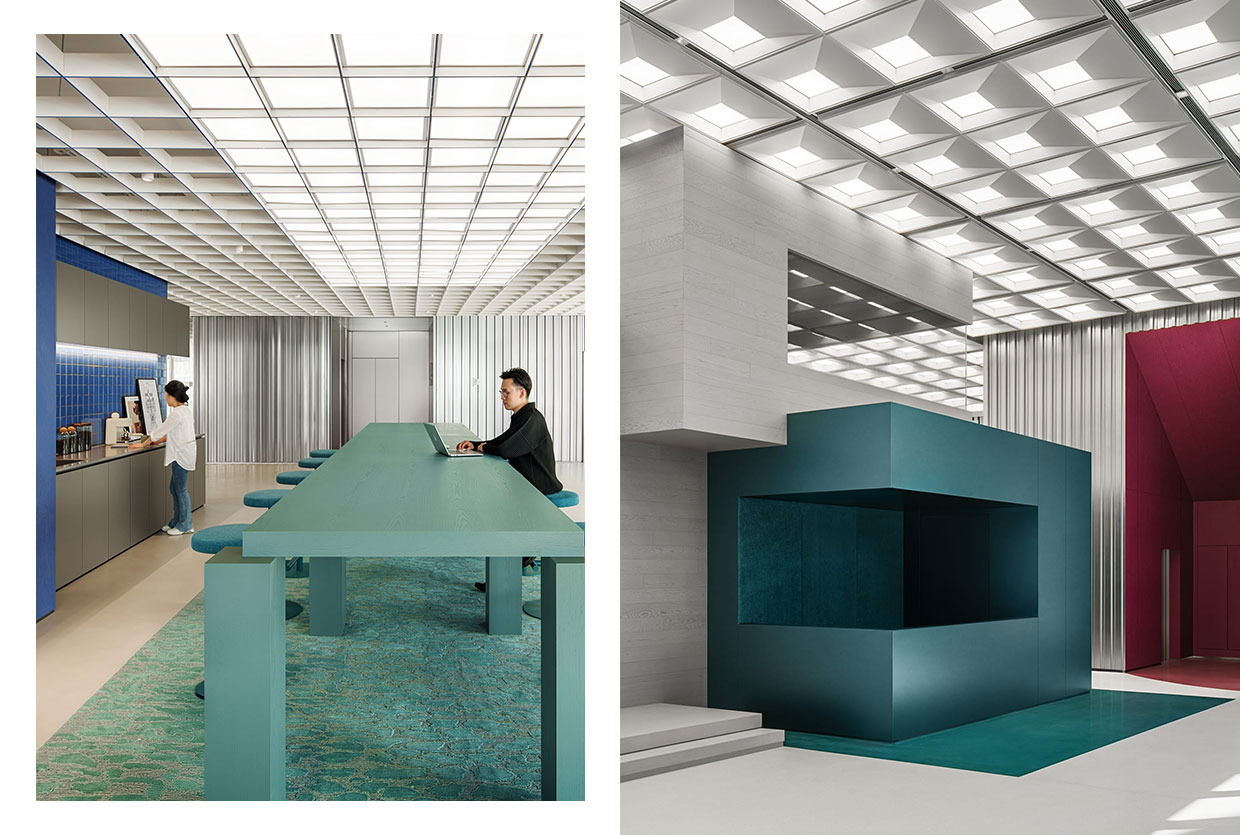
Floors three and four tackle the "open office vs. cubicle" debate by discarding both in favor of a hybrid "workpoint" model. As we look toward 2026 workplace trends, the fixed desk is becoming a relic. In its place, the Hangzhou office offers a modular landscape that adapts to the task at hand.
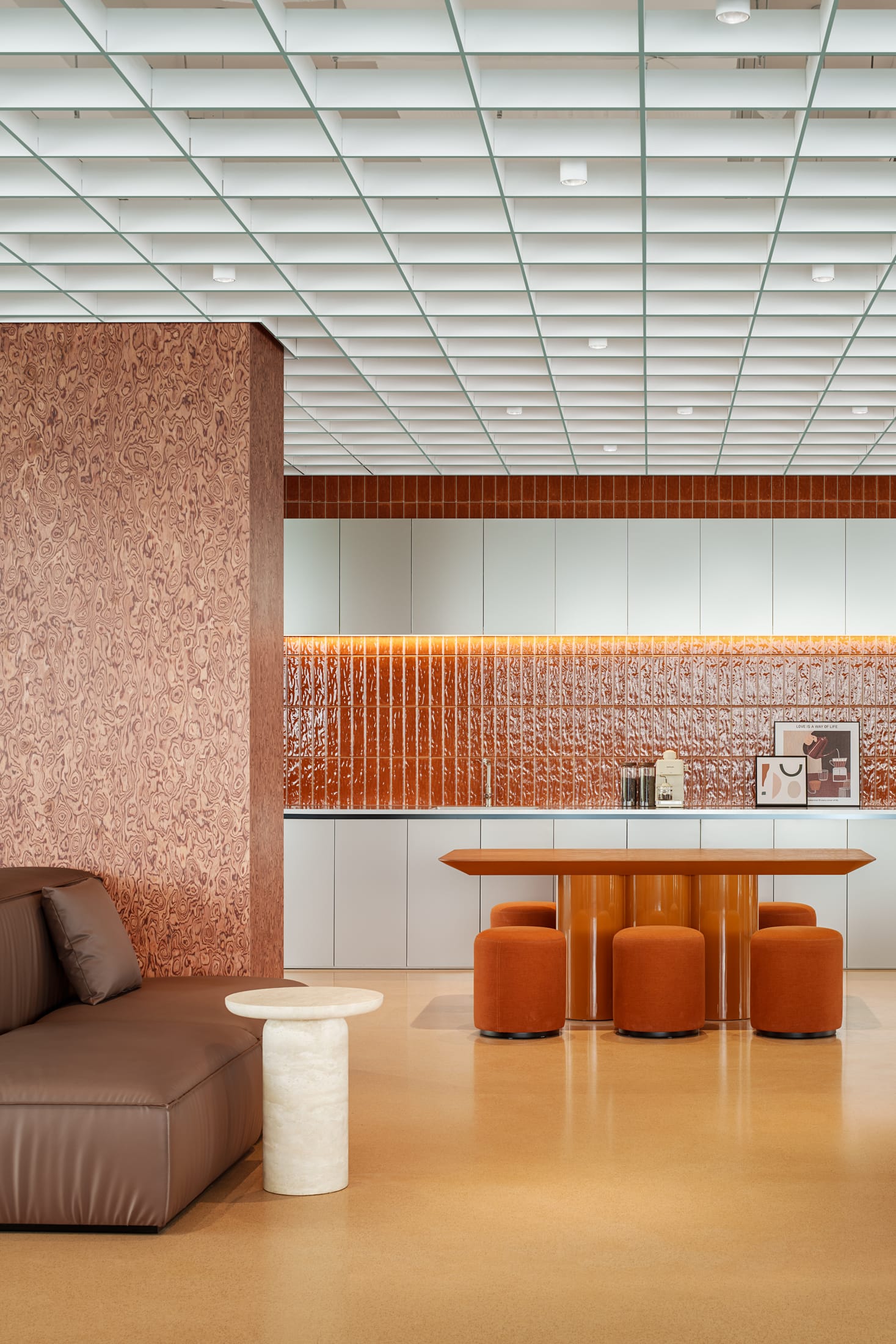
The layout is punctuated by "hospitality-inspired" lounge areas. These spaces utilize soft textiles, ergonomic furniture, and warm lighting to break up the professional R&D zones. By introducing these softer elements, the designers acknowledge that the most innovative ideas often happen during spontaneous conversations in a relaxed setting rather than during scheduled meetings.
Comparing Traditional vs. Next-Gen Workplace Features
| Feature | Traditional Office (2010s) | Next-Gen Hangzhou Office (2026 Vision) |
|---|---|---|
| Desk Layout | Assigned cubicles/Long benches | Modular workpoints & "third spaces" |
| Tech Integration | Cables, visible hardware | Invisible, frictionless smart tech |
| Social Space | Breakroom in the corner | Hospitality-inspired central lounges |
| Vibe | Corporate & Hierarchical | Playful, confident, & kinetic |
| Innovation | Hidden in R&D departments | Visible through glass-walled "labs" |
The Executive Suite: Symbolism and the Tree of Leadership
On the fifth floor, the design language shifts from the kinetic energy of the lower levels to something more grounded and symbolic. The centerpiece of this floor is a massive architectural column that transforms into a canopy of fins, spreading across the ceiling like the branches of a tree.
This "Tree of Leadership" is more than a structural necessity; it is a design philosophy made manifest. In many Chinese corporate cultures, leadership is evolving away from rigid hierarchy toward a model of "protective guidance." The tree serves as an anchor for the executive suite, offering a sense of shelter and unity. The use of natural textures and biophilic elements here reflects a growing 2026 trend: the "humanization" of the executive tier, where the environment promotes wellness and clarity of thought rather than just displays of power.

The Global Impact: A 2026 Vision for Workplace Design
What makes the Ippolito Fleitz Group’s work in Hangzhou so significant is its local relevance paired with global foresight. The project is centered around the concept of "Jù" (聚), which translates to "Gathering." In a world that has spent the last few years grappling with remote work, this office provides a compelling reason to come back to the physical space.
The office integrates "invisible efficiency." Smart technology is woven into the fabric of the building—automated lighting, climate control, and digital booking systems—but it never feels cold or mechanical. Instead, the technology serves to make the human experience more fluid. By using eco-friendly materials and maximizing natural light through the building's glass envelope, the project also hits the essential sustainability markers that are now non-negotiable for global firms.
The Hangzhou office is a blueprint for the next generation. It acknowledges that for e-commerce professionals, work is a 24/7 blend of lifestyle, technology, and community. By creating a space that is as sculptural as it is functional, Ippolito Fleitz Group has set a new standard for what it means to work in the world’s e-commerce capital.

FAQ: Inside the Hangzhou Next-Gen Office
Q: Why did the designers choose a 7.5-meter high lobby for an office? A: The height serves two purposes. First, it creates a "wow" factor that establishes brand authority in the competitive Hangzhou e-commerce market. Second, it allows for the "stacking" of multifunctional blocks, creating a flexible space that can host anything from a casual coffee chat to a full-scale corporate auditorium event.
Q: How does this design cater specifically to e-commerce workers? A: E-commerce is a content-heavy industry. This office includes specialized live-streaming and recording studios that are usually found only in media houses. Additionally, the "innovation vitrines" (glass-walled R&D labs) allow for the rapid prototyping and display of new products, which is essential for the fast-paced retail cycle.
Q: What is the significance of the "Tree" column on the top floor? A: It represents the "Tree of Leadership." Architects used this biophilic element to move away from traditional, intimidating executive corridors. Instead, the "branches" create a canopy that symbolizes protection, support, and the gathering of the company’s collective intelligence under one roof.
Q: How does this project reflect 2026 design trends? A: It focuses on three key future trends: Hybrid Flexibility (moving from desks to workpoints), Biophilic Symbolism (using nature-inspired forms to promote wellness), and Visible Innovation (making the "work" of the company a visible part of the interior aesthetic).