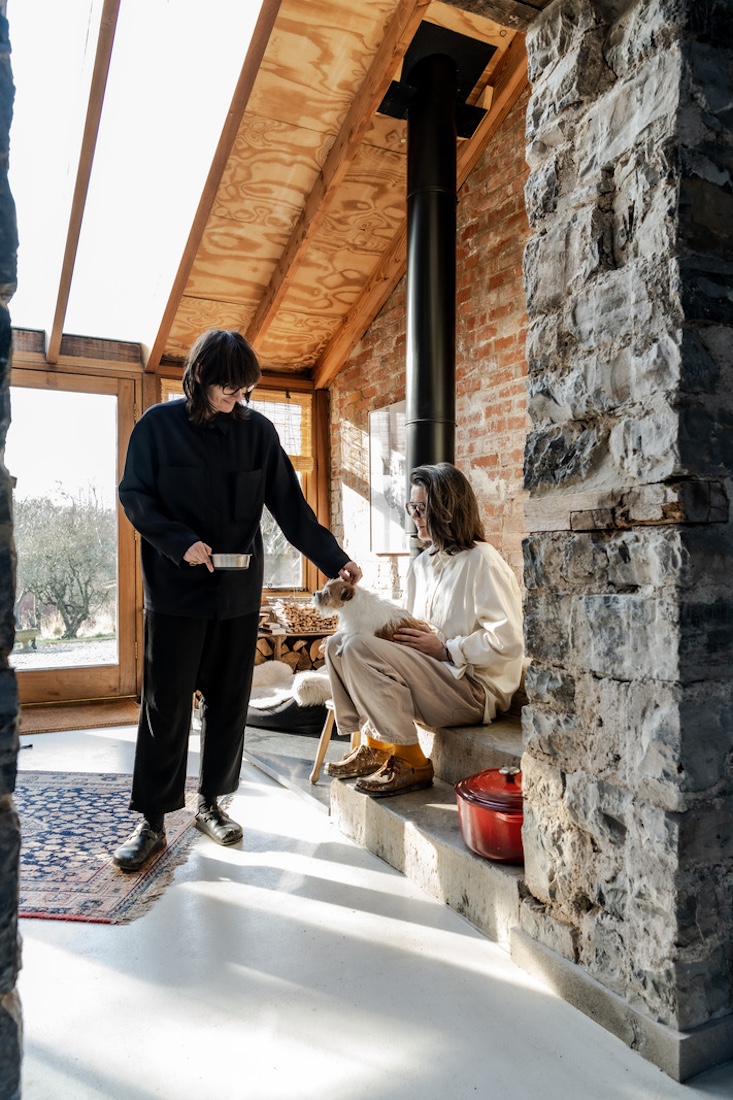
In the rolling, often mist-shrouded landscape of North Devon, there is a place where the boundaries between the past and the present don't just blur—they dissolve. This is the Devon Artists’ Studio, a project that stands as a masterclass in what I like to call "architectural empathy." Developed by the renowned firm McClean Quinlan, this two-acre property is more than a renovation; it is a resurrection of a Victorian walled garden that honors the "Romanticism of the Ruin."
The Devon Artists’ Studio is a unique renovation of a Victorian walled garden that features a converted ‘bothy’ as a living space and a painting studio transformed from a former squash court. Rather than sweeping away the decay of decades, the design team chose to lean into it, creating a residential and creative hub that feels as though it grew naturally out of the Devon soil. By repurposing 100% of the existing historical local stone and brick structures, the project achieves a rare level of sustainability and soul.
The Romanticism of the Ruin: A New Life for a Victorian Garden
Walking onto the grounds, you are immediately struck by the sense of enclosure and history. The original Victorian walled garden, once a site of structured productivity, had fallen into a state of "feral" beauty. For many developers, the instinct would be to clear the site and start fresh. However, McClean Quinlan and the owners, artists Leila and Sophie Mayer, saw something different: an opportunity to preserve the historical integrity of the North Devon site while creating a high-performance environment for modern living and large-scale art.
The core of the project lies in the "Romanticism of the Ruin." This philosophy dictates that the scars of time—the weathered brick, the moss-covered stone, and the uneven silhouettes—are assets, not liabilities. The architecture doesn’t compete with the ruins; it nests within them.
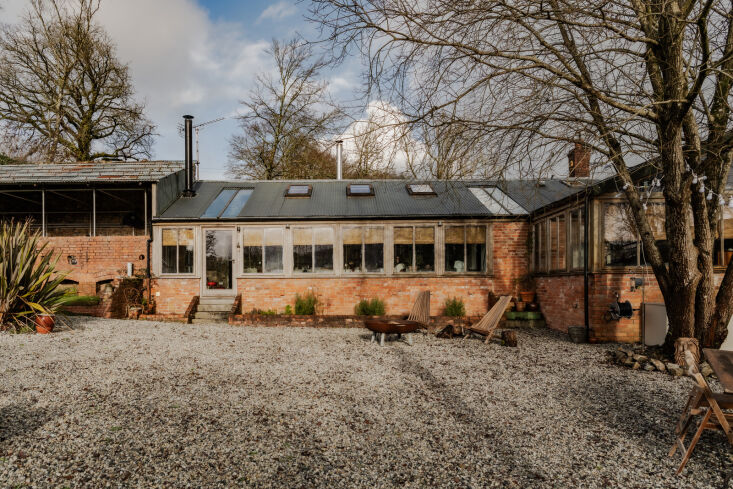
Collaborative Vision: McClean Quinlan and the 'Feral' Landscape
The collaboration between the architects and the artists was pivotal. To live and work in a place like this requires a certain level of comfort with the "untamed." The landscape design was kept intentionally loose, allowing the Devon flora to creep up to the very edges of the reclaimed structures.
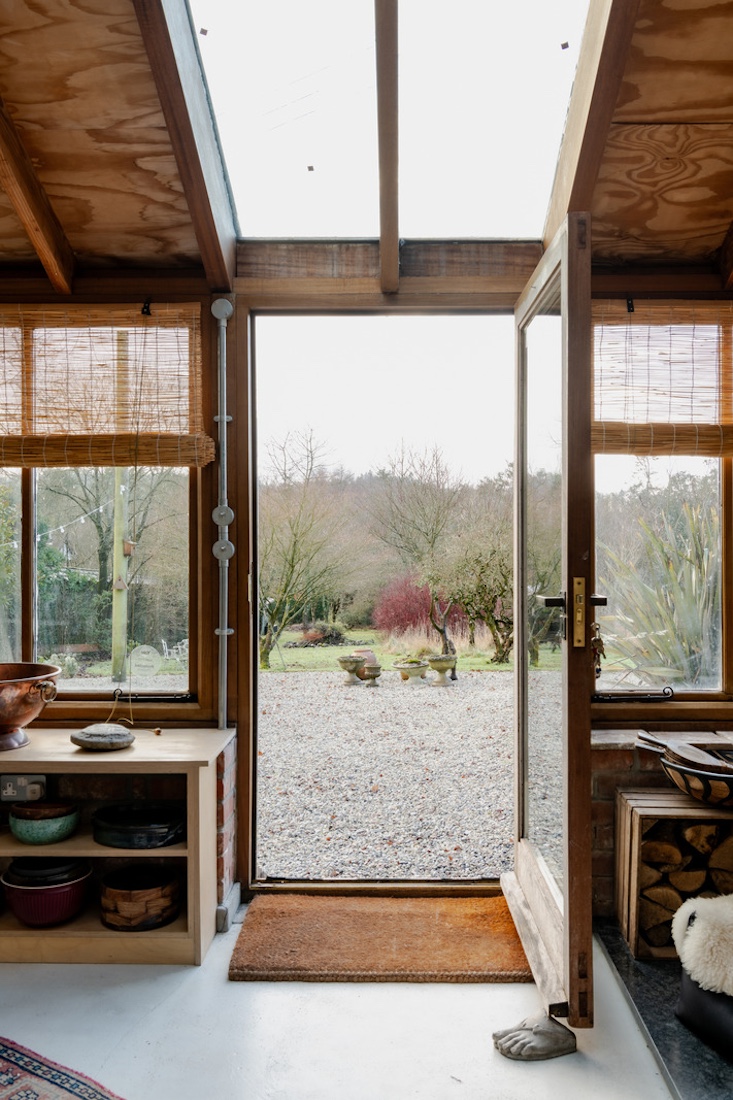
"We wanted to capture the feeling of finding something hidden," the architects noted during the design phase. By leveraging the untamed surroundings, the interior spaces feel like protected sanctuaries. Large apertures were cut into the thick masonry walls, not just for light, but to frame the "feral" garden as a living, breathing piece of art that changes with the coastal seasons.
"The house and studio don't just sit on the land; they belong to the history of the garden. There is a weight to the stone that makes the modern glass feel incredibly light." — Leila Mayer
The Living Space: Repurposing the 'Bothy'
At the northern corner of the walled garden sat the "bothy"—traditionally a small hut or cottage for estate workers. This structure was painstakingly transformed into a sophisticated two-bedroom home. The renovation is a study in contrasts: the exterior remains rugged and textural, while the interior is a temple of minimalist functionality.
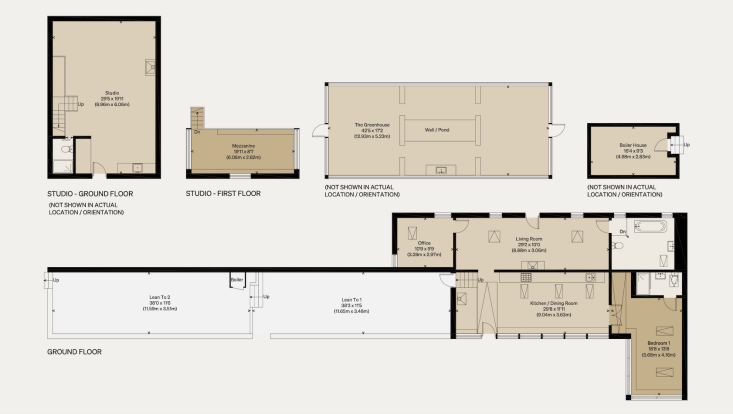
Upon entering, the weight of the historical stone walls provides an immediate sense of quiet. The floor plan is open and intuitive, designed to maximize the limited footprint of the original building without sacrificing the luxury of space.

One of the most striking "modernist insertions" is the kitchen. In a space defined by 19th-century masonry, the choice of stainless steel cabinetry is a stroke of genius. It reflects the light entering from the new windows, making the kitchen feel surgical and precise against the "beautifully imperfect" backdrop of the original walls.

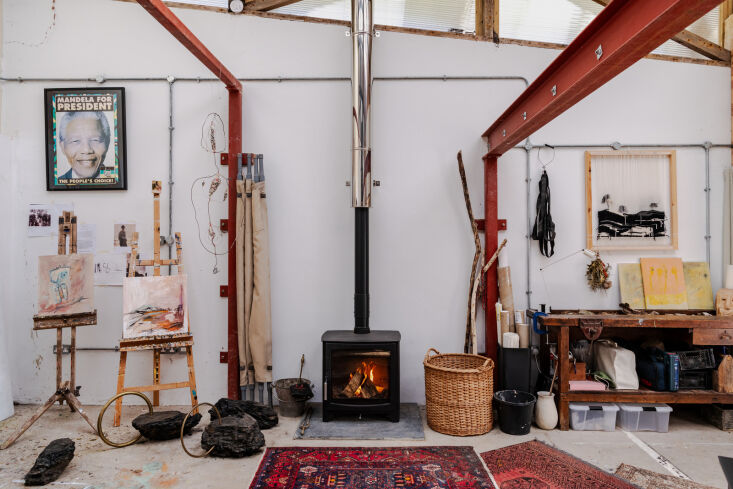
Living in a stone structure in North Devon could easily feel damp or chilly, but the technical specs of this renovation ensure otherwise. The team installed modern radiant floor heating throughout the bothy, hidden beneath polished screed floors. To add a focal point of traditional warmth, a log-burning stove serves as the heart of the living area, providing a tactile connection to the rural setting.
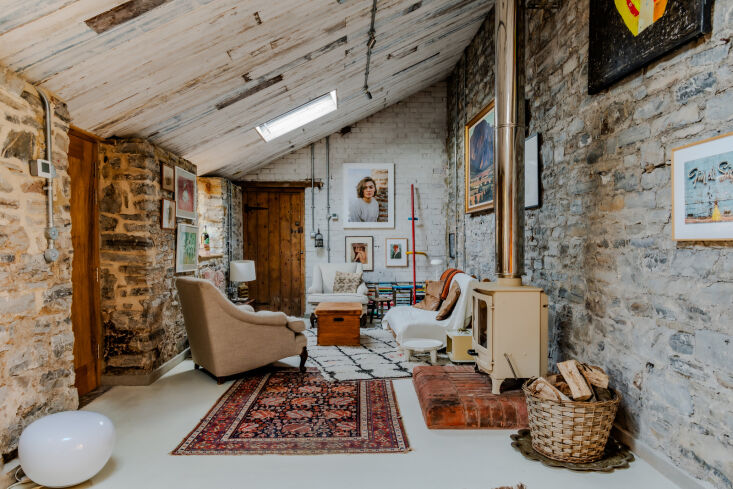
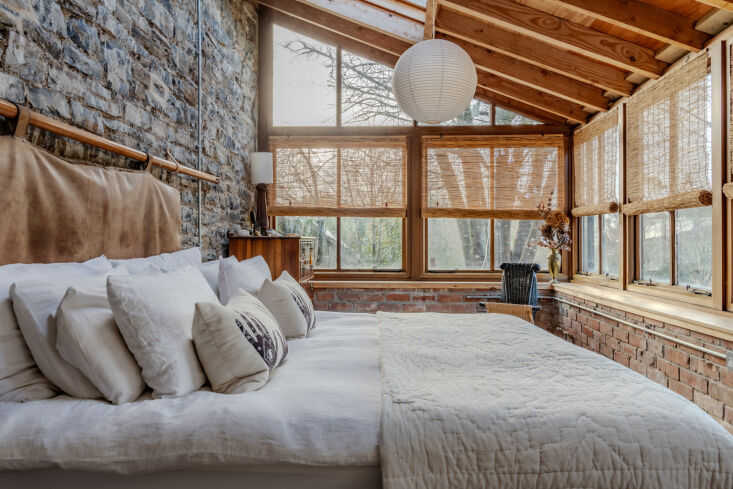
Perhaps the most impressive feat of the living space is its commitment to the circular economy. The renovation successfully repurposed 100% of the existing historical local stone and brick structures found on the 2-acre site. In the bedrooms, this results in a tactile, grounded atmosphere where the history of the garden is literally within arm's reach.
Comparison: The Evolution of Space
| Feature | The Bothy (Living Space) | The Squash Court (Painting Studio) |
|---|---|---|
| Original Function | Gardener's shelter / Storage | Private sports court |
| Architectural Tone | Intimate, cozy, domestic | Expansive, industrial, soaring |
| Primary Material | Local stone, stainless steel, wood | Brick, glass, steel mezzanine |
| Key Modern Add | Radiant floor heating | Double-height glazing & Mezzanine |
| Atmosphere | Sanctuary and rest | Action and "Creative Bravery" |
The Painting Studio: From Squash Court to Creative Sanctuary
If the bothy is for rest, the converted squash court is for action. For artist Sophie Mayer, the former sports court offered something most studios lack: volume. The double-height ceiling was essential for her large-scale gestural artwork, which requires the artist to move physically and aggressively across the canvas.
The engineering of the studio focused on "the physical act of creation." A new mezzanine was added, not just for storage, but to provide a vantage point. From here, Sophie can look down on her work-in-progress, gaining the perspective necessary for large-scale compositions.
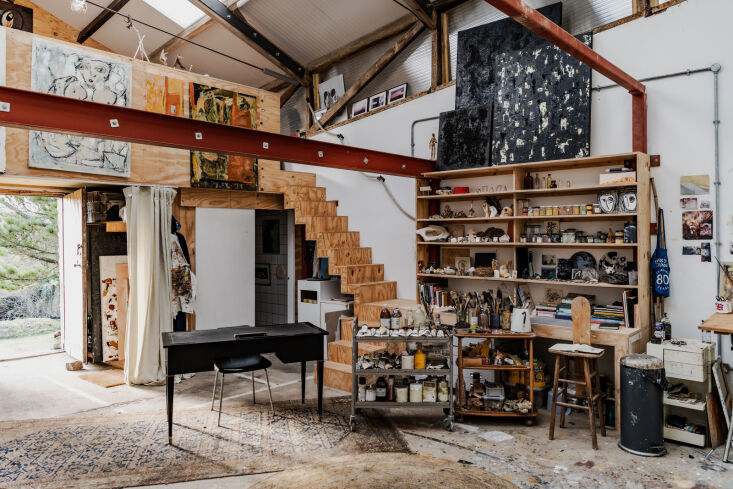
"The space gives me permission to be brave," Sophie explains. "In a small room, you make small choices. Here, the architecture demands that I use my whole body." The studio floor, often covered in the "beautiful mess" of pigment and oil, is a testament to the freedom that a well-designed architectural volume can provide.
Sustainable Architecture and Regional Connectivity
Beyond its aesthetic brilliance, the Devon Artists’ Studio is a model of sustainable home and studio design. The use of high-performance glass allows for massive spans of transparency without the heat loss typically associated with rural renovations. By choosing to repair rather than demolish, McClean Quinlan significantly reduced the carbon footprint of the project.
There is also the matter of "lifestyle connectivity." While the property feels worlds away from the urban grind, it is strategically located within three hours of major UK hubs like London and Manchester. This makes it a premier example of "rural-industrial hybrid" architecture—a place where one can engage in a deeply focused creative practice without becoming culturally isolated.
The orientation of the buildings was also carefully considered. The north-facing bothy is positioned to receive the longest and most consistent sunlight throughout the day, while a gravelled terrace connects the indoor living space to the surrounding "feral" landscape, creating an outdoor room for morning coffee or evening reflection.
Key Design Principles for Artist Studio Conversions
If you are looking to embark on your own studio conversion, the Devon project offers several universal lessons:
- Prioritize Natural Light Sources: While skylights provide excellent top-down light, clerestory windows (high windows above eye level) allow for wall space to be used for hanging art while still flooding the room with light.
- Volume Over Area: For many artists, the height of the ceiling is more important than the total square footage. High ceilings allow for heat dissipation (important when using certain mediums) and the ability to work on a larger scale.
- The "Gallery" vs. "Workshop" Balance: Decide if your studio is a place for making or a place for showing. The Devon studio balances this by using the mezzanine for perspective (showing) and the ground floor for the "beautiful mess" of making.
- Ventilation is Non-Negotiable: Especially for oil painters or sculptors, cross-ventilation is essential for safety and comfort.
Project Specs at a Glance
- Location: North Devon, UK
- Architect: McClean Quinlan
- Property Size: 2 Acres
- Historical Use: Victorian Walled Garden & Squash Court
- Materials: Repurposed local stone, brick, stainless steel, high-performance glass
- Distance to Hubs: ~3 hours to London/Manchester
FAQ
How did the architects handle the damp issues common in Devon stone buildings? The project utilized a "building within a building" approach in some areas, combined with modern tanking systems and radiant floor heating. This allows the stone to breathe externally while keeping the interior environment bone-dry and climate-controlled for both living and art storage.
Is it possible to visit the Devon Artists' Studio? As this is a private residential project and active working studio for the artists, it is not generally open to the public. However, it is frequently featured in architectural tours and design publications as a benchmark for Victorian wall conversions.
What was the most challenging part of the renovation? According to the design team, the most significant challenge was the structural stabilization of the "ruined" walls. Repurposing 100% of the local stone required careful hand-sorting and traditional masonry techniques to ensure the new glass and steel elements could be safely integrated.
The Devon Artists’ Studio reminds us that architecture is at its best when it listens to the land. By choosing the "Romanticism of the Ruin" over the convenience of a new build, McClean Quinlan has created a space that doesn't just house art—it inspires it. Whether you are an artist looking for your next sanctuary or a design enthusiast dreaming of a rural escape, the lessons of this Devon conversion are clear: respect the history, embrace the landscape, and never be afraid of a little "beautiful mess."