Quick Facts
- Project Name: Heion House by Studio Hagen Hall
- Location: Islington, North London (Grade II listed Georgian Terrace)
- Size: 110-square-metre original footprint
- Core Concept: Heion (Tranquility) and Ma (Negative Space)
- Key Materials: Smoked oak, microcement, unlacquered brass, white mosaic tile
- Color Palette: Sherwin-Williams Alabaster (SW 7008) and Accessible Beige (SW 7036)
- Design Philosophy: Modern Japanese interior design for period properties and small spaces
Heion House in Islington is a 110-square-metre sanctuary that redefines modern japanese interior design for period properties. By blending Georgian heritage with a quiet Japanese-inspired aesthetic, Studio Hagen Hall created a space of profound restraint. Modern japanese interior design for small spaces and period properties focuses on spatial flow, utilizing elements like the Genkan entryway and Shoji-inspired panels to create a tranquil sanctuary without erasing historic fabric.
The Philosophy of Heion: Beyond Minimalist Aesthetics
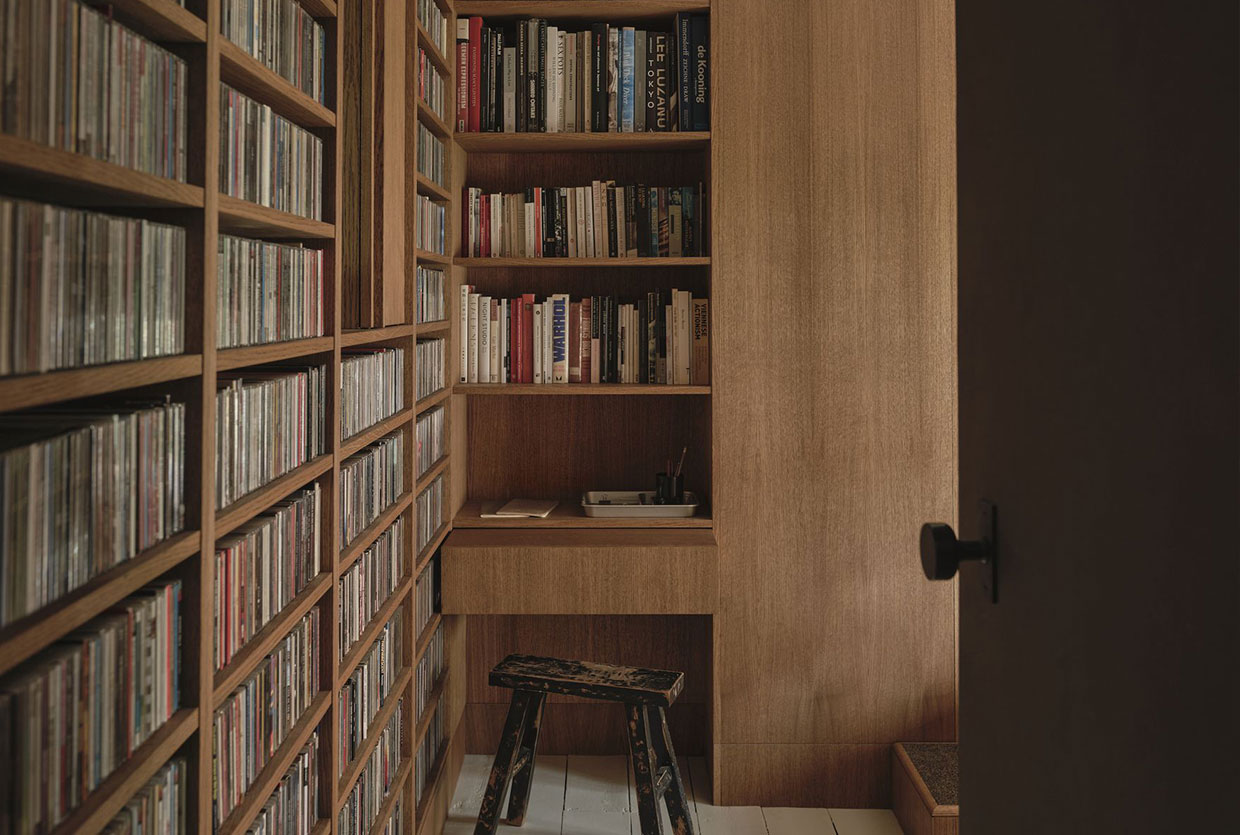
In the heart of North London, Heion House serves as a masterclass in modern japanese minimalist interior design. The name itself, Heion, translates to tranquility or peace, a sentiment that permeates every square inch of this 110-square-metre Grade II listed late-Georgian terrace. This project is not merely about removing clutter; it is an exploration of the Wabi-sabi philosophy, which celebrates the beauty of imperfection and the natural aging of materials.
At the core of the design is the concept of Ma, or negative space. In contemporary home design for 2026, Ma functions as a necessary mental health intervention. By prioritizing the space between objects rather than the objects themselves, the home offers a sense of mental clarity often lost in busy urban environments. This architectural pause allows the eye to rest and the mind to settle.
The lighting strategy within the home draws heavy inspiration from Jun'ichirō Tanizaki’s seminal text, In Praise of Shadows. Rather than flooding the rooms with harsh, uniform light, the design utilizes subtle transitions and soft glows. This approach creates a Japandi aesthetic that feels grounded and rhythmic, where the interplay of light and dark defines the mood of each room.
Spatial Flow: Reimagining the Georgian Layout
Creating a modern japanese style house interior within a historic London terrace required a radical rethink of traditional floor plans. Studio Hagen Hall implemented a layout reversal that challenges the standard Georgian configuration. By relocating the primary bedroom to the upper-ground floor and moving the social living salon to the top floor, the designers maximized natural light and created a more intuitive spatial flow and layout.
One of the most distinctive features is the introduction of a Genkan, a traditional Japanese entryway threshold. This space serves as a psychological and physical buffer between the bustling Islington streets and the interior sanctuary. The transition is marked by a change in floor material and elevation, signaling the moment one leaves the outside world behind.
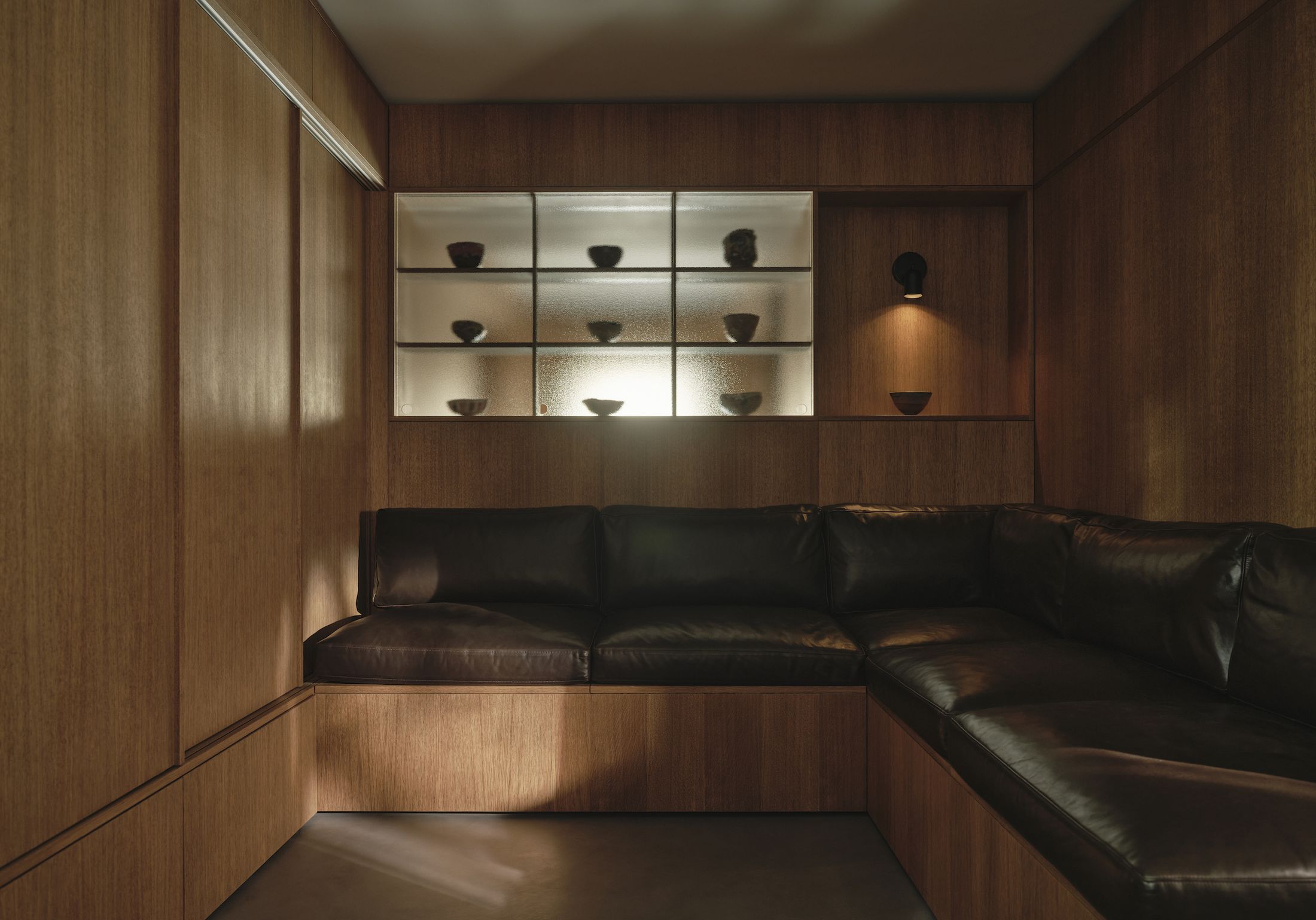
To manage light and privacy without sacrificing the open feel of the home, the designers adapted japanese shoji screen ideas for modern interiors. Instead of traditional paper, they utilized textured glass panels set within bespoke timber frames. These panels filter light softly throughout the day, providing the privacy of a wall with the translucency of a window. Within the modern japanese interior design living room, a Tokonoma, or traditional display niche, provides a dedicated space for a single ceramic piece or a seasonal floral arrangement, further emphasizing the home's curated and intentional atmosphere.
The design also makes clever use of verticality. A sunken dining area creates a functional pit that adds depth to the ground floor without requiring a physical extension. This sunken area allows for varied floor heights, which define different living functions while maintaining a sense of openness. It is a brilliant example of modern japanese interior design small space solutions, where every millimeter is utilized to enhance the feeling of volume.
The Restrained Palette: Material Honesty and Patina
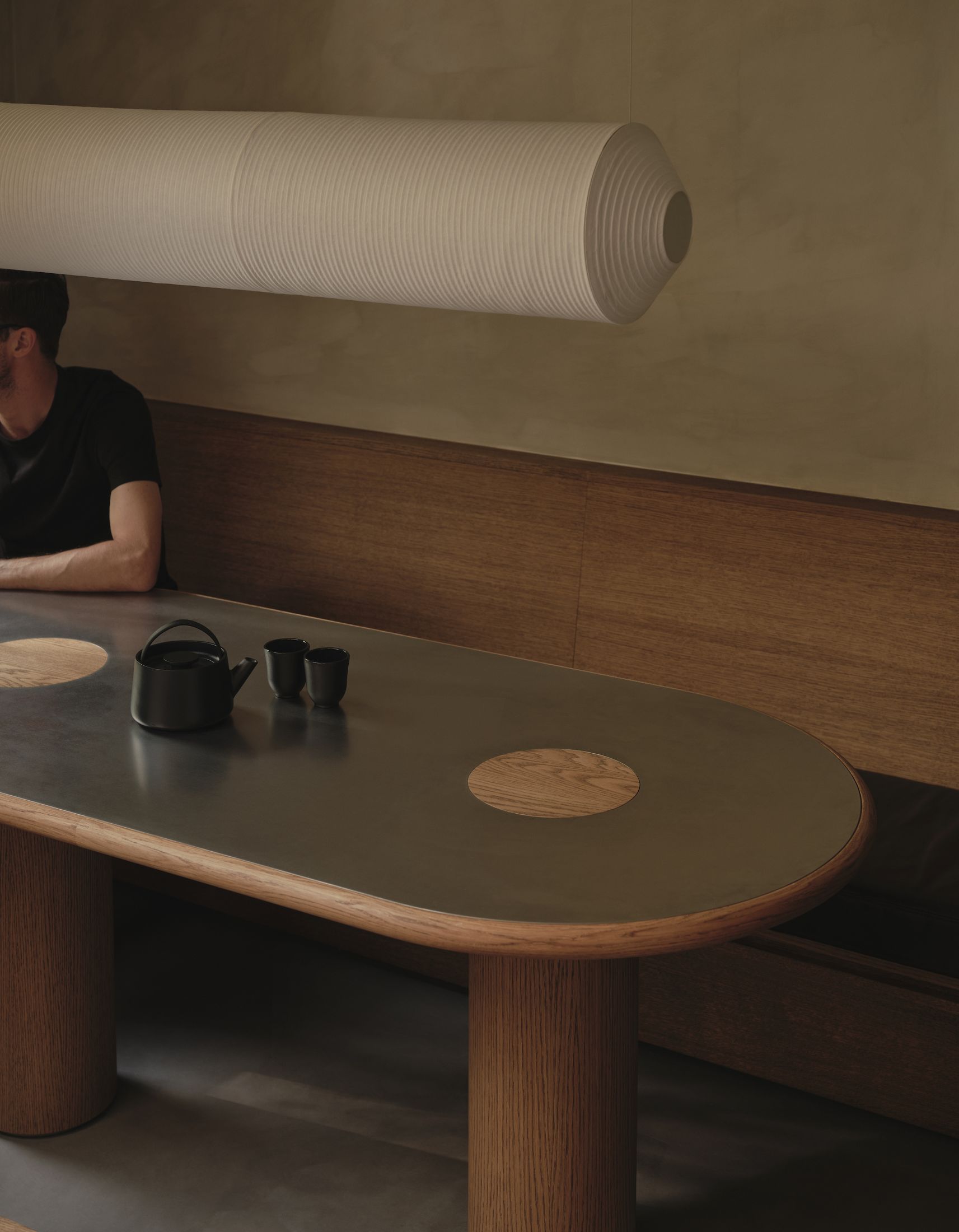
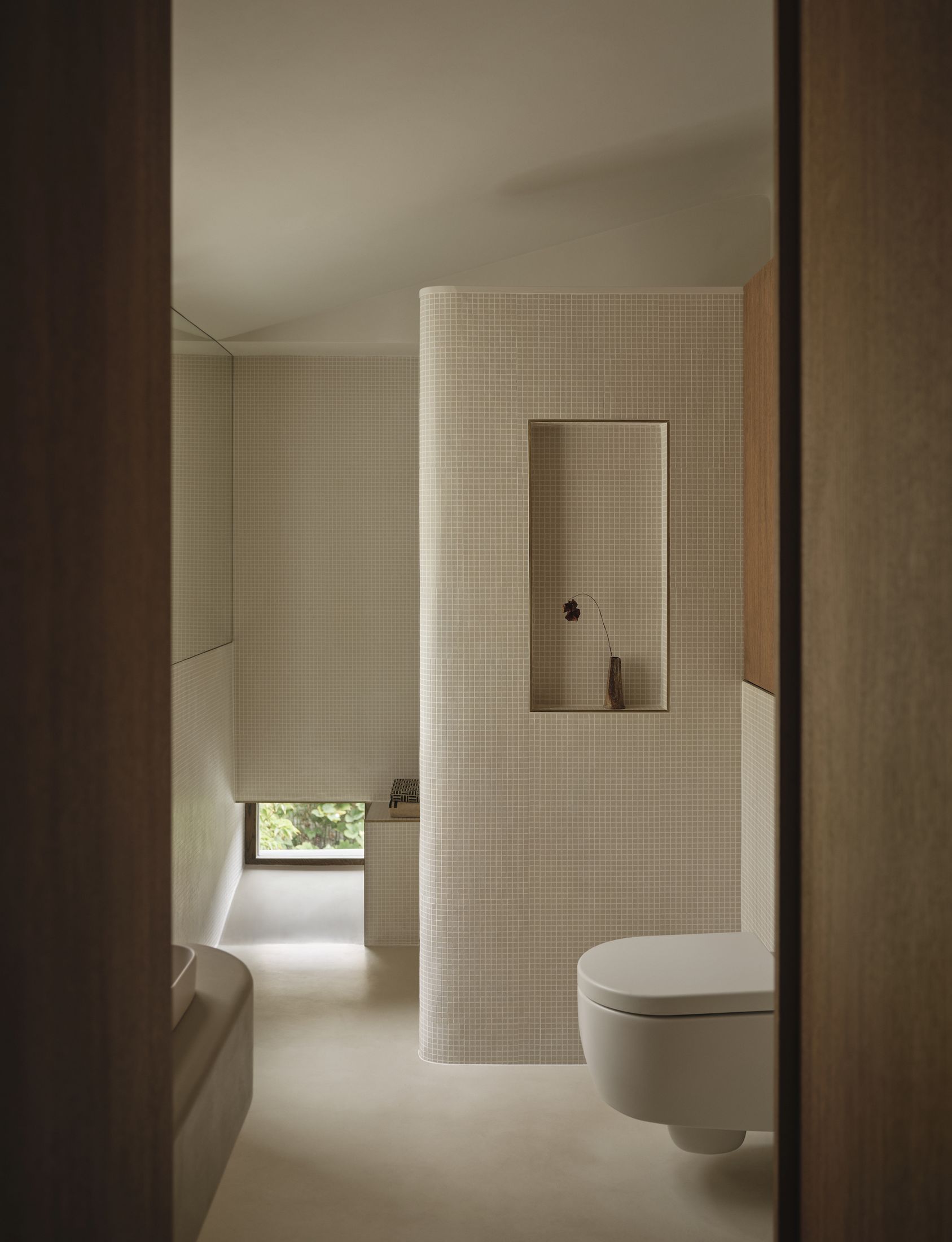
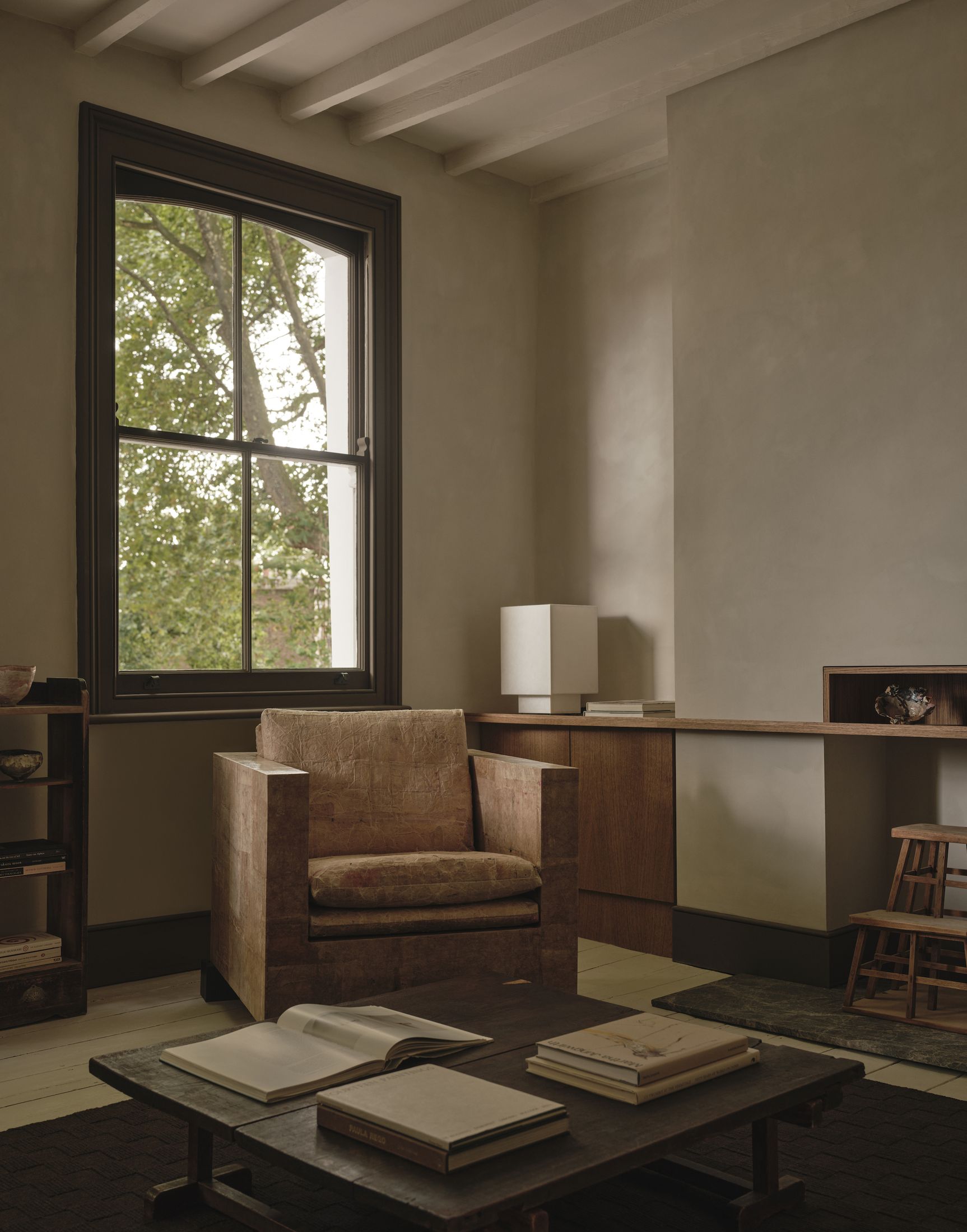
The success of Heion House lies in its modern japanese interior design material palette, which prioritizes tactile honesty over decorative excess. The home utilizes a restrained material palette consisting of bespoke smoked oak joinery, microcement surfaces, unlacquered brass accents, and white mosaic tile.
These materials were chosen specifically for their ability to develop a patina. Unlacquered brass will dull and darken with use, smoked oak will deepen in tone, and microcement floors offer a seamless, stony texture that feels cool underfoot. This celebration of natural wear aligns perfectly with the Wabi-sabi philosophy, ensuring the home feels more personal and soulful as the years pass.
Working within a Grade II listed structure meant that any intervention had to be sensitive to the original fabric. Studio Hagen Hall designed the bespoke smoked oak joinery as removable insertions. This clever architectural loop-hole allowed for the integration of modern Japanese spatial philosophy while respecting heritage restoration guidelines. The original architraves and fireplaces were preserved or lightly treated, creating a beautiful dialogue between historic London craftsmanship and contemporary Japanese minimalism.
Technical Specifications for the 2026 Japandi Look
For those looking to replicate this level of understated luxury, specific technical details are paramount. The atmosphere of Heion House is largely dictated by a precise color and lighting temperature standard.
- Paint Selection: To achieve the soft, bone-like glow of the walls, use Sherwin-Williams Alabaster (SW 7008) for main surfaces and Accessible Beige (SW 7036) for areas requiring a subtle shadow or depth.
- Lighting: All artificial lighting should be set to a 2700K warm white standard. This mimics the soft warmth of candlelight and complements the natural timber tones.
- Furniture Proportions: To maintain the low-profile proportions of a modern japanese style house interior, keep furniture heights consistent. Beds should sit between 14 and 16 inches high, while coffee tables are most effective at 12 to 14 inches.
- Hardware: Opt for unlacquered brass or bronze. These "living finishes" provide a sense of artisan craft that mass-produced, coated metals cannot match.
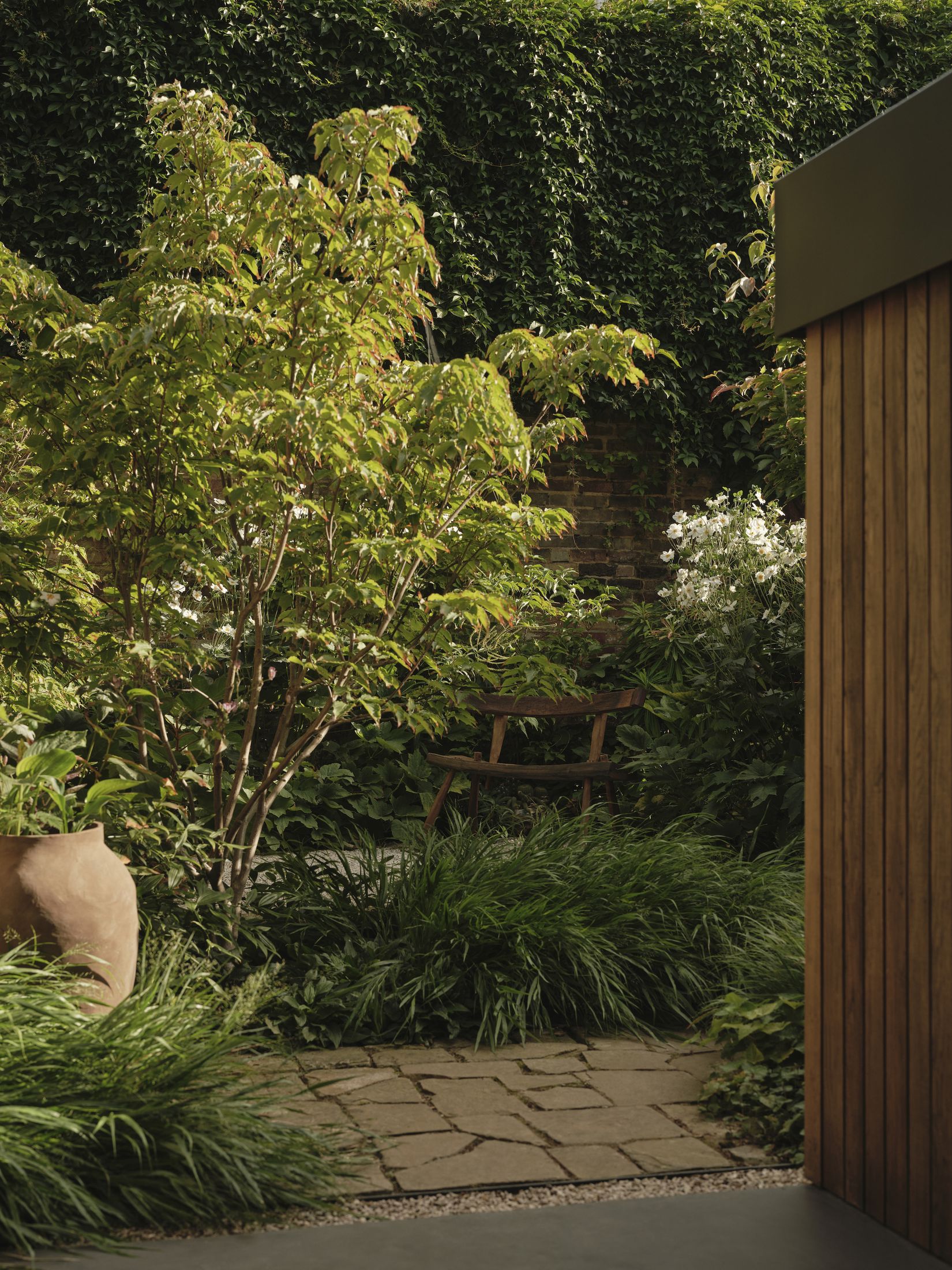
By focusing on these technical nuances, you can create a space that fosters indoor-outdoor harmony and mental quietude, regardless of your home's square footage.
FAQ
What is modern Japanese interior design called?
Modern Japanese interior design is frequently referred to as Japandi when it is blended with Scandinavian influences. However, when it stands alone as a contemporary evolution of traditional principles, it is often simply called modern Japanese minimalism. It focuses on the concepts of Ma (negative space) and Wabi-sabi (finding beauty in imperfection).
What are the 7 rules of Japandi home style?
The Japandi aesthetic is generally governed by seven key principles: a neutral color palette, the use of natural materials, a focus on functional furniture, the integration of greenery, a commitment to minimalism, the appreciation of artisan craftsmanship, and the prioritization of quality over quantity.
What is the Japanese trend in 2026?
The Japanese trend in 2026 is moving toward "Heion" or profound tranquility. This involves creating homes that act as sensory retreats from the digital world. Expect to see more textured glass inspired by Shoji screens, darkened "shadow" corners for meditation, and the use of sustainable, raw materials like microcement and reclaimed timber.
What is the 3-5-7 rule in interior design?
The 3-5-7 rule is a Japanese styling principle used for arranging objects. It suggests that items should be grouped in odd numbers to create a sense of balance and natural asymmetry. In a modern Japanese living room, you might see three ceramics on a shelf or five stones in a garden, as odd numbers are considered more aesthetically pleasing and dynamic in traditional Zen philosophy.