Imagine a world where sound is physically felt before it’s heard, and the boundary between the commercial cinema and your private living space has completely vanished. For years, the "home theater" was a compromise—a smaller, dimmer version of the real thing. But as we move through 2026, the tide has turned. Commercial cinema tickets now frequently exceed $30 per person, and the inconvenience of sticky floors and noisy crowds has pushed the luxury consumer inward.
A recent 2026 market analysis indicates that high-end 8K projector adoption in private residences has increased by 42%. We are no longer just "watching movies" at home; we are curating experiences that technically and sensory-wise outperform the local multiplex. To achieve this better-than-theater home cinema experience, I recommend focusing on five specific pillars: high-fidelity visual sovereignty, precision-engineered audio, tactile comfort, refined refreshments, and the elimination of decision fatigue.
Quick Summary: The 5 Pillars of the 2026 Private Cinema
- Visual Sovereignty: Deploying 8K laser optics (like the JMGO N1S Ultra) for clarity that exceeds IMAX.
- Sonic Precision: Moving beyond soundbars to high-fidelity integrated amplifiers (ARCAM Radia Series).
- Tactile Comfort: Prioritizing premium textiles and acoustic fabrics over traditional leather.
- The Curator’s Menu: Shifting to non-alcoholic artisanal cocktails and high-end snacks.
- The Host’s Rule: Eliminating the "Netflix scroll" by pre-selecting the evening's film.

1. Visual Sovereignty: The 8K Laser Revolution
In 2026, the resolution war has a clear winner. While 4K remains the standard for television, the 8K laser projector has become the cornerstone of the premium home cinema. Data shows that 78% of luxury home theater owners now prioritize integrated "smart-streaming" laser optics over traditional lamp-based systems. The reason is simple: maintenance. Traditional lamps dim over time and require replacement; modern laser systems offer 30,000 hours of peak performance with zero maintenance, enabling a massive 300-inch cinematic display that remains crisp from the first minute to the last.
When I evaluate these systems, I look for "chromatic accuracy"—the ability of the projector to reproduce colors exactly as the cinematographer intended. Two models currently dominate the landscape for 2026: the JMGO N1S Ultra and the Epson EpiqVision Ultra LS800.
| Feature | JMGO N1S Ultra | Epson EpiqVision Ultra LS800 |
|---|---|---|
| Resolution | 8K Upscaled / Native 4K Triple Laser | 4K PRO-UHD (Ultra Short Throw) |
| Brightness | 2800 ISO Lumens | 4000 Lumens |
| Optics | MALC Laser Engine | 3-Chip 3LCD Technology |
| Smart Integration | Integrated Gimbal Design | Built-in Android TV |
| Best For | Dedicated dark rooms & huge screens | Bright living rooms & short-throw setups |
The JMGO N1S Ultra is a marvel of industrial design. Its integrated gimbal allows for instant floor-to-ceiling calibration, making it perfect for those who want a flexible setup. However, for sheer detail in a 300-inch environment, the laser's ability to produce deep, "true" blacks is what truly separates it from the washed-out gray levels of a commercial theater. When you control the light, you control the emotion.
2. Sonic Precision: Beyond the Soundbar
If the projector is the heart of the theater, the audio system is its soul. We have moved past the era of the "all-in-one" soundbar. While convenient, soundbars lack the physical separation required for a truly immersive soundstage. To achieve better-than-theater sound, we must look toward precision-engineered systems like the ARCAM Radia Series.
The shift in 2026 is toward high-fidelity integrated amplifiers (such as the ARCAM A5, A15, or A25). These units utilize Class G amplification, which provides the ultimate sound quality by switching power rails to maintain efficiency while delivering massive peaks of uncompressed audio.
Why high-fidelity audio beats commercial Dolby Atmos:
- Bit-Perfect Playback: Home systems can now handle 192kHz/24-bit audio without the compression found in digital cinema broadcasts.
- Acoustic Fidelity: Commercial theaters are often "tuned" for the loudest common denominator. A private setup is tuned specifically for your room’s dimensions, ensuring that dialogue is razor-sharp while the low-frequency effects (LFE) are felt in your chest, not just heard.
- The ARCAM Advantage: Using an integrated amp like the A25 allows for seamless Bluetooth connectivity with high-definition codecs (aptX Adaptive), making it just as easy to host a listening party as it is to watch a blockbuster.
In my experience, the "unseen" part of audio is just as important as the speakers. High-quality cabling and dedicated power conditioners ensure that the noise floor remains non-existent. When the screen goes black and the room falls silent, there should be actual silence—not the faint hiss of a commercial sound system.
3. Tactile Comfort: The Textile Layer
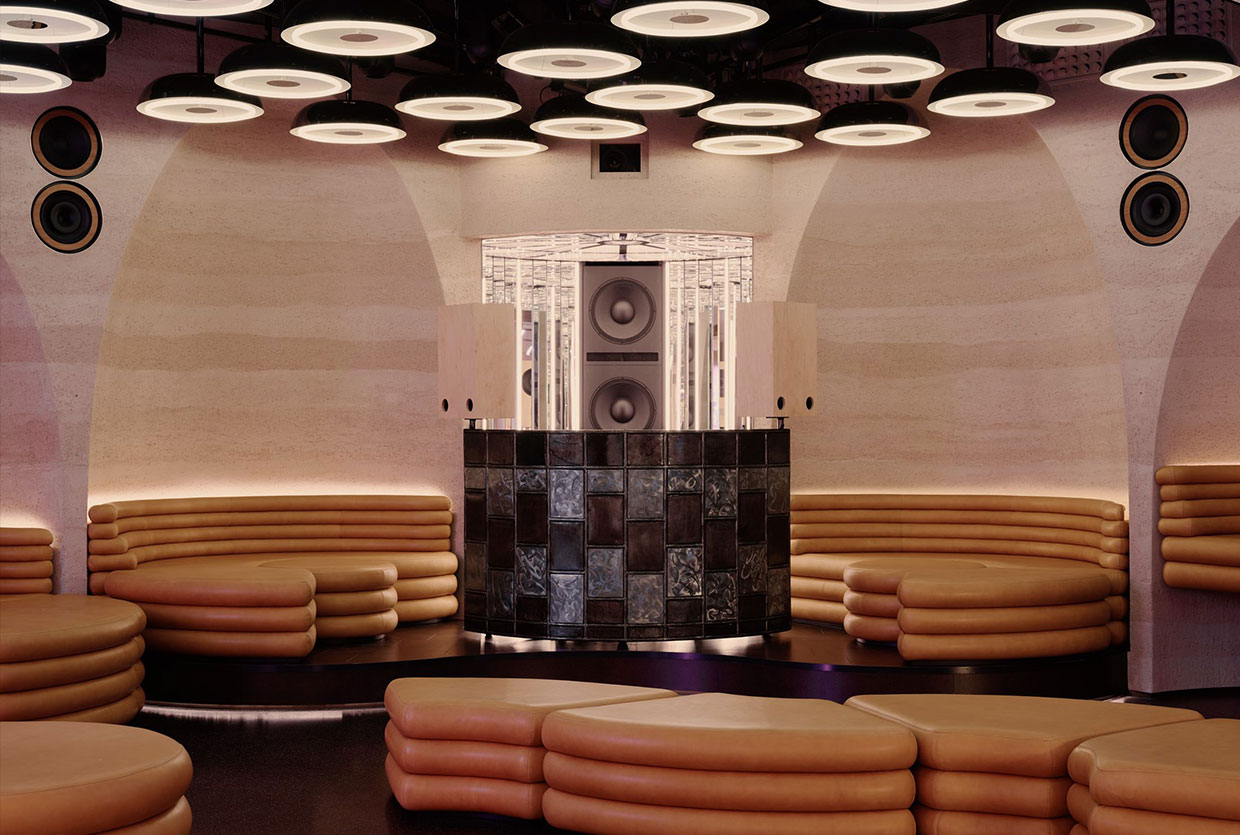
One of the greatest flaws of the commercial cinema is the seating. Cold leather, plastic armrests, and the general lack of "warmth" remind you that you are in a public space. In 2026, luxury is defined by textiles. I advise my clients to move away from the "spaceship" style leather recliners and toward high-density acoustic fabrics and natural materials.
We are seeing a massive trend toward using Pendleton wool and heavy-weight linen for theater seating and wall coverings. This isn't just an aesthetic choice; it's a functional one. Dense textiles act as natural acoustic dampeners, preventing "sound coloration" (when sound bounces off hard surfaces and creates echoes).
Essentials for the Textile Layer:
- Acoustic Wall Panels: Use fabric-wrapped panels that match your room’s color palette to absorb mid-to-high frequency reflections.
- The Weighted Blanket: A staple of the modern home cinema. It provides a sense of security and physical grounding that enhances the immersive experience.
- Zoned Lighting: Smart-home integration (via Lutron or Philips Hue) should gradually dim the lights over 30 seconds, mimicking the professional "curtain call" feel while highlighting the texture of the room.
4. The Curator’s Menu: Refined Refreshments
The "popcorn and soda" model is dying. In its place is a more curated, artisanal approach to hosting. The goal for 2026 is to maintain focus throughout the film, avoiding the "sugar crash" or the dulling effects of alcohol that can ruin the appreciation of a complex narrative.
The Non-Alcoholic (NA) Cocktail Movement has taken over the home cinema. Providing sophisticated options like a "Phony Negroni" or Athletic Brewing's "Host & Toast" series allows guests to stay sharp and engaged. For snacks, we are seeing a move toward "slow-burn" energy—think East Fork ceramic bowls filled with truffle-infused stovetop popcorn or small-batch charcuterie that doesn't require a noisy crinkling bag.
"The quality of the host is reflected in the quality of the vessel. Serving a chilled, non-alcoholic botanical spirit in a heavy crystal glass changes the entire weight of the evening." — Noah Brooks
5. The Host’s Rule: Eliminating Decision Fatigue
The most significant barrier to a great home movie night isn't technical—it's psychological. We have all experienced the "30-minute Netflix scroll," where by the time a movie is chosen, the excitement has evaporated. To achieve a better-than-theater experience, the host must take sovereignty over the selection.
This is what I call The Host's Rule. When inviting guests, the film is pre-selected. There is no voting, no scrolling. This mimics the commercial experience where the "showtime" is a fixed event, creating a sense of anticipation.
Technical Tip for the Host: Before guests arrive, ensure your system is set to Filmmaker Mode. Most modern 8K projectors and high-end TVs come with this setting, which disables all motion smoothing and artificial sharpening. It presents the film exactly as the director intended, with the correct frame rate and color temperature. Pairing this technical accuracy with a curated "theme"—perhaps matching the evening's refreshments to the film's setting—elevates the night from a simple viewing to a cultural event.
FAQ
Q: Is 8K really necessary when most content is still 4K? A: In 2026, the benefit of 8K projectors lies in their upscaling algorithms and their ability to project on screens larger than 150 inches without "screen door effect." If you are aiming for a massive 200 to 300-inch display, 8K ensures that the pixel density remains high enough to look like a solid image rather than a grid.
Q: Can I achieve this in a living room, or do I need a dedicated basement? A: With the advent of Ultra Short Throw (UST) projectors like the Epson LS800, you no longer need a dedicated dark room. UST projectors sit just inches from the wall and, when paired with an Ambient Light Rejecting (ALR) screen, can produce a stunning image even with some daylight.
Q: How do I manage all these devices without five different remotes? A: Ecosystem planning is key. I recommend using a unified control system like Savant or a high-end Harmony successor that integrates with your ARCAM amp and your projector. Most 2026 systems also support HDMI-CEC, allowing one remote to power the entire chain.
Conclusion
The transition to a better-than-theater home cinema experience in 2026 is a journey from "equipment" to "environment." By investing in the clarity of 8K laser optics, the sonic purity of Class G amplification, and the sensory comfort of premium textiles, you aren't just building a media room—you're building a sanctuary.
As the costs of commercial cinema continue to rise and the quality of home technology reaches new heights, the most exclusive seat in town is no longer at the theater. It’s in your own home, precisely where you want it to be. If you’re ready to reclaim your cinematic sovereignty, start with the visuals, but never forget that it’s the host’s curation that truly makes the magic happen.