Quick Facts: The Altadena Revival
- Location: Altadena, California (Verdugo Foothills)
- Designer: Katrina Rumford of Slow Dust Studio
- Home Size: 1,730 square feet (Original 1947 footprint)
- The Transformation: From a sterile, whitewashed "spec-reno" to a warm, whimsical sanctuary.
- Key Achievement: Increased the bathroom count from two to three and optimized the layout for a family of four without adding a single square foot of exterior space.
- Photography: Ye Rin Mok
Reviving a 1947 Gem in the Verdugo Foothills
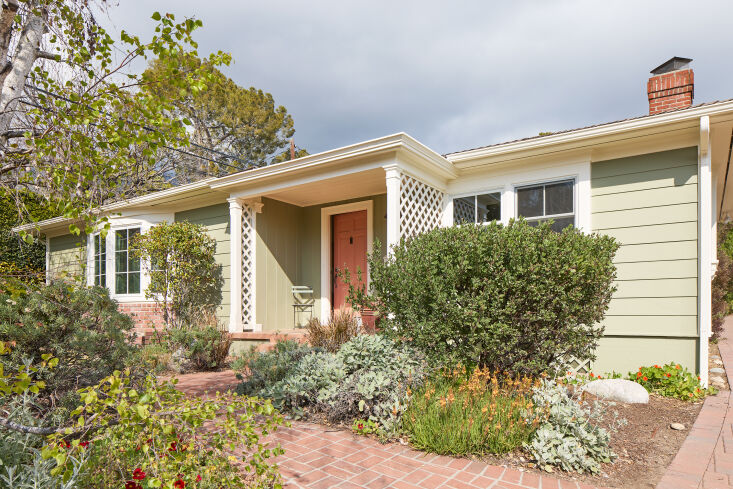
There is a specific kind of architectural heartbreak that occurs when a historic home is "flipped" with a heavy hand. We’ve all seen it: the soul of the house buried under layers of clinical white paint, grey laminate flooring, and recessed lighting that feels more like an office than a retreat. This was exactly the state of a charming 1947 residence in Altadena when its current owners—a family of four—called upon Katrina Rumford, principal of Slow Dust Studio.
The challenge wasn't just aesthetic; it was functional. At 1,730 square feet, the home felt cramped yet cavernous in the wrong places. The goal was to convert this cold, whitewashed space into a family-friendly sanctuary that felt both historic and deeply personal. Through a masterful use of color, custom millwork, and strategic spatial planning, Katrina Rumford transformed the house into a "Whimsical and Warm" haven that honors its mid-century roots while embracing a bold, modern palette.
Rethinking the Footprint: Maximizing Functionality without Adding Square Footage
One of the most impressive feats of this remodel is that it achieved a higher level of luxury and utility within the existing walls. In Southern California, where the instinct is often to build "out and up," Slow Dust Studio chose to build "smart." By reconfiguring the internal layout, the design team managed to increase the bathroom count from two to three, providing a dedicated space for the parents and a shared space for the children.
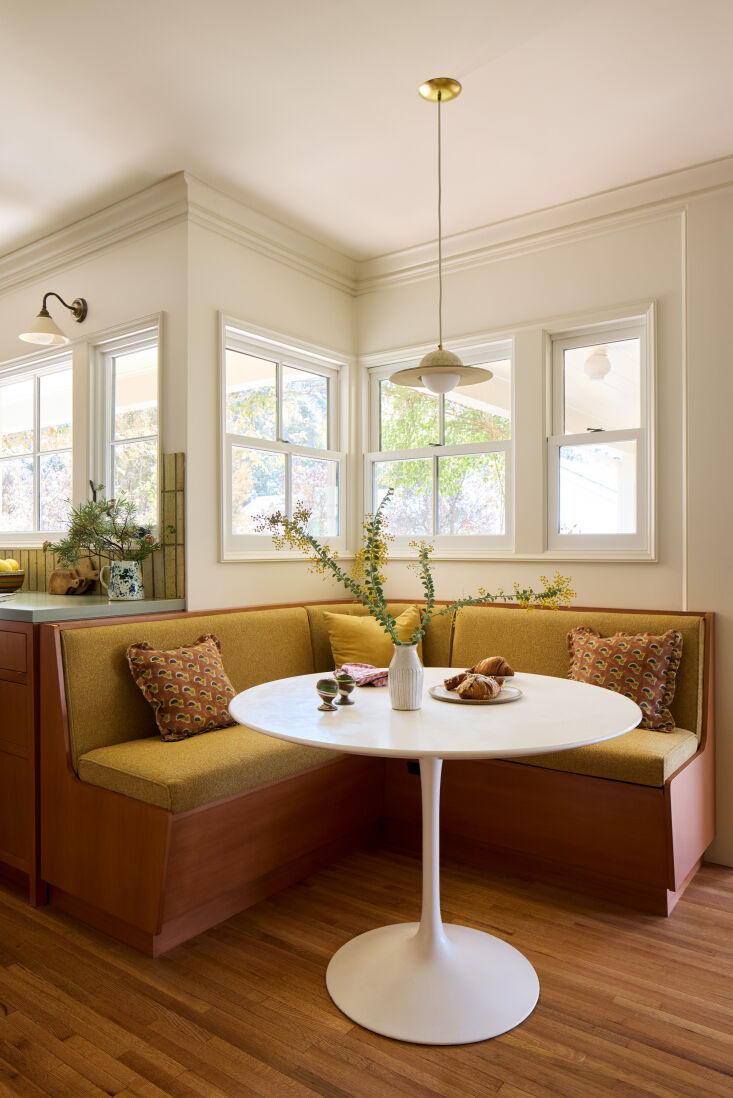
The most significant spatial "hack" involved a trade-off. To create the kitchen of the owners' dreams, square footage was reclaimed from an oversized primary bedroom closet. This allowed for a massive expansion of the kitchen’s working area and the inclusion of a built-in dining nook.
But where does the "stuff" go when you sacrifice a closet? The answer lies in smart, integrated storage. In the dining area, a custom banquette does double duty. It isn't just a place for morning coffee; it features deep, hidden drawers designed specifically to house the family’s extensive collection of board games, keeping the living area clutter-free.
The Kitchen: A Study in Douglas Fir and Posidonia Green
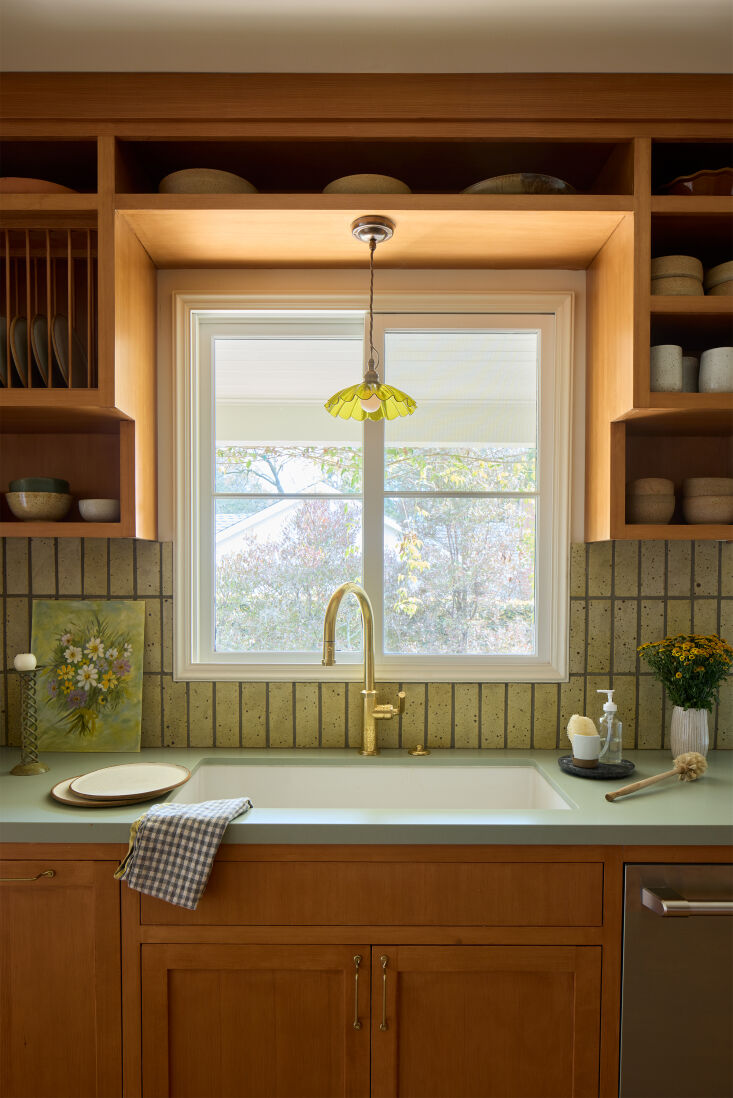
The kitchen serves as the heart of this whimsical transformation. Previously, the kitchen was walled off from the rest of the home—a common 1940s layout that felt isolating for a modern family. Slow Dust Studio removed the dividing wall, opening the kitchen entirely to the living room and allowing natural light to flood the core of the house.
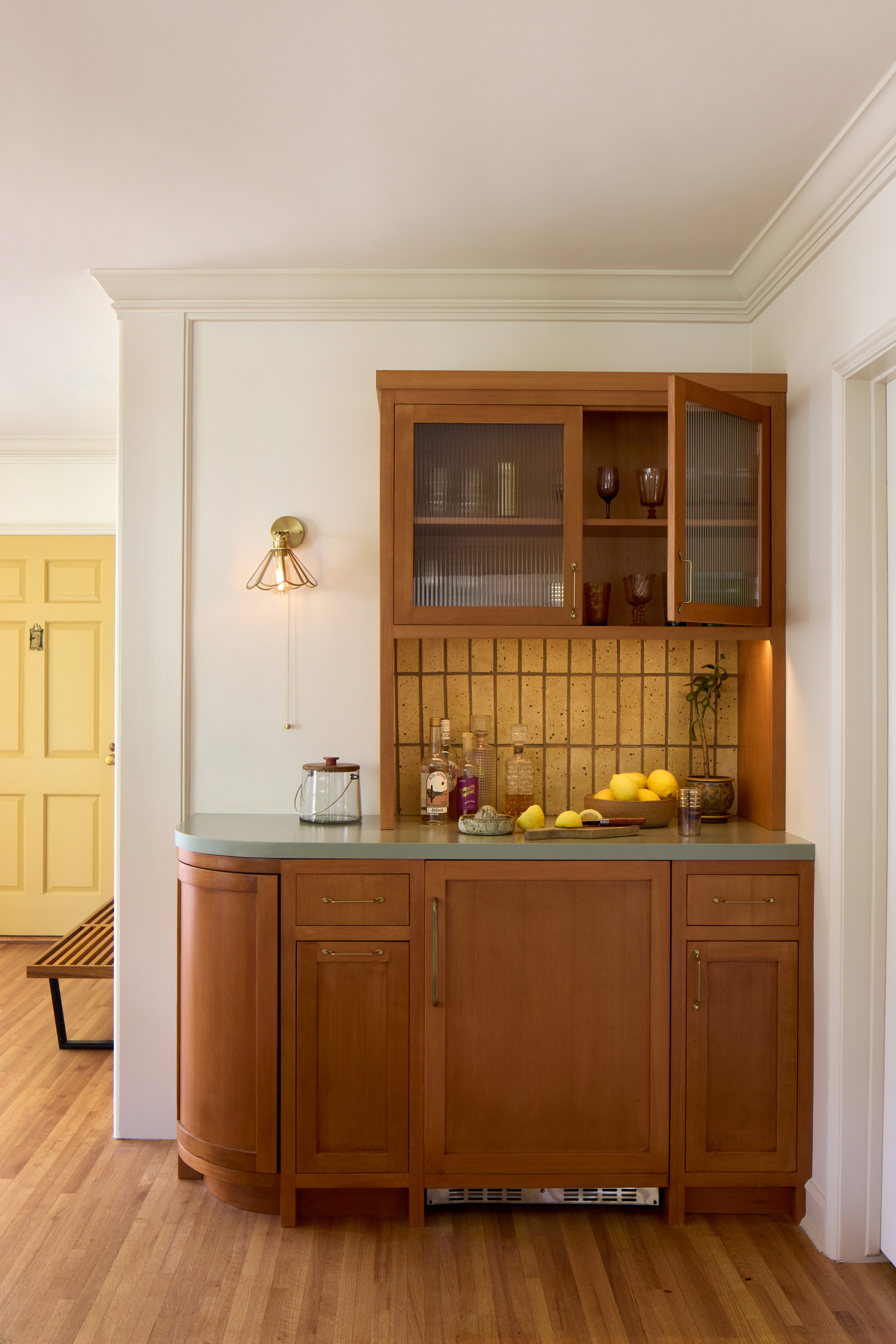
The material palette here is a masterclass in texture. Instead of the ubiquitous white shaker cabinets, Katrina opted for custom Douglas fir cabinetry. The wood’s straight, fine grain provides an organic warmth that anchors the room. This is paired with Silestone Posidonia Green countertops—a soft, muted sage that feels both fresh and timeless.
The inspiration for this specific green hue? A single, exquisite fixture. The deVol Frilly Chartreuse light hanging above the sink served as the aesthetic north star for the entire kitchen renovation. To finish the look, Rumford selected burnished brass fixtures from California Faucets, which will patina beautifully over time, adding to the home’s evolving character.
A Masterclass in Color: Bringing the 'Whimsical Warmth' to Life
The "whitewashed" look of the previous renovation had sucked the life out of the home's historic proportions. To bring it back, Katrina used a sophisticated palette from Farrow & Ball that plays with light and shadow.
| Room | Color | Brand | Atmosphere |
|---|---|---|---|
| Living Room Walls | Slipper Satin | Farrow & Ball | Off-white with a touch of warmth; never clinical. |
| Exterior Accents | Red Earth | Farrow & Ball | A terracotta hue that connects to the Altadena soil. |
| Primary Bedroom | Vert de Terre | Farrow & Ball | A soft, dusty green that creates a sanctuary feel. |
| Back Hallway | Money Tree | Hirshfield’s | Deep green to embrace the lack of natural light. |
Because the back of the house naturally receives less sunlight, Katrina leaned into the darkness rather than fighting it with bright white. Using moody tones like Hirshfield’s Money Tree and Autumn’s Hill, she created "pocket spaces" that feel cozy and intentional rather than dim.
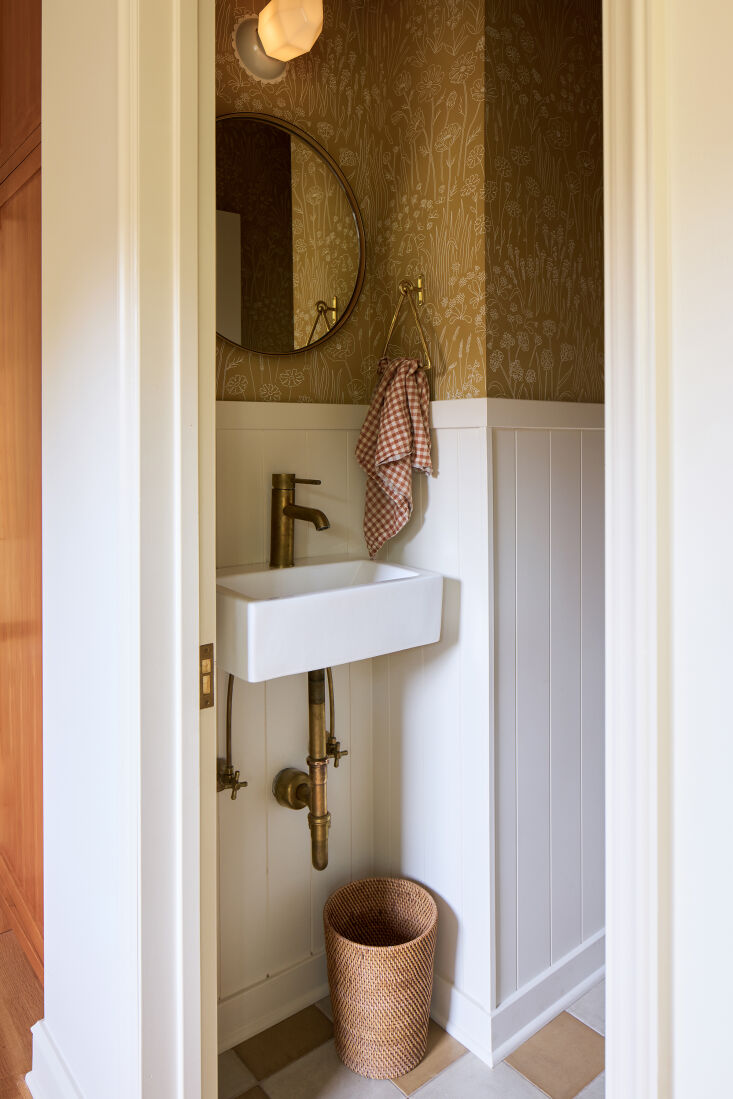
Wallpaper was another tool used to inject personality. In the powder room—which was carved out of the original primary bath—Hygge & West’s Alpine Garden wallpaper creates a "jewelry box" effect, turning a small, utilitarian space into a conversation piece.
Preserving Historic Character in Altadena
While the colors and layout are modern, the "bones" of the home remain firmly rooted in 1947. A key goal for Slow Dust Studio was to maintain a balance of materials: approximately 60% original elements paired with 40% new custom millwork.
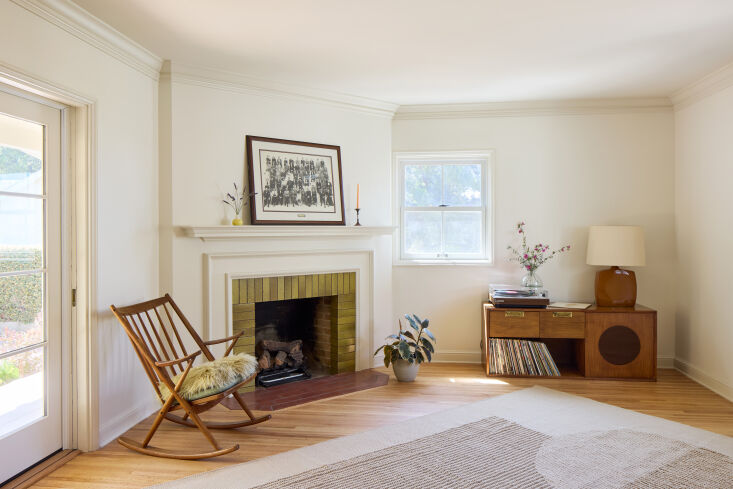
The original red oak floors, which had survived decades of wear, were meticulously refinished rather than replaced. To complement the warmth of the oak, the fireplace was reimagined using McIntyre Mossy Gold thin brick. This specific material choice bridges the gap between mid-century California and modern organic design, providing a textural focal point for the living room.
Ivy’s Pro Preservation Tip: When renovating in historic districts like Altadena, always check LA County regulations before touching windows or exterior facades. Hiring an architect or designer with a "preservation-first" mindset can save you thousands in permit delays and ensure your home retains its long-term value.
Affordable Materials for a High-End Result
One of the most refreshing aspects of Katrina Rumford’s philosophy is her belief that high-end design doesn't require an unlimited budget. This project is a testament to the "high-low" mix.
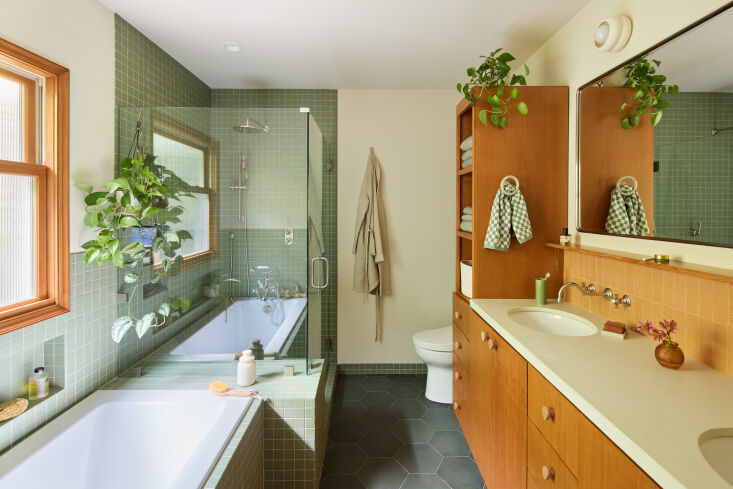
In the guest bathrooms, the team saved on costs by using metal cabinets from Wayfair but elevated them with high-end brass hardware from West Elm. For tiling, instead of custom handmade ceramics throughout, they mixed accessible brands like Bedrosians (the Makoto Hexagon line) with Daltile (Cypress Keystones). By focusing the budget on "touchpoints"—the things you feel every day, like custom cabinetry and solid brass faucets—the overall result feels incredibly luxurious without the premium price tag.
Expert Tips for Your Own Historic Renovation
If you are looking to embark on a similar journey with a historic home, consider these three takeaways from the Altadena project:
- Live in it first: The owners lived in the whitewashed house for several months before the demo. This allowed them to understand the flow of light and where they naturally spent their time, leading to the decision to open the kitchen.
- Embrace Biophilic Design: Even in a small footprint, connecting to the outdoors is key. The design uses Douglas fir and earthy greens to mirror the mountain views outside the windows, making the 1,730 square feet feel much larger and more grounded.
- The Phased Approach: "Instagram speed" is a myth. A quality gut renovation of a historic home takes time. Prioritize the structural and spatial changes first (like the bathroom additions) and let the decor evolve naturally.
FAQ
Q: How did they manage to add a third bathroom without an extension? A: By reconfiguring the internal layout of the original primary bedroom and hallway. They reclaimed space from a large, inefficient closet and repositioned walls to create a primary ensuite, a kid's bath, and a guest powder room within the existing square footage.
Q: Why was Douglas fir chosen for the cabinetry over white oak? A: While white oak is incredibly popular right now, Douglas fir has a historic connection to mid-century California architecture. Its tighter grain and warmer, slightly more orange/red undertones paired perfectly with the original red oak floors.
Q: What is the benefit of "burnished brass" over standard polished brass? A: Burnished brass is a living finish. It will naturally darken and patina over time, which helps a renovation feel more "settled" into an older home rather than looking shiny and brand new.
The 1947 Altadena house is no longer just a structure; it’s a narrative. It’s a story of how color can heal a space, how smart design can solve footprint limitations, and how a historic home can be whimsical, warm, and perfectly suited for a modern family.