There is a specific kind of magic in seeing a home that looks as though it has breathed for centuries, only to discover it was reimagined just last year. For Amanda Pays and Corbin Bernsen, this "new-old" alchemy isn't just a hobby—it’s a life calling. Over their 36-year marriage, the duo has famously flipped 30 properties, a staggering milestone that proves their design partnership is as enduring as their relationship. As they often joke, "We change houses, not spouses."
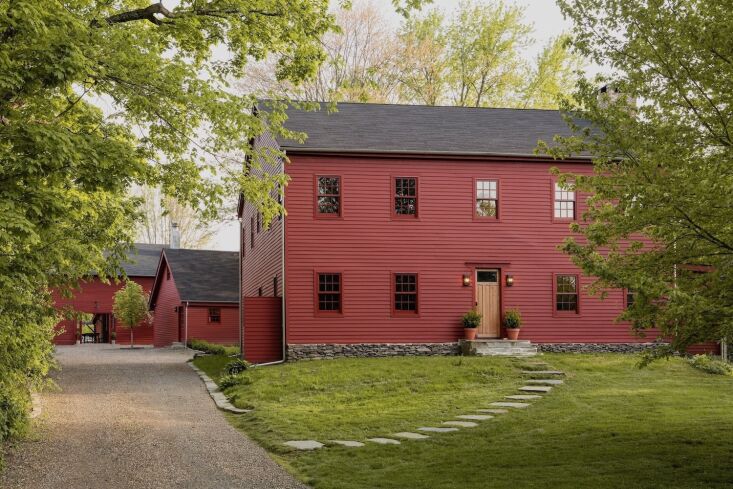
Their latest masterpiece, a sprawling eight-acre estate known as Barnswood in Germantown, New York, marks a significant shift from their long-standing Los Angeles roots to the soul-stirring landscape of the Hudson Valley. This wasn't just a renovation; it was a total architectural reclamation, featured on Season 7 of In with the Old. What began as a clunky, disjointed 1910 structure has been meticulously transformed into a classic Colonial-style farmstead that feels deeply rooted in the history of the region.
The Duo Behind the 30th Flip: 36 Years of 'New-Old' Design
To understand Barnswood, you must first understand the Pays-Bernsen philosophy. While many flippers aim for the "white box" modern aesthetic, Amanda and Corbin move in the opposite direction. They seek to "age" a house, stripping away mid-century mistakes to reveal—or recreate—the authentic bones of a property.
The move to Germantown was intentional. The Hudson Valley is a treasure trove of historic architecture and salvaged materials, making it the perfect playground for their 30th project. Their approach is visceral; they don't just look at floor plans, they listen to the house. At Barnswood, the house was screaming for a return to its Colonial roots, away from the "modernized" clutter that had accumulated over the decades.
The Transformation of Barnswood: From Clunky Modern to Colonial Classic
The couple referred to the original state of Barnswood as the "Bionic House"—a 1910 structure that had been renovated so many times it lost its identity. The layout was a maze of small, dark rooms and awkward transitions. To fix it, they did the unthinkable for most: they stripped the entire structure down to its studs.
"You have to take it back to the beginning to see where it wants to go. Stripping a house down isn't about destruction; it's about uncovering the truth of the space." — Amanda Pays
By removing the "clunky" modern elements, they were able to restore a simple, symmetrical Colonial layout. This involved moving staircases, opening up sightlines, and using traditional materials like lime wash on the walls. Lime wash provides a velvety, matte texture that reflects light softly, instantly giving new drywall the appearance of centuries-old plaster.
Material Biographies: The Global Search for Salvaged Details
What sets a Pays-Bernsen flip apart is the "biography" of the materials used. They don't just shop at big-box retailers; they hunt. Every beam, door, and floorboard in Barnswood has a story that spans continents.
The Egyptian Connection
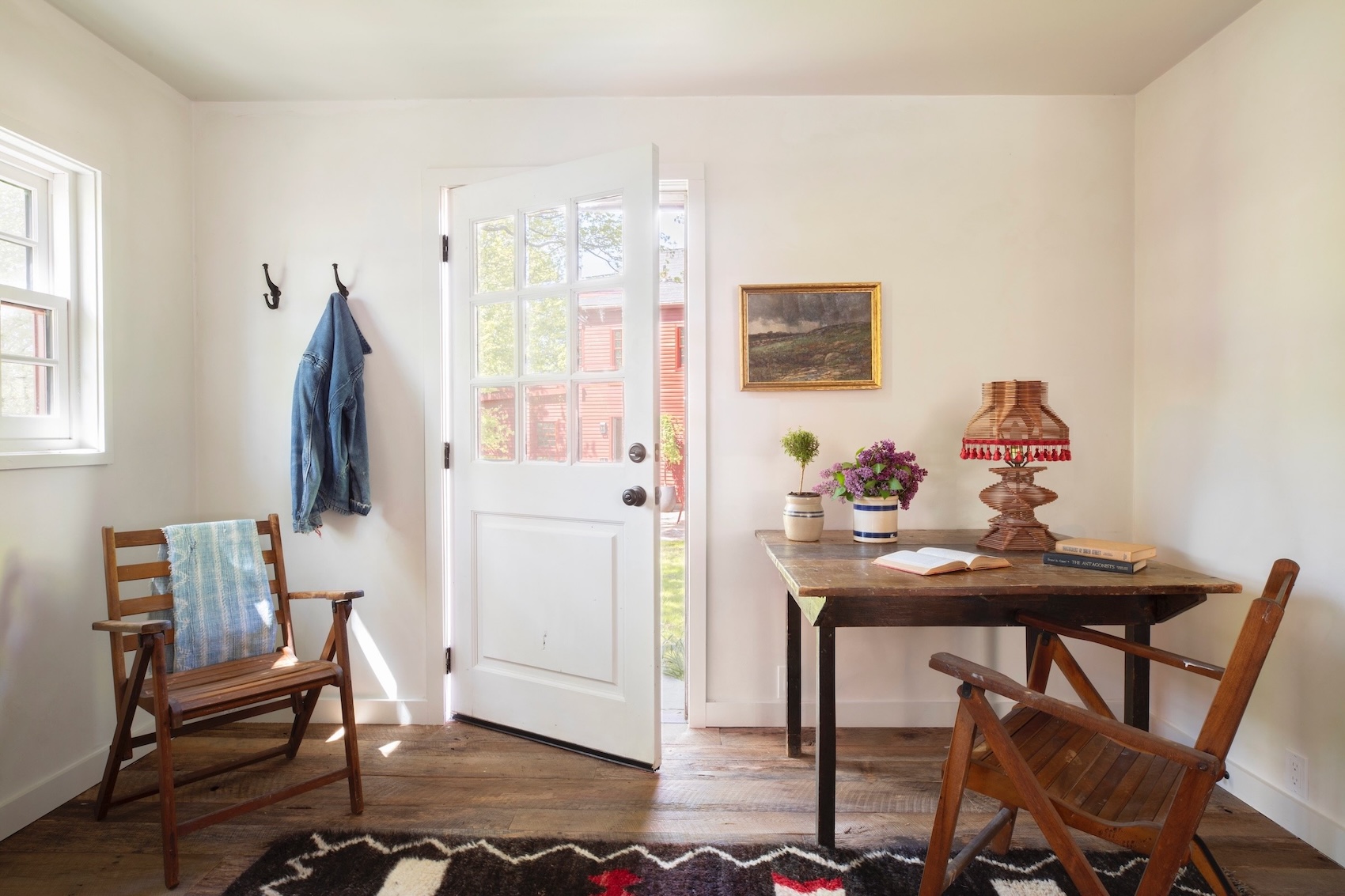
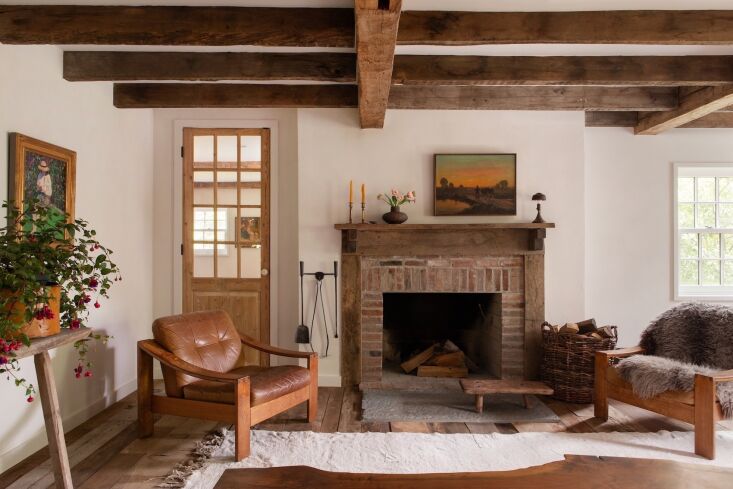
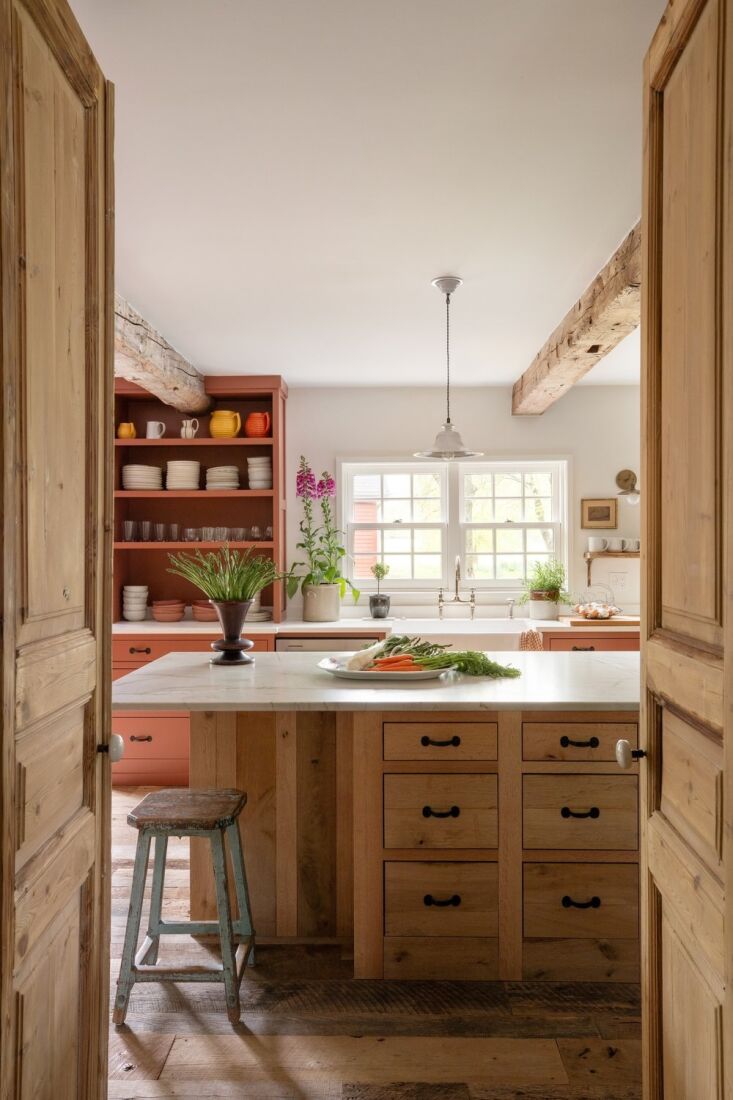
The most talked-about feature of the home is the collection of 16 antique English pine doors. These weren't found at a local yard; they were sourced from Alexandria, Egypt, via a specialized salvage house in Alabama. These doors, with their weathered patina and towering height, were integrated into the design from the start. Because the home originally had low ceilings, these oversized doors create an optical illusion of grandeur and verticality.
The Nova Scotia Floors
Underfoot, the house tells another story. The flooring was salvaged from the ceiling of an old clothespin factory in Nova Scotia. The wood possesses a tight grain and a deep, honeyed hue that modern lumber simply cannot replicate.
Maine Timber Framing
To provide an "authentic architectural backbone," the couple hand-picked structural and decorative beams from Maine. Corbin even got his hands dirty in the process—the living room mantel was a "scrap pile" surprise he crafted himself from leftover timber.
The Heart of the Home: A Terracotta Kitchen and Secret Passageways
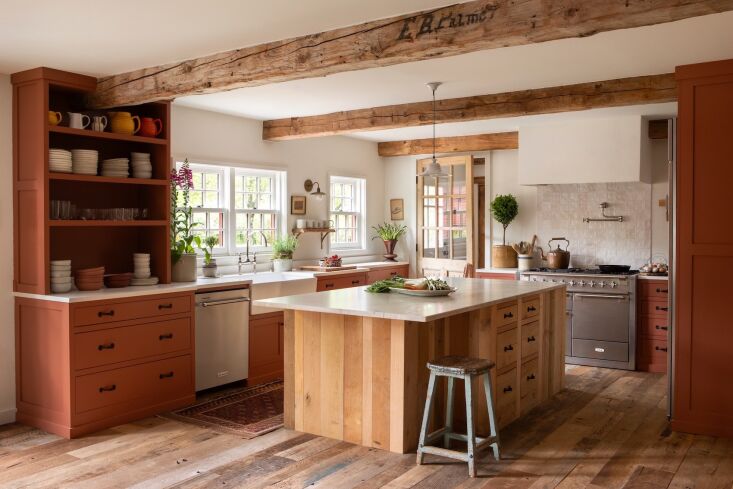
The kitchen serves as the ultimate example of the couple's "Save vs. Splurge" strategy. Instead of standard white marble, they leaned into the warmth of the Hudson Valley.
| Feature | The Choice | The Philosophy |
|---|---|---|
| Cabinetry | Custom Terracotta-colored wood | Grounding the space with earthy, local tones. |
| Appliances | AGA Range | Investing in a "hearth" that doubles as a design statement. |
| Maker | Ross Brown (Local) | Supporting local artisans to ensure bespoke quality. |
| Layout | Open-concept to Dining | Creating a flow for entertaining and family life. |
One of the most charming additions is the "secret" entrance to the media library. By using a jib door (a door flush with the wall and decorated to match), they maintained the clean lines of the hallway while adding a touch of cinematic mystery—a nod, perhaps, to their Hollywood backgrounds.
The Showstopper: The A-Frame Barn and Guest Cottage
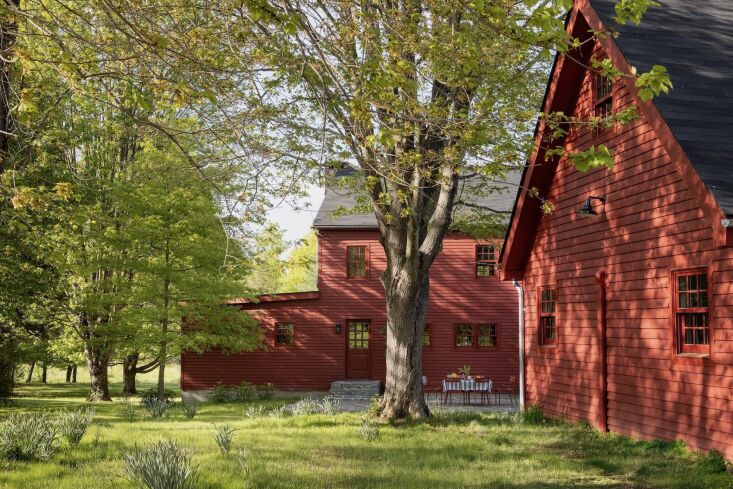
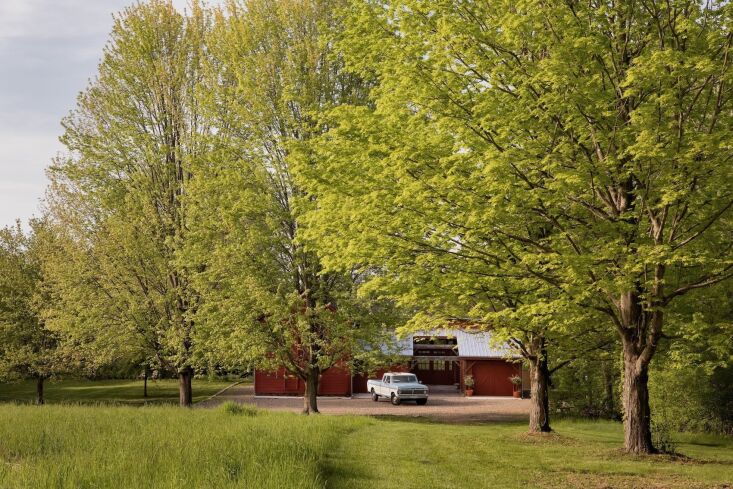
The eight-acre property allowed the couple to think beyond the main house. A massive A-frame barn was converted into a high-ceilinged entertainment space and gym. Amanda chose a classic "Barn Red" for the exterior, a decision that grounds the outbuildings in the traditional farmstead aesthetic of Germantown.
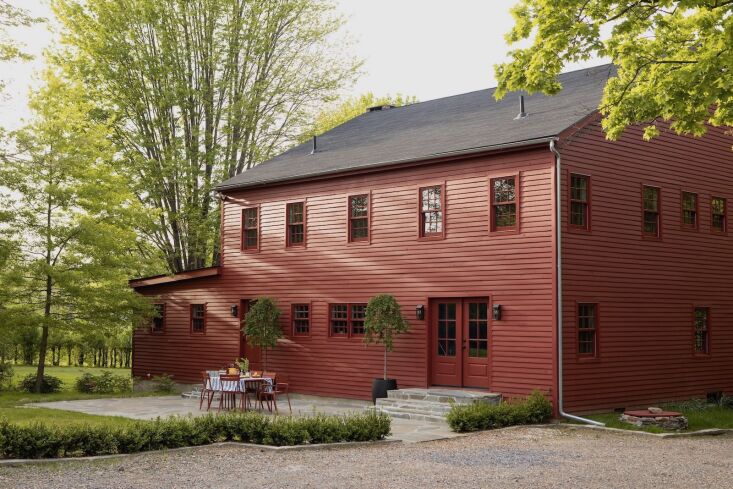
The guest cottage was treated with the same reverence as the main house, featuring stone patios and views of the surrounding meadows. For Amanda and Corbin, the exterior landscape is as much a part of the "living space" as the interior. The stone patios were designed to look as if they had settled into the earth over a century, rather than being laid by a contractor last Tuesday.
Amanda & Corbin’s Top Renovation Tips
If you’re looking to tackle your own "new-old" renovation, take a page from the Pays-Bernsen playbook:
- Source Locally and Seasonally: The couple frequents George Cole auctions and local architectural reclamation yards. Don't just look for "decor"—look for "elements" like beams and mantels.
- The 'Walk Away' Rule: Negotiation is key. Corbin’s tip? "Know your limit. If the price for that antique sink is too high, walk away. There is always another treasure around the corner."
- The Power of Paint: To ensure an "authentic" finish, Amanda often paints cabinets and doors personally. Hand-painting allows for subtle brush strokes that look more historic than a factory-sprayed finish.
- Mixing Heights: Use tall doors or vertical paneling in rooms with low ceilings to create a sense of volume.
- Practical Splurging: Splurge on the things you touch (handles, faucets, ranges) and save on the things you don't (negotiated bulk-buy appliances for secondary spaces).
Get the Look: Hudson Valley Heritage
- Walls: Use Bauwerk Colour or Portola Paints lime wash for that mottled, chalky texture.
- Kitchen: Look for Zellige tiles (hand-molded clay) to add organic imperfection to your backsplash.
- Hardware: Sourced unlacquered brass that will patina over time.
FAQ
How many houses have Amanda Pays and Corbin Bernsen flipped? Over their 36-year marriage, they have successfully renovated and flipped 30 properties, ranging from mid-century modern homes in Los Angeles to historic farmhouses in the Hudson Valley.
Where were the antique doors in the Barnswood project sourced from? The 16 antique English pine doors have a fascinating history; they were originally sourced from Alexandria, Egypt, and transported to a salvage yard in Alabama before Amanda and Corbin discovered them for their New York flip.
What is the 'new-old' design philosophy? It is a design approach that focuses on restoring historical integrity to a newer or poorly renovated home. This is achieved by using reclaimed materials, traditional finishes like lime wash, and architectural elements that give the house a sense of age and "soul."