Our Top Picks
- The Signature Look: A retro-contemporary fusion of 1950s airport lounge aesthetics and warm, tactile materiality that bridges the gap between mid-century charm and modern luxury.
- Social Innovation: A transformative approach to the traditional RSL, evolving into a multi-generational hub featuring pickleball courts and dedicated dog-friendly zones.
- The Verdict: The Club Rose Bay renovation by Akin Atelier and Merivale modernizes the historic 1940s RSL while preserving its communal soul through atmospheric lighting and bespoke joinery.
The 2026 remodel of Club Rose Bay represented a pinnacle of hospitality design, transforming a 1979 RSL institution into a modern community hub while preserving its 1940s architectural DNA through adaptive reuse and layered programming. By balancing heritage soul with contemporary hospitality excellence, the project demonstrates how professional hospitality interior design can revitalize struggling venues into vibrant, multi-functional social anchors.
Balancing Legacy and Modern Hospitality Design
For decades, the Club Rose Bay site stood as a silent witness to Sydney’s coastal history. Originally serving as the base for Australia’s first international airport in the late 1930s, the building eventually transitioned into a traditional Returned and Services League (RSL) club. However, time had not been kind. Before its recent transformation, the venue had remained largely untouched since its last major update in 1979, resulting in a space that felt frozen in time and increasingly disconnected from the evolving Rose Bay community.
The challenge of remodeling historic social clubs often lies in the delicate act of balancing legacy and modern hospitality design. The stakes were high for Club Rose Bay; after facing financial losses of approximately $350,000 in 2022 and $40,000 in 2023, the institution entered voluntary administration in August 2024. Its survival depended on a radical yet respectful reimagining. This led to a landmark partnership with the hospitality group Merivale, a move that the local community met with overwhelming support. In a pivotal January 2025 general meeting, members voted 147 to 1 in favor of the management agreement to breathe new life into the club.
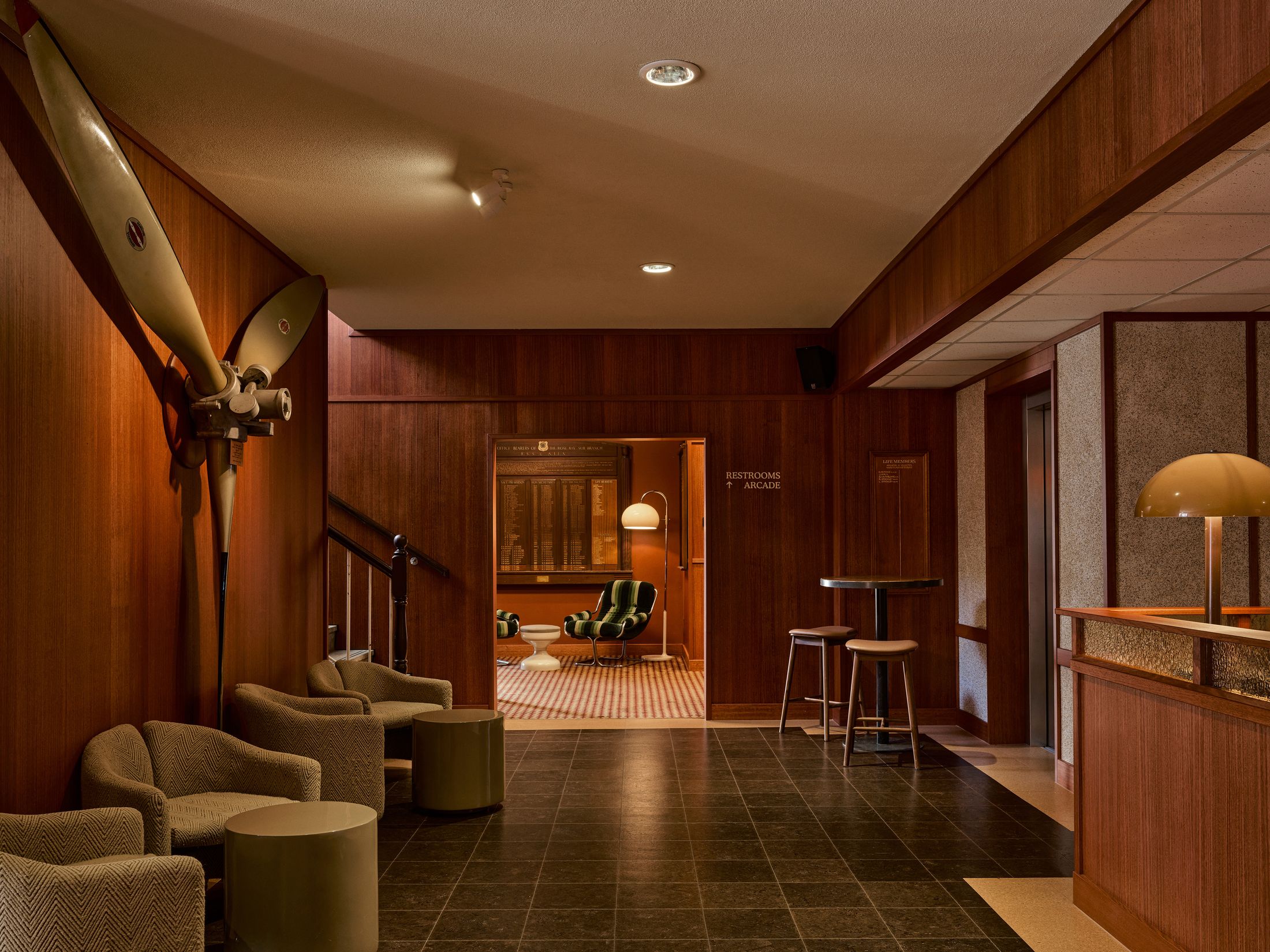
Akin Atelier, the design firm behind the project, leaned heavily into mid-century modernism to honor the site’s 75-year history. Rather than erasing the past, they used visual storytelling to celebrate the jet-age aesthetic of the 1940s and 50s. The result is a venue that feels both nostalgic and fresh, proving that heritage preservation is not about looking backward, but about carrying the spirit of a place into the future.
Tactile Materiality: Material Choices for Warm Hospitality Interiors
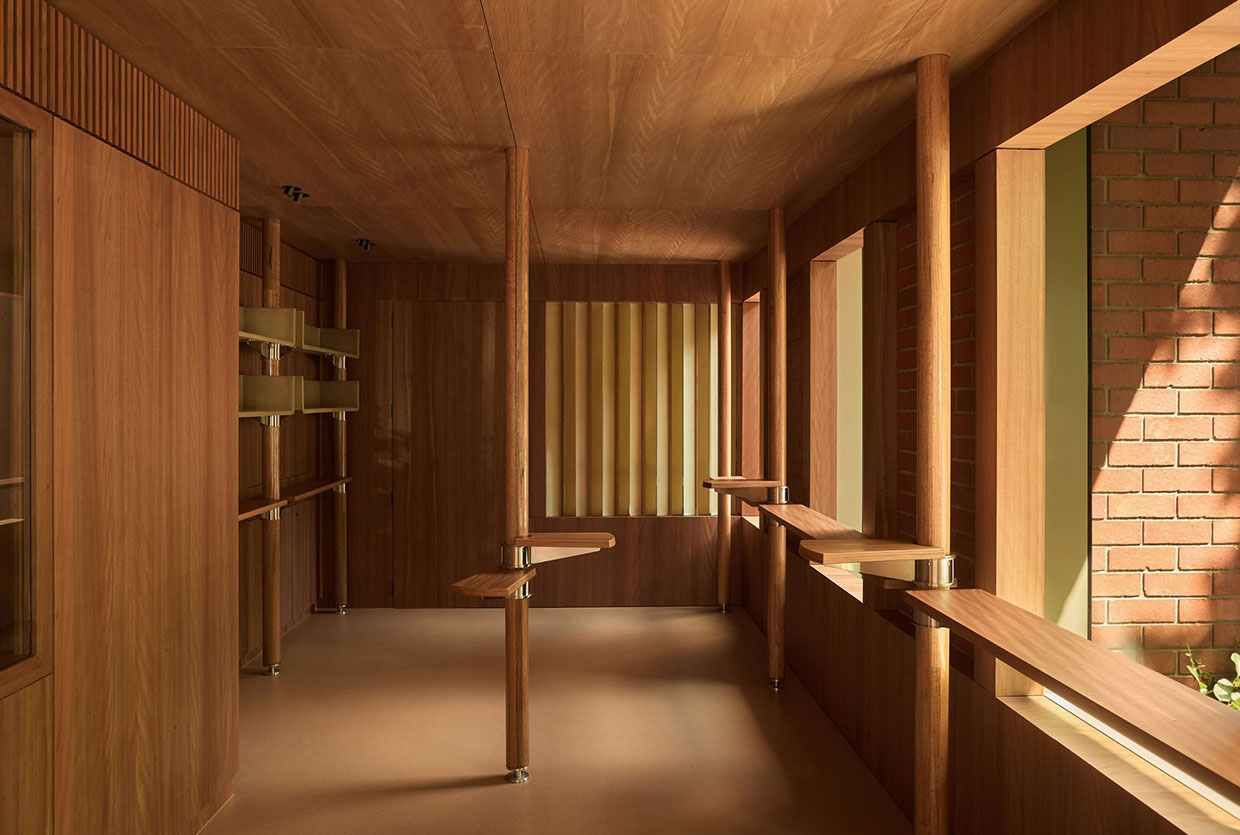
When we discuss high-end hospitality interior design, the conversation often centers on the material palette. For Club Rose Bay, the goal was to foster a sense of community warmth through tactile materiality. The designers avoided the cold, glass-and-steel tropes of modern commercial spaces, opting instead for materials that invite touch and evoke a sense of permanence.
The interior fabric is defined by three key elements:
- Cherry-stained timber: Used throughout partitions and bespoke joinery, this wood provides a deep, saturated warmth that feels inherently sophisticated.
- Corbelled brickwork: A nod to the original mid-century fabric, the textured masonry adds a layer of architectural depth and structural honesty to the walls.
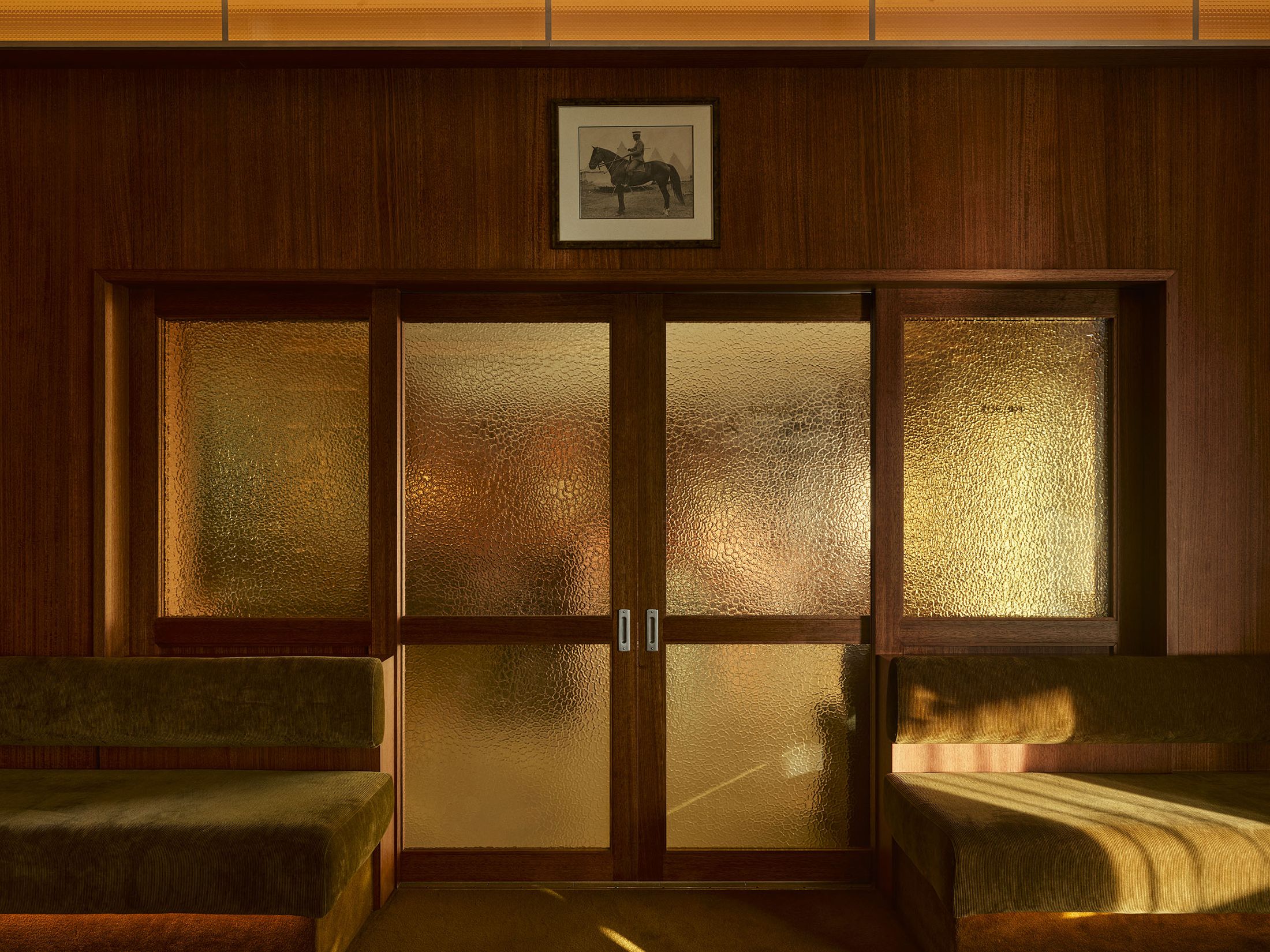
- Hammered glass: This material is used to filter light and create privacy without closing off spaces, maintaining the open, communal flow of the club.
In Notti’s, the club’s flagship dining room, the application of amber-tinted hammered glass is particularly effective. It casts a soft, golden glow across the tables, reminiscent of an eternal sunset. These intentional material choices for warm hospitality interiors ensure that even when the room is empty, it feels inhabited and inviting. The choice of materials serves as a modern reinterpretation of 1940s utility, elevated through refined craftsmanship and atmospheric lighting.
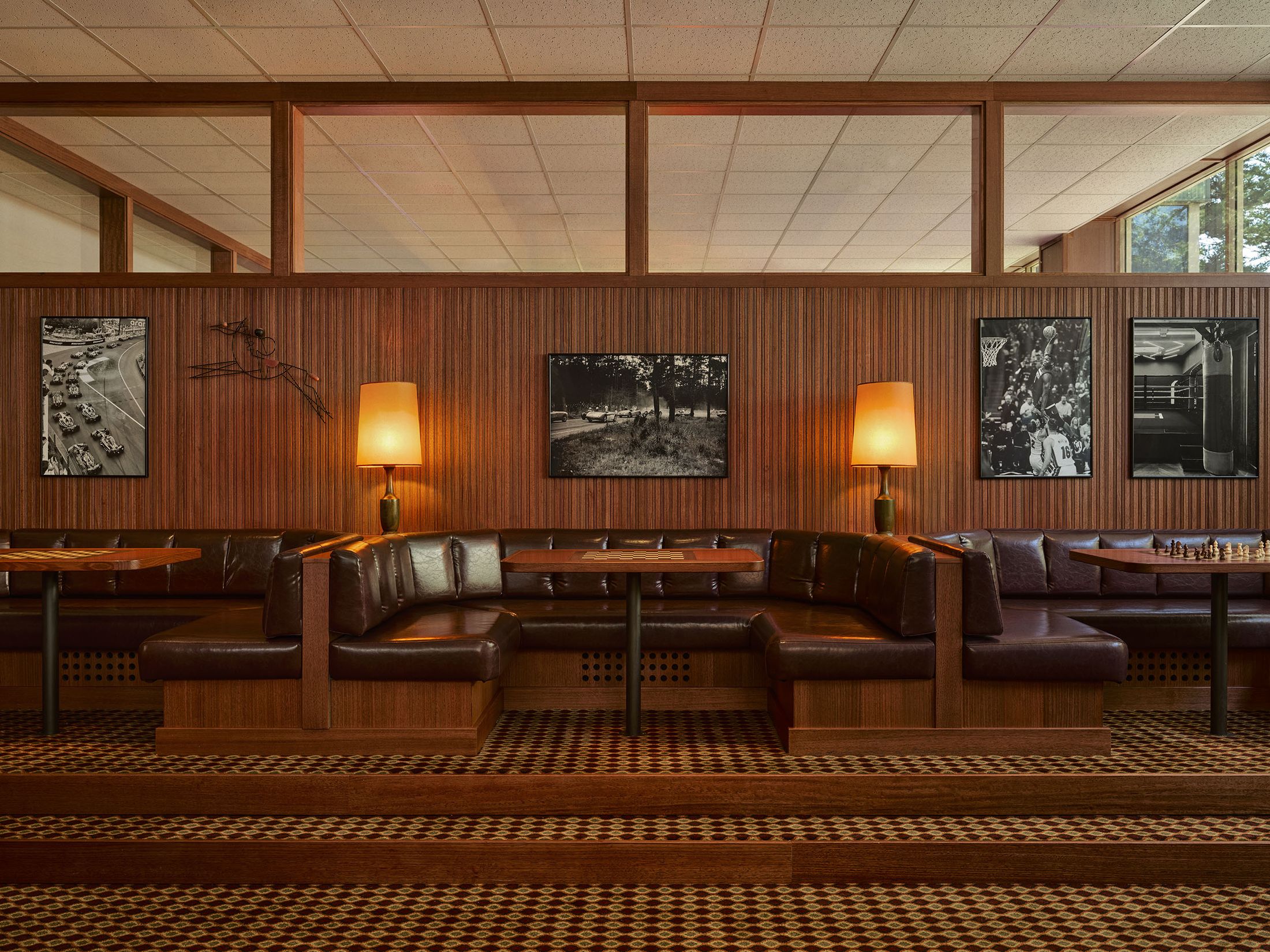
Zonal Programming: From Mr Pop to the Memorabilia Hall
Effective hospitality design relies on zonal programming—the ability to create distinct atmospheres within a single footprint. At Club Rose Bay, the transition between zones is handled with surgical precision. One moment you are in a brightly lit dining area, and the next, you are immersed in the moody, clandestine world of Mr Pop.
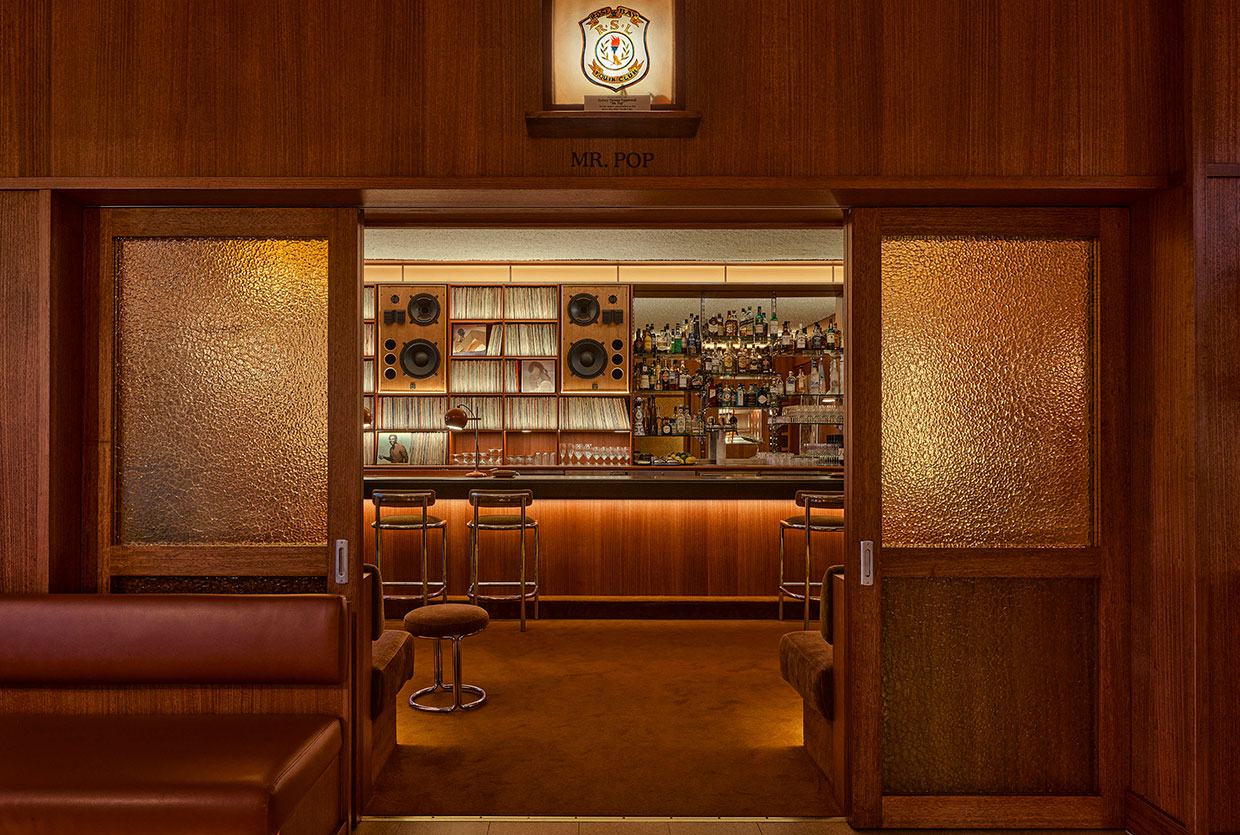
Mr Pop is perhaps the most evocative space in the entire club. Inspired by the site’s aviation history, it serves as a record bar with a distinct jet-age aesthetic. To capture the feeling of a 1950s airport lounge, the designers utilized plush carpeted walls, corduroy banquettes, and custom-milled cherry-wood speakers. Patterned glass lightboxes dot the space, creating a soft peach glow that feels like a scene pulled directly from a vintage travel magazine. This retro-inspired hospitality design tips its hat to the era of glamourous air travel while providing a contemporary local hangout.
Contra-distinct to the high-energy vibe of the record bar is the Memorabilia Hall. This is the ceremonial heart of the club, where the traditional functions of an RSL are preserved with dignity.
- Ode of Remembrance: The space is designed to host daily moments of reflection, integrated seamlessly into the modern hospitality environment.
- Architectural Symmetry: High ceilings and cherry-stained timber partitions create a sense of reverence without feeling dated.
- Curation: Veteran memorabilia is displayed in custom-milled cases, treating history as a curated gallery rather than a cluttered attic.
By separating these zones while maintaining a consistent material language, the design respects the diverse needs of its members—from those seeking a quiet place to reflect to younger visitors looking for a sophisticated cocktail experience.
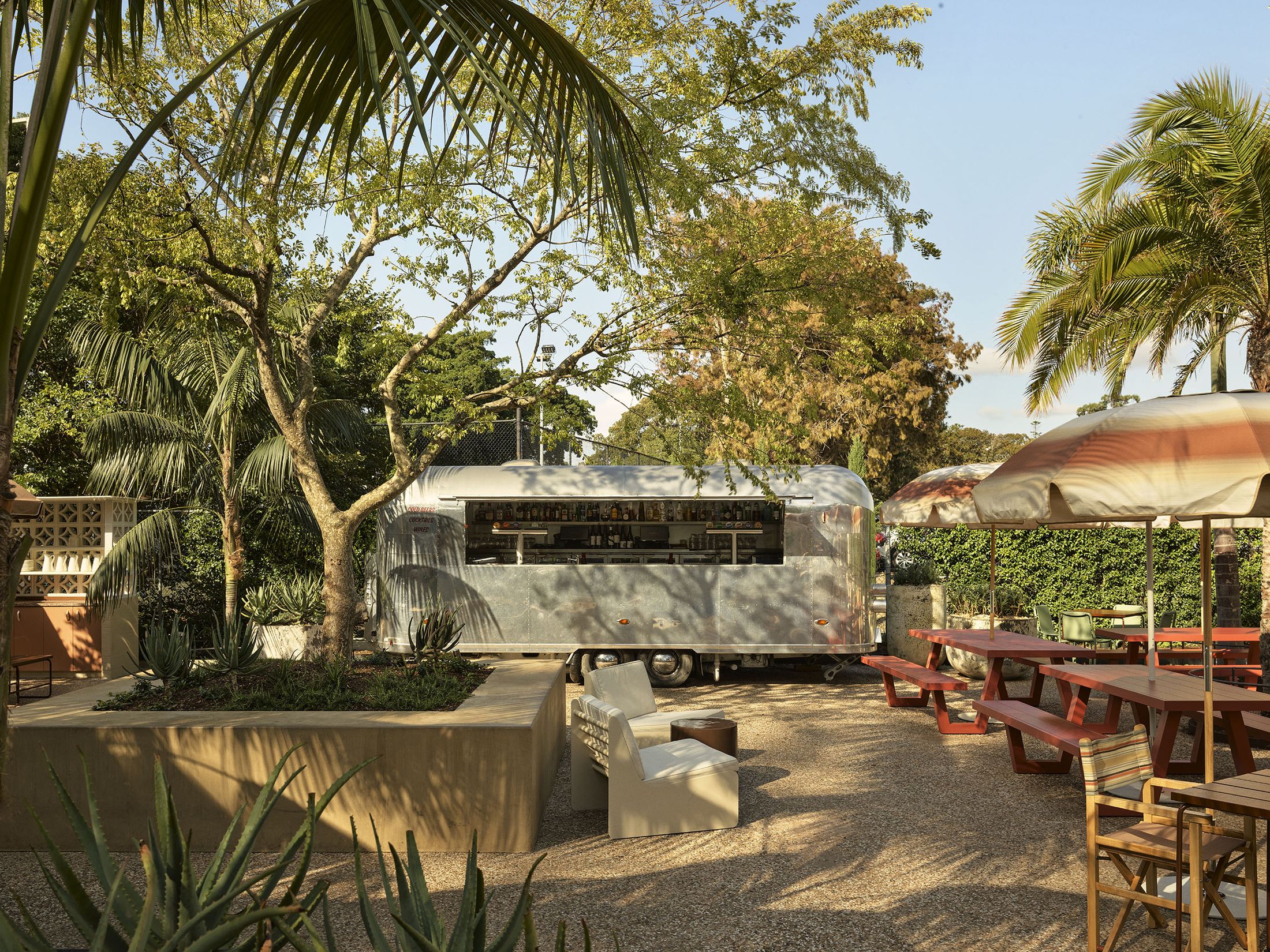
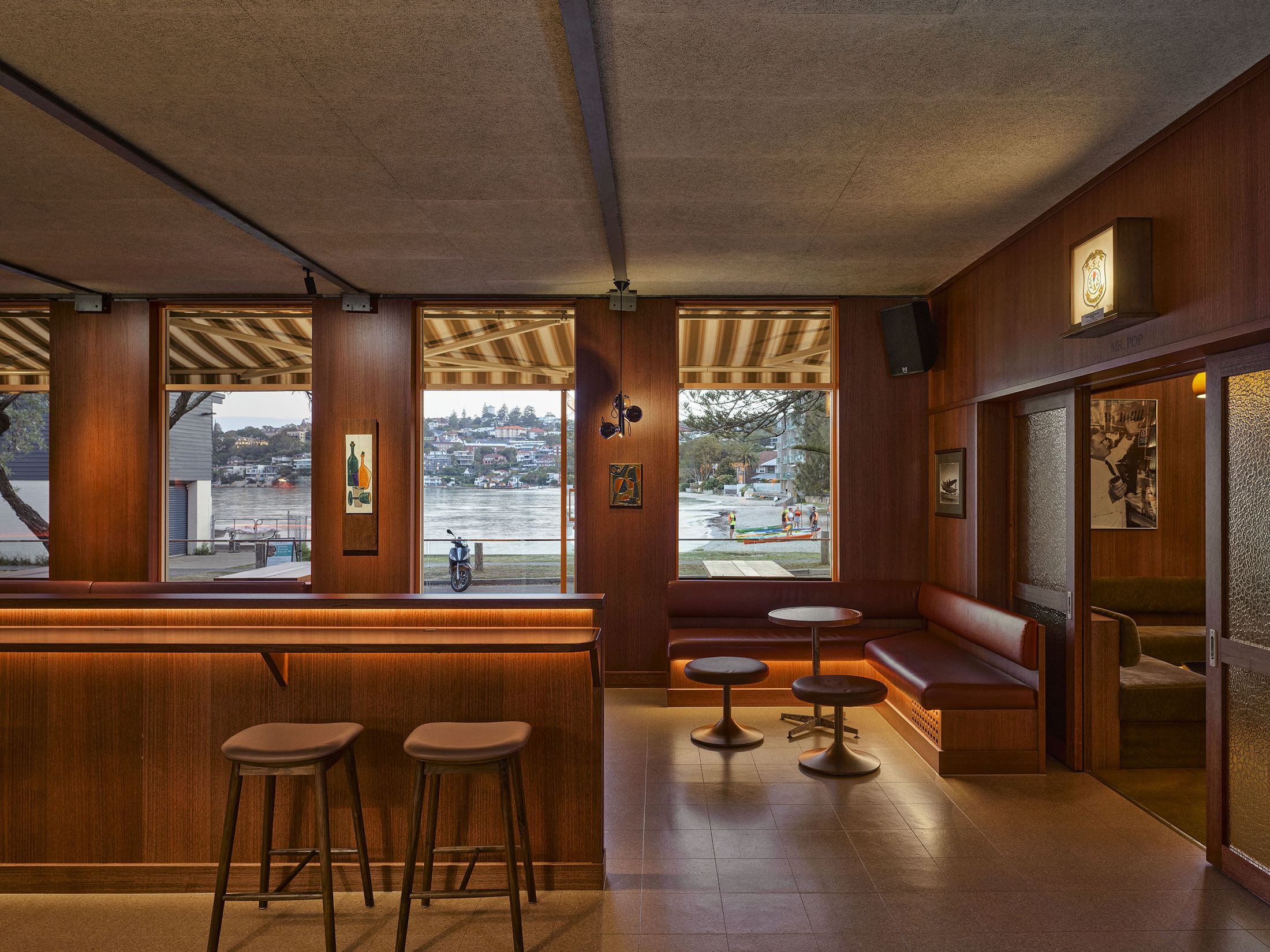
The Future of Community Hubs: Beyond the Bar
What makes the 2026 remodel of Club Rose Bay truly stand out is its commitment to lifestyle amenities that go beyond food and beverage. In an era where social clubs must compete with a myriad of entertainment options, adaptive reuse strategies must include diverse programming. The comprehensive refurbishment, completed in December 2025, introduced features that would have been unthinkable in the 1979 iteration.
Modern hospitality design now frequently incorporates wellness and activity-based socialising. At Club Rose Bay, this manifests as:
- A full-size pickleball court: Tapping into the world's fastest-growing sport to attract a dynamic, health-conscious demographic.
- Half basketball court: Providing a space for local youth and casual play.
- Dog-friendly Airstream bar: An outdoor, alfresco dining area that welcomes the four-legged members of the Rose Bay community.
These additions have turned the club into a 24/7 destination, moving away from the "night-only" bar culture of the past. It is this forward-thinking approach that led to the project being shortlisted for the hospitality design awards 2026. The success of the venue proves that by evolving the Australian RSL culture into a broader social club typology, these institutions can remain relevant, profitable, and beloved for another 75 years.
FAQ
What is hospitality design?
Hospitality design is a specialized branch of interior design and architecture focused on creating spaces for the hospitality industry, including restaurants, bars, hotels, and social clubs. It balances aesthetic appeal with high-traffic functionality, prioritizing guest experience, atmospheric lighting, and strategic flow to ensure both comfort and operational efficiency.
How to become a hospitality designer?
To become a hospitality designer, one typically earns a degree in interior design or architecture. Specialized coursework or internships focusing on commercial kitchen layouts, hotel brand standards, and building codes for public spaces are essential. Building a portfolio that showcases masterclass in hospitality design projects and staying updated via a hospitality design magazine are also key steps for career growth.
What are the 5 types of hospitality?
The 5 main types of hospitality generally include Food and Beverage (restaurants/bars), Accommodation (hotels/resorts), Travel and Tourism (airlines/cruises), Entertainment (theaters/social clubs), and Meetings/Events (conferencing). Each sector requires a tailored approach to interior design to meet specific guest expectations.
Who owns Hospitality Design magazine?
Hospitality Design magazine is owned by Emerald X, a leading operator of business-to-business trade shows and conferences. The publication is a primary source for industry news, highlighting winners of the hospitality design awards and exploring emerging trends in global venue aesthetics.