Modern Office Design: Structural Innovation and the Suspended Capsule in Ningbo
Quick Facts
- Project Name: MAX Show Office & Sales Centre
- Location: Ningbo MAX Zone Technology Park
- Hero Feature: Column-free suspended conference capsule
- Fit-out Cost: $900 – $3,300 per square meter (2026 forecast)
- Lobby Height: 28-foot structural ceiling
- Core Strategy: Five-Floor Vertical Innovation Lifecycle
- Primary Objective: Activity-based working and structural symbolism
Modern office design is no longer just about floor plans; it is about symbolic architecture. In Ningbo’s MAX Zone, the suspended conference capsule serves as a dramatic centerpiece for workplace innovation. Innovative workplace layout strategies in 2026 are best exemplified by structural elements like Ningbo's suspended capsules, which symbolize a shift toward activity-based working and architectural adaptability. This modern office design approach integrates industrial prototype workshops with flexible spatial modules to foster intentional collaboration.
The Vertical Innovation Lifecycle: A Five-Floor Strategic Blueprint
In contemporary commercial architecture, the concept of vertical functional zoning has evolved from a simple floor-stacking exercise into a narrative of corporate growth. The MAX Show Office in Ningbo utilizes its five stories to represent the Innovation Lifecycle, a progression that moves from public symbolism to high-precision engineering and, finally, to strategic leadership. This multi-level workspace strategy ensures that the building is not just a container for employees but a tool for organizational development.
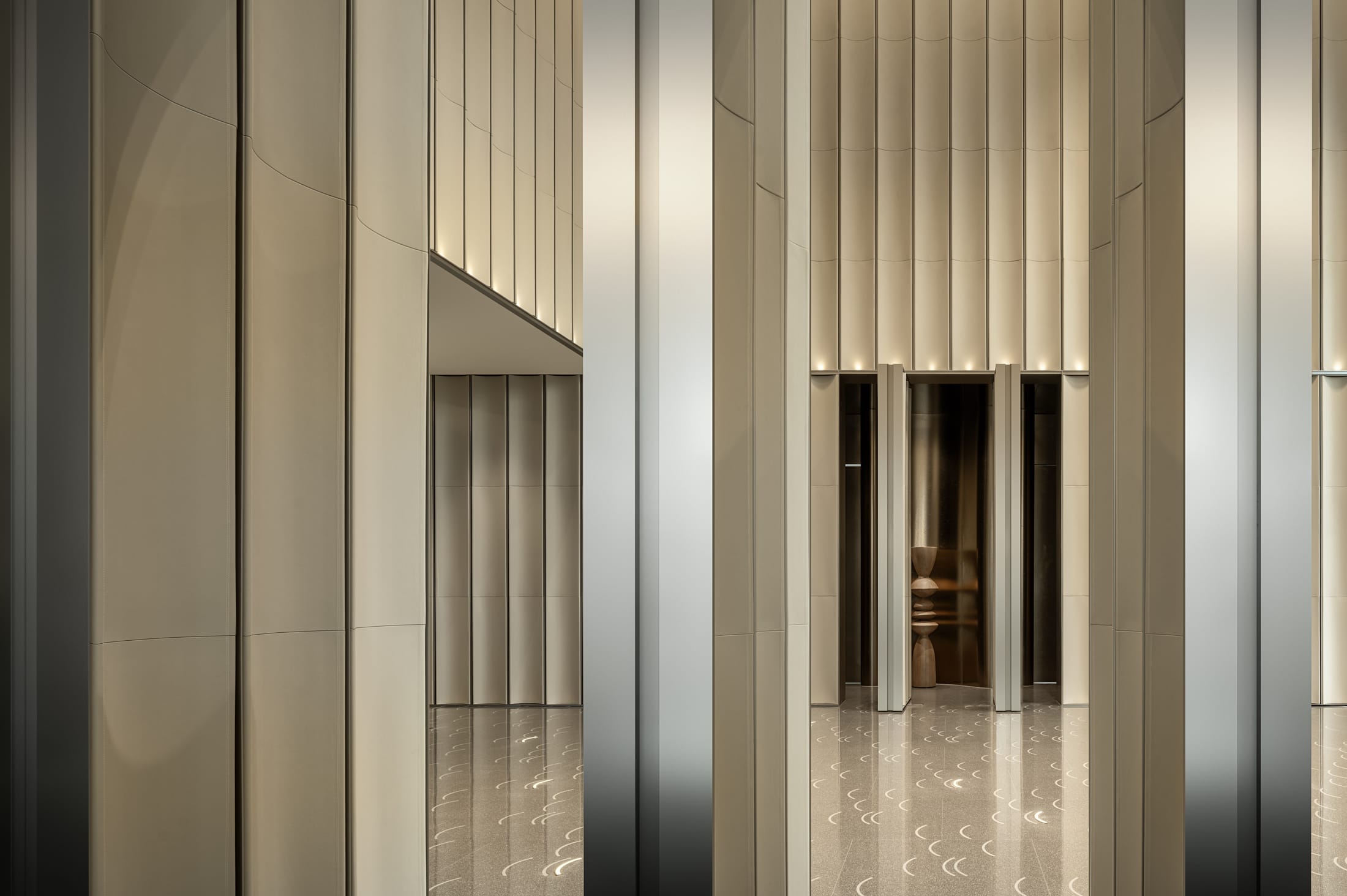
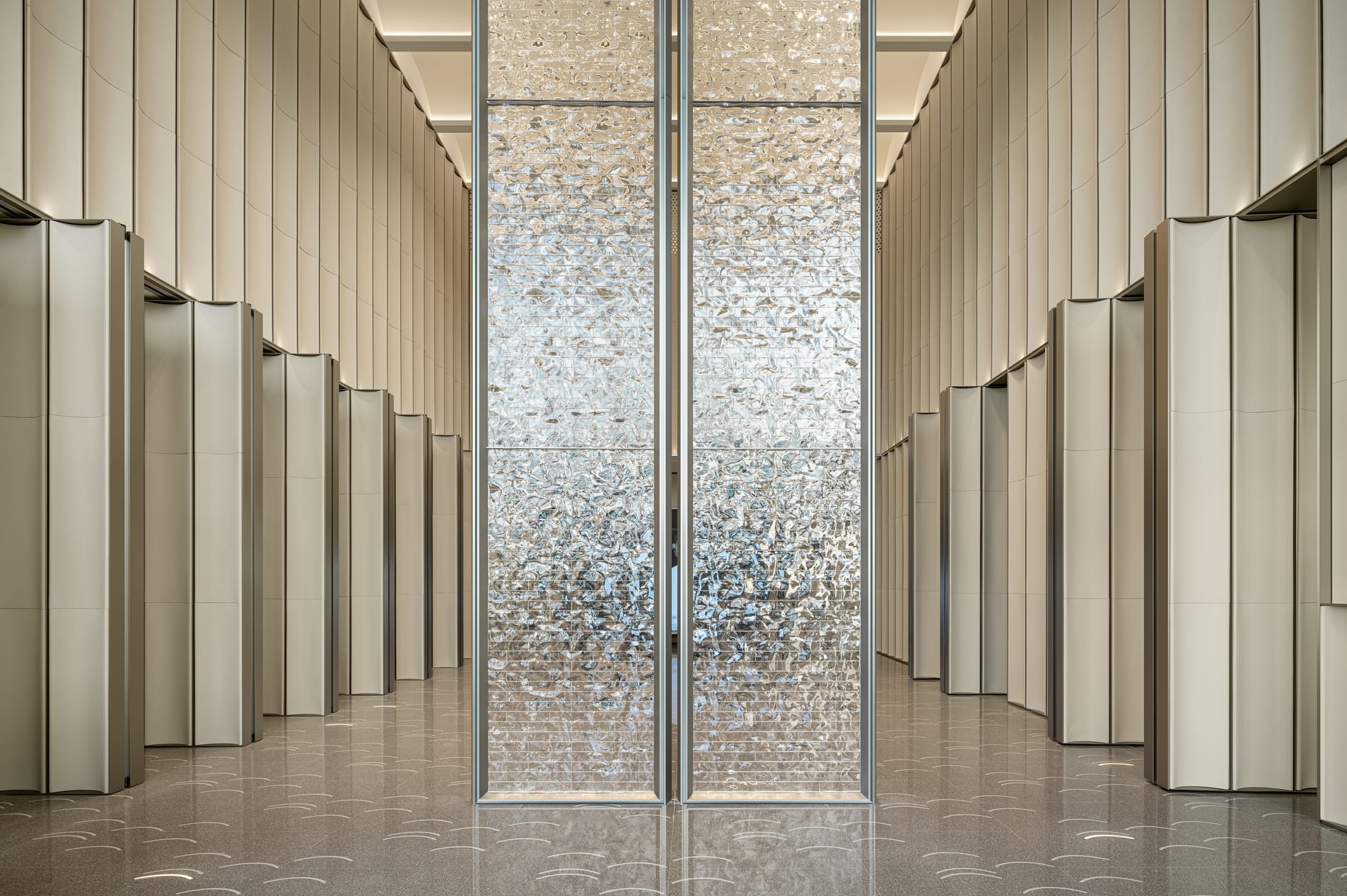
The ground floor acts as a symbolic theater. With its 28-foot ceiling, it serves as the architectural manifestation of a company's vision, utilizing spatial flow and wayfinding to guide visitors toward the heart of the innovation process. As one ascends, the environment shifts. The second and third floors transition into an iterative workspace, housing the collaborative R&D hub where engineering and design teams converge. This is where creative office design ideas move from theoretical sketches to physical reality.
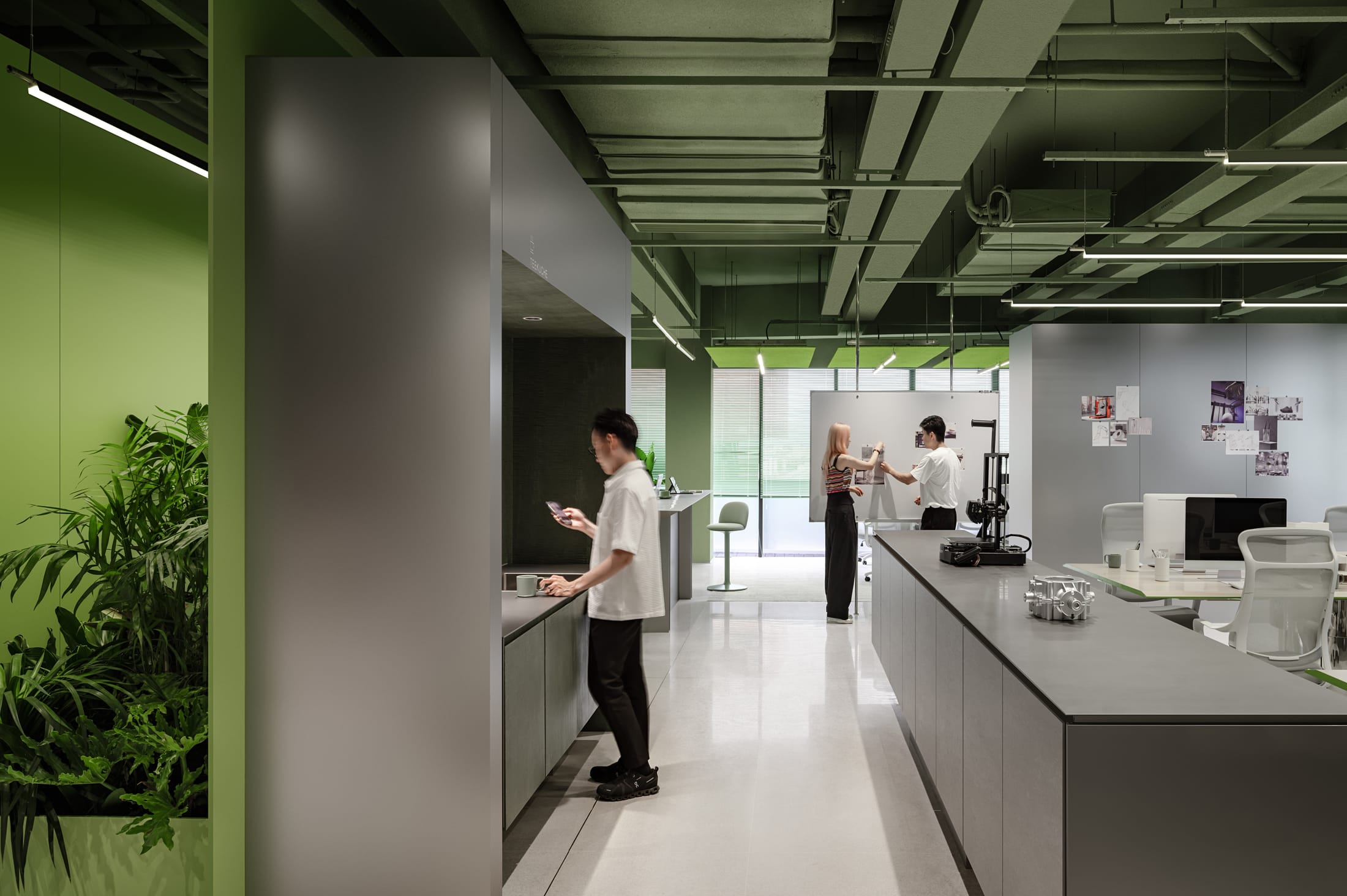
Designing for serendipity requires more than just an open floor plan; it requires the intentional placement of social magnets. By strategically locating coffee bars and informal meeting zones between the hard-tech R&D labs and the administrative zones on the fourth floor, the layout encourages cross-pollination between disparate departments. This innovative workplace layout for tech companies is built on the premise that the next breakthrough often happens in the transit spaces between formal meetings.
When companies consider how to plan flexible office space, they must account for the neuroarchitecture of the building. The upper levels are reserved for deep-focus leadership zones and a lounge that takes design cues from luxury hotels. By varying the sensory inputs—from the cold, industrial materials of the prototyping labs to the warm, acoustic-dampening textures of the executive suites—the building supports the full spectrum of cognitive work required in a modern office design.
Structural Innovation: The Suspended Dialogue Capsule
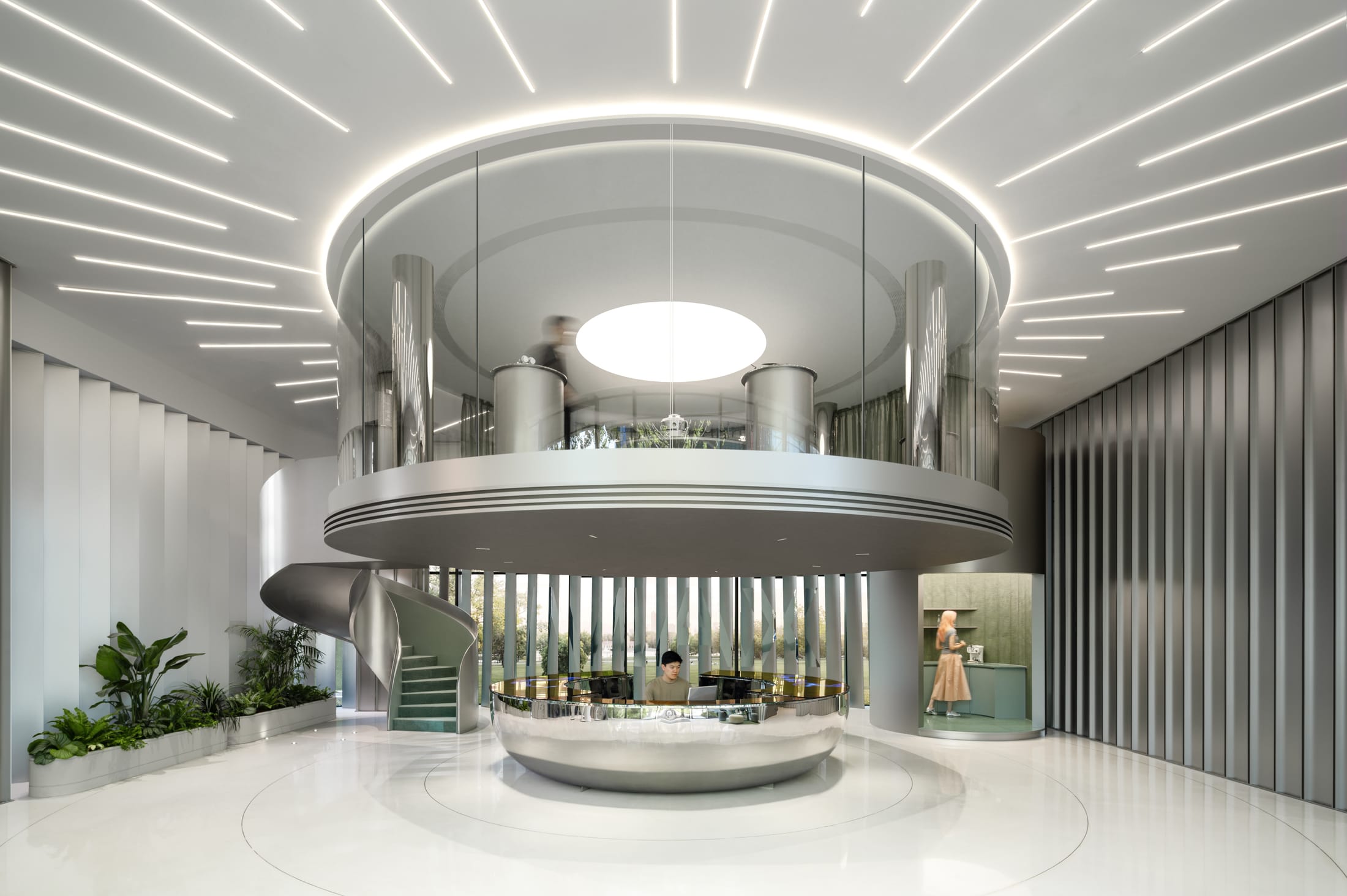
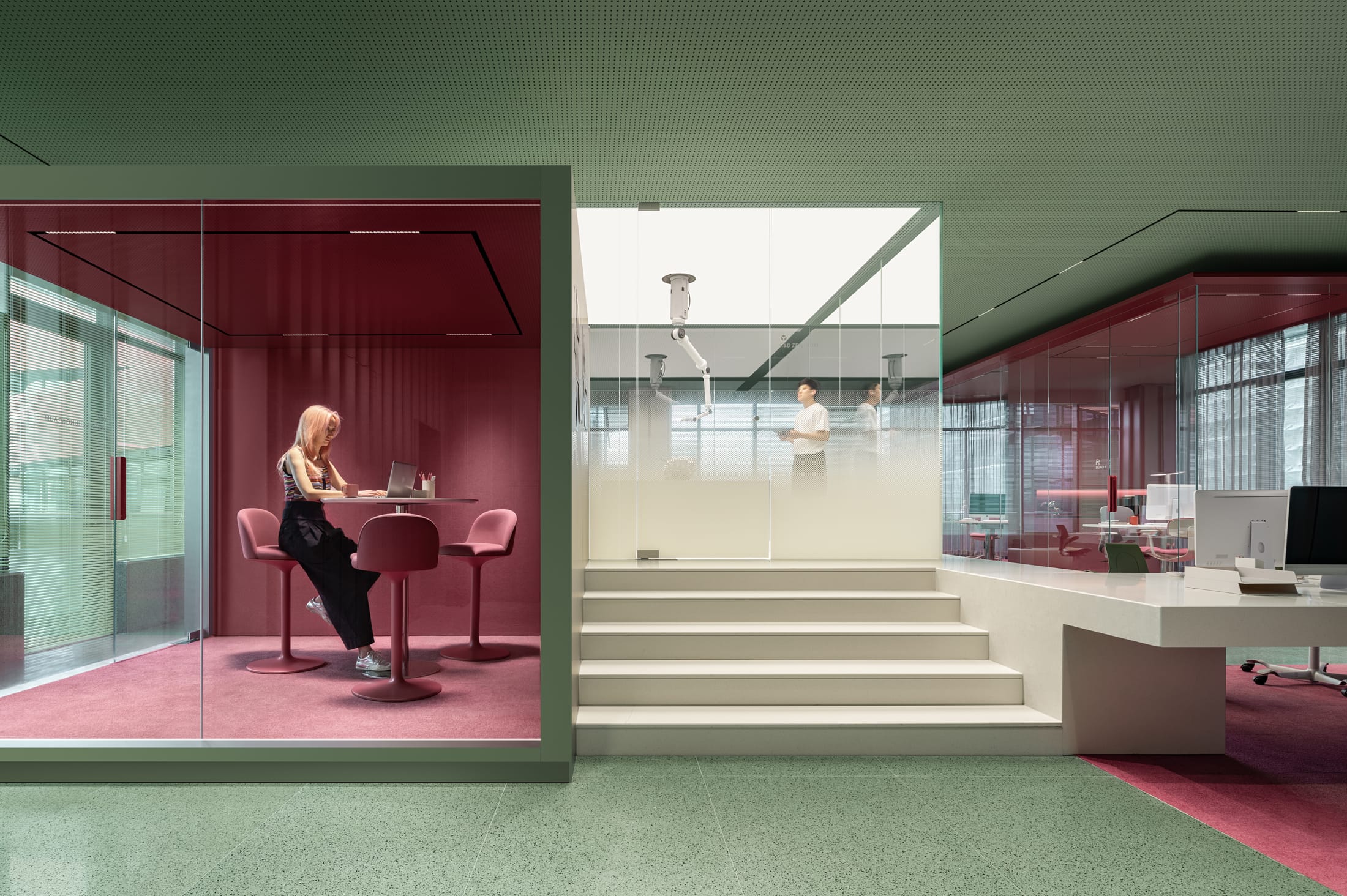
The defining feature of the MAX Show Office is its structural architectural innovation consisting of a conference capsule dramatically suspended above its lobby. This floating element is more than a visual gimmick; it is a dialogue-focused design that challenges the traditional hierarchy of the workplace. By removing supporting columns, the design creates an unobstructed spatial flow beneath, maintaining the transparency and openness of the entry sequence.
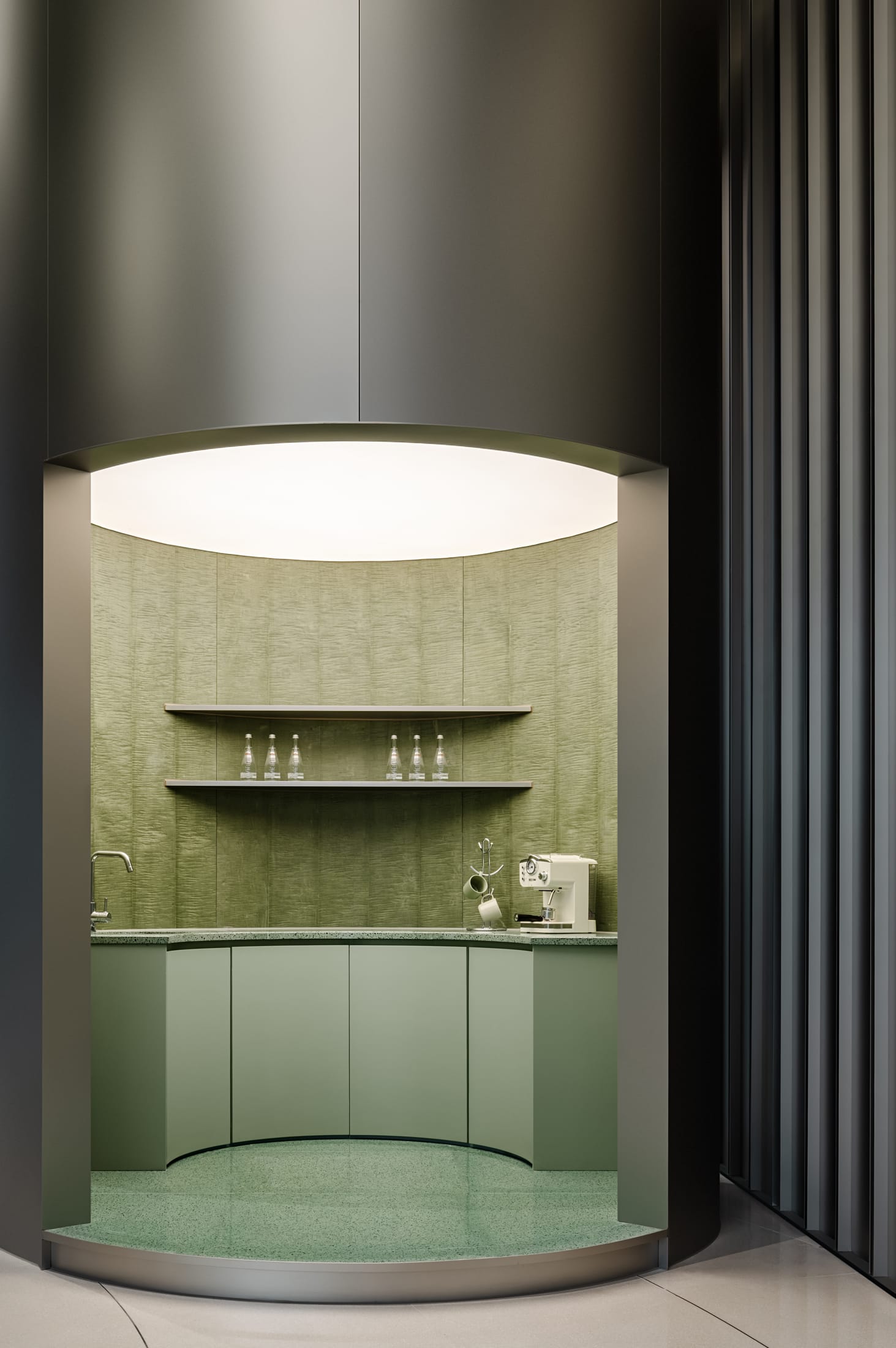
Architecturally, the capsule bridges Ningbo’s maritime history with its future as a tech manufacturing powerhouse. The choice of materials is deliberate. The exterior is clad in anodized aluminum, reflecting the industrial precision of the 2026 era, while the interiors often feature sea-green terrazzo, a subtle nod to the city’s coastal identity. This blend of industrial functionality and local cultural aesthetics is a hallmark of a contemporary Chinese courtyard symmetry, reimagined for a vertical environment.
Engineering Statistics
- Ceiling Height: 28-foot total lobby clearance to accommodate the mezzanine.
- Capsule Support: High-tension structural suspension system for a column-free experience.
- Material Palette: Anodized aluminum cladding, sea-green terrazzo, and high-transparency glass.
- Function: Enclosed meeting environment with 360-degree views of the innovation zones.
The suspended structural elements represent the levitation of ideas. Inside the capsule, the atmosphere is optimized for high-stakes decision-making. The modern office layout for collaboration usually focuses on wide-open spaces, but the capsule provides a necessary counterpoint: a secluded, elevated sanctuary for concentrated dialogue. These suspended conference room design ideas are increasingly popular in high-tech headquarters where the symbolic value of the boardroom must match the innovative output of the labs below.
Designing the Prototype Workshop and R&D Lab
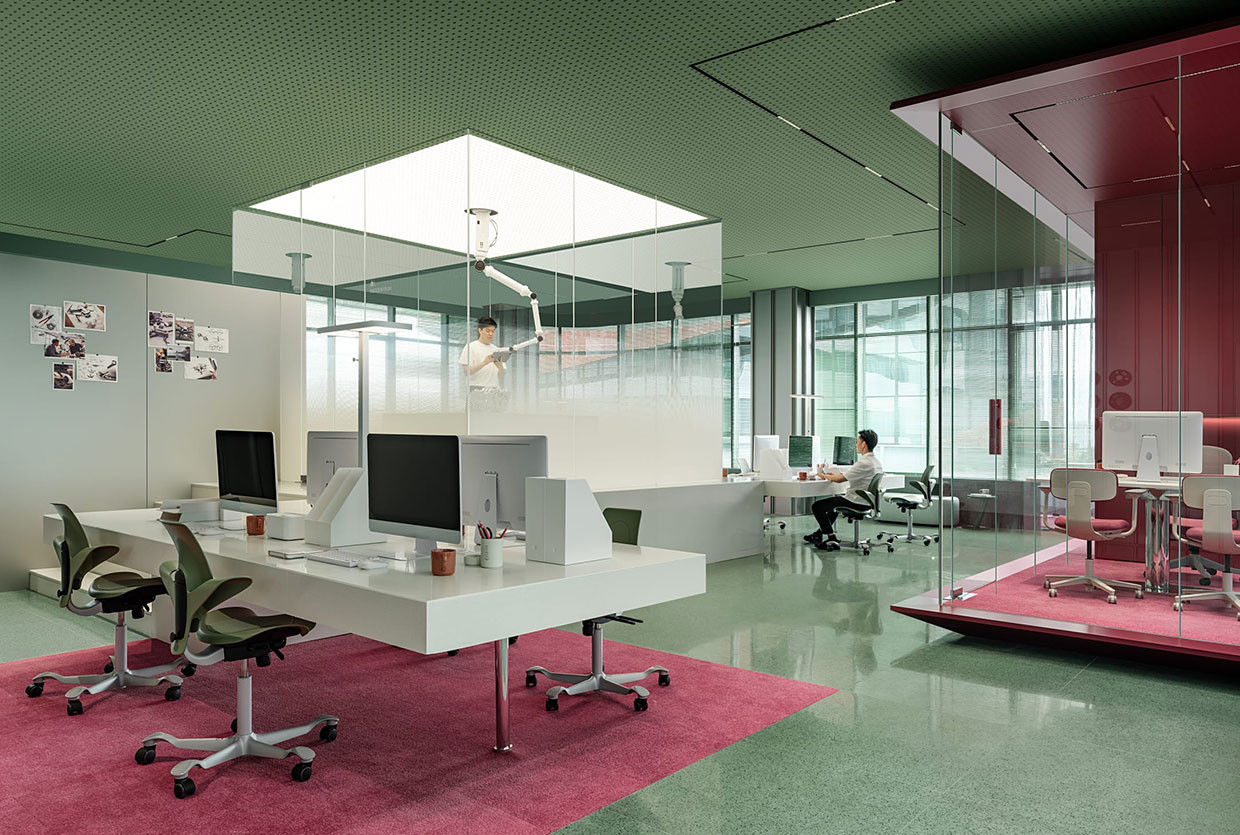
The pivot toward activity-based working has necessitated a change in how we view industrial spaces within the office hub. In the Ningbo project, the industrial prototype workshop is not hidden in a basement; it is integrated into the primary spatial flow. By placing the workshop and its 3D printing integration on the second floor, the design team ensures that the "makers" are visible to the "thinkers," reducing the friction between conceptual design and physical prototyping.
Specialized modern office design ideas for the R&D floor prioritize architectural adaptability. The labs are built on raised platforms with underfloor infrastructure, allowing for rapid reconfiguration of heavy machinery and testing equipment. These hybrid-use zones allow a space to function as a high-focus laboratory in the morning and a collaborative assembly area in the afternoon.
- Iterative Flow: Positioning 3D printing labs adjacent to collaborative zones to speed up the feedback loop.
- Acoustic Segregation: Using glass partition walls to maintain visual transparency while providing the noise insulation required for high-focus privacy.
- Flexible Spatial Modules: Implementing movable workbenches and overhead power drops to ensure the lab can evolve with new technology.
When designing a prototype workshop in office settings, the challenge lies in balancing the "dirty" work of manufacturing with the "clean" environment of corporate administration. Ningbo solves this through materials that are both durable and aesthetically refined. Polished concrete floors and exposed structural steel provide the necessary industrial durability, while integrated lighting and ergonomic flexible spatial modules keep the space feeling human-centric and professional.
The Business Case: ROI and 2026 Fit-out Benchmarks
Investing in structural innovation like a suspended capsule requires a robust economic justification. In the current global market, office utilization rates have stabilized at approximately 54%, leading many firms to prioritize quality over quantity in their real estate portfolios. High-concept modern office design serves as a talent magnet, reducing the long-term costs of recruitment and retention. By creating a physical environment that cannot be replicated at home, companies justify the return to the office.
The financial framework for a project of this scale involves a tiered approach to fit-out costs. Based on 2026 benchmarks, a standard high-quality office might range from $900 to $1,500 per square meter, but specialized zones like the Ningbo capsule and the R&D labs can push those figures toward $3,300 per square meter. The justification for this premium lies in future-proof office infrastructure. A building that can adapt its layout without major structural demolition has a much lower total cost of ownership over a ten-year cycle.
Economic Benchmarks (2026 Context)
- Standard Fit-out: $900 – $1,500 /sqm (Open plan, standard modularity).
- Specialized Innovation Zones: $2,500 – $3,300 /sqm (Suspended structures, R&D labs).
- Utilization Target: Aiming for a 20% increase in spatial efficiency through hybrid-use zones.
- Energy Efficiency: Integration of automated climate control for the 28-foot lobby to manage loss factors.
Effective flexible office space planning focuses on reducing the loss factors associated with static, underused desks. By shifting the budget from fixed workstations toward high-impact collaborative zones and modular layouts, developers can create a resilient work environment. Architectural adaptability is no longer a luxury; it is a fiscal necessity in a volatile business landscape where headcount and technology requirements can change in a single quarter.
FAQ
What are the key elements of modern office design?
The core elements include activity-based working zones, flexible spatial modules, and technology-integrated environments. A modern office design prioritizes a mix of collaborative spaces, such as huddle rooms and open-plan areas, and private zones for deep-focus work. Additionally, sustainable materials and wellness-focused features like natural lighting and biophilic design are essential for the contemporary workplace.
How does modern office design impact employee productivity?
Thoughtful design reduces cognitive load and physical fatigue by providing ergonomic furniture and varied work settings. By offering spaces tailored to specific tasks—such as quiet zones for analysis and social hubs for brainstorming—modern office design allows employees to choose the environment that best suits their current needs, leading to higher efficiency and reduced burnout.
What are the latest trends in modern office design?
Trends for 2026 focus on architectural adaptability and hybrid-use zones that can transition between social and professional functions. We are seeing a rise in the use of structural metaphors, such as suspended meeting rooms, and the integration of industrial prototype workshops directly into the office floor to foster faster innovation. Neuroarchitecture, which focuses on the psychological impact of space, is also becoming a primary consideration.
How do you integrate technology into modern office design?
Integration starts with future-proof office infrastructure, such as raised flooring for easy cable management and high-density wireless networks. Modern offices also utilize smart building systems to monitor occupancy and environmental conditions. Incorporating specialized tech like 3D printing labs and advanced acoustic dampening in meeting capsules ensures that the physical space supports the digital tools employees use daily.
Why is acoustic design important in modern offices?
In an open-plan environment, noise is the leading cause of distraction and reduced productivity. Effective acoustic design uses a combination of sound-absorbing materials, acoustic baffles, and strategic zoning to manage sound levels. For specialized structures like a suspended conference capsule, high-performance glass and insulation are critical to ensure that sensitive discussions remain private and free from external lobby noise.
Conclusion
The MAX Show Office in Ningbo stands as a testament to the power of structural boldness in the corporate realm. By moving beyond the mundane and embracing the challenges of a column-free, suspended conference capsule, the project redefines the potential of a workplace layout. It proves that when modern office design is grounded in both symbolic narrative and economic reality, it becomes a powerful engine for innovation.
In an era where the purpose of the office is being redefined, Ningbo’s blueprint offers a compelling answer: the workplace must be a destination that inspires. Through its vertical innovation lifecycle and intentional collaboration model, it provides a resilient framework for the future of work. For workplace leaders, the message is clear—prioritizing architectural adaptability and structural innovation is the key to building an environment that is as dynamic as the people who inhabit it.