Imagine walking down the sun-drenched Avenue de Sarrià in Barcelona, where the air smells faintly of salt and espresso. You pause before a storefront that feels less like a traditional beauty salon and more like a curated sanctuary. This is GxBar Barcelona—a masterclass in how commercial architecture is pivoting toward a "Modern Mediterranean" identity for 2026. Gone are the tired terracotta clichés and dusty lavender bunches of the past; in their place, we find a sophisticated blend of raw, sun-baked textures, industrial precision, and a "soul-driven" layout that redefines how we interact with retail spaces.
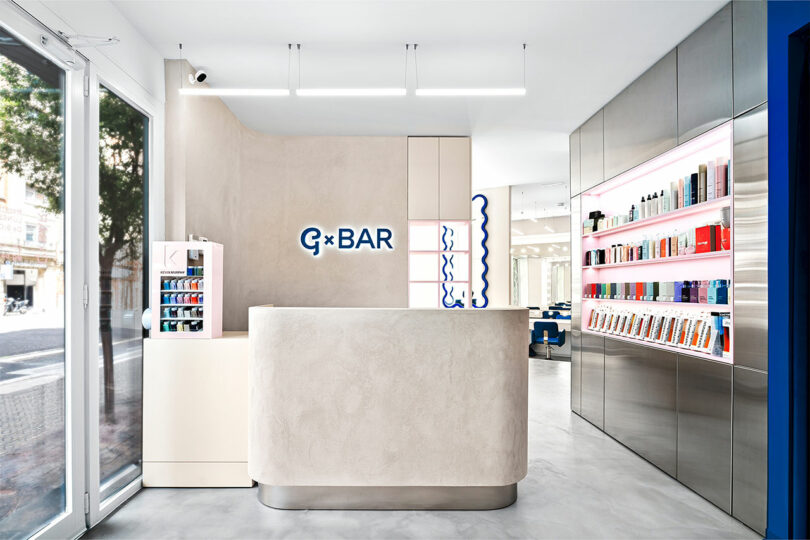
The GxBar project, a collaboration between the visionary Ukrainian brand GxBar and the architectural precision of HVYLYA design, serves as the ultimate blueprint for the next generation of boutique commercial interiors. At its core, GxBar Barcelona's interior design is characterized by a blend of warm Mediterranean sandy tones, bold cobalt blue accents, and functional zoning that balances open-concept services with private treatment areas. It’s an environment that doesn’t just offer a service; it stages an experience.
The GxBar Blueprint: Mastering Small-Space Commercial Identity
Designing for a compact commercial footprint requires more than just aesthetic flair—it requires a surgical approach to spatial logic. Located at 21 Av. de Sarrià, GxBar occupies a modest 1,055 square feet. For many business owners, this size feels restrictive, but HVYLYA design utilized it as a canvas for high-impact efficiency. By moving away from rigid walls and instead using "soft" partitions and material shifts, the architects transformed a tight floor plan into an airy, multi-functional hub.
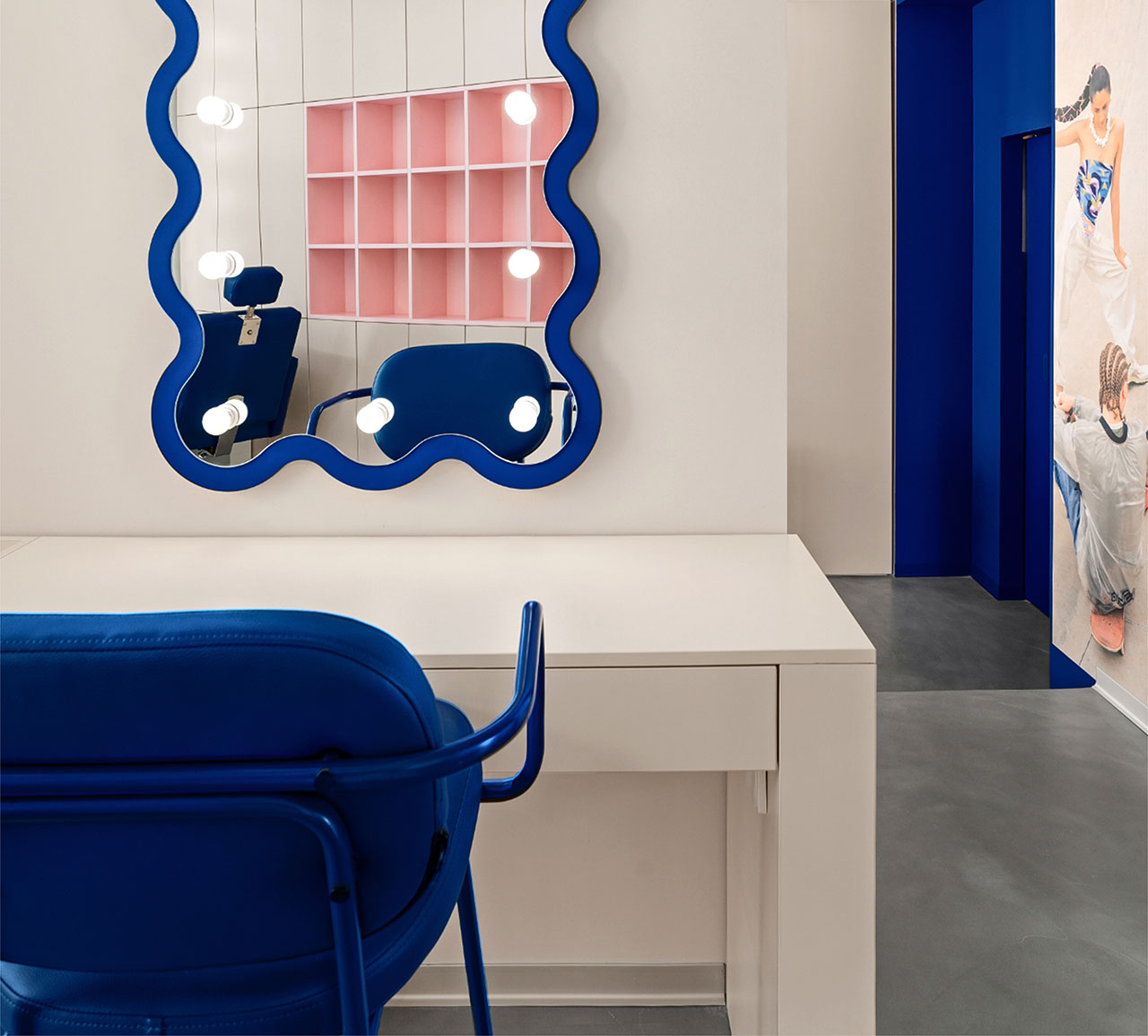
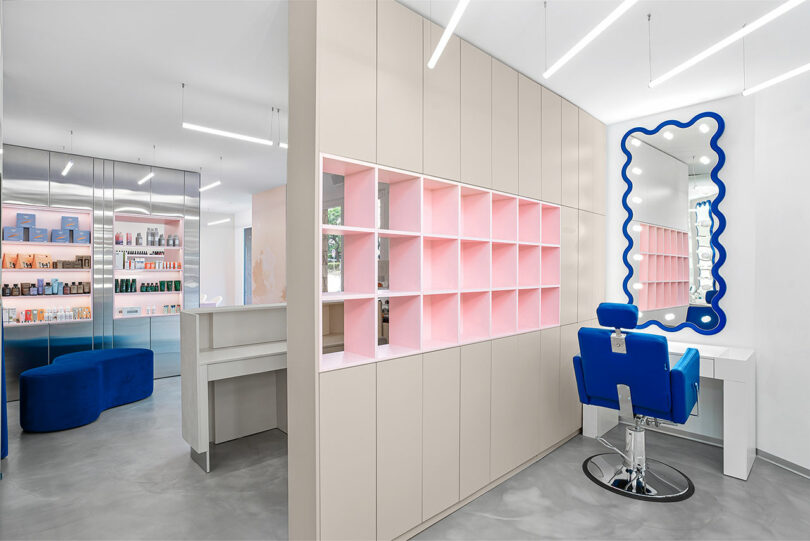
One of the most striking elements of this spatial optimization is the use of partially covered display windows. Rather than fully exposing the interior to the street—which can leave clients feeling like they are in a fishbowl—the design uses strategically frosted or obstructed sections. This creates an intimate, "insider" feel while still allowing natural light to flood the manicure and makeup stations. To maintain a fluid "spatial choreography," the team integrated custom furniture, such as the sculptural Oito mirrors and the minimalist Sled chairs, which provide functionality without visual clutter.
The results of such meticulous planning are backed by data. Strategic zoning techniques, like those implemented in GxBar, have been shown to increase perceived square footage by up to 35% in boutique retail environments. When a space feels larger and more intuitive to navigate, the customer's stress levels drop, and their willingness to explore (and spend) increases.
2026 Trend Watch: Curated Maximalism and Tactile Textures
As we look toward 2026, the dominant narrative in commercial architecture is shifting from "cold minimalism" to what I call Curated Maximalism. It’s not about clutter; it’s about the deliberate layering of high-contrast textures and "hero" colors to create a memorable brand identity.
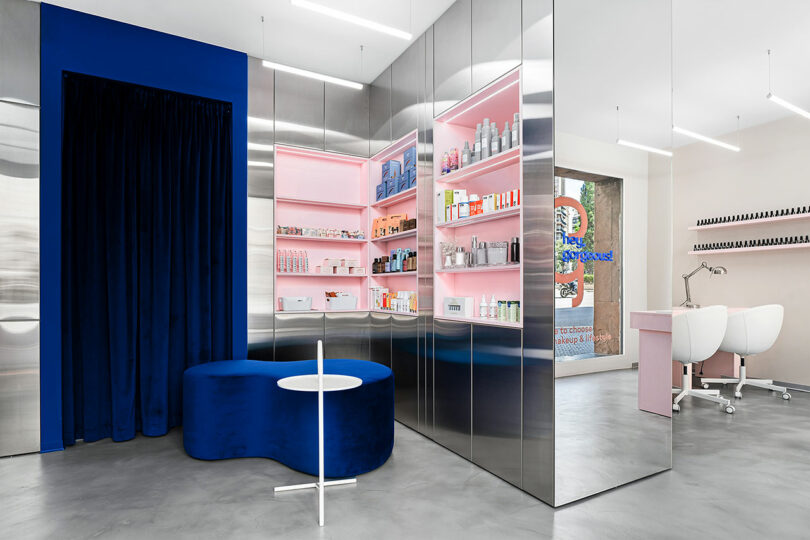
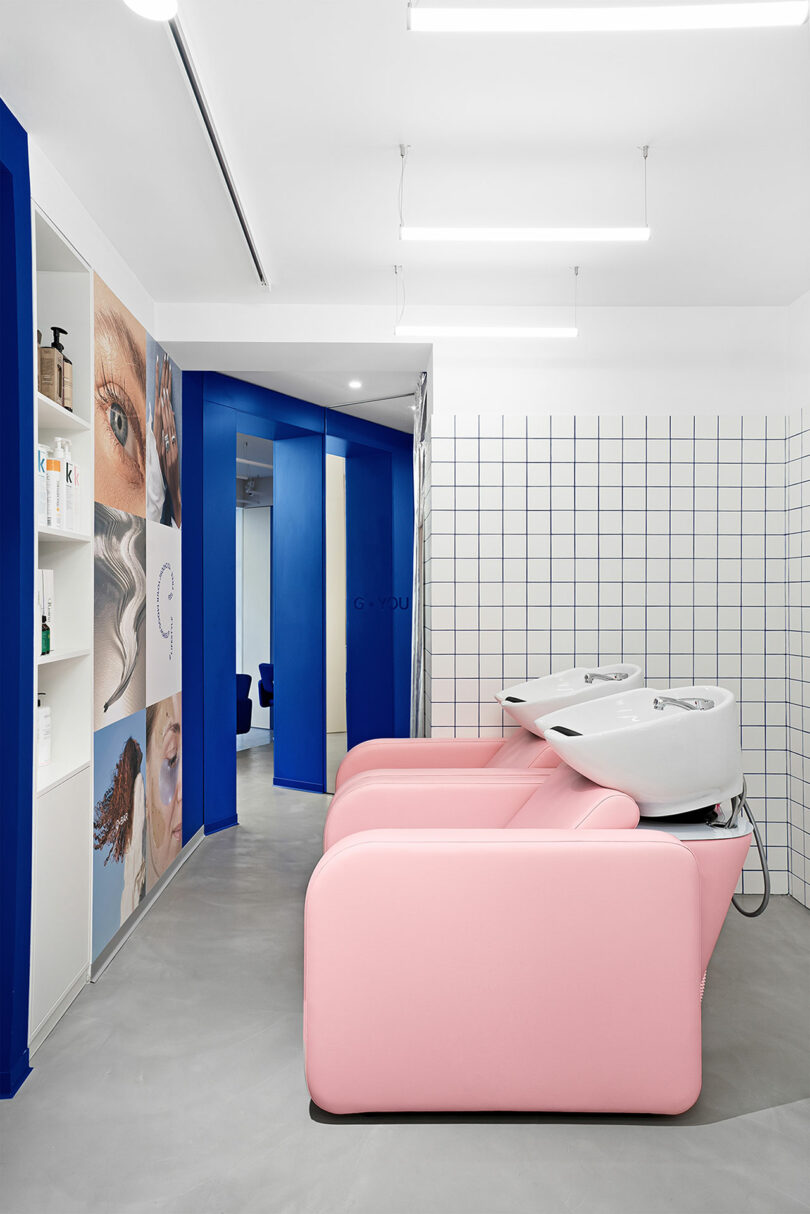
At GxBar, this trend is realized through the juxtaposition of artisanal textures—think lime-wash walls and Venetian plaster—against sleek, high-tech finishes. The star of the show is undoubtedly the iconic "GxBar Blue." This high-voltage cobalt doesn't just decorate the space; it anchors it. It appears in the upholstery, the custom fixtures, and even the architectural accents, providing a modern counterpoint to the warm, sandy backdrop.
| Feature | Traditional Minimalism | 2026 Curated Maximalism |
|---|---|---|
| Color Palette | Monochromatic, neutral | Earthy neutrals + one "Power Accent" (e.g., Cobalt) |
| Texture | Smooth, uniform | Artisanal (Lime-wash, pitted plaster, raw metal) |
| Furniture | Mass-produced, hidden | Bespoke, sculptural "Hero" pieces |
| Lighting | Standardized overhead | Biophilic tech-integrated & layered ambient |
This "Resi-mercial" influence—a portmanteau of residential and commercial—is a direct response to our post-pandemic desire for comfort. We want our commercial spaces to feel as welcoming as a high-end living room but with the professional polish of a global brand.
The Sensory Canvas: Engineering the 4D Commercial Experience
Modern Mediterranean identity is not just seen; it is felt. In the 2026 design landscape, we are seeing a move toward "4D Sensory Engineering." This means that architects are no longer just thinking about how a space looks on Instagram, but how it sounds, smells, and feels to the touch.
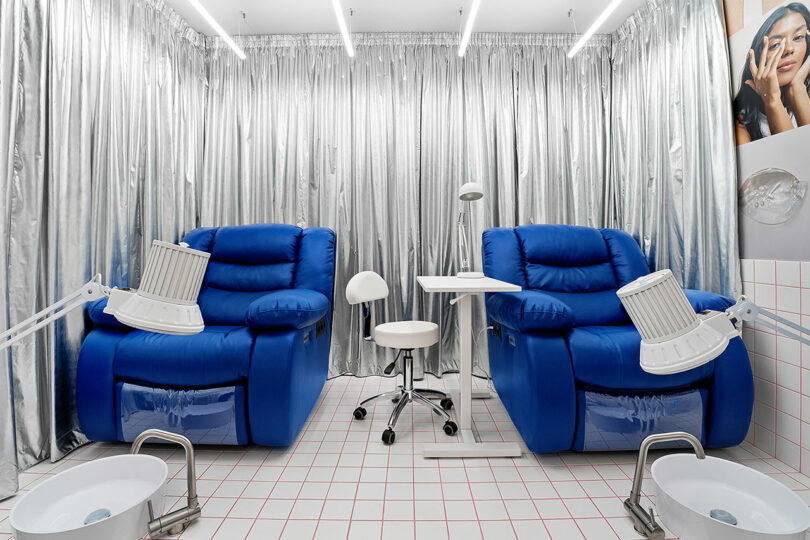
The HVYLYA design for GxBar optimizes its 1,055 square feet by integrating sensory elements that delineate zones. For example, the transition from the bustling hair and makeup stations to the private skincare rooms is marked by a shift in acoustics and texture. Metallic silver curtains act as flexible, shimmering boundaries that offer privacy for clients while adding a futuristic, tactile edge to the room.
The importance of this sensory layering cannot be overstated. Market analysis for 2026 indicates that integrating 4D sensory elements—such as tactile lime-wash walls and specialized acoustic engineering—can improve client retention rates by 22% in commercial beauty spaces. When a client feels "wrapped" in a sensory experience, the service becomes an escape, making them far more likely to return.
Ivy’s Style Tip: When applying these principles to your own project, don't overlook the "underfoot" experience. Transitioning from a hard poured-concrete floor to a textured artisanal tile can subconsciously signal to a customer that they have entered a "slower," more luxurious zone of the store.
High-Performance Safety: Transparency Without Sacrifice
In commercial architecture, beauty must always be backed by brawn. One of the biggest challenges for 2026 is meeting rigorous safety standards—like fire-rated compartmentation—without breaking the visual flow of an open-concept Mediterranean design.
The trend is moving toward fire-rated glazed systems that offer the same slim profiles as standard glass. High-performance solutions allow designers to maintain sightlines across the entire salon, ensuring brand awareness and "visual energy" remain high, while still complying with EN/WELL standards. This "invisible safety" is crucial for boutique spaces where every inch of visibility counts toward making the space feel expansive and connected.
Future-Proofing: Tech-Integrated Nature and the 'Philosophy of Savoring'
Finally, we must talk about the "Philosophy of Savoring" (Sobremesa). The GxBar Barcelona design encourages clients to linger. Whether it’s through the comfortable Sled chairs or the inviting artisanal tile work, every detail is a pushback against the "fast beauty" culture.
Future-proofing your commercial space for 2026 means integrating technology that supports this slower pace. We’re seeing:
- Biophilic Tech: Self-watering vertical gardens that improve indoor air quality.
- Smart Lighting: LED systems that transition from "energetic morning" light to "warm golden hour" glow as the day progresses.
- Smart Layouts: Designing "decompression zones" where clients can sit with a coffee before or after their treatment.
Conclusion: Architecture as a Strategic Identity Asset
The GxBar Barcelona project proves that Mediterranean commercial design is no longer just about geography; it’s about a feeling of warmth, humanity, and climate-responsive intelligence. By blending bold cobalt accents with tactile, sandy textures and mastering the art of small-space zoning, HVYLYA design has created a space that is both a functional business engine and a poetic retreat. For business owners in 2026, investing in these architectural principles isn't just a design choice—it's a strategic identity asset that drives client loyalty and brand value.
FAQ
1. How can I implement "Curated Maximalism" in a small retail space without it feeling cluttered? The key is the "Hero Piece" strategy. Choose one or two bold architectural elements—like an oversized custom mirror or a vibrant accent wall in GxBar Blue—and keep the rest of the furniture minimalist and low-profile. This provides visual impact without overwhelming the floor plan.
2. Why is lime-wash and Venetian plaster becoming so popular in commercial spaces again? These materials offer "visual depth" that flat paint cannot achieve. In an era of digital saturation, customers crave tactile, hand-finished surfaces. Lime-wash also has natural anti-fungal properties and provides a soft, matte finish that photographs beautifully for social media.
3. What is the most important factor in designing a beauty salon for 2026? Zoning for privacy vs. community. As GxBar shows, you need the "energy" of an open hair/makeup floor, but you must balance it with "sensory-quiet" zones for private treatments. Using materials like metallic curtains or acoustic glass allows you to achieve this balance without building heavy, dark walls.