Imagine the gentle hum of a suburban Tokyo diner at 2:00 PM. In one booth, a student is cramming for an exam; in another, a screenwriter sketches out a plot over bottomless coffee; across the aisle, a salaryman finishes a report. There is a specific kind of focused energy found in these communal spaces—an "independent-togetherness" that traditional corporate offices often fail to replicate.
When KOKUYO, Japan’s titan of stationery and office furniture, sought to create a new "learning hub" in Tokyo, they didn't look to Silicon Valley tech campuses. Instead, they tapped the architectural firm DDAA to translate the DNA of the Japanese family restaurant (famiresu) into a 5,317-square-foot masterpiece of hybrid interior architecture. The result is KOKUYO DIG: a space that challenges the binary of "private vs. open" and instead fosters a child-like curiosity for lifelong learning.
The Psychology of the Space: Designing for Natural Impulses
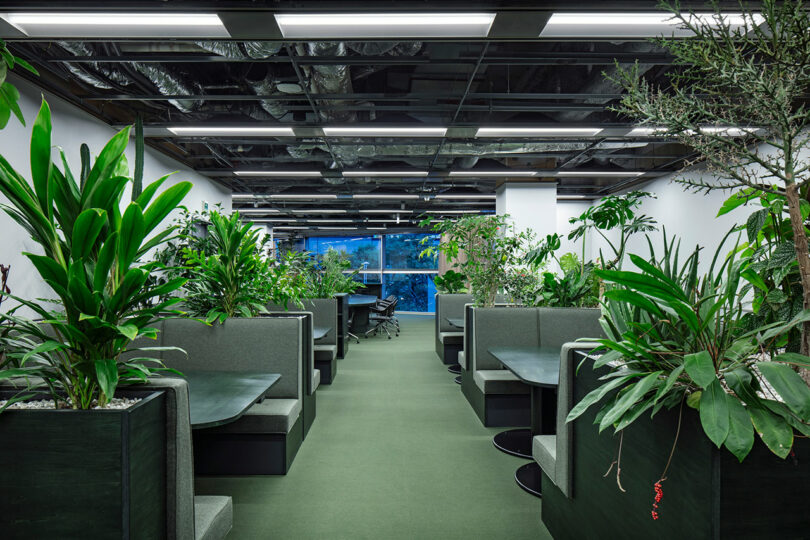
The core philosophy behind KOKUYO DIG is the realization that you cannot force curiosity, but you can design for it. DDAA moved away from the sterile, high-pressure aesthetics of traditional corporate styling to embrace a typology that sparks imagination. In the famiresu model, the high-backed booth provides a psychological "nest," allowing for deep concentration while remaining connected to the ambient energy of the room.
At KOKUYO DIG, this is manifested through "independent work in a communal environment." The design recognizes that modern professionals—much like students—perform best when they have the freedom to choose their level of engagement. By integrating KOKUYO’s own high-performance furniture as catalysts for creative activity, the space feels less like a place of "labor" and more like a sanctuary for "purposeful exploration."
Editor’s Insight: The genius of the "famiresu" approach lies in the removal of the "boss's gaze." When an office feels like a public third space, employees feel a greater sense of autonomy, which is the primary driver of creative risk-taking.
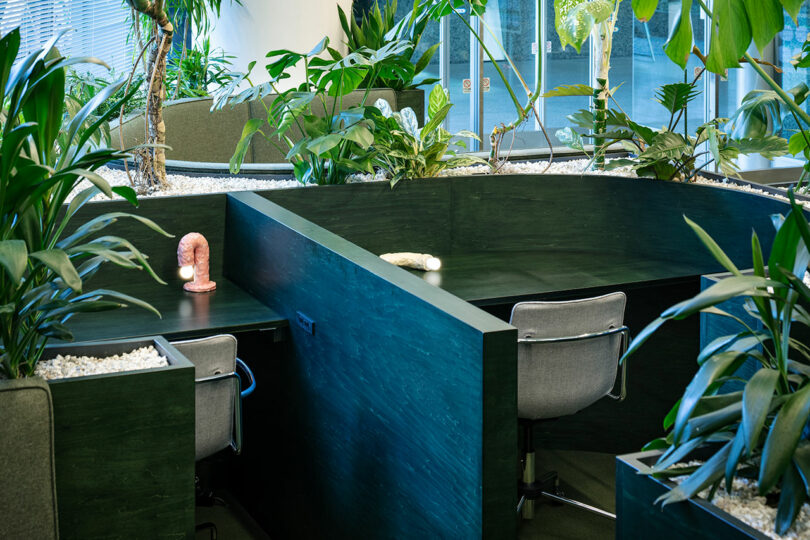
Design Move 1: The Vertical Split and Rising Sightlines
Spanning exactly 5,317 square feet, the KOKUYO DIG headquarters utilizes a sophisticated dual-level architectural plan. Unlike traditional two-story offices that create silos, DDAA implemented a vertical logic that optimizes visibility and movement across both floors.
The spatial configuration is designed so that sightlines gradually rise from the center of the office toward the back. This intentional slope ensures that even when the space is at full capacity, it never feels claustrophobic. The first floor acts as the "foundation," housing a comprehensive library for deep work and research. The second floor, meanwhile, serves as the high-energy "active zone," featuring a snack bar and a supply dock.
| Feature | Level 1: The Library | Level 2: The Hub |
|---|---|---|
| Primary Function | Deep Research & Concentration | Collaboration & Socialization |
| Acoustic Profile | Dampened, quiet, "Library-esque" | Vibrant, conversational, active |
| Seating Logic | Seated, ergonomic concentration | Standing desks & "Fat Furniture" booths |
| Visual Element | Floor-to-ceiling archives | Open snack bar and supply docks |
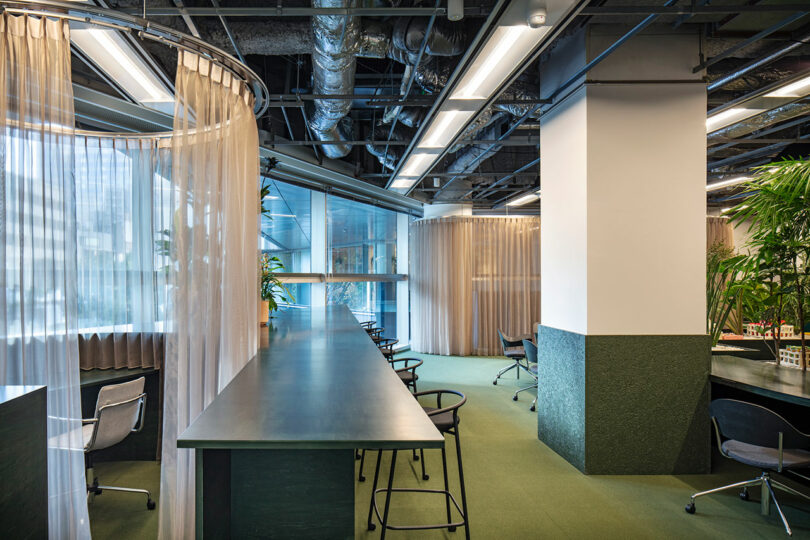
Design Move 2: Biophilic Partitions and the 2026 ‘Green’ Standard
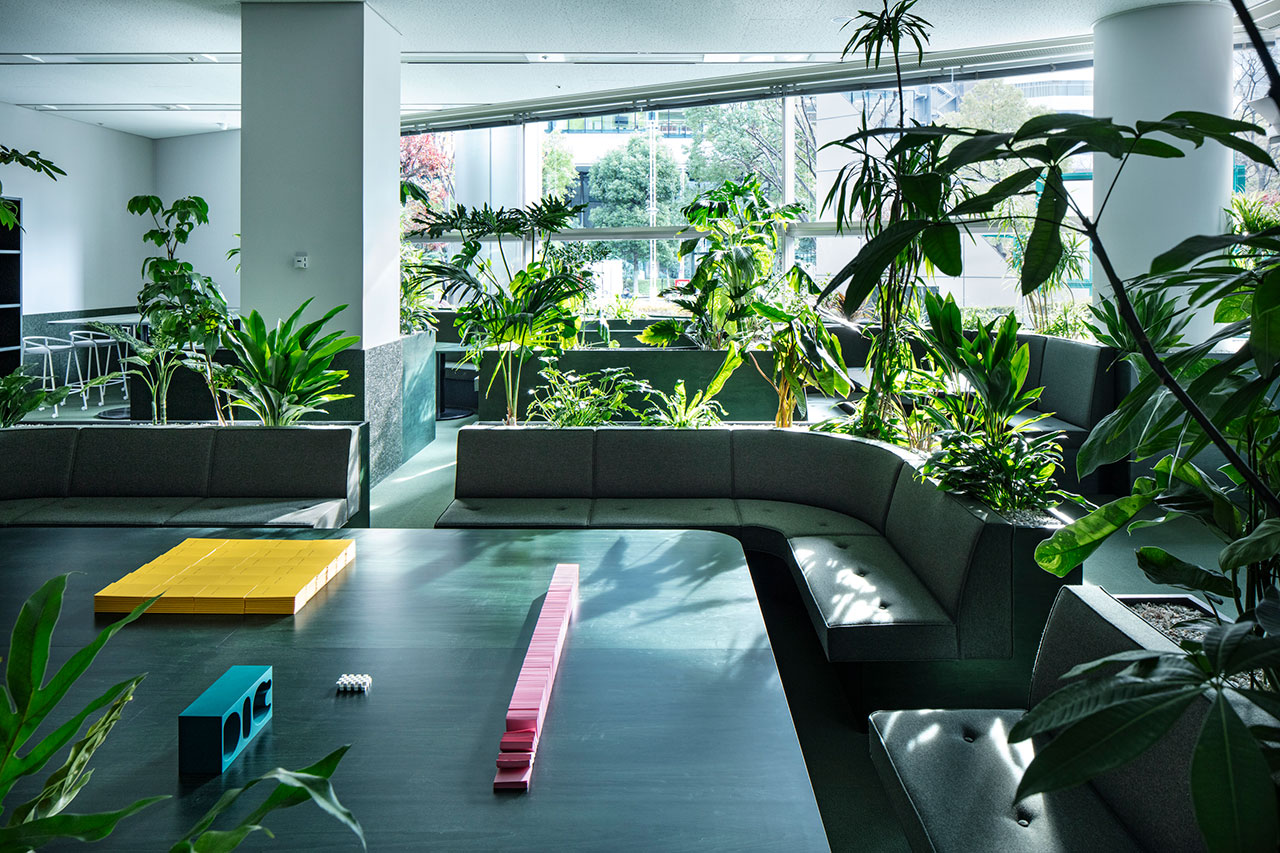
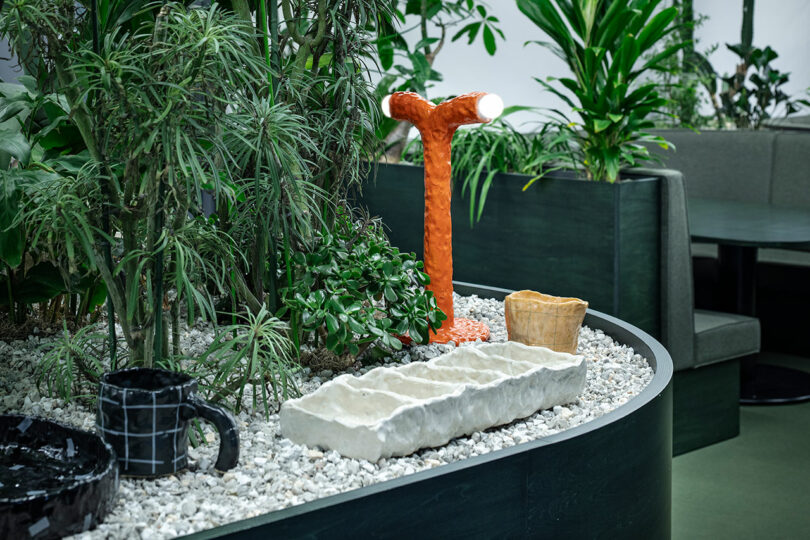
As we look toward 2026, the trend of "Beyond Biophilia" is taking center stage. It is no longer enough to place a potted plant on a desk; greenery must become a functional part of the architectural infrastructure. In KOKUYO DIG, lush plants are utilized as living partitions.
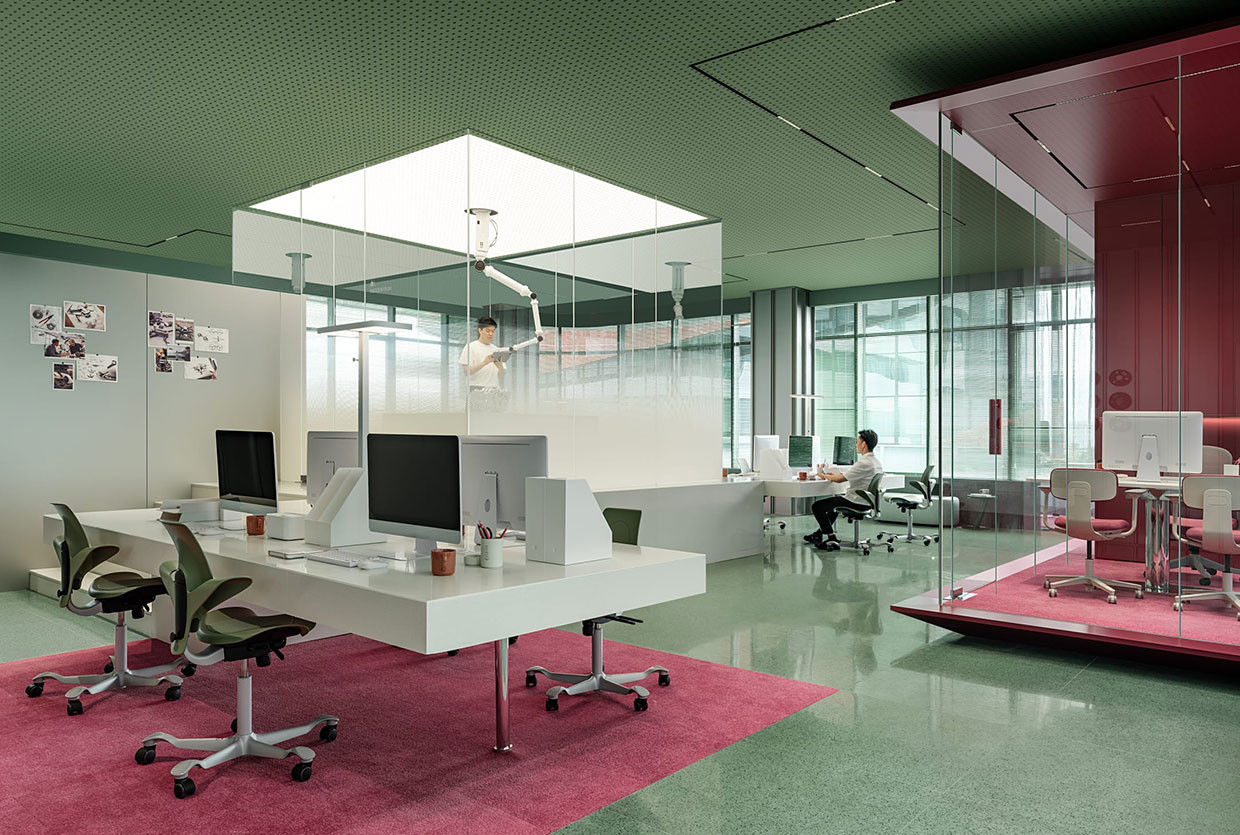
These green boundaries provide privacy and natural vibrancy without the need for rigid, opaque walls. By using dense clusters of foliage, DDAA creates "soft zones" that filter light and sound. This is complemented by a color palette of green-toned furniture and custom flooring that blurs the line between the interior and an indoor garden.
- Functional Greenery: Plants act as acoustic dampeners, absorbing the "chatter" of the hybrid office.
- Sensory Focus: The presence of living organisms has been shown to lower cortisol levels, making the DIG office a "neuro-responsive" environment.
- Visual Continuity: Green-toned flooring creates a seamless flow, making the 5,317-square-foot space feel exponentially larger.
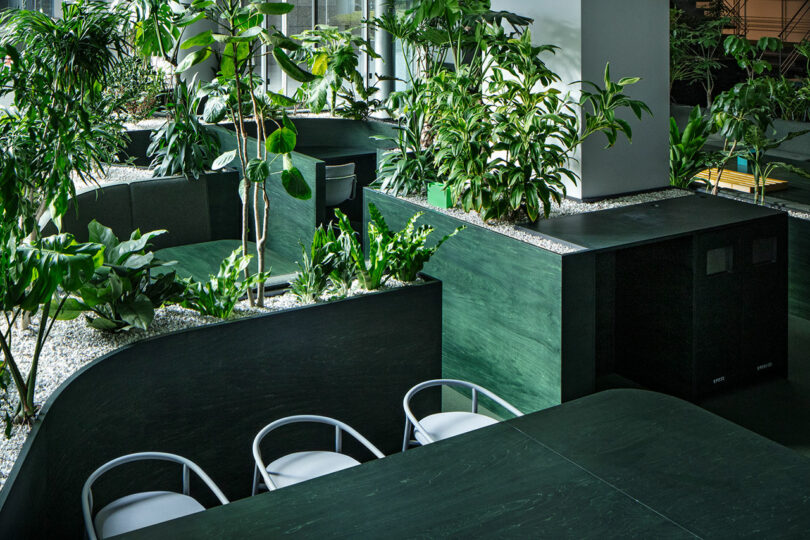
Design Move 3: Scattered Destinations and Movement Logic
One of the most radical departures from traditional office design in KOKUYO DIG is the abandonment of the "centralized desk" model. Instead, DDAA created "Scattered Destinations." Paths radiate from key hubs—the library on Level 1, and the snack bar and supply dock on Level 2—to maximize every square inch of the floor plan.
This layout encourages "planned serendipity." To get a coffee or a new notebook, an employee must traverse different zones, increasing the likelihood of cross-departmental interaction. The "Supply Dock" is a particular highlight, featuring KOKUYO's modular accessories and organized flexible storage, turning the act of getting office supplies into an aesthetic experience.
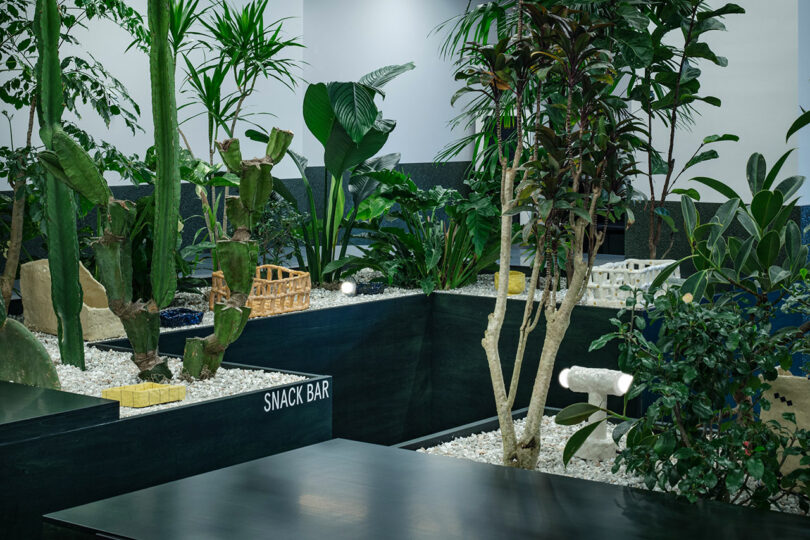
The 2026 Lens: Why KOKUYO DIG is the Future of Commercial Interiors
KOKUYO DIG is a harbinger of the "Experiential Workplace" trend we expect to dominate through 2026. As remote work remains a viable option, the physical office must offer something the home cannot: a "memorable journey."
- Neuro-responsive Elements: The use of "Fat Furniture"—oversized, soft booth seating—provides acoustic comfort and physical security, catering to the diverse sensory needs of a modern workforce.
- Sustainable Luxury: The project emphasizes traceable materials and a "Bespoke Revival." From the custom lighting fixtures (like the organic, worm-shaped lamps) to the artisanal textures of the snack bar, the space feels curated rather than manufactured.
- The Learning Hub Model: By positioning the office as a place for learning rather than just working, KOKUYO aligns itself with the global shift toward employee development and intellectual wellness.
In the hands of DDAA, the KOKUYO DIG office has become more than just a place of business; it is a sophisticated experiment in human behavior. By looking at the humble family restaurant, they have found a way to make the modern office feel like exactly what it should be: a place where we are free to be curious, together.
FAQ
How does the 'famiresu' (family restaurant) concept improve office productivity?
The family restaurant typology balances the "social buzz" of a public space with the physical privacy of high-backed booths. This allows employees to work independently without feeling isolated, leveraging "ambient noise" which has been shown to enhance creative thinking compared to total silence.
What is 'Beyond Biophilia' in the context of KOKUYO DIG?
While traditional biophilic design adds plants as decoration, 'Beyond Biophilia' integrates them as functional architecture. At KOKUYO DIG, plants replace walls and partitions, managing sightlines, improving air quality, and providing acoustic dampening.
How does the vertical layout benefit a hybrid workforce?
The dual-level plan separates "modes" of work rather than "departments." By placing the quiet library on one level and the social snack bar on another, employees can move between floors based on their current task needs, fostering a more dynamic and flexible work environment.