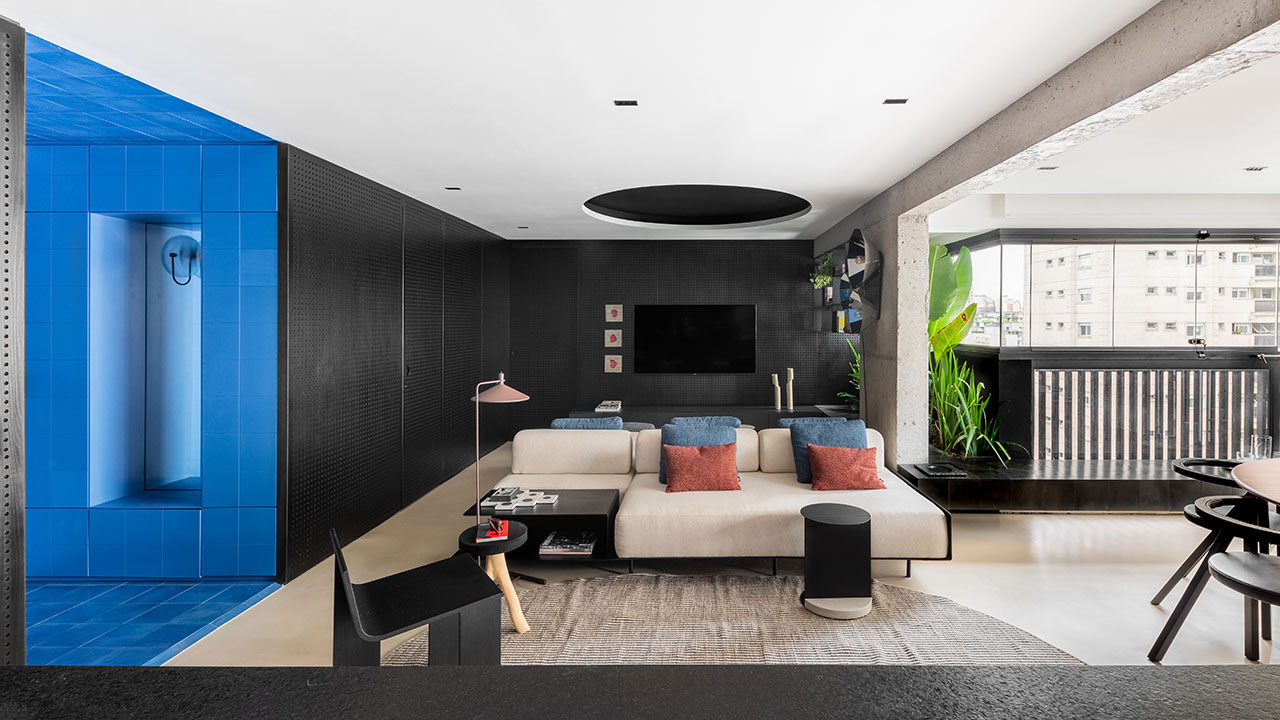
Imagine walking into a space where the boundaries of work, rest, and social life don’t just blur—they dissolve into a choreographed dance of light and texture. In the heart of São Paulo’s Perdizes neighborhood, the FM Apartment by Zalc Arquitetura stands as a masterclass in this philosophy. For the modern creative, the traditional "open-concept" layout of the 2010s—often a cavernous, echoing hall of white walls—has evolved. As we look toward 2026, the secret isn't just about tearing down walls; it’s about "soft zoning" and activity-based design.
The FM Apartment, a 1,076-square-foot sanctuary, serves as the ultimate blueprint for this shift. By prioritizing flow and multi-sensory materials over rigid partitions, the designers have reclaimed the apartment's soul. The core secret lies in the use of continuous polished concrete floors and strategically placed modular furniture that anchors the kitchen, terrace, and living room into a single, cohesive social ecosystem. This isn't just about aesthetics; it's about a lifestyle that demands flexibility without sacrificing intimacy.
The Social Core: Maximizing Connection through 'Soft Zoning'
One of the most impressive feats of the FM Apartment is its spatial efficiency. Through thoughtful layout optimization, the team at Zalc Arquitetura increased the functional social living area by 22%. They achieved this by treating the outdoor terrace not as an appendage, but as a primary living zone, seamlessly integrated into the interior.
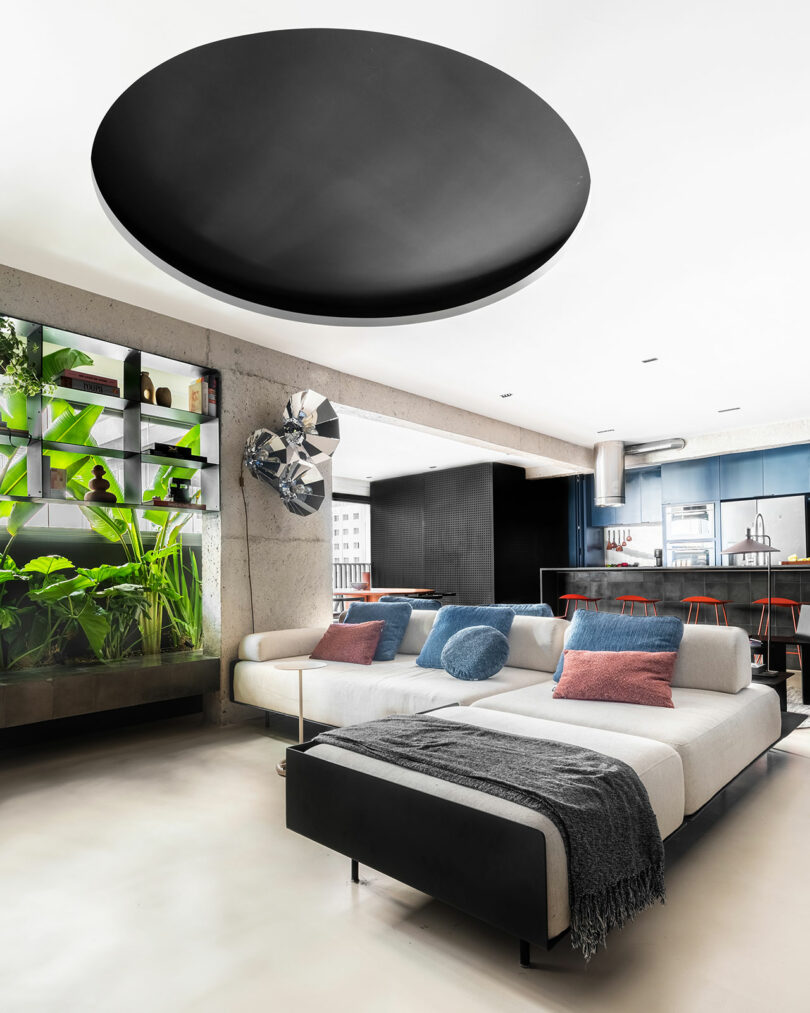
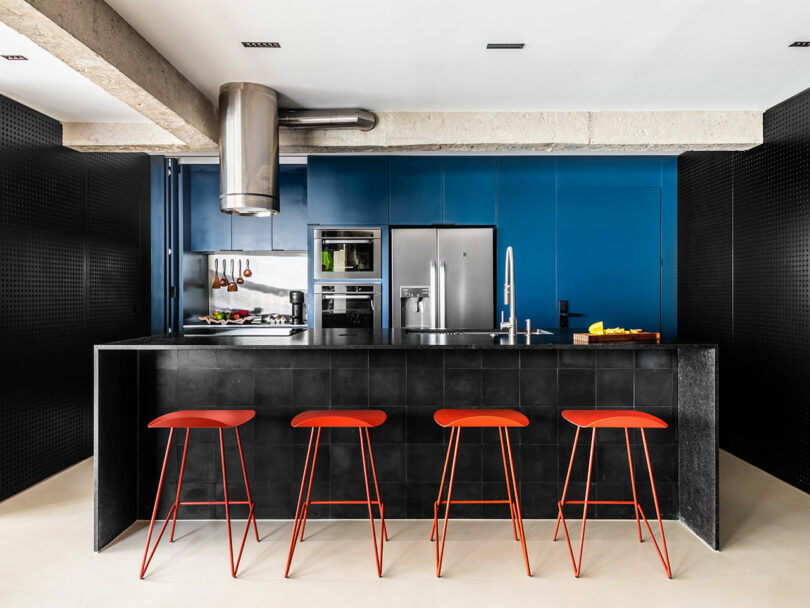
The "Soft Zoning" approach replaces drywall with visual cues and furniture silhouettes. Instead of a wall separating the kitchen from the lounge, a custom-designed modular island sofa acts as the architectural boundary. This piece is a workhorse: it provides seating for the living room on one side and a perch for the kitchen area on the other, encouraging conversation to flow as easily as the floor plan.
Ivy’s Tip: To replicate "soft zoning" on a budget, look for low-profile furniture that doesn't block the sightline. A backless bench or a transparent shelving unit can define a "room" without cutting off the light.
To maintain visual continuity, the designers chose a single material for the foundation: continuous polished concrete. By eliminating the "seams" usually found at doorways or between the kitchen tile and living room wood, the eye perceives the space as significantly larger than its actual footprint. This lack of visual breaks is a hallmark of the 2026 "Invisible Boundary" trend.
Activity-Based Design: Reclaiming Space for the Creative Workflow
For the creative professional, a home is rarely just a home. It is a studio, a gallery, and a retreat. The FM Apartment adopts an Activity-Based Design (ABD) philosophy, which moves away from the idea of "single-use rooms" toward "zones of intent."
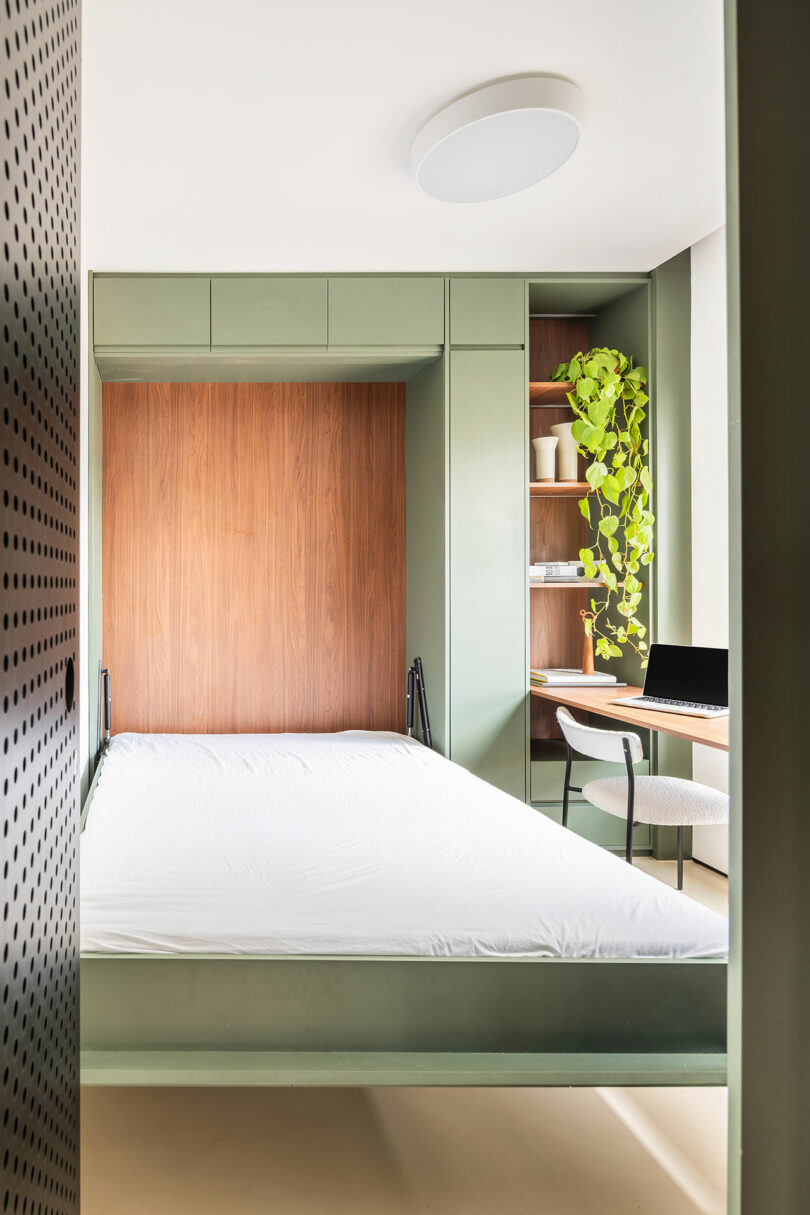
The guest room is the perfect case study. Instead of letting a guest bed sit idle for 350 days a year, the designers implemented a multifunctional millwork system. By integrating a Murphy bed and a continuous wooden desk surface, they reclaimed approximately 15% of the total floor area (roughly 160 square feet) for daily creative use.
This room functions as:
- A deep-work sanctuary: The wide wooden desk provides ample space for sketching, digital editing, or architectural drafting.
- A cozy guest suite: The Murphy bed pulls down effortlessly, transforming the office into a bedroom in seconds.
- A meditation/flex zone: When the bed is up, the floor space remains clear for movement.
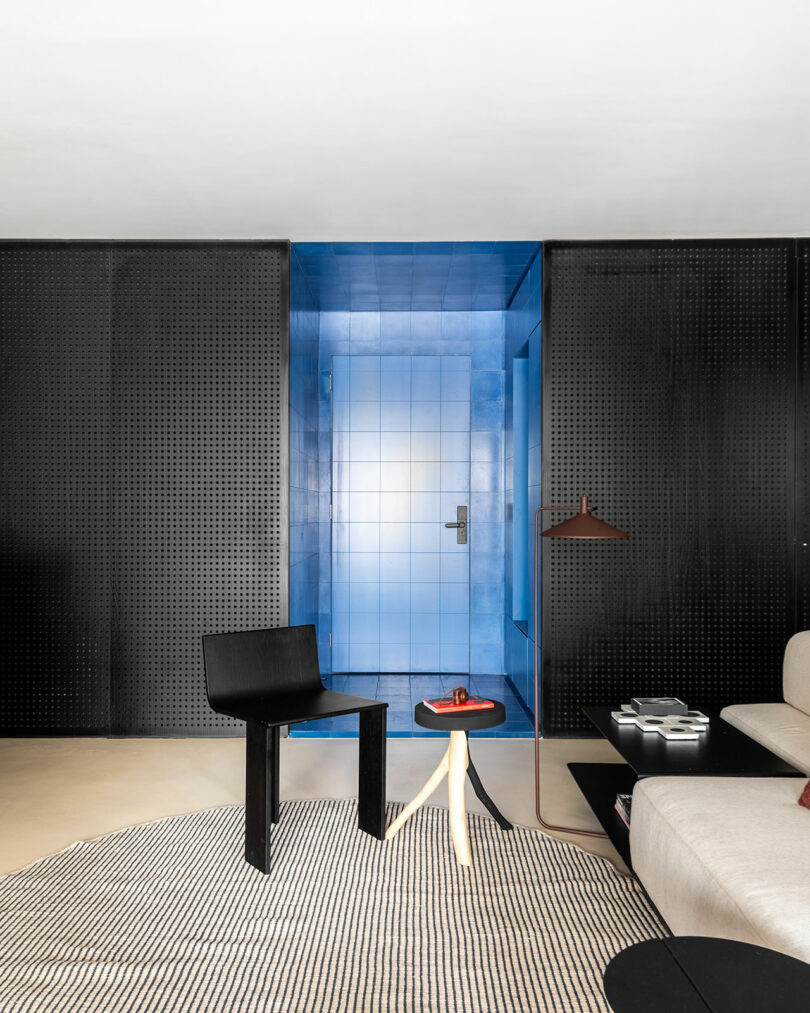
Acoustic balance is the silent partner in this design. To prevent the open layout from becoming a noise trap, the designers utilized perforated black industrial panels. these panels act as "acoustic lungs," absorbing sound while maintaining a visual connection between spaces.
The Aesthetic Palette: Industrial Edge Meets Vibrant Expression
The "Industrial Modern" look has matured. In 2026, we are moving away from cold, sterile grays and toward what I call "Sensory Industrialism." The FM Apartment balances raw materials with high-octane color—specifically, the vibrant cobalt blue and deep petrol hues that are defining the mid-decade aesthetic.
The material palette is a study in contrasts:
- Handcrafted Texture: The entryway and bathrooms feature cobalt blue hydraulic tiles, a nod to Brazilian craftsmanship that adds a visceral, handmade feel to the modern space.
- Structural Rigor: Black industrial millwork and metalwork provide the "skeleton" of the apartment, offering a sharp, graphic contrast to the softer elements.
- Organic Warmth: Natural wood surfaces and an abundance of tropical greenery are used to "thaw" the concrete aesthetic.
Biophilic integration is more than just placing a few pots on a shelf. In the FM Apartment, suspended shelving units allow vines to cascade down, creating "living curtains" that soften the hard lines of the industrial panels. This layers the space, making it feel livable and "breatheable" rather than just a showcase of design.
The Material Palette Sidebar
| Material | Application | Design Intent |
|---|---|---|
| Polished Concrete | Entire floor area | Visual continuity and industrial durability. |
| Cobalt Hydraulic Tiles | Entryway & Bathrooms | Vibrant focal point; artisanal texture. |
| Black Perforated Metal | Cabinetry & Partitions | Acoustic absorption and "broken-plan" visibility. |
| Freijó Wood | Desks & Custom Millwork | Organic warmth to balance the cool concrete. |
2026 Trend Forecast: Why the FM Apartment Works
The success of the FM Apartment isn't just about its current beauty; it anticipates how our needs are evolving. Here are the three key trends this project solidifies for 2026:
1. The 'Broken-Plan' Evolution
We are moving past the "Wide Open" phase. The FM Apartment uses perforated panels and furniture silhouettes as gentle separators. This creates "broken-plan" living—where you have the light and air of an open space but the emotional comfort of defined zones. You are "together, but separate."
2. Layered Lighting for Emotional Zoning
In a space without walls, lighting does the heavy lifting. The FM Apartment utilizes a tiered lighting system, focusing on 2700–3000K warm LEDs. By using dimmable tracks and accent lighting, the owner can "turn off" the kitchen at night while keeping the living room warm and inviting, effectively hiding the workspace when it’s time to relax.
3. The 'Hotel-Like' Primary Suite
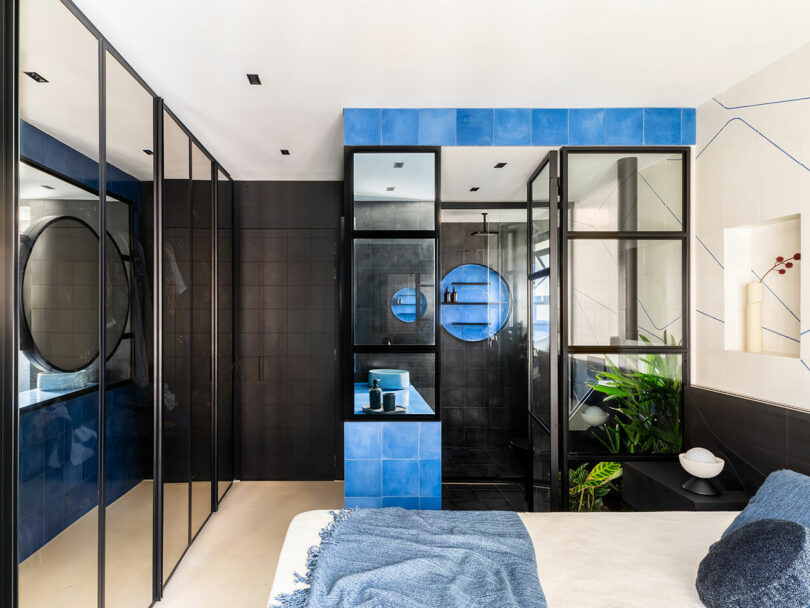
The primary bedroom isn't just a place to sleep; it’s a wellness retreat. By connecting the bathroom through glass partitions and maintaining a consistent color story, the suite feels like a high-end boutique hotel. It’s an open-concept within an open-concept.
4. Intentional Pet-Friendly Details
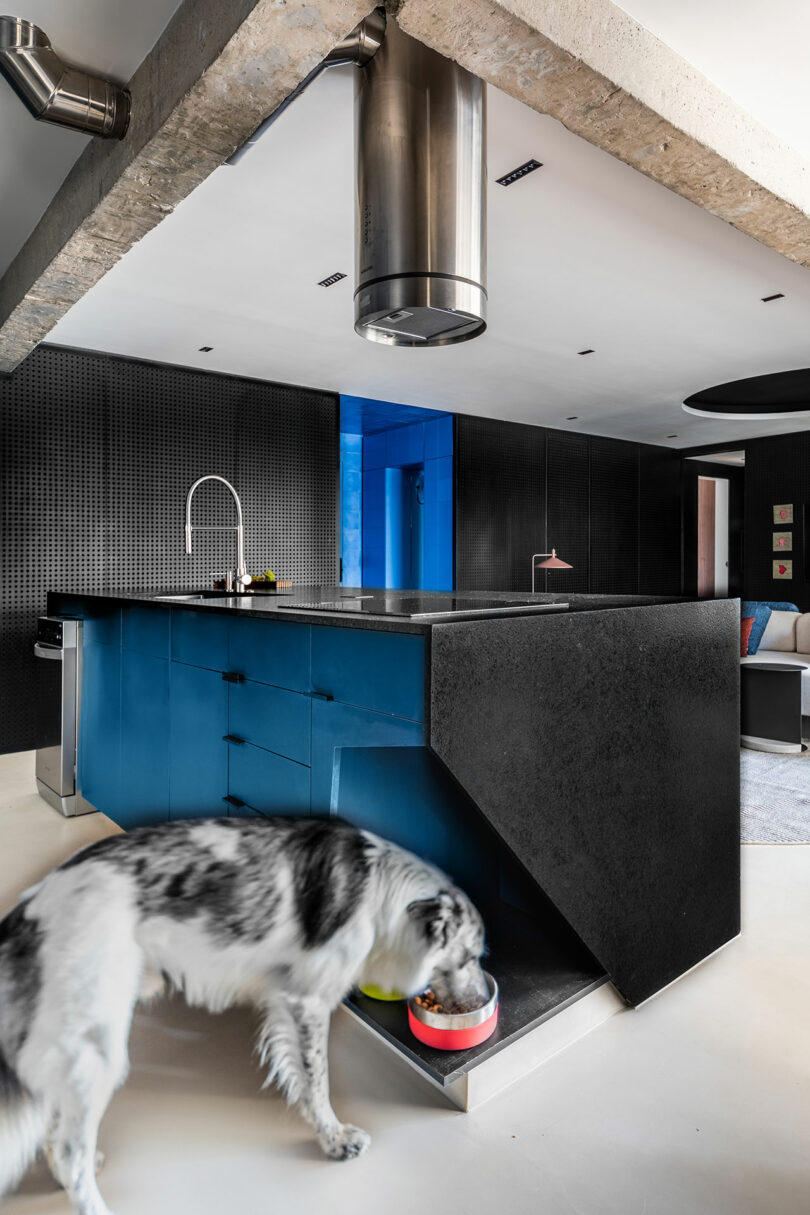
A creative sanctuary must accommodate all residents. The designers integrated a filtered water access point directly into the side of the kitchen island for the owner's pet. This small, thoughtful detail eliminates the "clutter" of standalone bowls and integrates the pet's needs into the very architecture of the home.
Final Thoughts: A Blueprint for Better Living
The FM Apartment proves that you don't need a sprawling mansion to live expansively. By embracing soft zoning, activity-based design, and a bold material palette, Zalc Arquitetura has created a space that recharges the creative spirit. It’s a reminder that the best design doesn't just look good on camera—it solves the friction points of our daily lives, giving us back the space and time to create.
FAQ
Q: How do I maintain polished concrete floors in an apartment?
A: Polished concrete is incredibly low-maintenance. The key is to use a pH-neutral cleaner and avoid harsh acids like vinegar or bleach, which can dull the finish over time. Periodic resealing every 3-5 years will keep it looking pristine.
Q: Are Murphy beds actually comfortable for daily use?
A: Absolutely, provided you invest in the mechanism. Modern Murphy bed systems like the one in the FM Apartment allow for high-quality, full-depth mattresses. The secret is the piston-lift mechanism which makes daily transformation effortless.
Q: Can I use cobalt blue tiles in a small bathroom without making it feel smaller?
A: Yes! The trick is to use the vibrant color on a "feature plane"—like the floor or one accent wall—and keep the rest of the surfaces light or neutral. In the FM Apartment, the blue acts as an anchor that actually draws the eye and adds depth.