Standing forty stories above the pavement, the world changes. The frantic rhythm of the city below softens into a silent, shimmering grid, and the horizon becomes your most prominent neighbor. For years, high-altitude living was defined by a certain "observation deck" coldness—all glass, steel, and stark minimalism. However, as we look toward 2026, the narrative is shifting. We are entering an era where the penthouse is no longer just a platform for viewing the skyline; it is a grounded, tactile sanctuary that mediates between the vastness of the atmosphere and the intimacy of home.
Sophisticated high-altitude interior design focuses on balancing these expansive views with intimate living spaces through the strategic use of 'golden hour' natural light, curated sculptural furniture, and layered textures that provide psychological warmth against the cityscape. This "Quiet Luxury" movement in the clouds moves away from clinical whites and toward "grounded" neutrals—mushroom, refined greige, and limestone—complemented by biophilic elements that improve well-being. By integrating natural materials like walnut wood, honed limestone, and linen, designers are creating a seamless "Indoor-to-Outdoor Flow" that makes even the highest residence feel connected to the earth.
I. The Architecture of Light: Designing with the Golden Hour
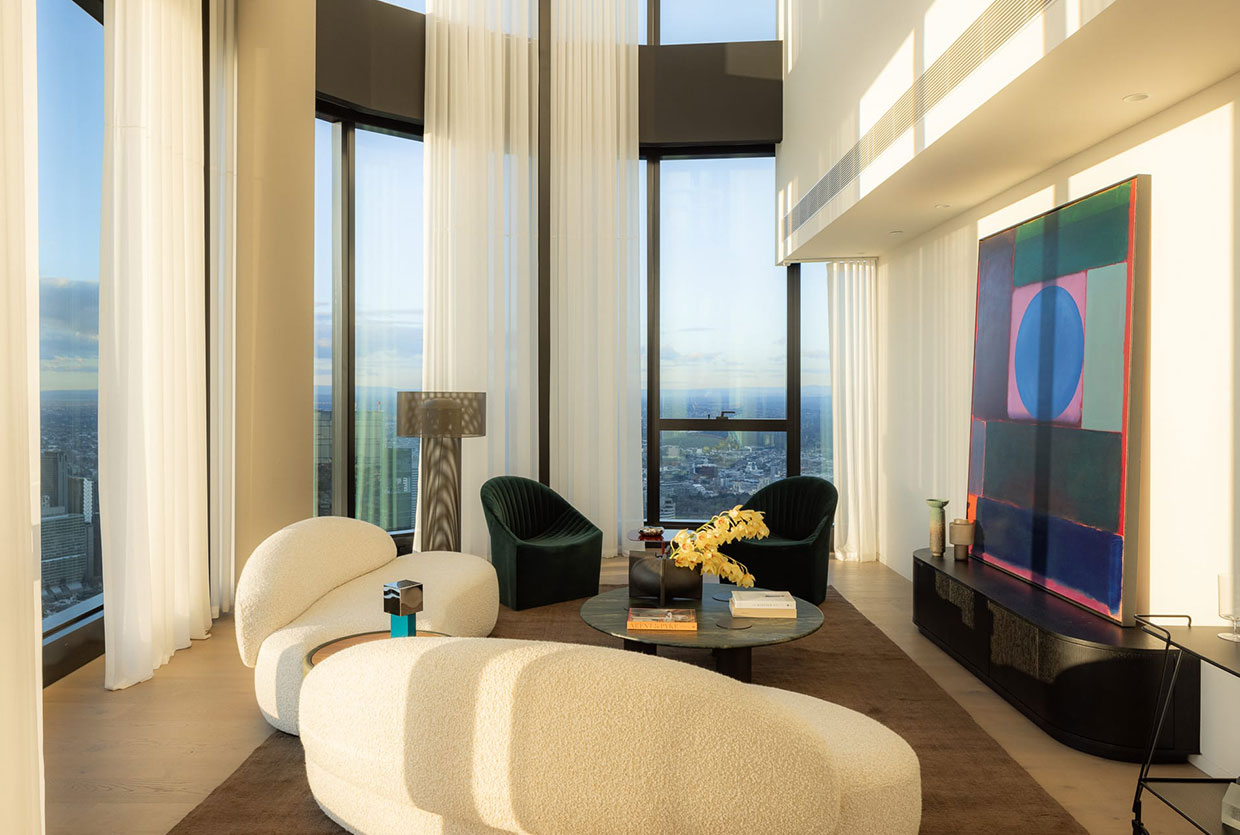
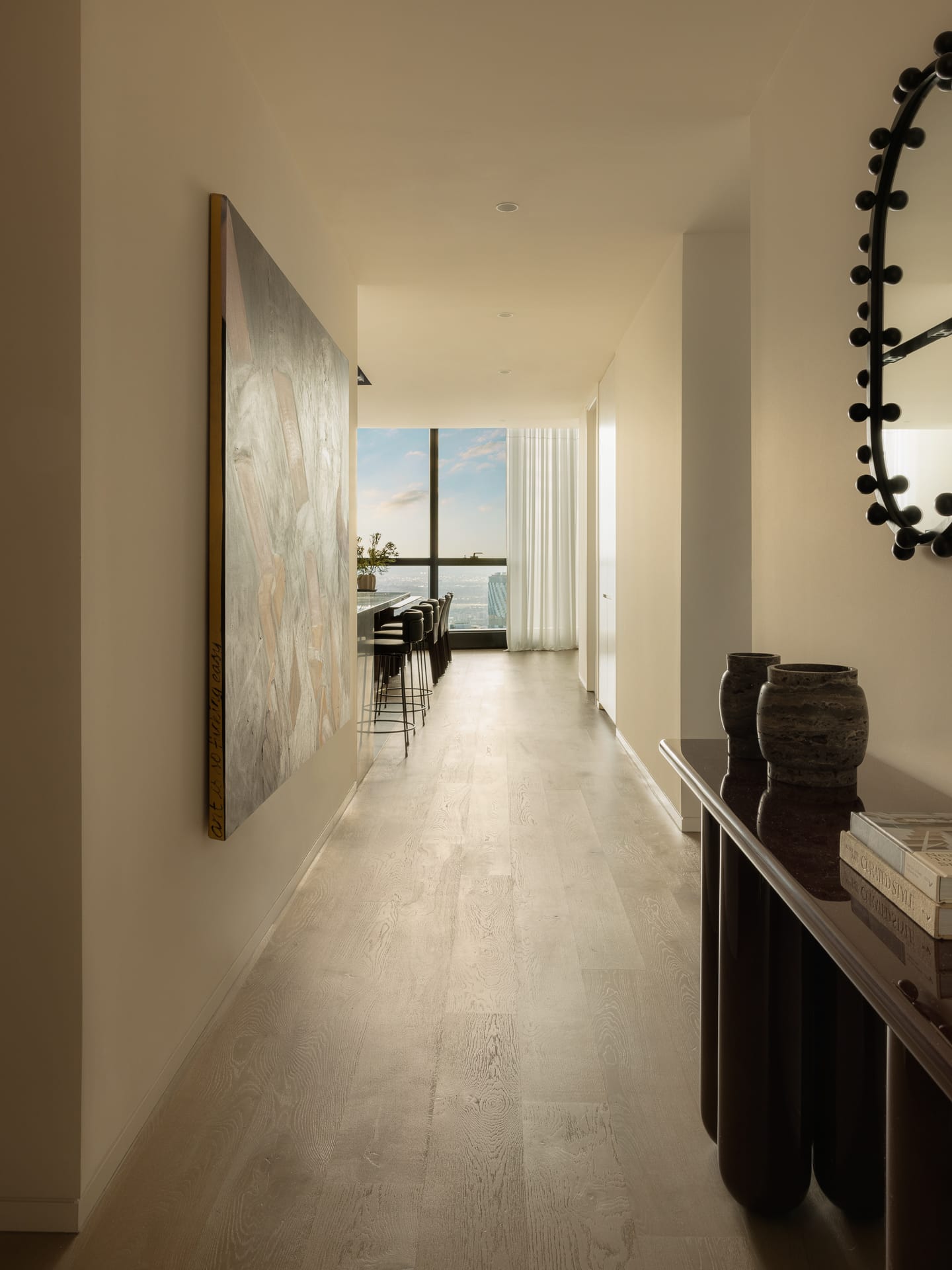
In a high-rise, light isn't just a utility; it is a primary design material. When you are living at the skyline, the sun doesn't just enter the room—it performs. Designing for the skyline requires an understanding of how the "Golden Hour" interacts with interior surfaces. We are seeing a move toward "light-responsive" interiors where the choice of wall finish and upholstery is dictated by how it catches the long, amber shadows of late afternoon.
Floor-to-ceiling glass windows should be treated as ever-changing canvases of art. Rather than competing with the view, the interior palette must harmonize with it. This involves using low-reflectivity glass and automated shading systems that track the sun's path, ensuring that the glare never detracts from the comfort of the space.
To balance the intensity of natural light, the 2026 trend emphasizes layered artificial illumination. Think of it as a hierarchy:
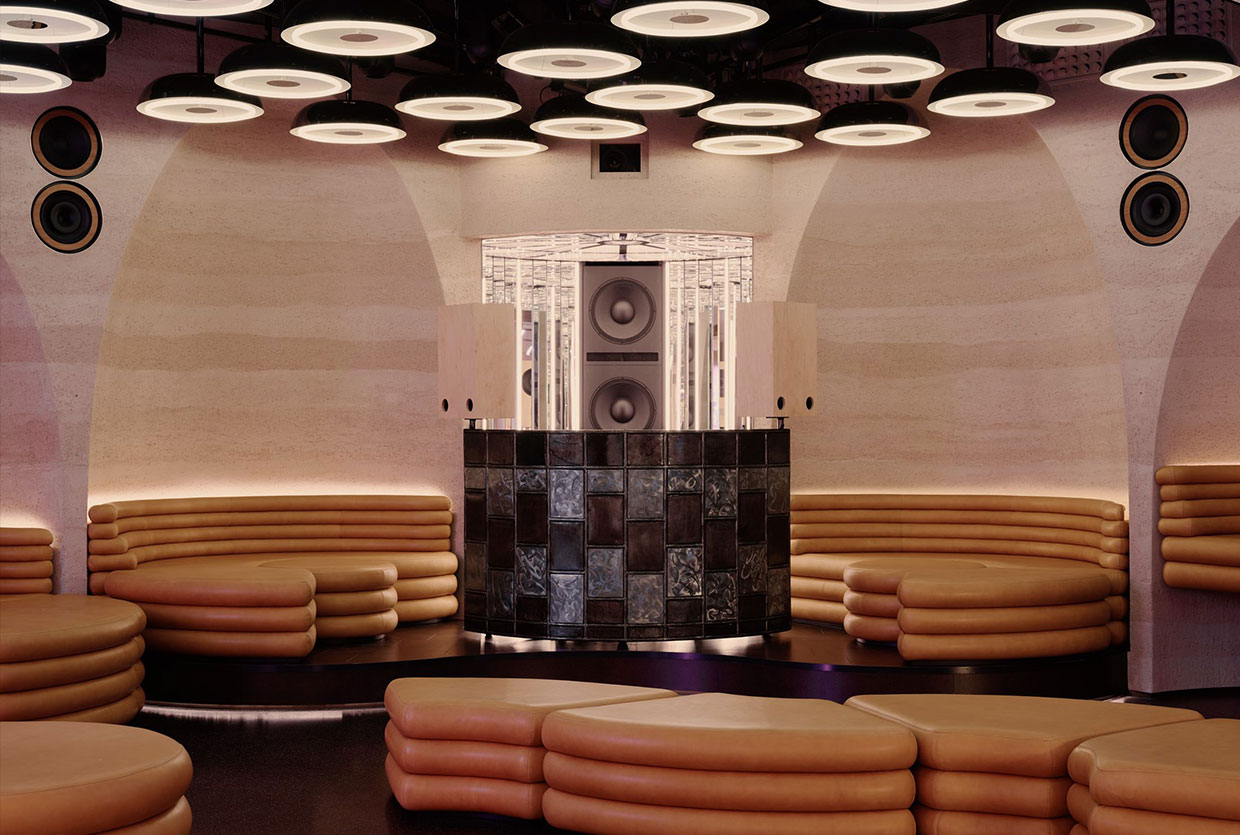
- Sculptural Chandeliers: Central pieces that act as a focal point when the sun sets, providing a soft, diffused glow.
- Hidden LEDs: Recessed lighting in coves or under cabinetry to provide "washes" of light that highlight texture without visible fixtures.
- Task Lighting: Precisely placed lamps in reading nooks or workspaces to create pockets of intimacy within large, open volumes.
II. Material-First Philosophy: Beyond Cold Minimalism
The inherent challenge of high-altitude residential architecture is the "coldness" of the building envelope—typically glass and aluminum. To counter this, the 2026 design shift is leaning heavily into tactile depth. We are seeing a departure from high-gloss surfaces in favor of matte, hand-troweled plaster and limewash walls that catch the light with subtle, organic irregularity.
Recent 2026 luxury market data indicates a 45% increase in the selection of walnut and chestnut tones for high-altitude millwork. These deeper, richer wood tones provide a necessary visual "weight" that anchors the room, preventing it from feeling like it’s floating aimlessly. When paired with "Quiet Luxury" neutrals like mushroom or refined greige, these woods create a timeless atmosphere that feels both sophisticated and incredibly cozy.
Ivy’s Professional Tip: When choosing stone for a high-rise, opt for "honed" or "leathered" finishes over polished ones. A polished marble floor can create harsh reflections from the sun, whereas a honed limestone or travertine absorbs light, contributing to a calmer, more grounded sensory experience.
III. Biophilic Integration at High Altitude
Living in the sky can sometimes lead to a sense of disconnection from the natural world. This is why biophilic design has become a non-negotiable for modern penthouse living. Internal design analytics suggest that 82% of premium penthouse owners now prioritize biophilic integrations, such as stone accent walls and even indoor courtyards, to bridge the gap between their high-altitude lifestyle and the earth below.
Biophilic design at height is achieved by:
- Organic Textures: Integrating linen drapes, wool rugs, and braided jute to introduce the irregularities found in nature.
- Framed Vistas: Using furniture placement to "frame" specific natural elements—the curve of a river, a distant park, or the shifting clouds.
- Sky-Patios: Creating a true indoor-to-outdoor flow with expansive sliding glass doors that open onto covered terraces, essentially creating an outdoor living room that feels safe yet exposed to the elements.
IV. The 2026 Floor Plan: Zoned Openness and Dual Primary Suites
The days of the "Big Box" open plan—where the kitchen, living, and dining areas melt into one cavernous, echoing hall—are fading. For 2026, the most sophisticated floor plans utilize "Zoned Openness." This concept maintains the grand scale of a penthouse while using architectural elements like double-sided fireplaces, floating shelving, or subtle floor-level changes to create intimate nooks.
We are also seeing a significant rise in the "Dual Primary Suite" configuration. This layout acknowledges the needs of multi-generational luxury families or high-net-worth individuals who frequently host long-term guests. Each suite functions as a self-contained sanctuary, complete with its own morning bar and wellness bath.
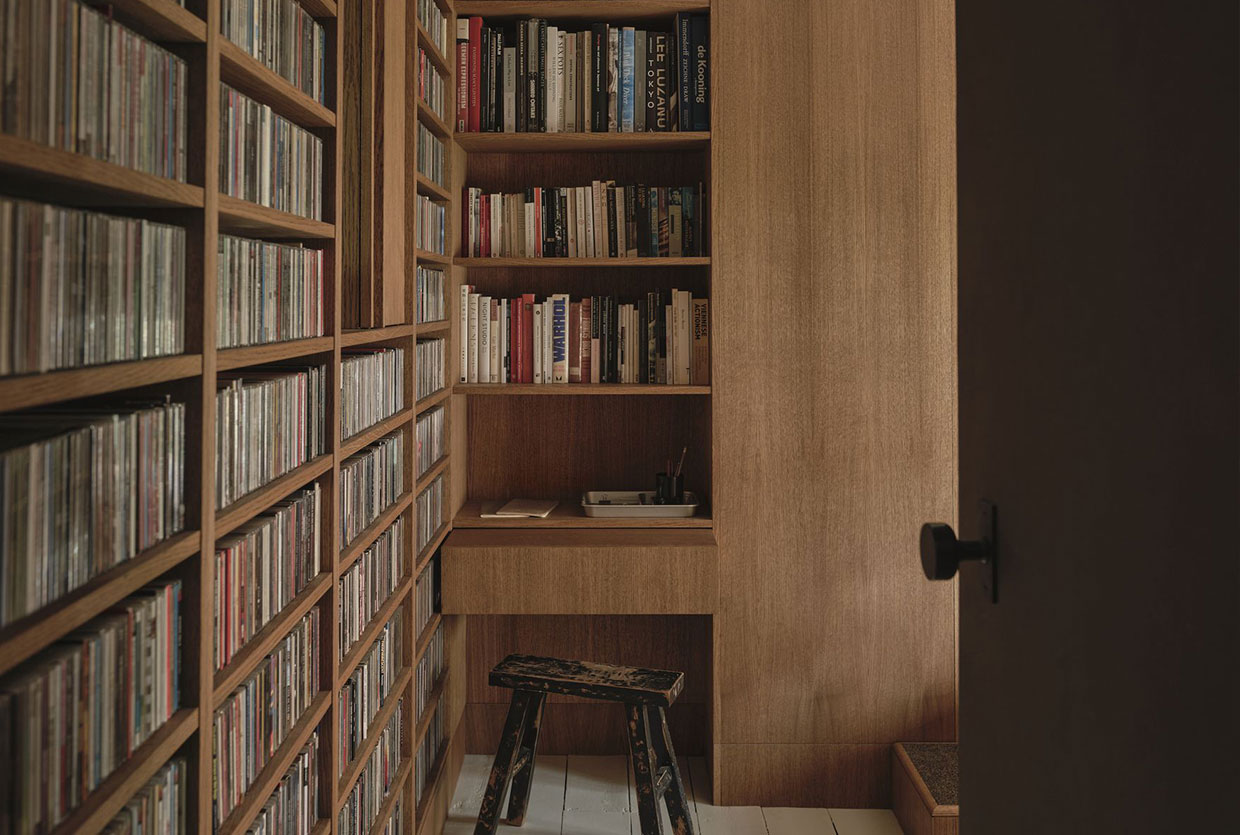
Another critical addition to the 2026 floor plan is the Hidden Work Nook. As the line between professional and private life remains blurred, the "Zoom Room" has evolved into a soundproofed, elegantly appointed library that can be completely closed off from the home’s social flow, ensuring privacy without sacrificing the view.
V. The Smart and Silent Penthouse: Invisible Technology
Luxury in 2026 is measured by what you don't see. The trend has shifted decisively away from visible gadgets toward "invisible" smart technology. This includes:
- Acoustic Engineering: Using hidden acoustic treatments behind plaster walls to dampen the whistle of high-altitude winds.
- Circadian Lighting: Systems that automatically adjust the color temperature of interior lights to match the natural daylight cycle, promoting better sleep and mood.
- Climate Control: Precision systems that manage not just temperature, but humidity and air filtration, which is vital at higher altitudes where the air can be thinner and drier.
Wellness is no longer an afterthought; it is baked into the floor plan. Custom yoga studios and meditation rooms with views of the horizon provide a rarefied space for mental clarity, often featuring natural wood tones and minimal distractions to keep the focus on the breath and the vista.
VI. Room-by-Room Curation
The Kitchen: The Dual-Kitchen Concept
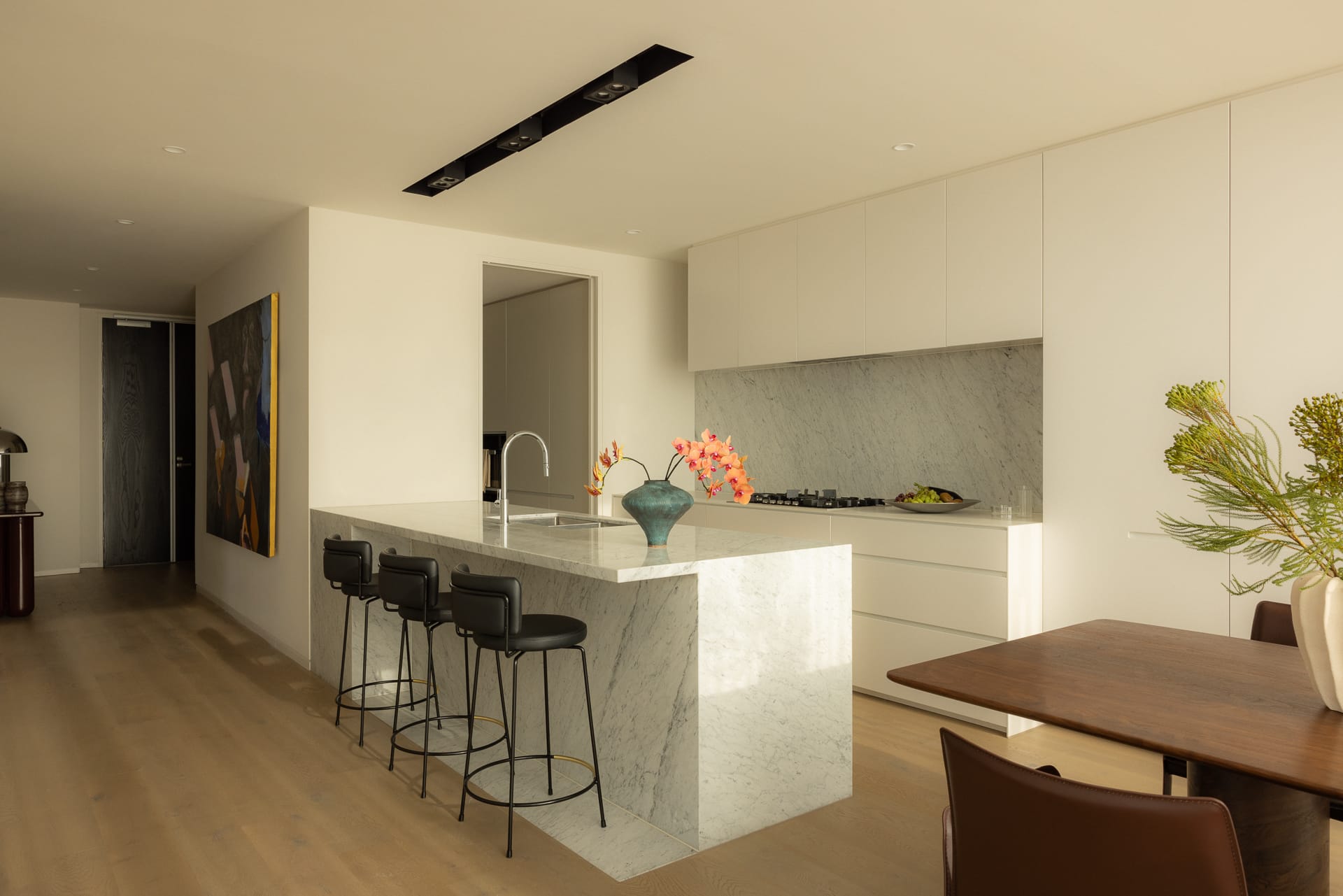
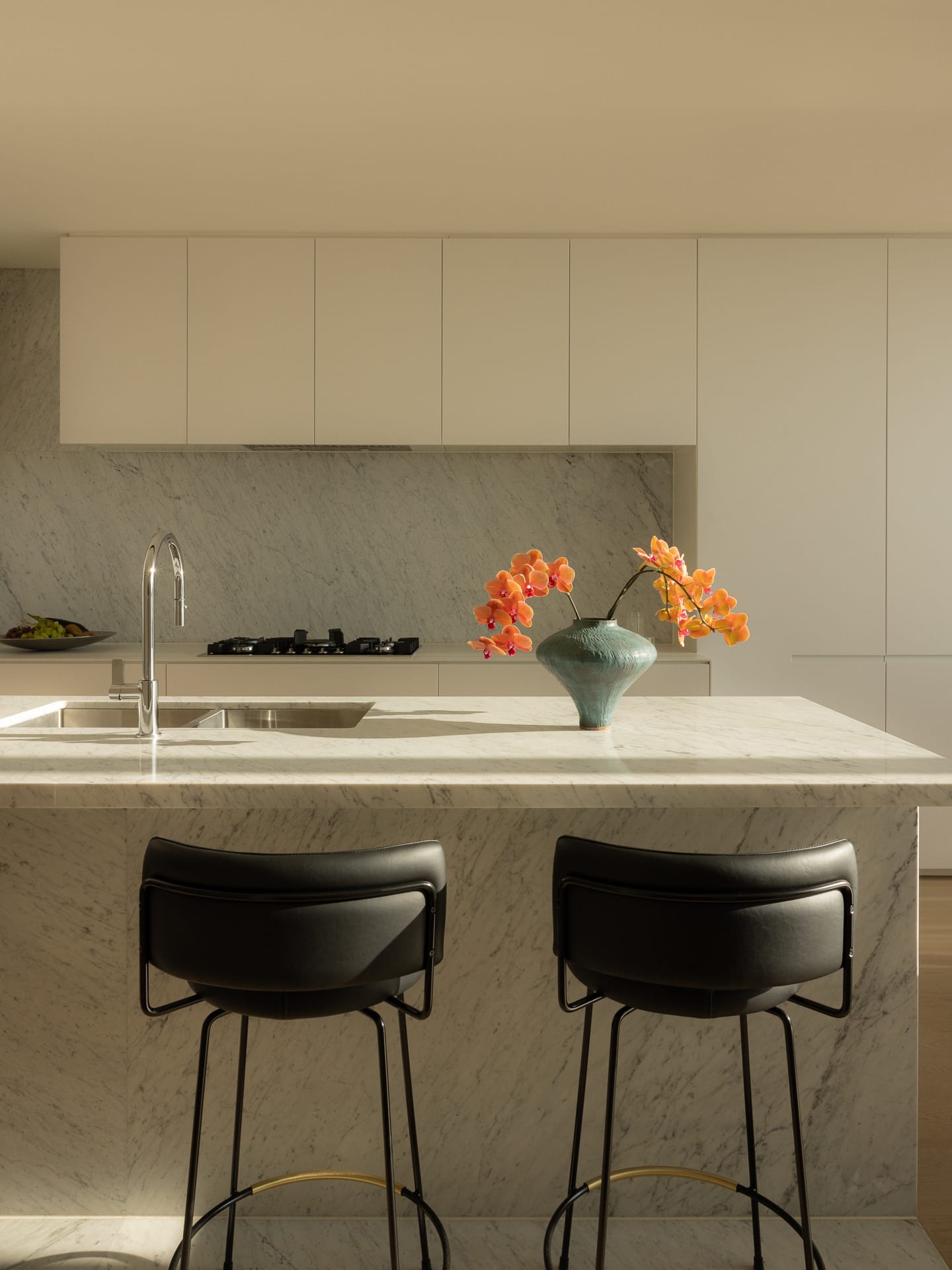
The modern skyline kitchen is split into two distinct zones. The Showcase Kitchen features a massive island of honed stone and sculptural faucets—it's designed for entertaining and "looking" like a gallery. Meanwhile, the Hidden Scullery (or prep kitchen) houses the heavy-duty appliances and messy prep work, allowing the main living area to remain pristine.
The Master Suite: A Wellness Sanctuary
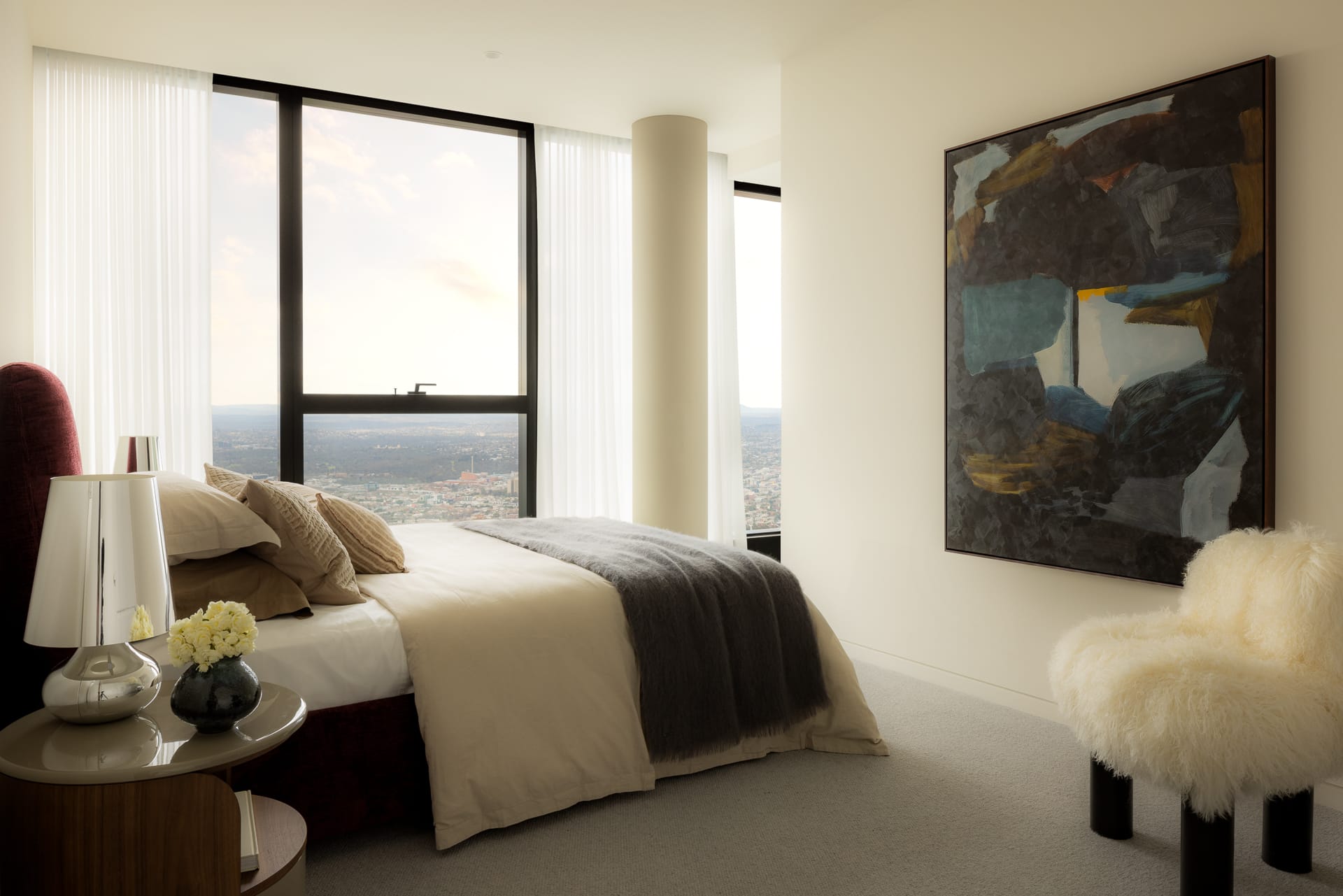
The 2026 Master Suite is less of a bedroom and more of a private spa. We are seeing a preference for zero-entry steam showers with integrated seating, freestanding soaking tubs positioned to catch the sunset, and "morning bars" equipped with hidden refrigeration and water filtration for a seamless start to the day.
The Living Area: Anchoring the Space
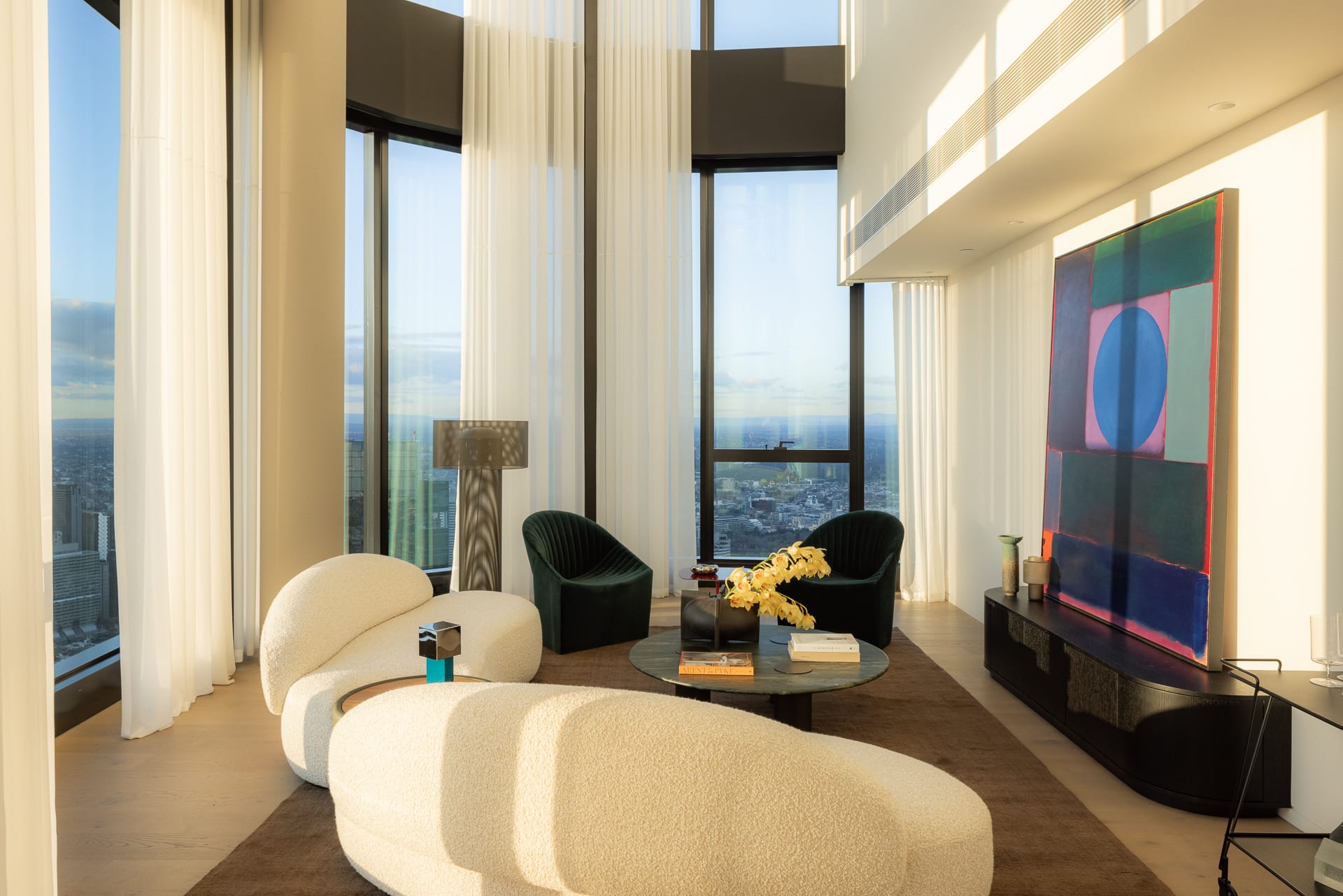
In a room with high ceilings and vast views, furniture must be "sculptural" to hold its own. Large-scale sectional sofas in bouclé or mohair provide a soft, tactile contrast to the hard lines of the architecture. By using low-profile furniture, you ensure that the skyline remains the protagonist while the seating provides a comfortable "anchor" for conversation.
VII. FAQ
Q: How do I prevent a glass-walled apartment from feeling too "cold"? Ivy: The key is texture and tone. Introduce warm woods like walnut, use "living" finishes like unlacquered brass that patina over time, and layer your textiles. A silk-and-wool rug or linen wallcoverings can instantly soften the "hard" feeling of glass and steel.
Q: Is biophilic design possible without a balcony? Ivy: Absolutely. You can integrate biophilic principles through material choices—like a feature wall of honed travertine or a river-pebble floor in the shower. Indoor-to-outdoor flow can also be psychological; by using colors that mirror the sky and horizon, you create a visual bridge to the outside world.
Q: What is the biggest mistake people make in high-rise decor? Ivy: Choosing furniture that is too small or too "fussy." High-altitude spaces have a grand scale; tiny patterns and spindly furniture get lost. You need "investment-grade" pieces with strong silhouettes that can stand up to the monumental views.
VIII. Conclusion: Living at the Peak
Designing for the skyline is an exercise in balance. It is about respecting the power of the view while creating a home that feels warm, safe, and deeply personal. As we move into 2026, the most successful high-altitude interiors will be those that prioritize "Quiet Luxury"—investing in the quality of light, the honesty of materials, and the seamless integration of nature and technology.
Whether you are looking out over Manhattan, Dubai, or Shanghai, the goal remains the same: to create a sanctuary where you can watch the world turn from a place of absolute comfort.