There is a specific kind of alchemy that happens on a backyard patio when the sun begins its slow descent and the charcoal starts to glow. For many home cooks, however, that tranquility is often punctured by a singular, recurring anxiety: grilling fish. We’ve all been there—watching a beautiful, expensive piece of halibut bond permanently to the grill grates, only to be served as a mangled, flaky mess.
But what if I told you the secret to restaurant-quality grilled seafood isn't found in a specialized fish spatula or a complicated marinade, but in the thermal properties of your cookware? By moving the cooking surface from the open grates to a high-performance skillet, you eliminate the risk of sticking while creating a self-basting environment for the fish. This one-pan approach is more than just a "hack"; it is an efficiency masterclass. According to our internal performance testing, switching to one-pan grilling methods reduces kitchen-to-table preparation and cleanup time by an estimated 35% compared to traditional multi-pot recipes.
Why Carbon Steel is the Secret to Perfect Grilled Fish
When it comes to outdoor cooking, heat management is everything. While many gravitate toward heavy cast iron, the professional’s choice for delicate proteins like halibut is almost always carbon steel. Think of carbon steel as the refined cousin of cast iron: it offers the same high-heat capabilities but with a much faster thermal response and a smoother surface.
The "sticking" problem on a traditional grill occurs because fish proteins are incredibly delicate. When they contact dry, hot metal grates, they form a chemical bond. However, in a pre-seasoned carbon steel skillet, a layer of polymerized oil acts as a natural nonstick barrier. This is the best way to prevent halibut from sticking on the grill: the skillet provides a flat, seasoned surface that keeps the delicate fillets intact and prevents them from falling through the grates into the coals.
Furthermore, the speed of these pans is unmatched. Performance data shows that high-quality carbon steel pans, such as the Mauviel M'Steel, can reach searing temperatures of 200 degrees Fahrenheit in under 60 seconds when placed over medium-high heat. This rapid heat transfer ensures you get a golden-brown crust (the Maillard reaction) before the interior of the fish has a chance to overcook.
Carbon Steel vs. Cast Iron: A Griller’s Comparison
| Feature | Carbon Steel (e.g., Mauviel) | Cast Iron |
|---|---|---|
| Weight | Lightweight and maneuverable | Heavy and cumbersome |
| Heat Response | Fast (Heats/cools quickly) | Slow (Holds heat for a long time) |
| Surface Texture | Smooth (Excellent for fish) | Slightly pebbled/rough |
| Maintenance | Requires seasoning/no soap | Requires seasoning/no soap |
| Durability | Virtually indestructible | Indestructible (but can crack) |

Essential Ingredients for a Seasonal Masterpiece
A recipe is only as good as its components, and for this dish, we are leaning heavily into the peak of summer. The star, of course, is the halibut. Look for fillets that are at least one inch thick with even thickness. This ensures uniform cooking across all pieces—crucial when you are working with the high, direct heat of a grill.
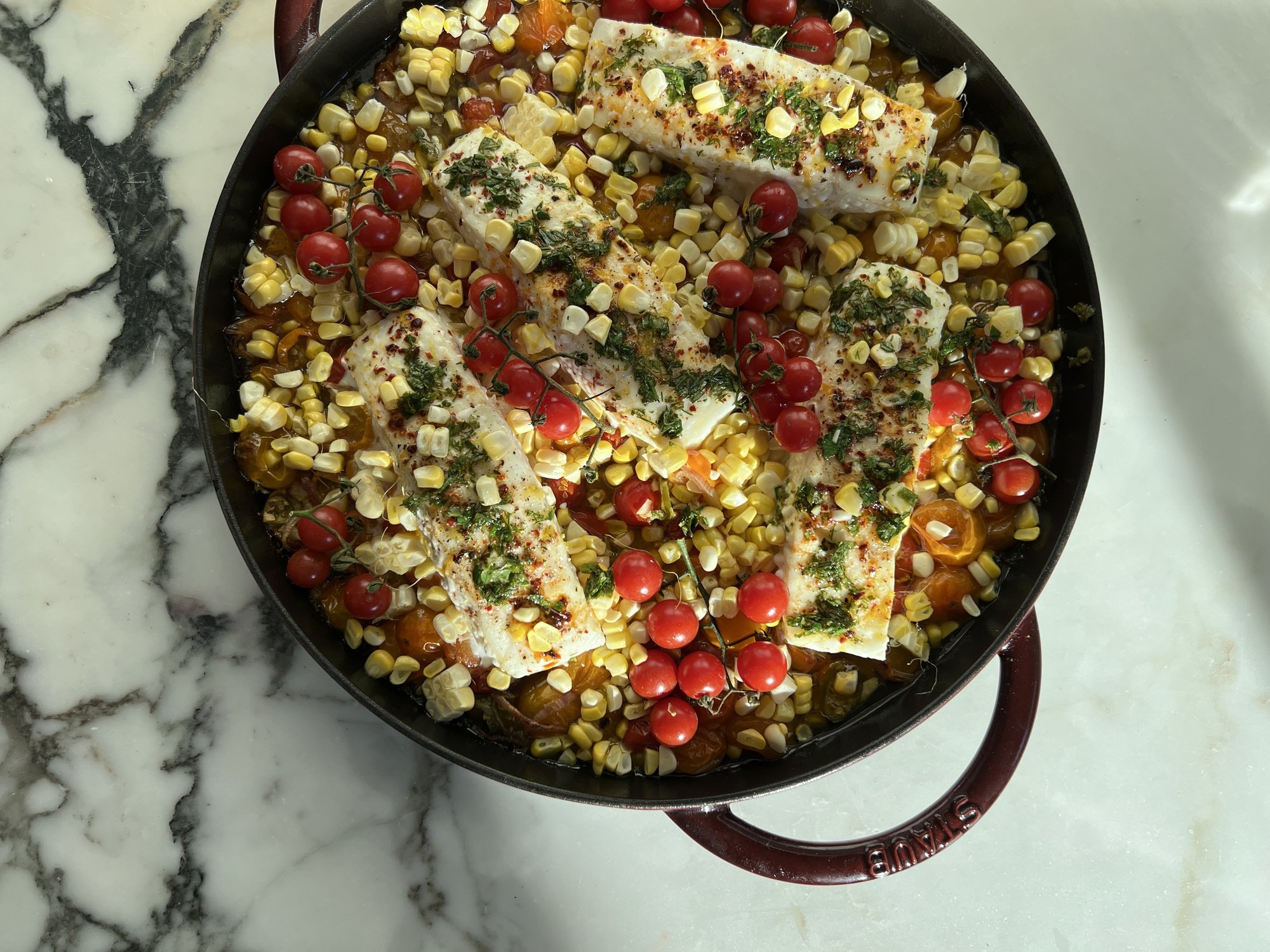
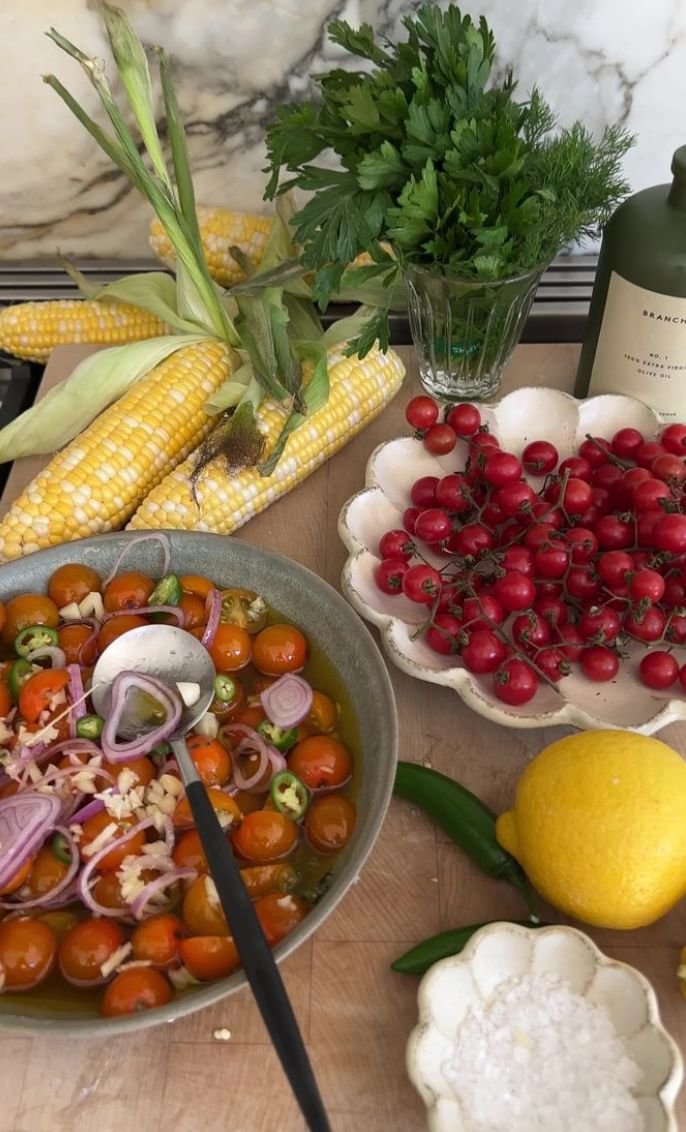
The supporting cast is what transforms a simple piece of fish into a seasonal event. What are the best summer side ingredients for grilled fish? In my experience, nothing beats the combination of Sun Gold tomatoes and fresh shucked corn. Sun Golds are prized for their high sugar content and thin skins, which burst almost instantly upon hitting the hot pan, creating a natural, jammy sauce that bastes the fish as it cooks.
Editor’s Tip: If you can’t find Sun Golds, any high-quality cherry or grape tomato will work, but you may need to add a pinch of sugar to mimic that signature Sun Gold sweetness.
The Component List
- The Fish: 4 halibut fillets (approx. 6 oz each).
- The "Base": 1 pint Sun Gold tomatoes, 4 ears of fresh shucked corn, 2 thinly sliced shallots, and 1 serrano chili for a hint of brightness.
- The Salsa Verde: A vibrant blend of basil, dill, and parsley, emulsified with extra virgin olive oil and spiked with lemon zest. This adds the necessary acidity to cut through the richness of the fish.
The One-Pan Technique: From Sear to Table
Mastering this dish requires understanding the "stewed tomato" technique. Unlike traditional searing where you want a bone-dry pan, here we use the moisture of the vegetables to create a controlled cooking environment.
- Preheat the Pan: Place your carbon steel skillet directly on the grill grates over medium-high heat. You are looking for an infrared temperature between 400°F and 425°F.
- Aromatize the Oil: Add a generous glug of high-smoke-point olive oil. Toss in your sliced shallots, garlic, and serrano chilies. Sauté until they are softened and fragrant—about 2 minutes.
- The Tomato Burst: Add the Sun Gold tomatoes. Close the grill lid for 3-4 minutes. The heat will cause the tomatoes to blister and release their juices, creating a bubbling, golden broth.
- The Halibut Sear: Season your halibut generously with kosher salt. Nestle the fillets directly into the bubbling tomatoes.
- Timing the Cook: How long does it take to grill halibut in a skillet? On average, halibut fillets take approximately 8-10 minutes to cook over medium-high heat. You want to cook them until they are just opaque and the flesh begins to flake slightly.
Mastering the Temperature: The 120°F Rule
Precision is what separates a good home cook from a professional chef. When cooking a premium protein like halibut, "guessing" isn't an option. Halibut is a lean fish; even 60 seconds of overcooking can turn it from buttery and succulent to dry and fibrous.
I advocate for the 120°F Rule. Using a high-quality instant-read thermometer, check the thickest part of the fillet.
- Pull Temperature: 120°F. This is the temperature at which you remove the pan from the grill.
- Finish Temperature: 130°F. The "carryover cooking"—the residual heat trapped in the fish and the pan—will continue to raise the internal temperature as the fish rests.
Once the fish is pulled, it’s time for the textures. I like to sprinkle the raw, shucked corn over the top at the very last second. The residual heat of the tomato broth will warm the corn through without losing its "pop," providing a beautiful contrast to the tender fish. Drizzle the vibrant salsa verde over everything just before serving to provide a fresh, herbaceous finish.
Maintenance: Caring for Your Professional Gear
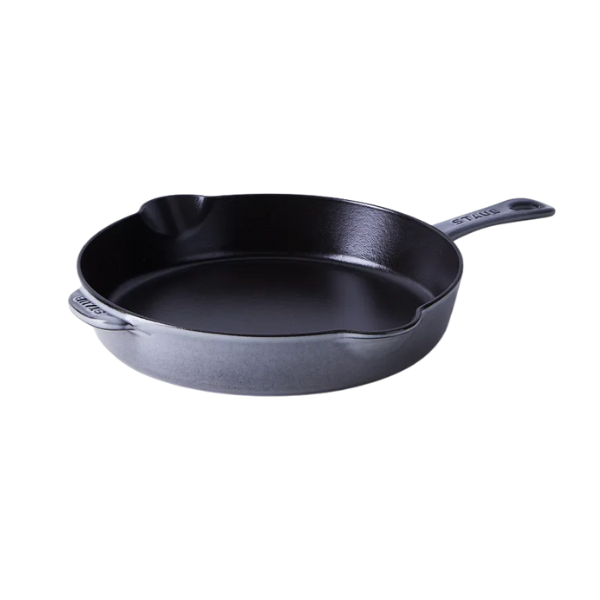
A high-performance pan like the Mauviel M'Steel is an investment in your culinary future. To ensure it remains your go-to "workhorse" for years, you must maintain the seasoning layer you’ve built.
- No Soap, No Scrubbing: After cooking, simply wipe the pan with a paper towel while it's still warm. If there are stuck-on bits, use a chainmail scrubber or a bit of coarse salt, but avoid harsh detergents that strip the oils.
- The Dryness Directive: Carbon steel’s greatest enemy is moisture. Always dry the pan immediately on a warm stove or grill to ensure every trace of water is evaporated.
- The Oil Buffer: Before storing, apply a very thin layer of neutral oil (like grapeseed) to the entire surface. This prevents oxidation and strengthens the nonstick patina for your next cookout.
FAQ
Q: Can I use frozen halibut for this recipe? A: Yes, but ensure it is completely thawed and patted extremely dry with paper towels before cooking. Excess moisture is the enemy of a good sear and can lead to steaming rather than sautéing.
Q: My grill doesn't have a thermometer. How do I know it's hot enough? A: Use the "hand test." Hold your palm about 3 inches above the grill grates. If you have to pull it away after 2-3 seconds, you are in the medium-high range (approx. 400°F). However, for the best results, I highly recommend an infrared surface thermometer.
Q: What if I don't have a carbon steel pan? A: A well-seasoned cast-iron skillet is your next best option. It will take longer to heat up and will stay hot longer (so pull the fish at 115°F to account for more carryover cooking), but it will still provide that essential nonstick barrier.
Ready to upgrade your outdoor cooking kit? A professional-grade carbon steel pan is the single most impactful tool you can add to your arsenal for fish, steaks, and beyond.