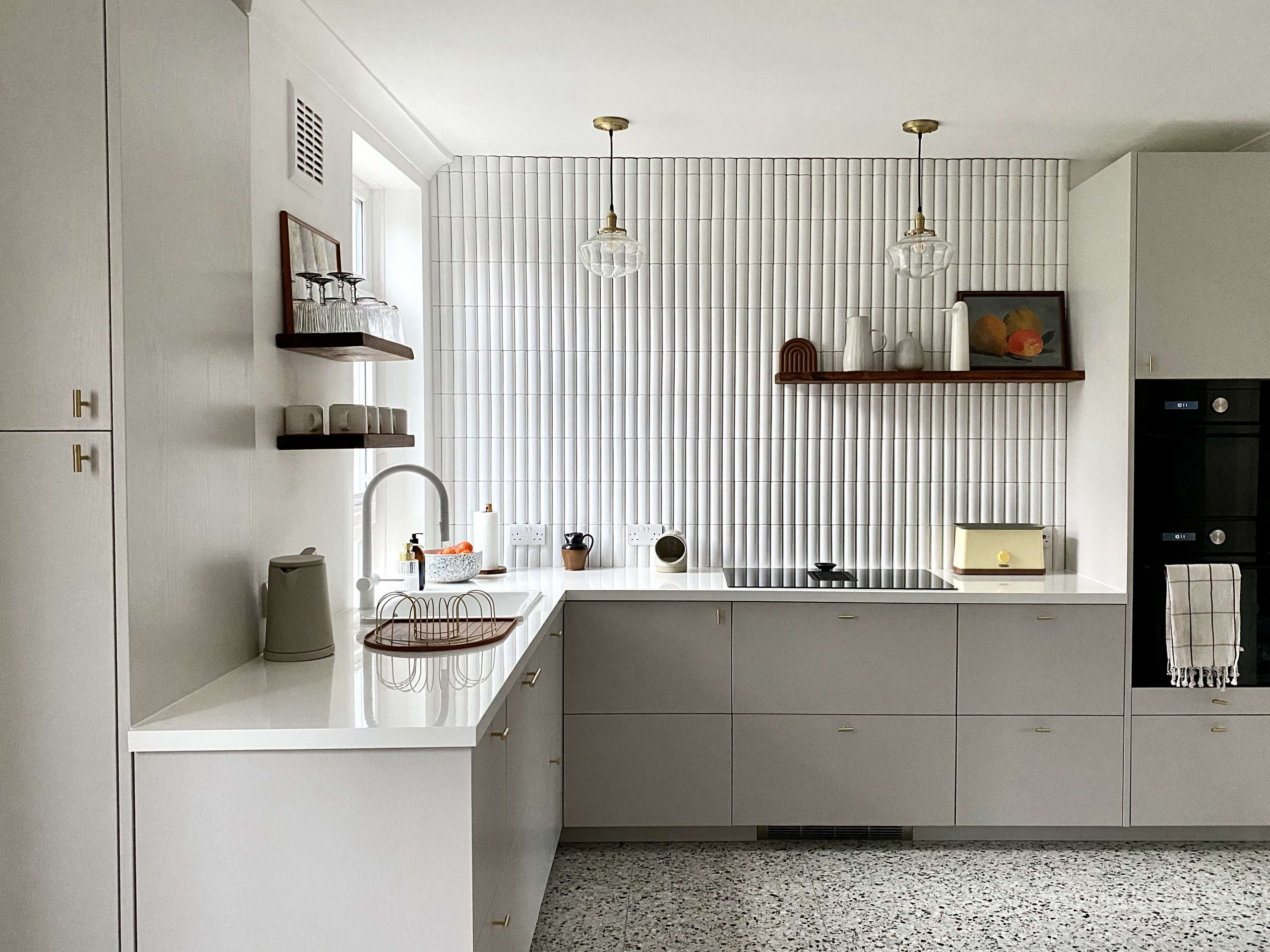
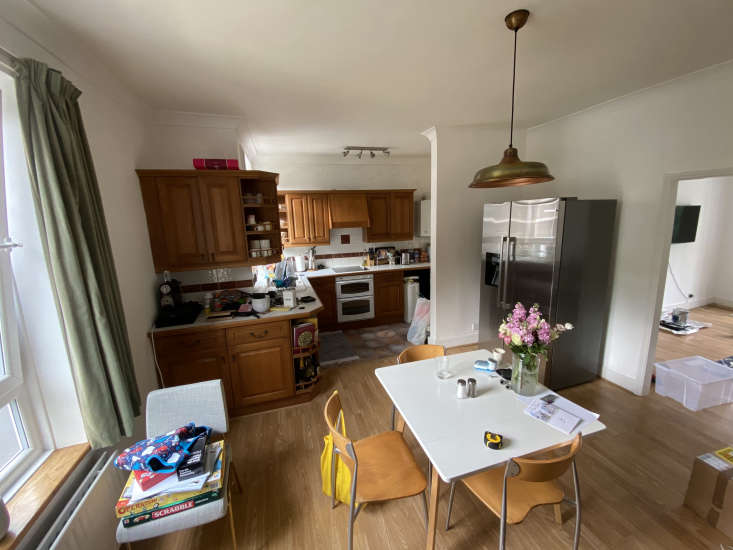
There is a specific kind of "gloom" that haunts the kitchens of London’s Victorian terrace houses—a relic of 1990s renovations that favored heavy, orange-toned wood veneers, oversized blocky cabinetry, and a layout that felt more like an obstacle course than a culinary sanctuary. For many homeowners in the capital, the challenge isn't just about updating the look; it’s about reclaiming the soul of a space that should be the heart of the home.
When I first walked into this North London kitchen, it was a study in beige and missed opportunities. The boiler took up a prime corner, the laundry machines were noisy interruptions, and the lack of light made the room feel disconnected from the garden outside. The goal was clear: we needed a radical transformation that honored the 1960s and 70s design era—the "Golden Age" of textures—while maintaining the structural integrity of a Victorian row house.
The Victorian Dilemma: Why the 90s Kitchen Had to Go
The original layout was a classic case of 90s "utilitarianism." It was functional, yes, but it completely ignored the verticality of the room and the natural flow of a modern family's day. The bulky veneer cabinets felt oppressive, and the faux-wood vinyl flooring had seen better days.
To create the sunny, textural, retro-inspired space the family craved, we first had to address the "space hogs." We relocated the boiler to an upstairs cupboard and moved the washer/dryer to a newly created utility nook under the stairs. This reclaimed nearly 15% of the kitchen’s footprint, allowing for a more open, breathable floor plan. By stripping back the layers of 90s interventions, we found a canvas ready for a high-low design strategy that blends budget-savvy choices with high-end finishes.
The Smart Strategy: Mastering the Ikea Hack for a Bespoke Look
In the world of interior design, the "Ikea Hack" has moved from a DIY trend to a legitimate professional strategy. For this project, the budget was healthy but not infinite. To bridge the gap between mainstream and ultra-premium, we opted for Ikea’s Sektion (or Metod, in the UK) cabinet carcasses. They are reliable, modular, and—most importantly—cost-effective.
Pro-Tip: How can I upgrade an Ikea kitchen on a budget? You can achieve a bespoke, high-end look by using standard Ikea cabinet carcasses and upgrading them with custom-painted wood fronts from specialized companies. This strategy allows you to invest your savings into premium worktops or high-end appliances while maintaining a designer aesthetic.
We partnered with Naked Doors to provide the character. By choosing their custom-painted wood fronts in a heritage-inspired "Sage and Clay" palette, the kitchen immediately lost its flat, mass-produced feel. The depth of real wood and the precision of the spray finish gave the cabinetry a weight and texture that standard melamine-faced doors simply can’t replicate.
Recent market data supports this shift toward "semi-bespoke" solutions. Integrating custom cabinet fronts with Ikea systems can reduce total kitchen cabinetry expenses by up to 40% compared to fully custom-built solutions, without sacrificing the luxury look that adds significant value to London properties.
Designing the 'Retro Cool' Aesthetic: Terrazzo and Texture
What exactly defines that elusive "retro cool" look we see in high-end design magazines today? It’s not about kitsch; it’s about a sophisticated nod to the mid-century modern aesthetic through material choices.
Pro-Tip: What defines a 1960s/1970s retro kitchen style? Key elements include textural terrazzo flooring, 3D vertical ceramic tiles, mid-century inspired brass hardware, and a mix of streamlined modern appliances with vintage-inspired color palettes like mustard, sage, or burnt orange.
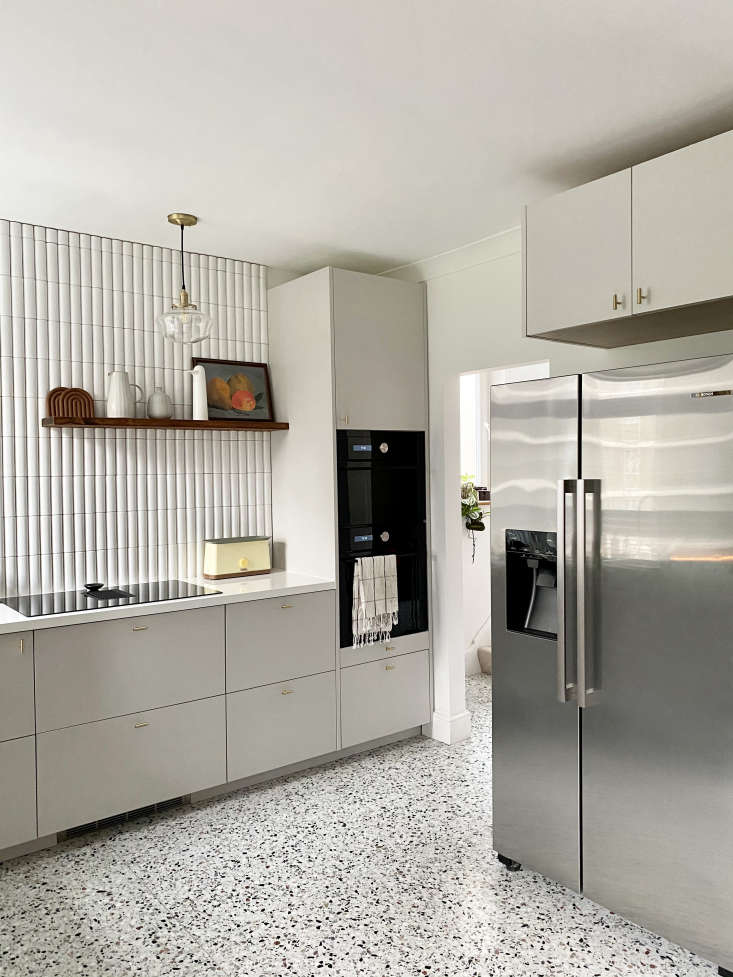
For the flooring, we moved away from the 90s vinyl and went straight to the source of mid-century elegance: Diespeker & Co. We selected a real terrazzo tile with large marble aggregate. Unlike its modern resin counterparts, real terrazzo has an organic irregularity that feels grounded and permanent. It’s cool underfoot in the summer and holds heat beautifully if you have underfloor heating installed.
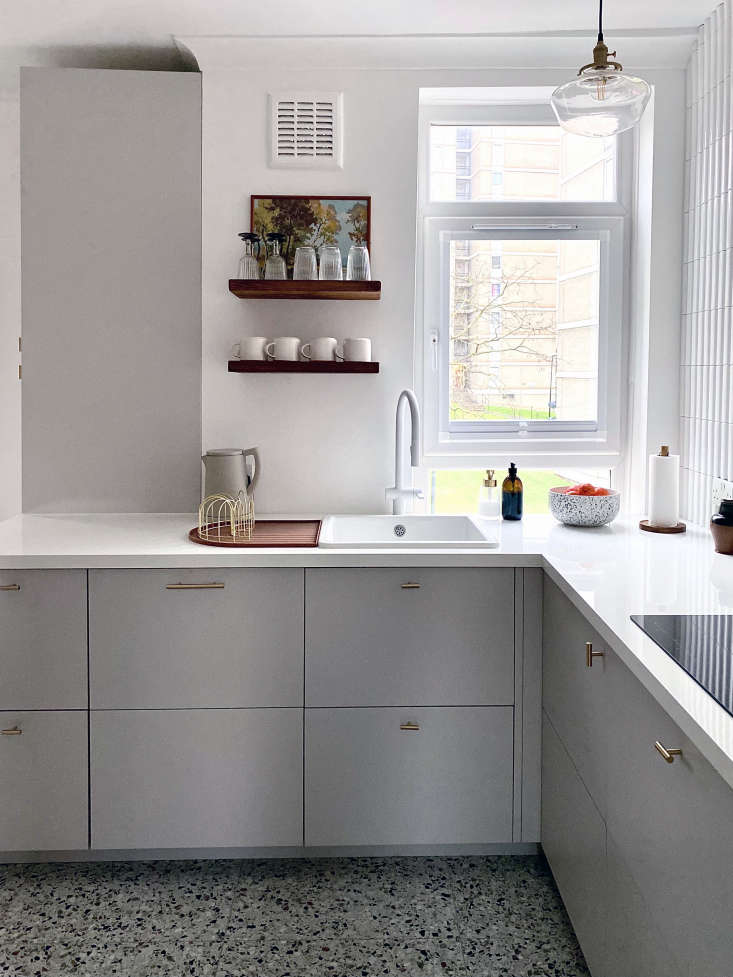
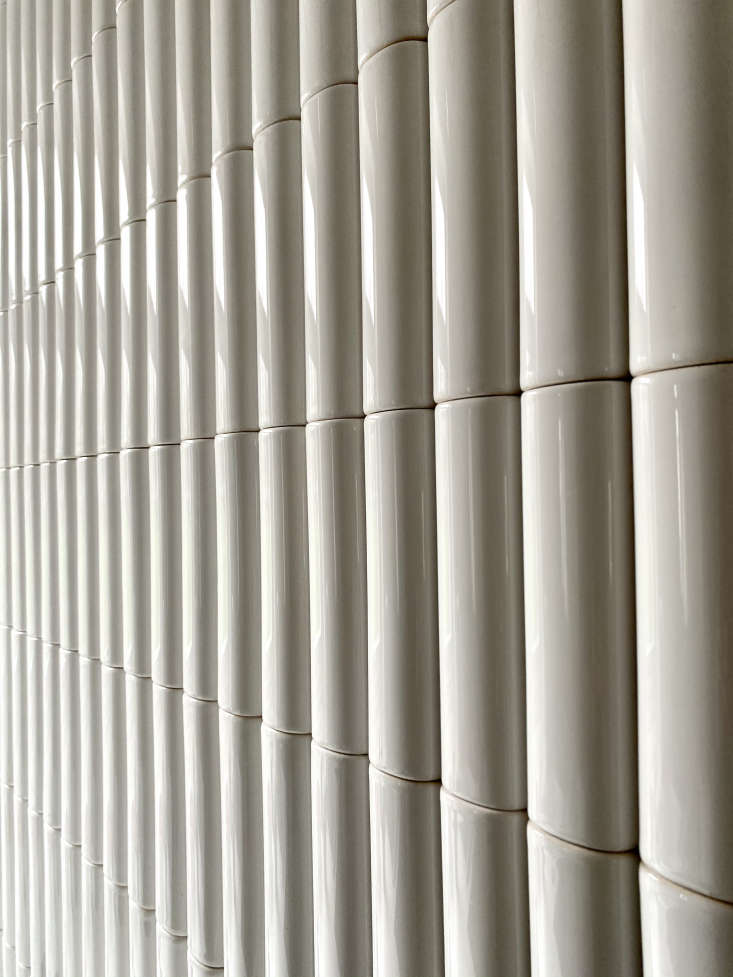
To complement the floor, we focused on the backsplash. Instead of standard subway tiles, we used 3D vertical ceramic "Soap" tiles from Kaufmann Keramik. The verticality of the tiles draws the eye upward, making the Victorian ceiling feel even loftier. The tactile, pillowed surface of the tiles catches the light at different times of the day, adding a rhythmic, architectural quality to the room.
To tie it all together, we used brass T-bar handles and faucets from Plank Hardware. The warmth of the brass acts as a "jewelry" for the kitchen, echoing the mid-century obsession with metallic accents and providing a soft contrast to the cool tones of the terrazzo and sage cabinetry.
2026 Appliance Trends: Professional Performance Meets Retro Style
As we look toward the 2026 kitchen market, there is a clear trend emerging: the "Pro-sumer" kitchen. Homeowners are no longer satisfied with basic appliances; they want professional-grade power in a residential setting. Statistics show a 25% increase in consumer preference for professional-grade appliances like ZLINE and induction cooktops in residential retrofits over the last three years.
For this London kitchen, we integrated a ZLINE dual-fuel range. The DuoPro™ burners provide the precision of a professional kitchen, while the stainless steel finish maintains a sleek, modern look that doesn’t compete with the retro elements.
For the refrigeration, we went in two directions. We used integrated LG InstaView towers to hide the bulk of the food storage behind custom Naked Doors panels, but for the "hero" piece, we added a small Big Chill retro beverage fridge in a custom cream finish. This high-low mix—professional performance hidden away and vintage style on display—is the hallmark of modern interior styling.
| Brand | Product | Feature | Design Impact |
|---|---|---|---|
| ZLINE | Dual-Fuel Range | DuoPro™ Burners | Professional Grade Performance |
| LG | InstaView Refrigerator | Knock-to-see glass | Modern convenience, hidden look |
| Big Chill | Retro Beverage Fridge | 1950s Silhouette | Focal point retro aesthetic |
| Kaufmann Keramik | 3D Vertical Tiles | Tactile 'Soap' finish | Architectural texture |
The Reality of Renovation: Timeline and Living On-Site
One of the most frequent questions I get from readers is about the logistical reality of a kitchen overhaul. Can you actually live in your house while your kitchen is a construction site?
Pro-Tip: Can you live in your house during a kitchen renovation? While technically possible, it is not recommended for families with small children or pets. A typical high-end kitchen construction, such as a London Victorian row house remodel, takes approximately six weeks from demolition to completion. During this time, you will be without a sink, stove, and often laundry facilities.
For this project, the family decided to stay in the house. While the final result was worth the wait, the six-week timeline was a lesson in patience. The first week was pure demolition—loud, dusty, and jarring. By week three, the "bones" (plumbing, electrics, and Ikea carcasses) were in place. The final two weeks were dedicated to the "jewelry"—the custom doors, the terrazzo polishing, and the delicate 3D tile installation.
If you choose to live on-site, I always recommend setting up a "temporary kitchen" in another room with a microwave, a slow cooker, and a dedicated washing station. It’s a marathon, not a sprint, and the psychological impact of living in a construction zone shouldn't be underestimated.

FAQ
Q: Is terrazzo difficult to maintain in a high-traffic kitchen? A: Real terrazzo is incredibly durable, but it is porous. It must be professionally sealed upon installation. Once sealed, it’s easy to clean with pH-neutral soap and water. Avoid acidic cleaners (like vinegar or lemon) which can etch the marble chips.
Q: How do custom fronts like Naked Doors attach to Ikea cabinets? A: They are designed to be "plug-and-play." Companies like Naked Doors pre-drill the hinge holes to match Ikea’s exact specifications, so you simply swap the standard Ikea doors for the custom ones using the same hardware.
Q: Why are 3D vertical tiles becoming so popular? A: Interior design is moving away from flat, "Instagrammable" minimalism toward "Sensory Design." 3D tiles provide a tactile experience and create shadows that change throughout the day, giving the room a more dynamic and lived-in feel.
Final Thoughts: The Retro Revolution
Moving from "90s Gloom" to "Retro Cool" isn't just about changing colors; it's about changing the energy of a room. By strategically using an Ikea Hack to save on the basics, this London family was able to invest in heritage materials like Diespeker terrazzo and Kaufmann Keramik tiles that will stand the test of time.
The result is a kitchen that feels both nostalgic and forward-thinking—a space where professional-grade performance meets a warm, curated aesthetic. If you're staring at an orange-toned kitchen from three decades ago, remember: the potential for a bespoke, high-end transformation is likely already hiding in your floor plan.