Quick Facts
- Location: 11th Arrondissement, Paris (Bastille/Oberkampf)
- Original State: A 1,270 sq ft windowless former Chinese fabric warehouse
- Key Architectural Move: The creation of a 387 sq ft "roof-free" central courtyard
- Indoor-Outdoor Ratio: Approximately 30% patio-to-living space
- Project Timeline: 24 months from site visit to occupancy (including 6 months for permits)
- Primary Materials: Pine plywood, original reinforced concrete, industrial glass, and marble
- Design Philosophy: "Raw meets Refined"—industrial heritage softened by warm, low-tech wood
Finding a diamond in the rough in the Paris real estate market often requires looking where others see only a "big box." In the dense, historic fabric of the 11th arrondissement, space is the ultimate luxury, but light is the ultimate challenge. When my clients first walked into what was once a dark, windowless warehouse used for fabric storage, they didn't see a cave; they saw a 1,270-square-foot blank canvas. The goal was ambitious: to convert this industrial void into a sun-drenched family sanctuary that felt more like a Mediterranean villa than a Parisian workshop.
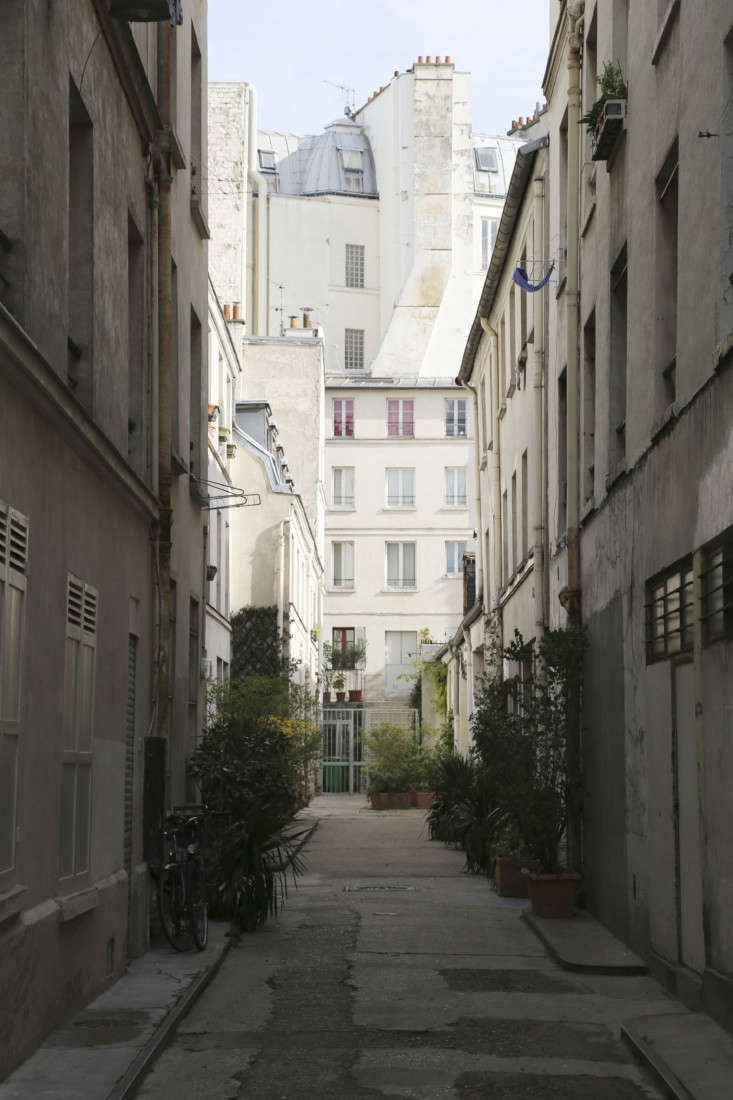
The fundamental question we face in warehouse conversion in Paris is always the same: how do you breathe life into a structure with no peripheral windows? The solution isn't found on the walls, but through the roof. By strategically removing sections of the industrial cover to create a central courtyard, we redefined the entire floor plan, ensuring that every room—from the master suite to the kitchen—had direct access to natural light and fresh air.
The Architectural Breakthrough: The Central 'Roof-Free' Courtyard
In a city as dense as Paris, the concept of a "windowless warehouse to loft" transformation sounds like a recipe for a claustrophobic basement. However, the most effective architectural solution for bringing natural light into such structures is the "inside-out" approach. Instead of fighting for exterior windows that the local Plan Local d’Urbanisme (PLU) might not allow, we carved out the center of the building.
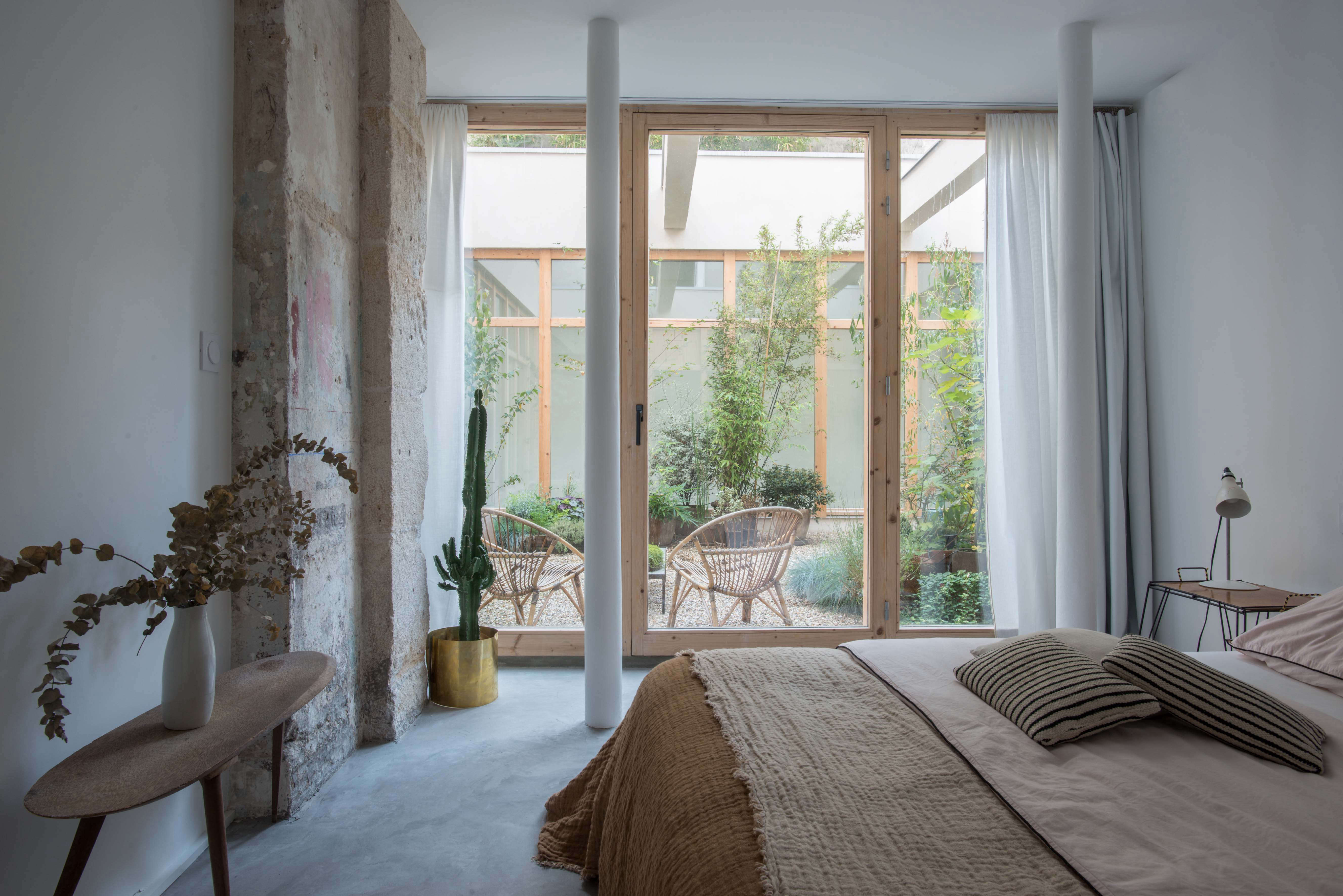
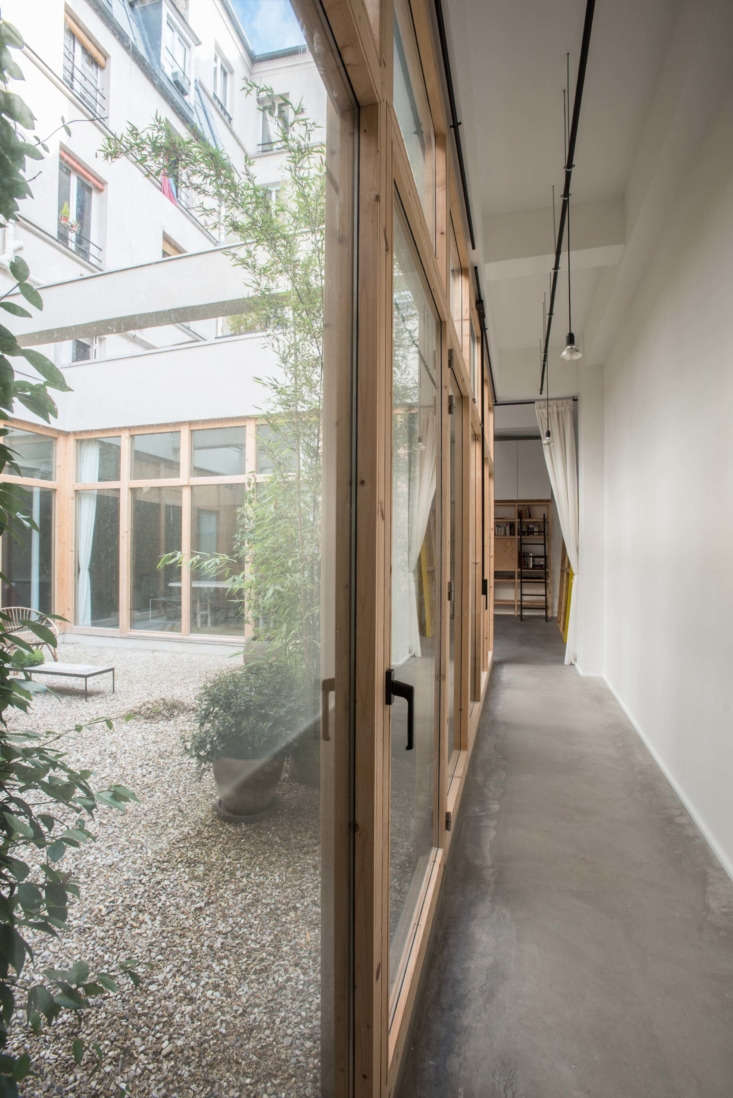
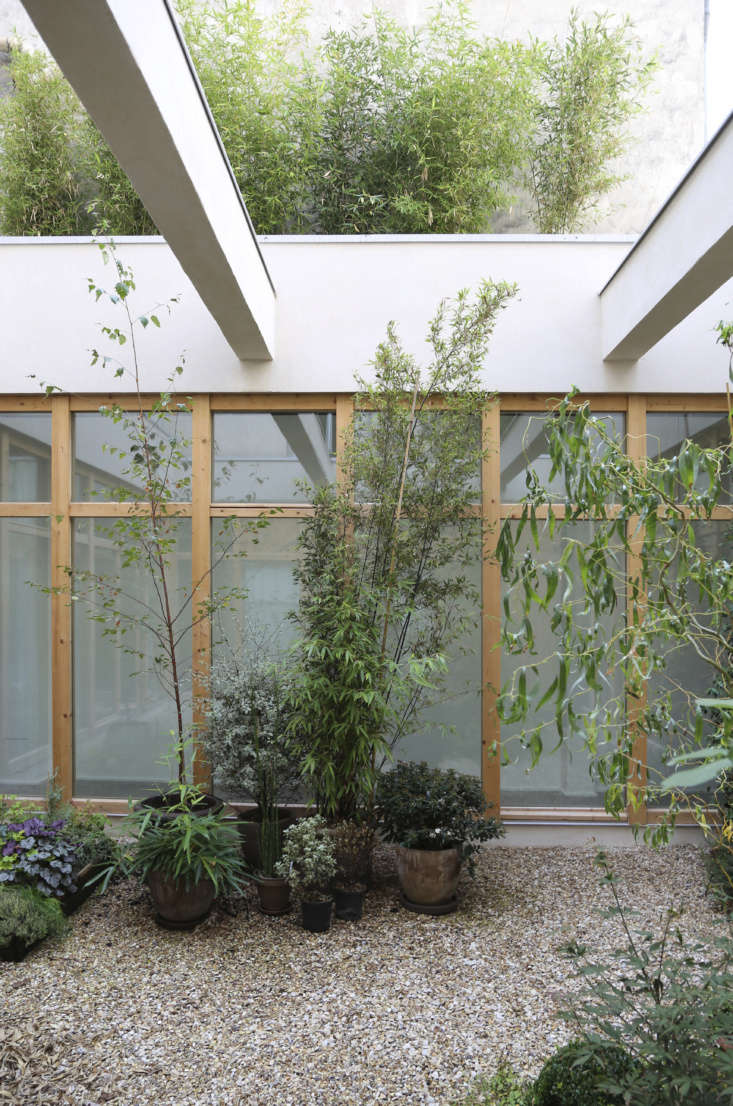
This wasn't just a small light well. We dedicated 387 square feet of the footprint to an open-air patio. This provided a staggering 30% outdoor-to-indoor space ratio. By removing the heavy roof panels but preserving the original structural concrete beams, we created a skeleton that filters sunlight throughout the day.
Ivy’s Style Tip: When designing around a central courtyard, use floor-to-ceiling glass partitions. It transforms the courtyard from a "room" into a living piece of art that changes with the Parisian seasons.
Every room in this 1,270 sq ft sanctuary now flows around this light source. The kitchen looks across the patio toward the bedrooms, creating a visual connectivity that makes the home feel much larger than its square footage suggests. This "biophilic" layout is essential for industrial family loft design, where the lack of traditional views is compensated for by an internal, private garden.
The Material Palette: 'Raw meets Refined'
To keep the project within a realistic budget while maintaining a high-end editorial aesthetic, we leaned into the "Raw meets Refined" philosophy. The primary materials used in modern industrial loft conversions today are no longer just cold steel and brick; we are seeing a massive shift toward pine plywood for warmth.
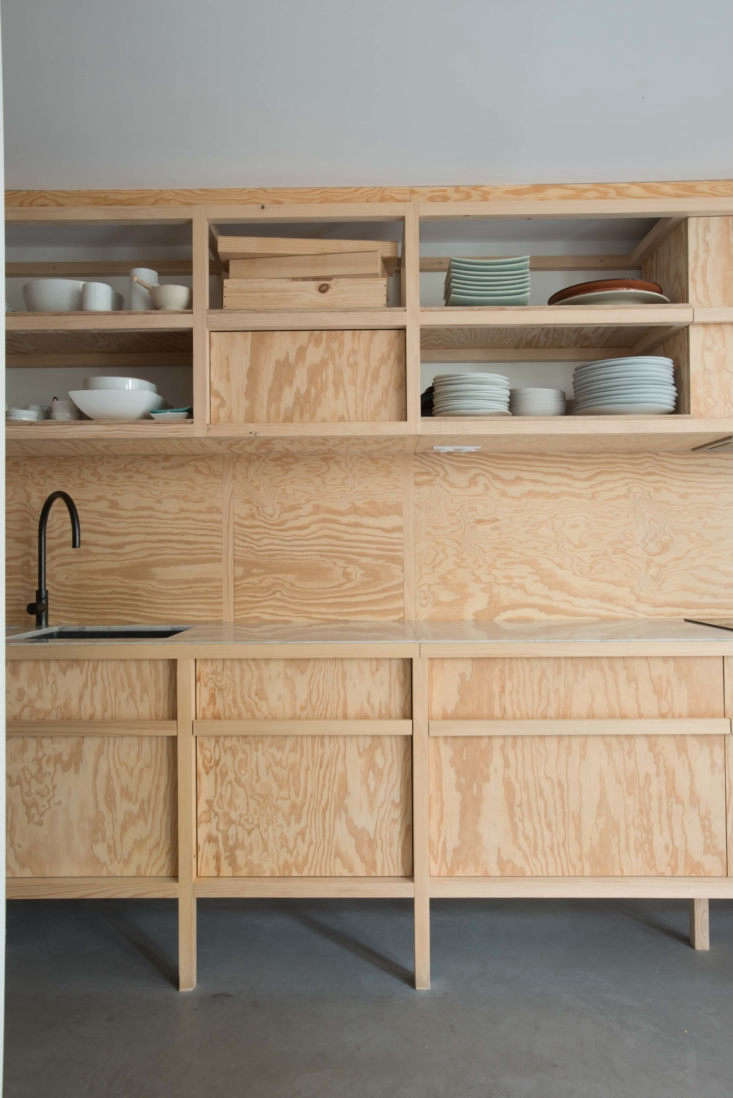
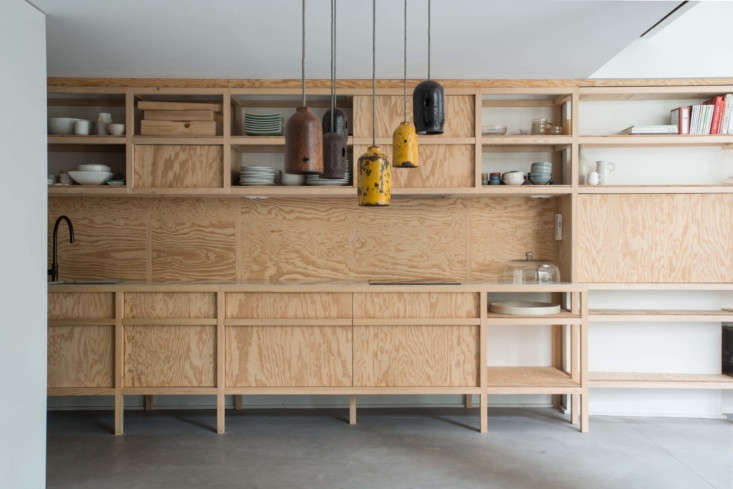
Pine plywood is often dismissed as a "construction-grade" material, but in a sprawling industrial space, it provides the necessary organic texture to balance the original concrete structure. We used it for everything from floor-to-ceiling cabinetry to mezzanine stairs. This "low-tech" material adds a golden, honeyed glow to the rooms, preventing the loft from feeling like a sterile gallery.
To elevate the plywood, we paired it with "high-low" finishes:
- The Raw: Original concrete floors (polished and sealed) and exposed structural beams.
- The Refined: Carrara marble countertops in the kitchen and matte black hardware from brands like Duravit and Villeroy & Bosch.
- The Heritage: Salvaged industrial lighting, including original Edison-style bulbs and factory pendants, to honor the building’s history as a garment workshop.
Interior Zoning: Open-Plan Living Without Losing Privacy
The challenge with a "big box" warehouse is how to create distinct zones without building heavy walls that block the very light we fought so hard to let in. Our solution was the "packing crate" concept. We designed the internal structures—the bedrooms and bathrooms—as if they were oversized wooden crates placed within the larger volume.
The plywood hallways act as the connective tissue of the home. These aren't just transition spaces; they are functional. One side of a hallway might be a deep wardrobe, while the other is a library. By using custom plywood shelving units that extend through the loft, we maintained a sense of continuity. These units eventually morph into the kitchen cabinetry, creating a seamless visual flow.
For the guest areas and home offices, we utilized the high 14-foot ceilings to create mezzanine levels. This vertical expansion is a hallmark of converting commercial space to residential in 2026, where the "volume" of a space is valued just as much as its "surface area."
Navigating Paris 2026: Permits and the 'Reversible Permit' Law
If you are planning a warehouse conversion in Paris, you must be prepared for the administrative marathon. Project data from high-density urban zones like Bastille or the 11th arrondissement indicates that a full industrial-to-residential renovation takes an average of 24 months to navigate from the initial site visit to the day you move in.
The most critical hurdle is the "Change of Purpose" (Changement de destination). In Paris, converting a commercial space (like a fabric warehouse) to a residential one requires strict adherence to the Plan Local d’Urbanisme (PLU).
| Phase | Duration | Key Requirements |
|---|---|---|
| Site Audit & Feasibility | 2 Months | Structural survey, light path analysis, asbestos check. |
| Permit Application | 6 Months | Submission to the Mairie de Paris; requires architect's seal. |
| Construction & Fit-out | 12-14 Months | Structural reinforcement, courtyard excavation, utility routing. |
| Final Inspection/Occupancy | 2 Months | Compliance with 2025/2026 thermal regulations (RE2020). |
By 2026, the "Reversible Building Permit" will become even more relevant. This allows developers and homeowners to design spaces that can easily transition between commercial and residential use without a full permit overhaul, a move by the city to future-proof property values and adapt to the "work-from-home" culture.
Sustainable Urban Living: Insulation and Efficiency
A windowless warehouse is often a "thermal sieve." To make this a comfortable family sanctuary, we had to upgrade the industrial insulation to meet the rigorous 2025/2026 energy standards. This involved "box-in-box" insulation, where we built an insulated shell inside the original masonry.
The central courtyard also plays a functional role in climate control. Using "stack effect" ventilation, the courtyard acts as a natural chimney, pulling hot air out of the living spaces during the humid Parisian summers. To enhance the air quality, we integrated a micro-garden within the patio.
We used a mix of:
- Bamboo: For vertical greenery and privacy.
- Aromatic Plants: Lavender and rosemary to provide a sensory "Paris-meets-Provence" experience.
- Pea Gravel: For a permeable, low-maintenance floor that feels like a traditional French park.
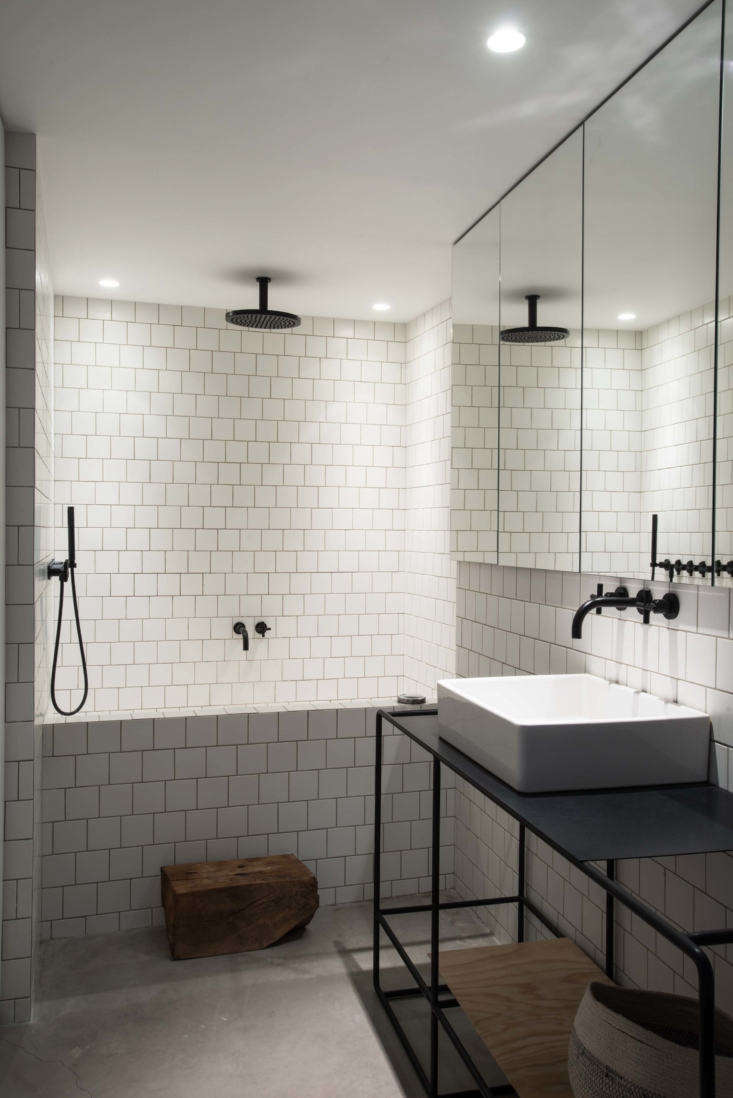
Even the private spaces, like the master bath, were designed to feel connected to the building's industrial roots. We used steel-framed glass doors and classic white tiling, accented by high-end matte black fixtures from Duravit. This ensures that even the most "modern" parts of the home still tip their hat to the garment-district history of the 11th.
Conclusion: The Reward of Industrial Conversion
The journey from a windowless, dusty fabric warehouse to a sun-drenched sanctuary is not for the faint of heart. It requires a 24-month commitment and the willingness to sacrifice square footage (like our 387 sq ft courtyard) to gain quality of life.
However, the result is a home that is entirely unique—a private oasis hidden behind a nondescript Parisian door. By using a palette of humble materials like pine plywood and celebrating the raw concrete bones of the past, we created a space that feels both historic and ahead of its time. In the world of interior design, the most rewarding projects are those that find the light where no one else thought to look.
FAQ
What is the difference between 'change of use' and 'change of purpose' in Paris? "Change of Use" (Changement d'usage) is a purely administrative categorization regarding whether a space is for living or working. "Change of Purpose" (Changement de destination) is a more technical urban planning term required when you are physically altering a building's function, such as turning a warehouse into a home. Both are required for a legal conversion in Paris.
How much does a warehouse conversion cost compared to traditional apartments? Typically, the purchase price per square meter is lower for warehouses, but renovation costs are significantly higher (often 2-3 times higher than a standard apartment refresh) due to the need for structural changes, new plumbing, and heavy-duty insulation.
Is a central courtyard feasible for all single-story warehouses? Architecturally, yes, but legally, it depends on the local PLU. You must ensure that removing a section of the roof does not violate density laws or impact the structural integrity of neighboring buildings, which is why a 24-month timeline for planning and execution is standard.