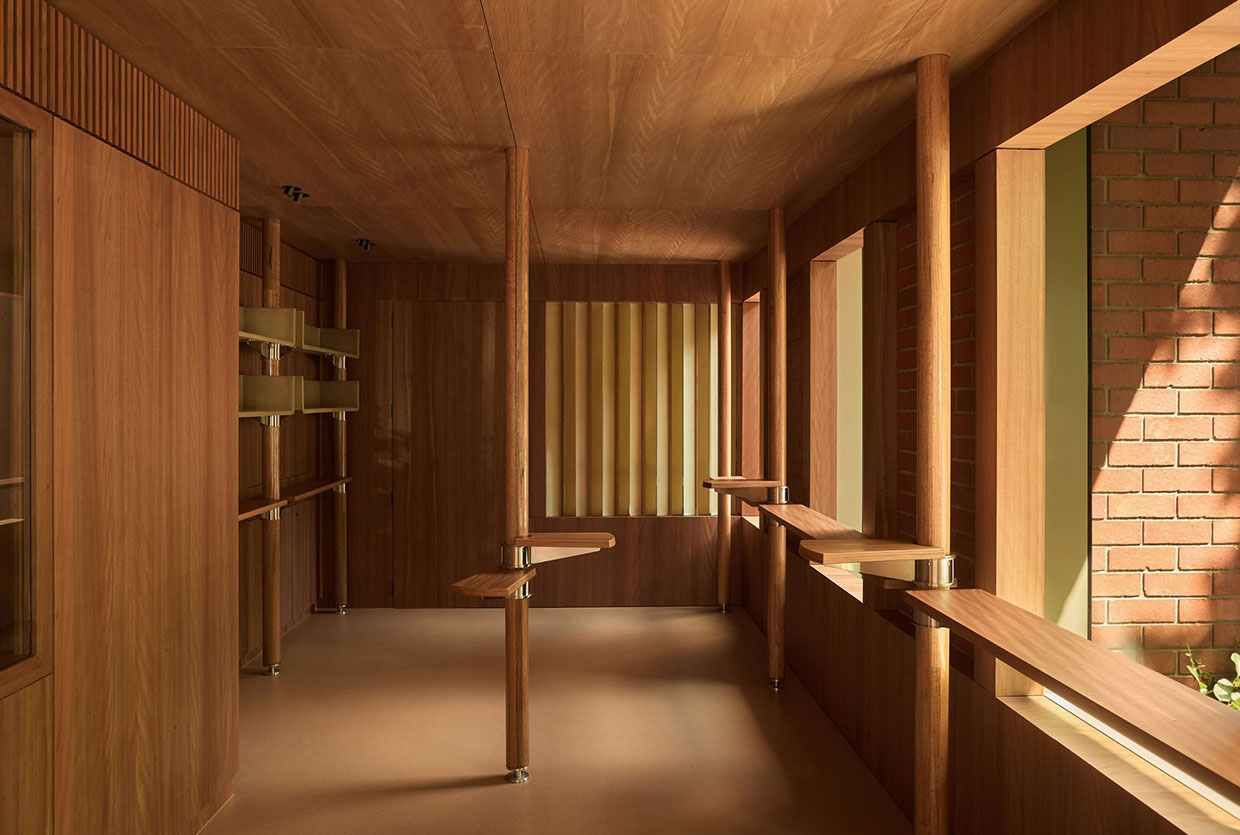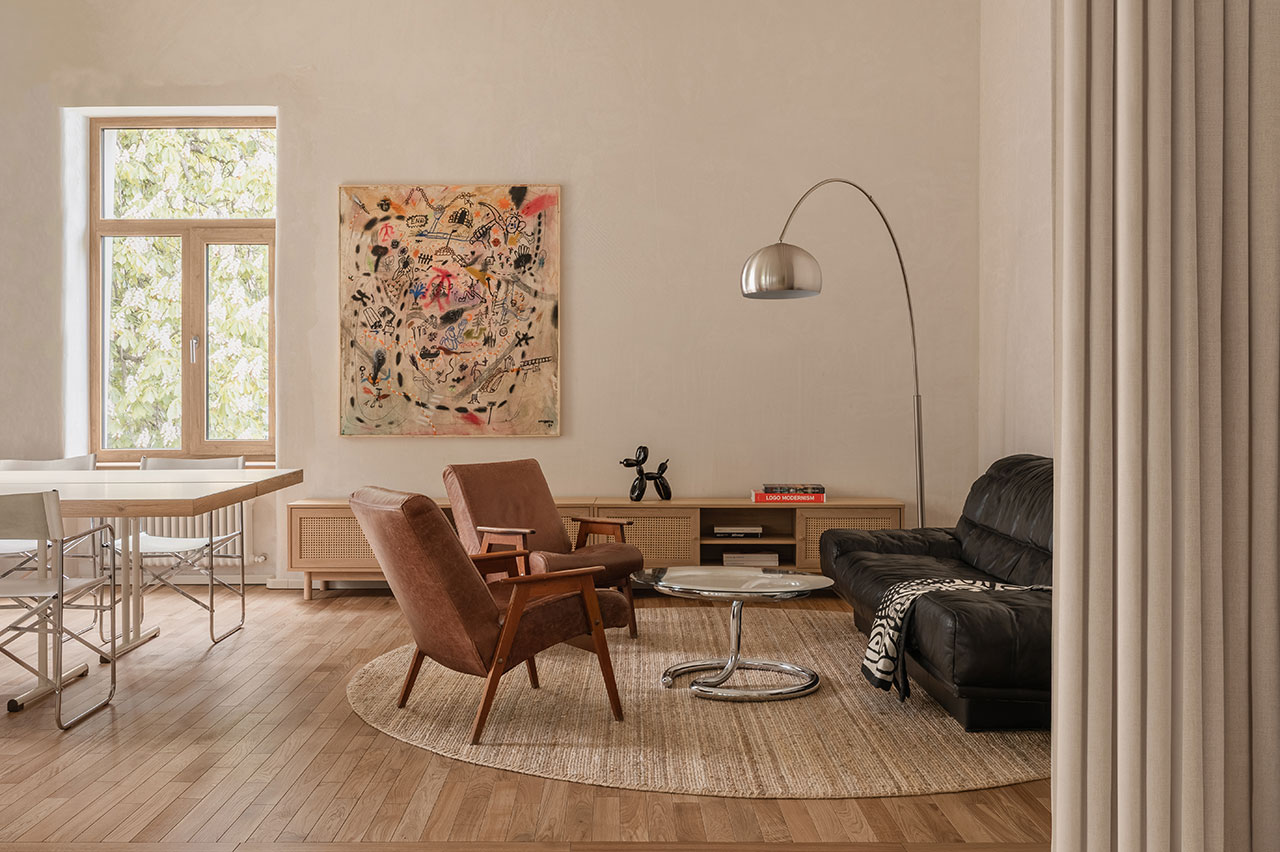
Imagine walking into a space that feels less like a high-stakes headquarters and more like the expansive, sun-drenched loft of a brilliant friend. In the heart of Kyiv, within a building that breathes the history of the early 20th century, ater.architects has redefined the "office" for the Banda Agency. The challenge was clear: create a workspace for a firm that generates a steady stream of ideas, where the rigidity of a 2019-style cubicle would act as a creative chokehold.
Rejecting corporate norms, ater.architects designed the Banda Agency office as a "spacious shared apartment." Spanning 3,229 square feet, this creative workshop replaces fixed desks with a flexible layout where every single zone is transformable. By utilizing a podium-based corridor and modular 12-person tables, the office can transition from a standard collaborative layout to a full-scale presentation stage in under 60 seconds. It is a masterclass in hybrid architecture, successfully integrating 100% of its workstations into a multi-functional floor plan, with only one dedicated mezzanine level for fixed monitors.
A Historic Canvas: Early 20th-Century Architecture Meets Industrial Modernism
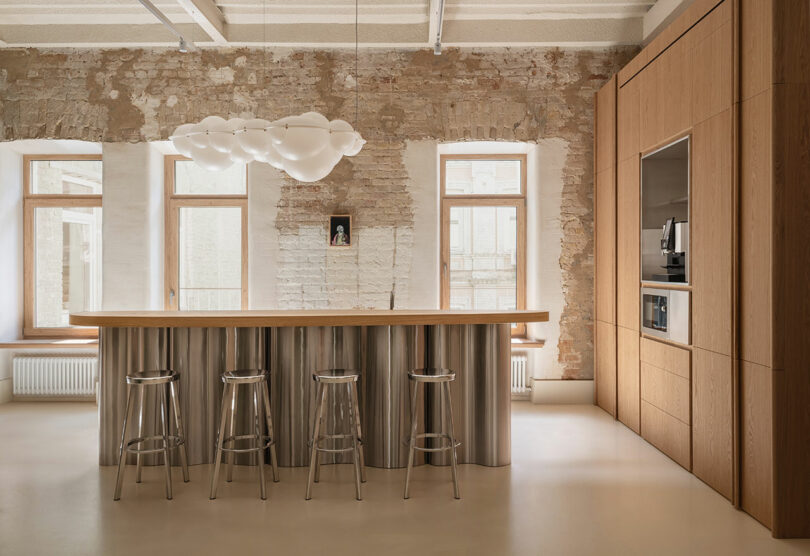
To step into the Banda Agency is to witness a deliberate friction between eras. The architects chose not to erase the building's soul but to amplify it. They meticulously restored original early 20th-century moldings and decorative friezes, allowing the weight of history to ground the space. However, this isn't a museum. The strategy here is high-contrast: the ornate plasterwork is met with the cold, sleek surfaces of reflective aluminum and stainless steel.
This juxtaposition serves a dual purpose. It honors the Kyiv heritage while meeting 2026 hybrid needs, where technology and biophilic light must coexist. We see this tension most clearly in the reception area, where the curved, futuristic desk acts as a foil to the classical geometry of the ceiling.
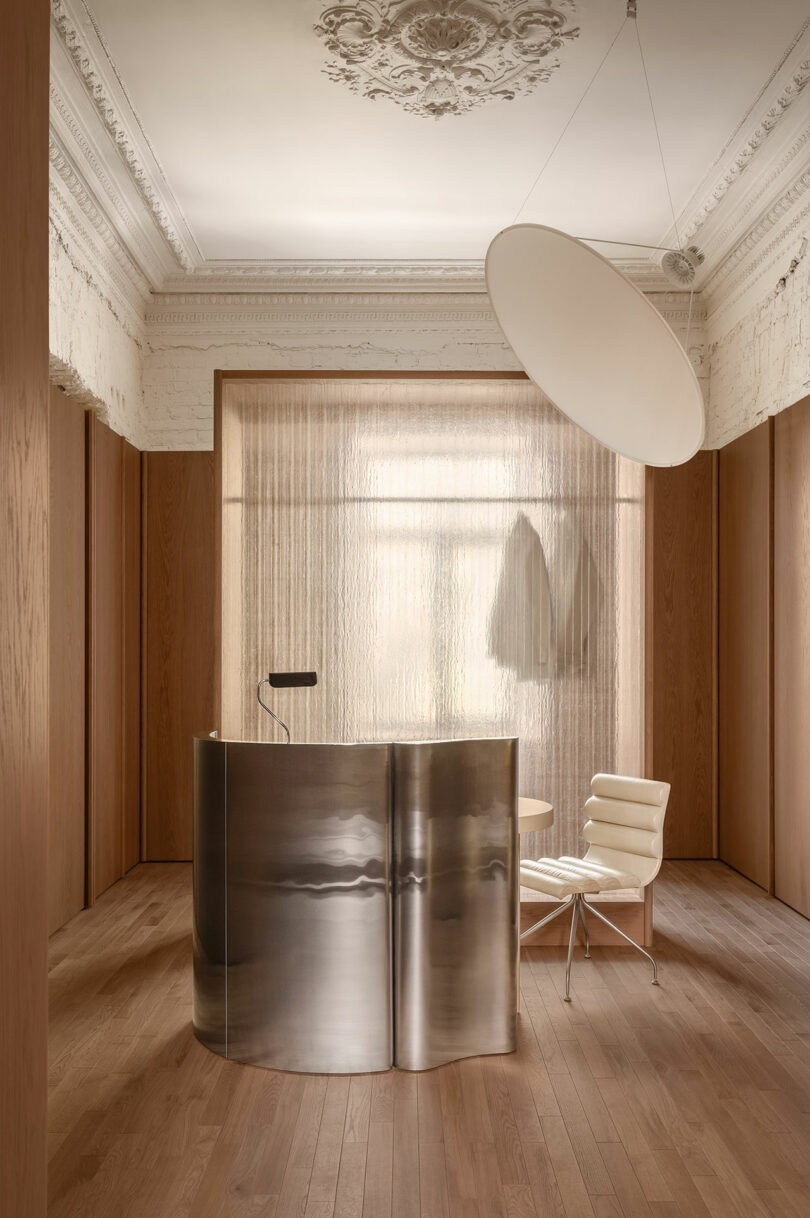
The design team utilized high-contrast elements not just for aesthetics, but to define "mood zones" without the need for walls. In an era where employees crave variety, the shift from a textured, historic corridor to a bright, industrial workstation provides a mental reset.
The Main Hall: A Masterclass in Hybrid Flexibility
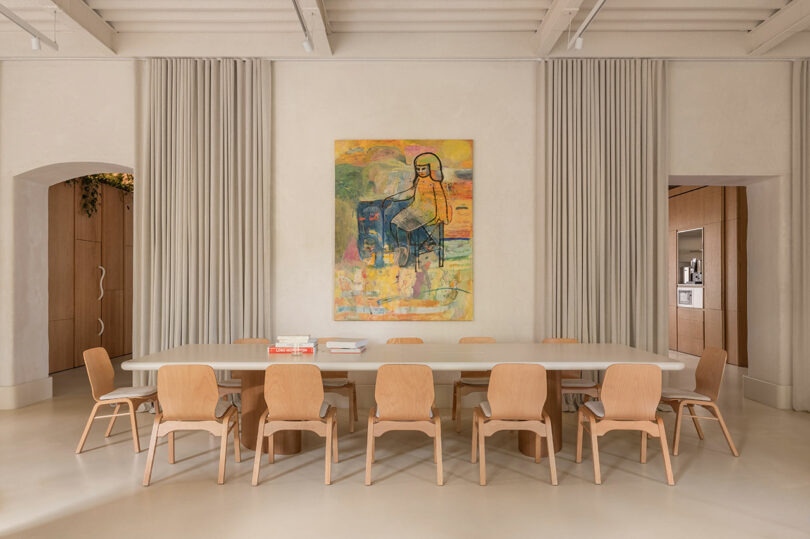
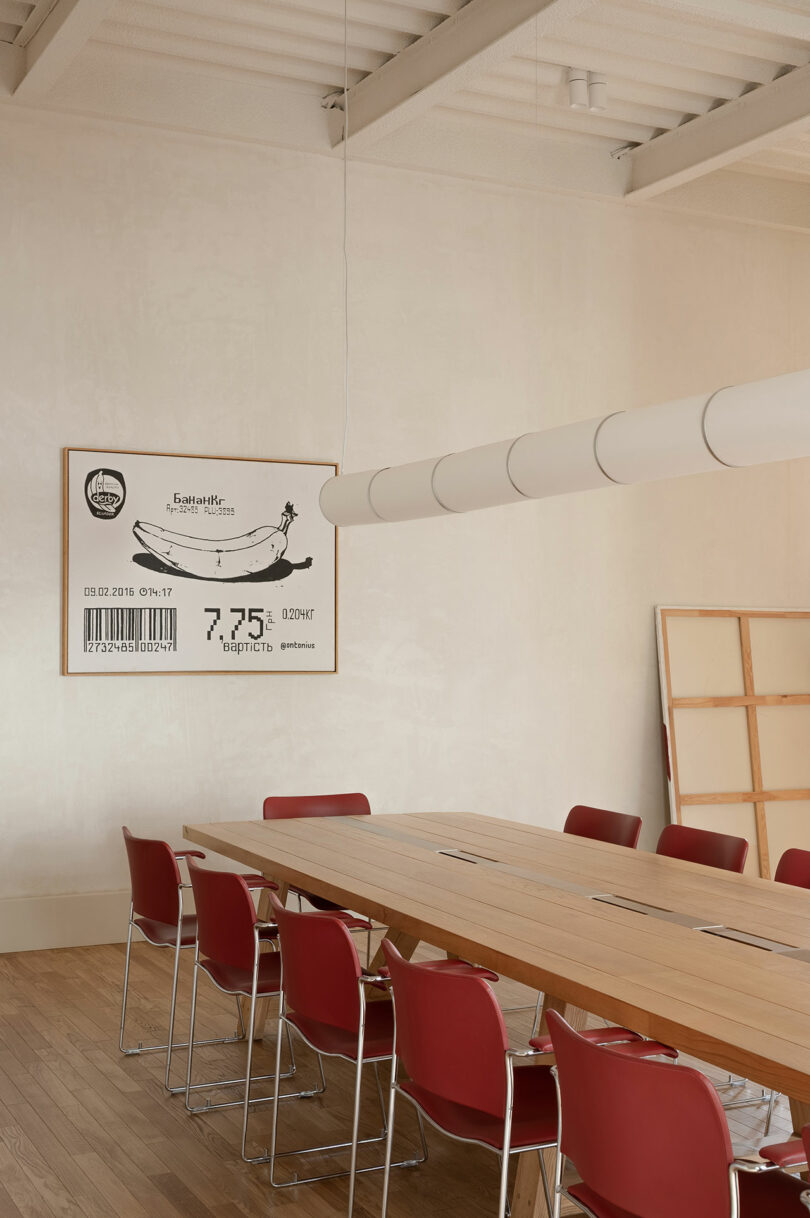
The heart of the 3,229-square-foot workshop is the Main Hall. Here, the "Shared Apartment" concept reaches its peak. Corporate cubicles are entirely absent, replaced by oversized, modular 12-person tables that resemble communal dining furniture more than office desks. This setup encourages a "steady stream of ideas," allowing teams to expand or contract based on the project's needs.
One of the most innovative features is the podium-based corridor. Rather than serving as a simple walkway, this raised platform doubles as a stage. When the agency hosts events or presentations, the furniture—all of which is mobile—can be shifted aside, turning the entire hall into an auditorium.
Why Flexibility Trumps Density in 2026
Modern workspace design has shifted. It is no longer about how many people you can fit per square foot, but how many functions you can fit into the same space. ater.architects achieved this through:
- Modular Furniture: Heavy-duty tables that can be separated or joined in seconds.
- Low Storage Units: These act as invisible boundaries, defining zones without blocking sightlines or natural light.
- Vintage Curation: The use of vintage 1980s chairs adds a residential, eclectic feel that softens the industrial edges.
| Feature | Traditional Corporate Office | Banda Agency Workshop |
|---|---|---|
| Desk Layout | Fixed, assigned cubicles | Modular, 12-person shared tables |
| Transition Time | Permanent | Under 60 seconds to event-ready |
| Acoustics | Carpet & dropped ceilings | Soundproof 'Trams' & fleece pile |
| Aesthetic | Uniform/Brand-centric | Eclectic 'Shared Apartment' |
Private Nodes: Mezzanines, Zoom Rooms, and Acoustic Trams
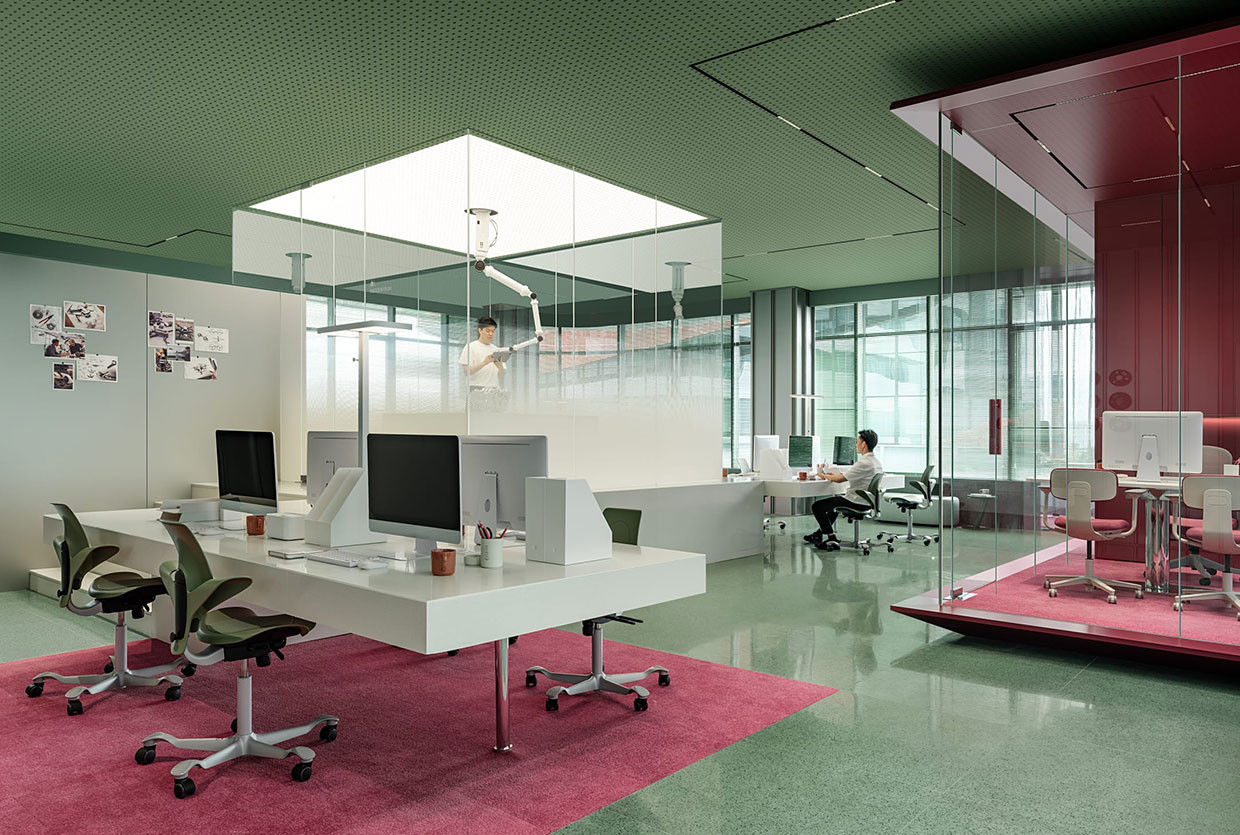
While the open-plan layout facilitates collaboration, ater.architects understood that deep work and private calls are the pillars of a functional day. To solve the perennial "open office" noise problem, they introduced dedicated workstations with fixed monitors on a private mezzanine. This vertical separation creates a literal hierarchy of focus—collaborate below, execute above.
For communication, the architects designed soundproof "Zoom rooms" inspired by urban transit. These "Tram" nodes feature rounded glass panels and high-profile fleece pile for exceptional acoustic management.
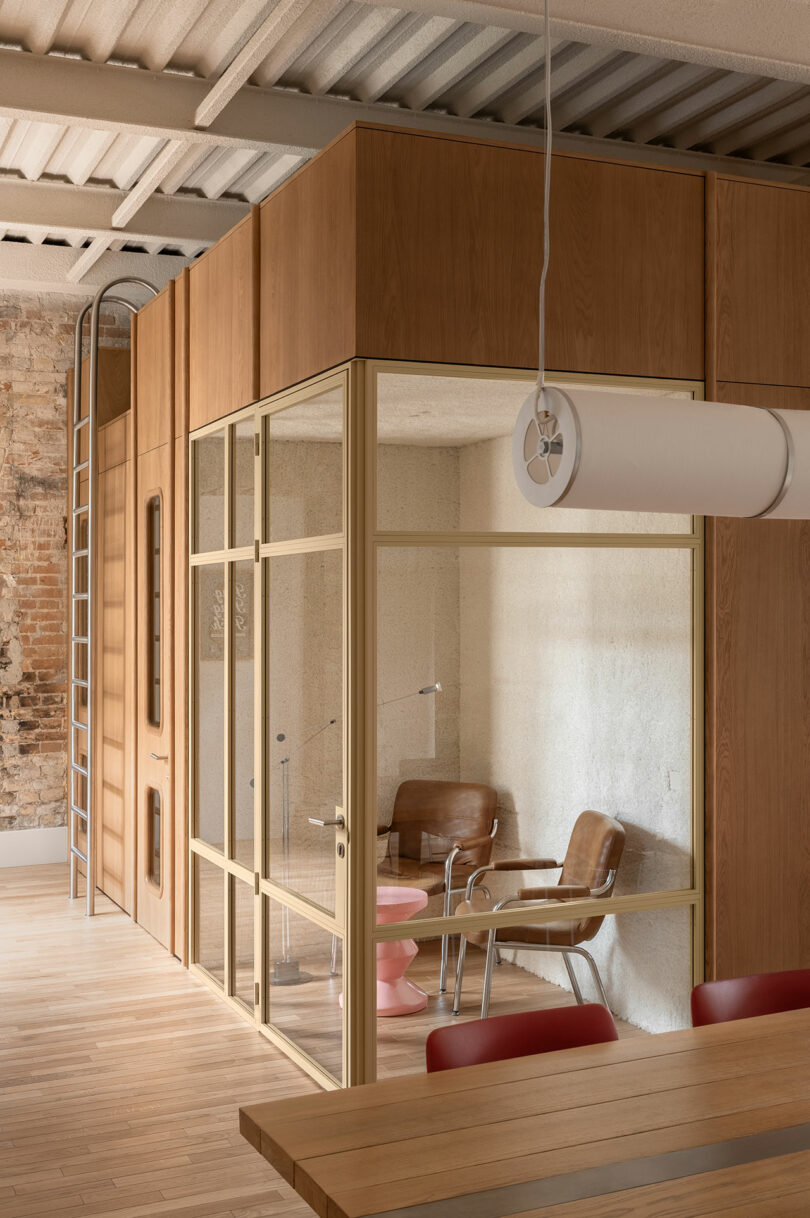
In a 2026 hybrid environment, acoustic excellence is non-negotiable. By using sound-absorbing fabrics and strategic glass placement, the agency ensures that a brainstorming session in the main hall doesn't interfere with a high-stakes client call in the Tram.
The Cloud Lounge: A Sensory Escape Above the Workflow
Perhaps the most talked-about feature of the project is the Cloud Lounge. Located directly above the main hall and accessed via a steep metal ladder, this relaxation zone is a radical departure from the "breakroom" trope. The entire space is fully upholstered in a sky-print fabric, creating an immersive, sensory escape.
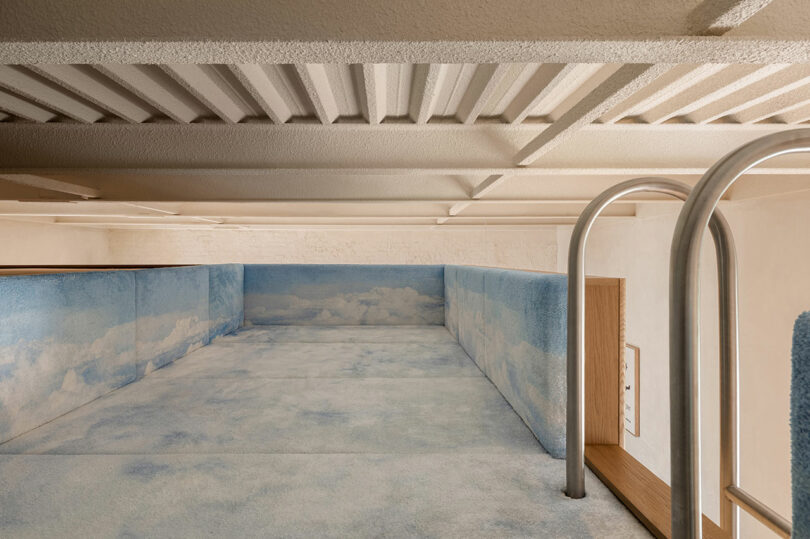
The psychological impact of such a space cannot be overstated. In dense urban environments like Kyiv, providing a visual escape that mimics the openness of the sky helps mitigate the stress of high-output creative work. It is an "acoustic and visual cocoon" where employees can recharge, meditate, or simply look at work from a different perspective.
The Creative Workshop: Prototyping and Brand Heritage
Banda Agency isn't just a place where people type; it's a place where they make. To support this, the architects integrated a dedicated workshop area. Moving beyond mere aesthetics, the space utilizes aluminum pegboards for tool storage and model-making. This functional depth ensures that the tools of the trade are always within reach but organized as a visual design element.
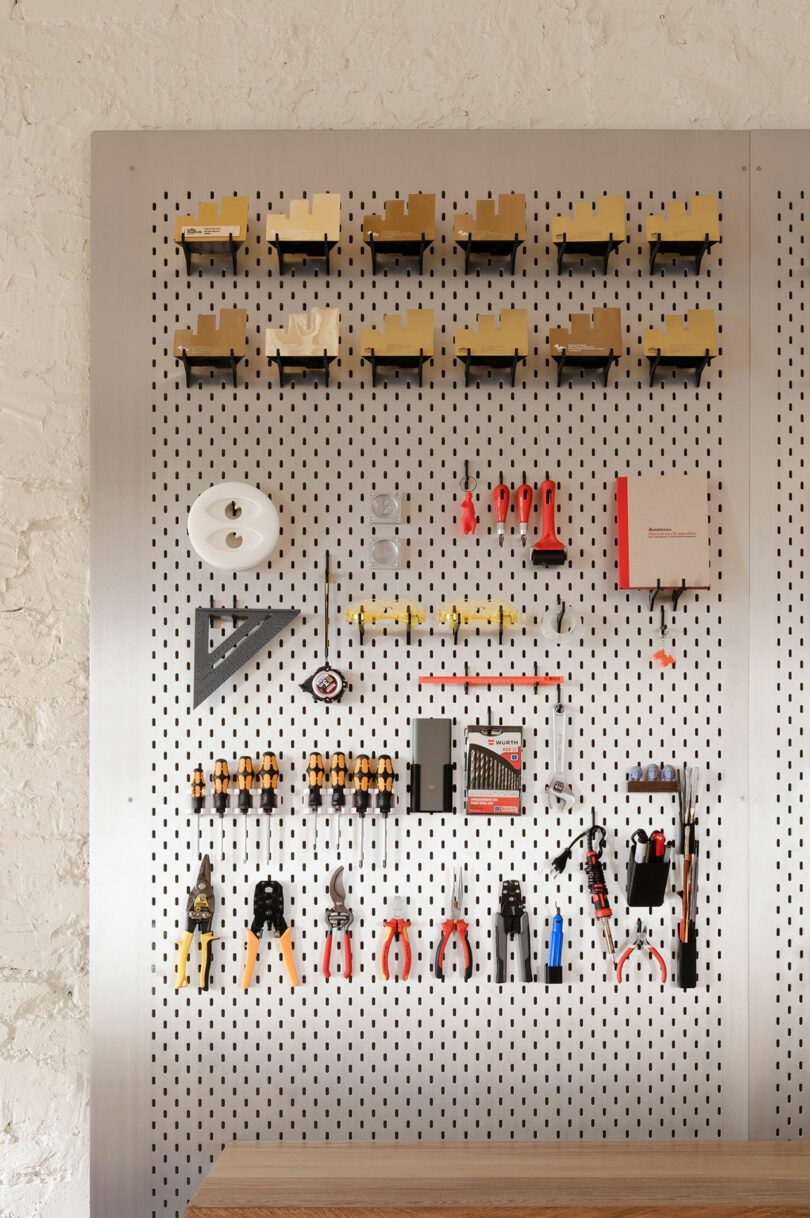
Furthermore, the brand’s heritage is woven into the very fabric of the office. The agency's numerous awards are not hidden in a glass case but integrated into the makerspace and communal areas. This fosters a sense of collective pride and reminds the team of their creative identity every time they reach for a prototyping tool.
Applying the Banda Model: Office Design Trends for 2026
The ater.architects project for Banda Agency serves as a blueprint for the "Experience-Driven" workspace. As we look toward the future of office design, several elements from this project stand out as non-negotiable for creative firms:
- Transformability: The ability to change a room's function in minutes.
- Residential Comfort: Using residential-style kitchens and vintage furniture to reduce "office fatigue."
- Vertical Zoning: Utilizing mezzanines to separate collaborative noise from "deep work" silence.
- Acoustic "Nodes": Soundproof pods that allow for digital connectivity without disrupting the floor.
- Sensory Escapes: Dedicated areas for mental decompression (like the Cloud Lounge).
- Human-Centric Lighting: Balancing natural light from historic windows with high-contrast architectural lighting.
- Neurodiversity Support: Offering different types of seating and environments (pods, open tables, soft lounges) to cater to different cognitive styles.
The success of the Banda office lies in its rejection of the "one size fits all" corporate mentality. By treating the office as a living, breathing workshop—a "shared apartment" for ideas—ater.architects has created a space that doesn't just house a team, but actively fuels their creative process.
FAQ
How does the office transition from a workspace to an event space in 60 seconds? The office uses heavy-duty modular tables on wheels and a podium-based corridor. By pushing the modular 12-person tables to the periphery, the central "apartment" floor becomes a clear auditorium or gallery space, with the podium serving as a natural stage.
What materials were used to balance the historic building with modern needs? The architects used a "contrast strategy," pairing original 20th-century plaster moldings and friezes with industrial materials like reflective aluminum, stainless steel, and high-profile fleece pile for acoustics. This creates a bridge between Kyiv’s architectural heritage and a futuristic, functional aesthetic.
Why is the "Cloud Lounge" accessed by a ladder? The ladder access serves as a physical and mental "threshold." By climbing away from the main workflow, employees undergo a transition into a dedicated rest state. The immersive sky-print fabric then provides the sensory shift needed for mental recharging.