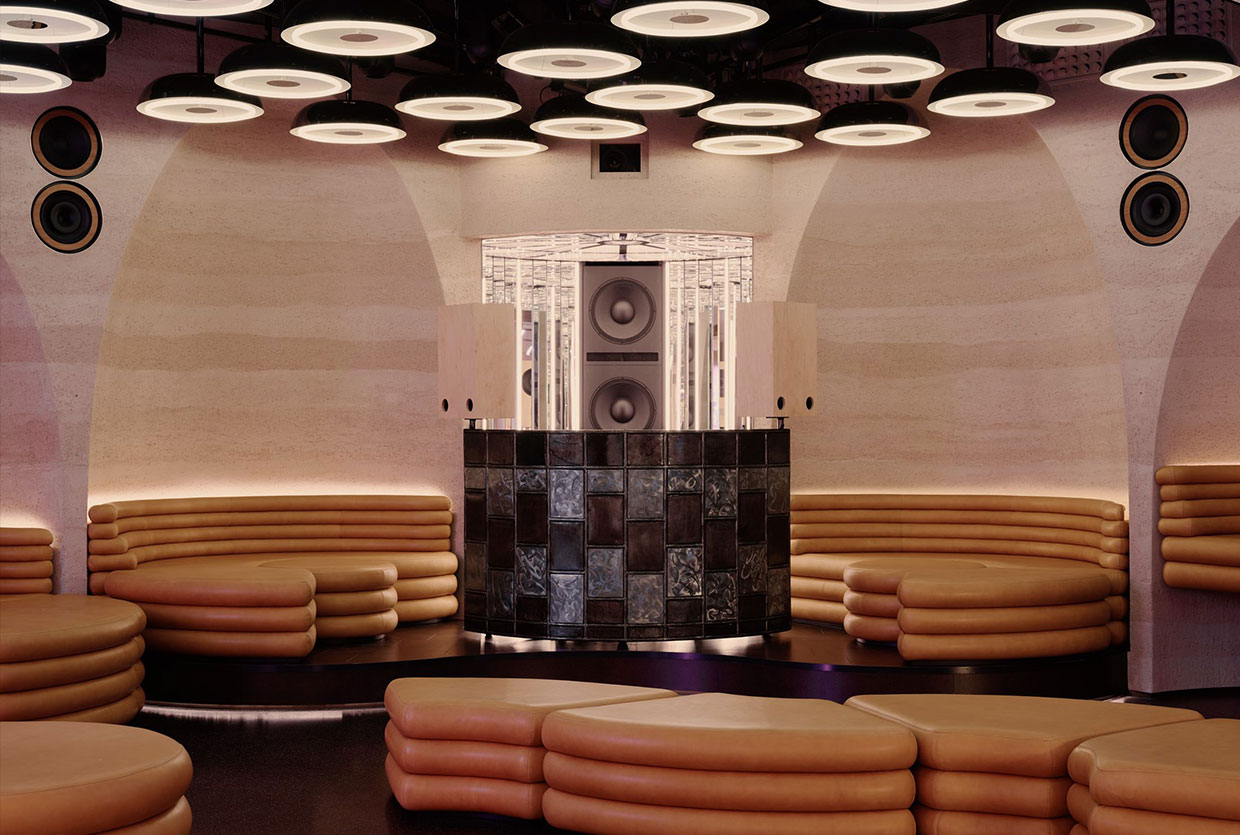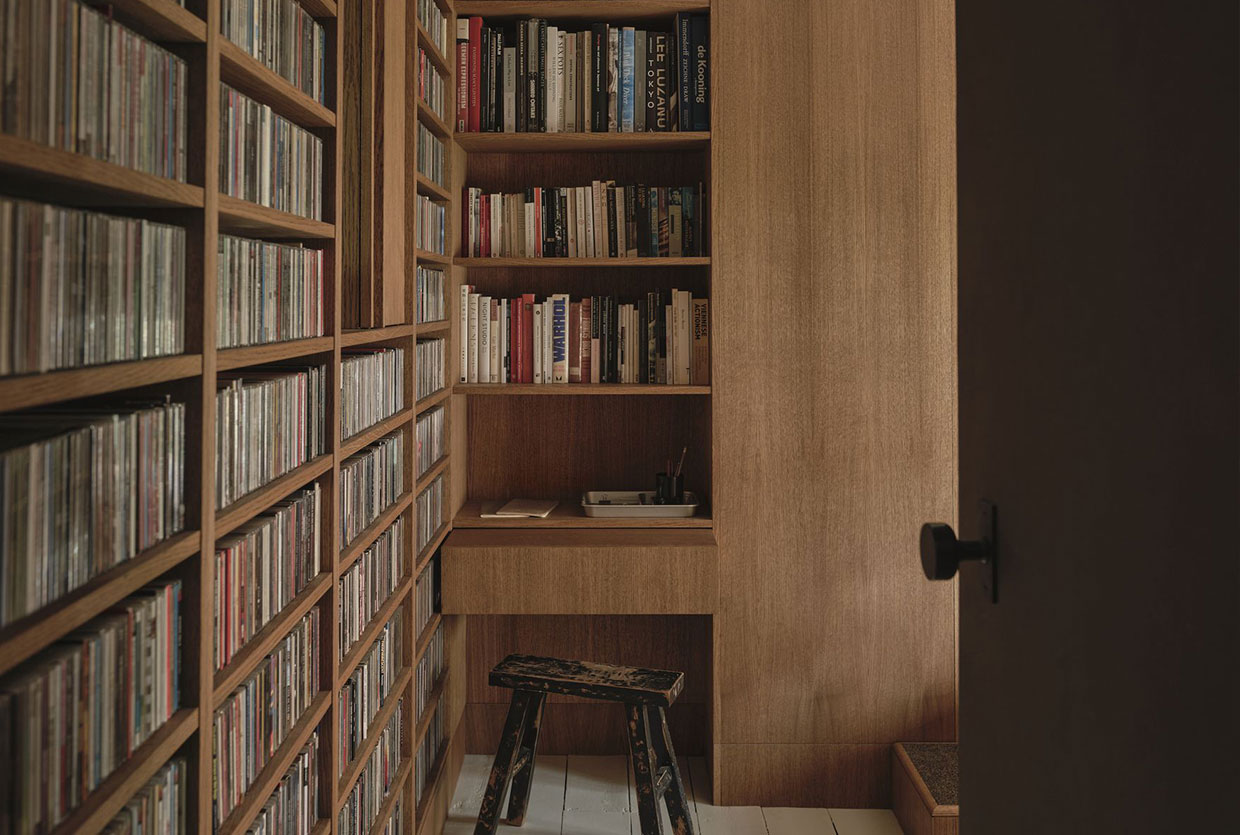
You know the feeling when you stand before the steel-clad doors of a legendary nightclub—the anticipation, the sensory weight of concrete, the hum of bass that feels like it’s vibrating through your very marrow. Now, imagine that visceral, subterranean energy translated into the sanctuary of a private home. This is the realm of Studio Karhard.
Founded twenty years ago by Thomas Karsten and Alexandra Erhard, the Berlin-based architecture firm has spent two decades shaping the city's subculture. Most famously, they are the minds behind the interior of Berghain, arguably the world’s most exclusive techno temple. But their latest residential triumph, a project dubbed "B32" in the heart of Kreuzberg, proves that "Techno Fantasy" isn't just for the dancefloor—it is a sophisticated, livable design language for the modern avant-garde.
Quick Facts: The Studio Karhard Blueprint
- The Architects: Thomas Karsten and Alexandra Erhard, the visionary duo behind Berghain’s iconic industrial aesthetic.
- The Philosophy: "Techno Fantasy"—a blend of industrial brutalism, futuristic lighting, and high-end tactile luxury.
- The Heritage: 20 years of architectural expertise rooted in Berlin’s subcultural movements.
- The Strategy: Utilizing "light scenes" and "material alchemy" to balance cold industrial surfaces with warm, human-centric comfort.
- The Key Project: B32, a radical "gut-out" renovation in Kreuzberg that optimized a standard layout into a futuristic 3-room sanctuary.
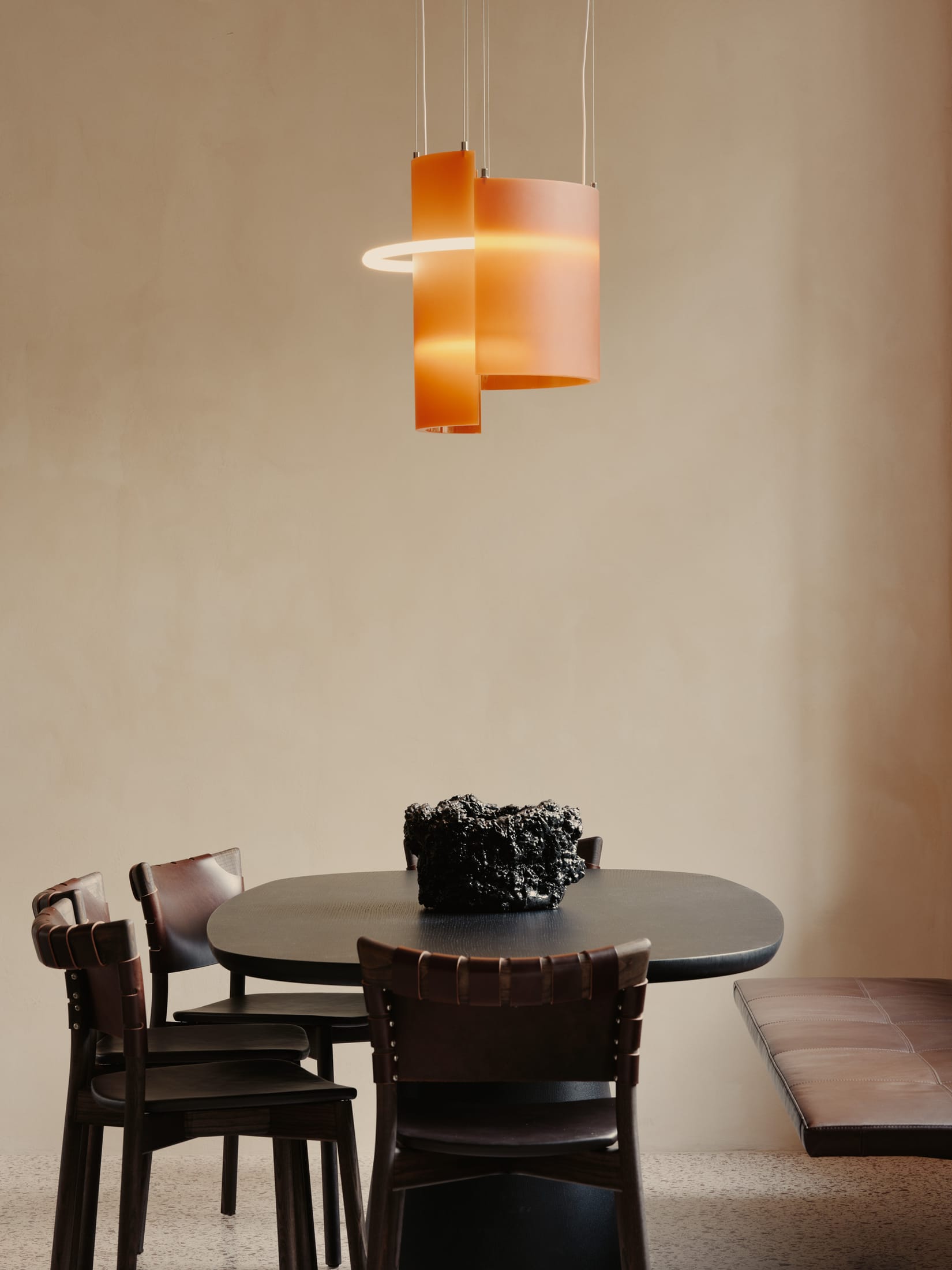
The Kreuzberg Project: A Radical Reconfiguration
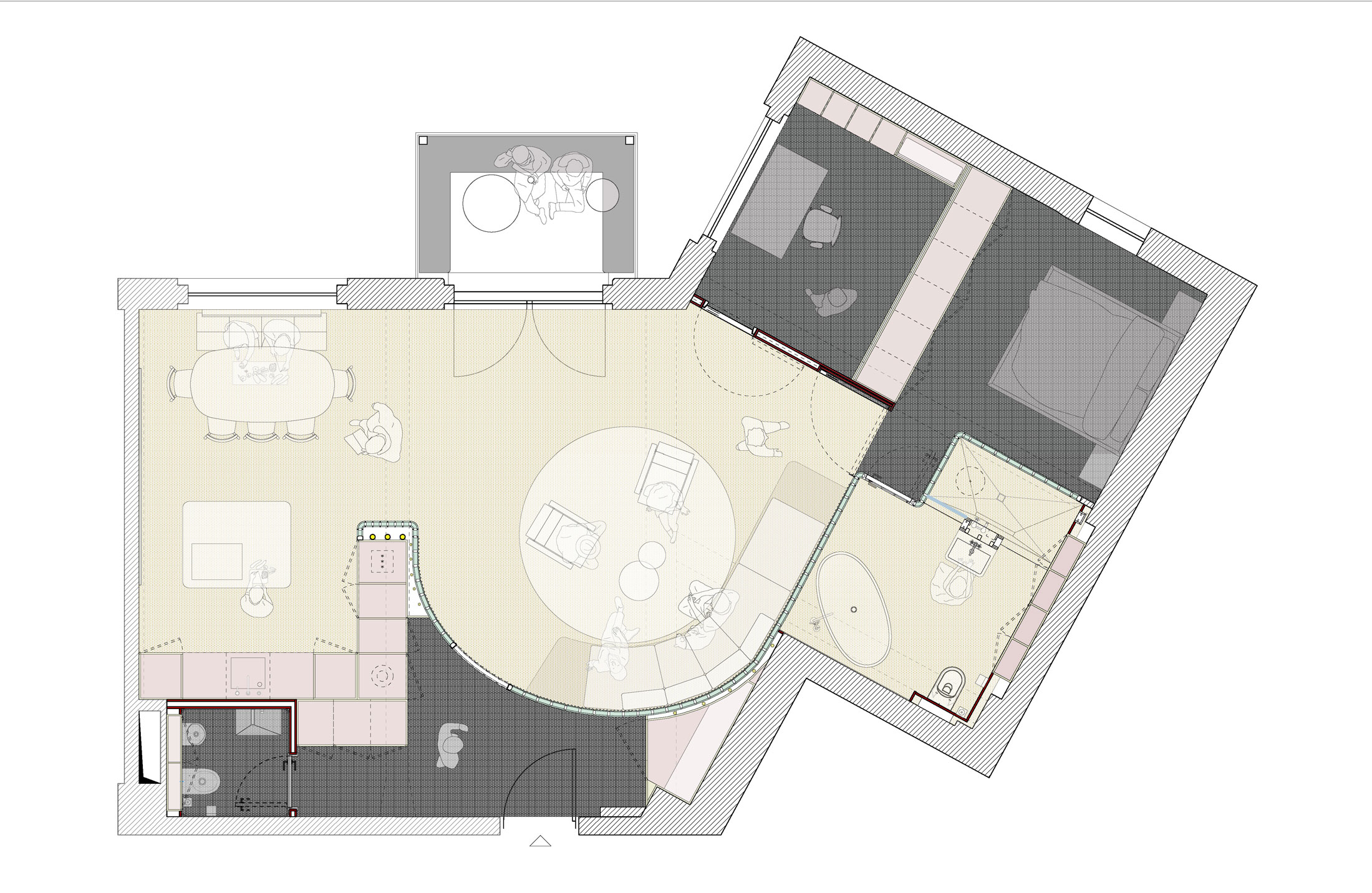
The challenge of the B32 apartment was one common to many historic European cities: a cramped, standard two-room layout that felt disconnected from the vibrant, fluid lifestyle of its owner. Studio Karhard approached the space not with a paintbrush, but with a sledgehammer.
Through a full "gut-out" renovation, the team stripped the apartment to its bare bones, successfully reconfiguring the layout to convert 2 rooms into a highly functional 3-room living space. This wasn't merely about adding a wall; it was about structural optimization. By rethinking the flow, Karhard created a "spatial loop" that allows for both social openness and private retreat.
The goal was to dial back the raw intensity of a nightclub without losing the "edge." In a residential context, this means ensuring that the industrial elements—the exposed pipes or the cold metals—don't overwhelm the domesticity of the home. Instead of a warehouse vibe, they achieved what I like to call "Warm Brutalism."
The Luminous Diaphragm: The Curved Glass Block Wall
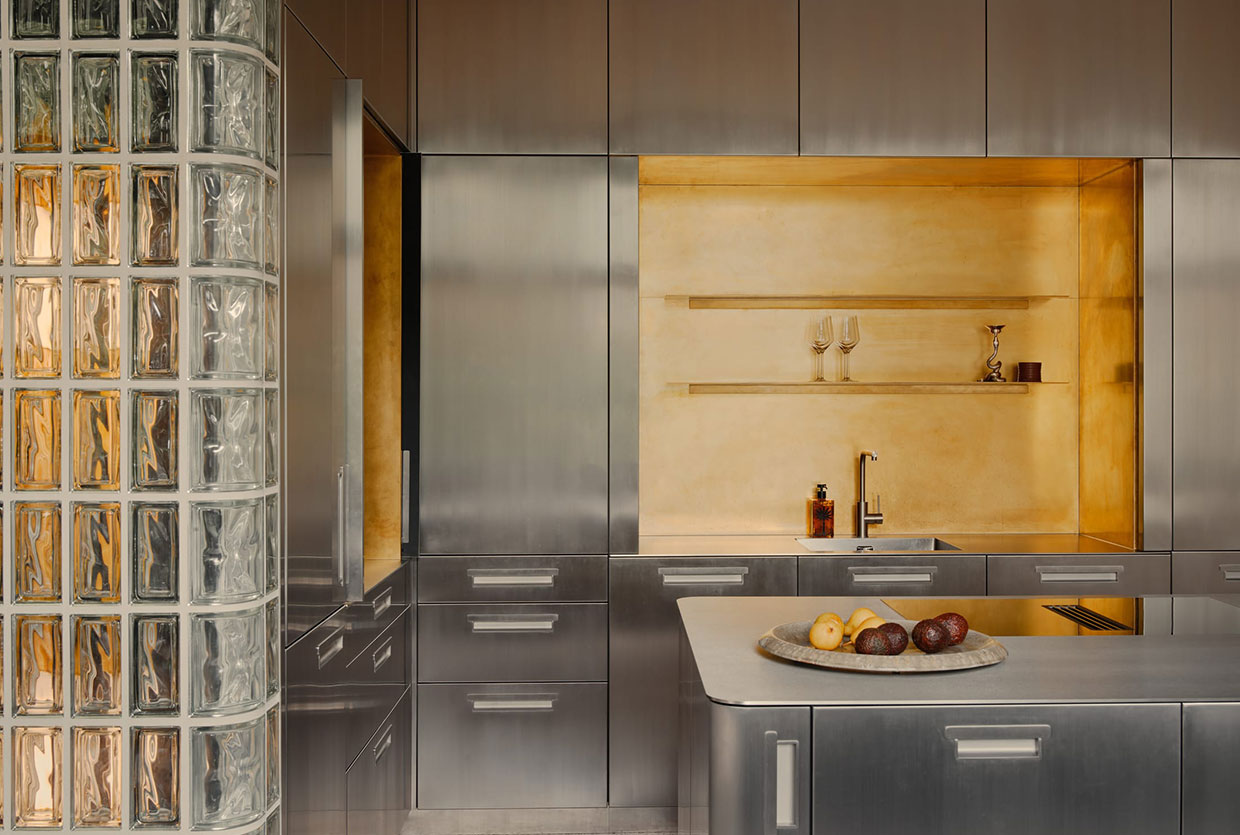
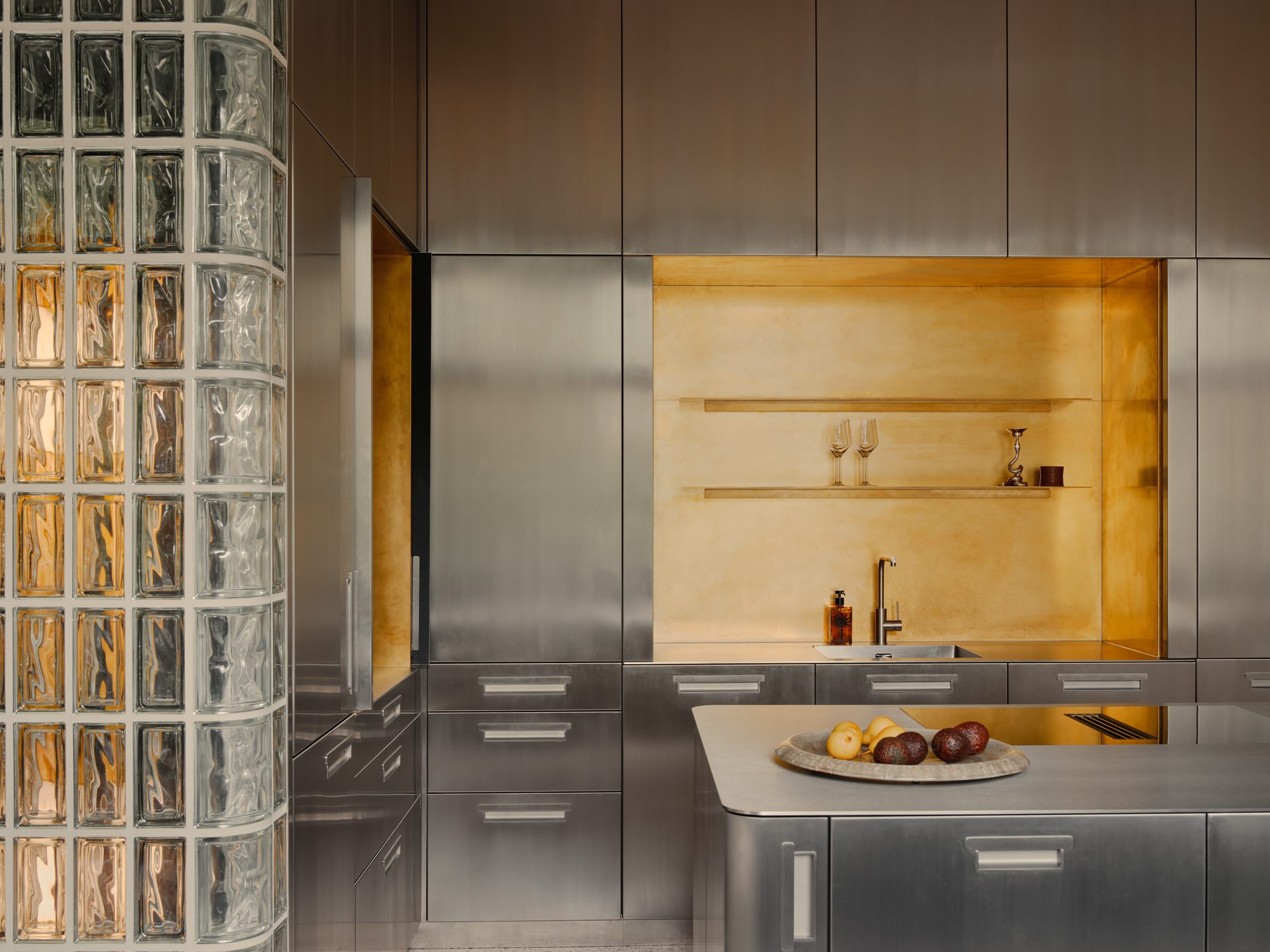
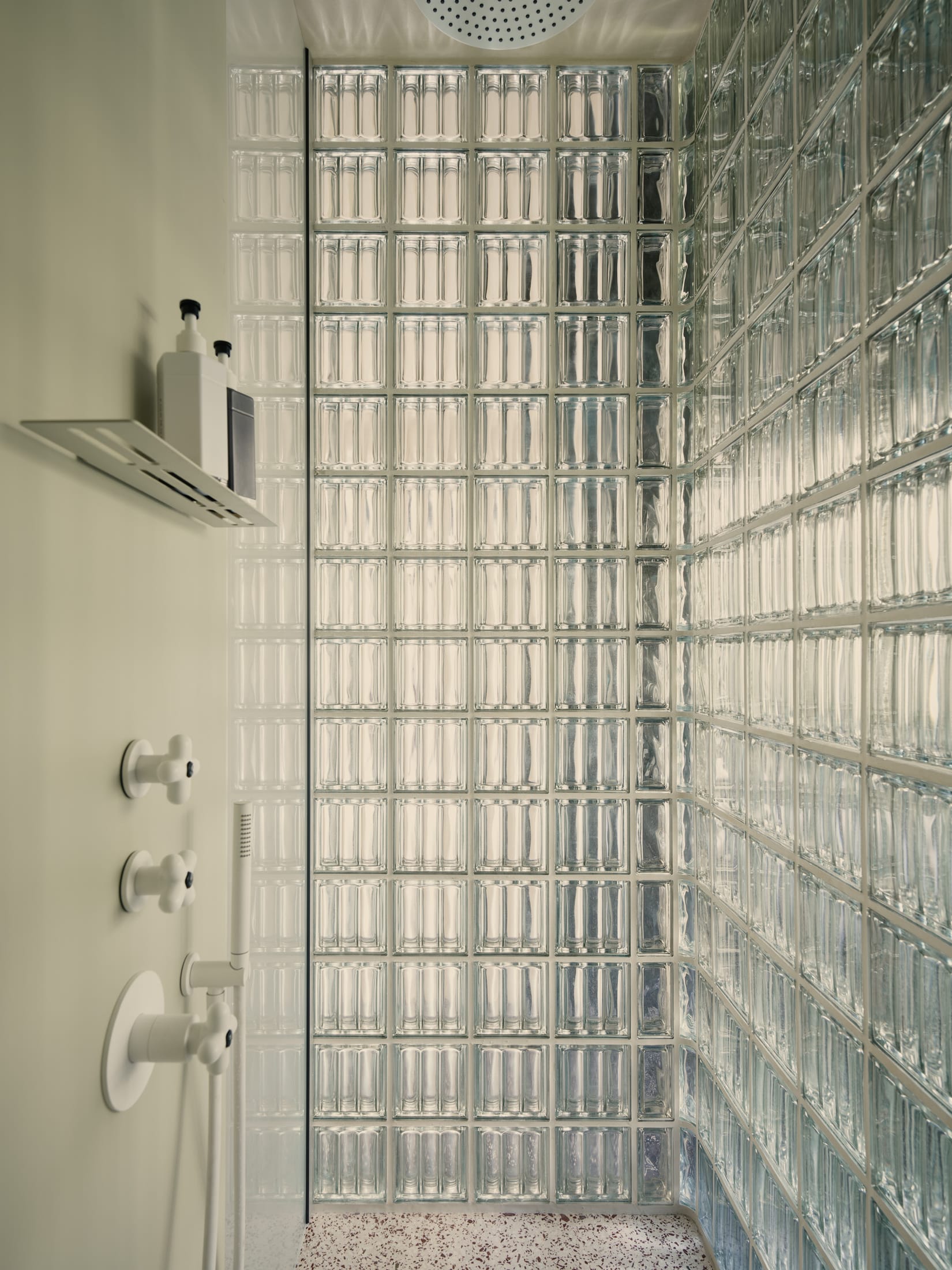
If there is a single masterstroke in the B32 project, it is the curved glass block wall. In the design world, glass blocks often carry a dated 1980s stigma, but Karhard has reclaimed them as a "luminous diaphragm."
Positioned to separate the entrance from the living area, this wall serves multiple purposes. It provides structural separation without blocking the flow of light. More importantly, it acts as a massive light fixture. By integrating internal illumination, the wall emits a soft, ambient glow that feels more like a futuristic art installation than a piece of masonry.
Ivy’s Style Tip: To replicate this "Techno Fantasy" glow at home, avoid harsh overhead lighting. Use diffused light sources behind textured surfaces—like frosted glass or perforated metal—to create depth and a sense of "mystery" in your corners.
Material Alchemy: Industrial Precision vs. Milanese Elegance
The "Techno Fantasy" aesthetic is defined by its Material Palette. It is a dialogue between the cold precision of the machine and the soft touch of the human hand. Studio Karhard refers to their process as "cooking," blending ingredients that shouldn't work together until they create a surprising new flavor.
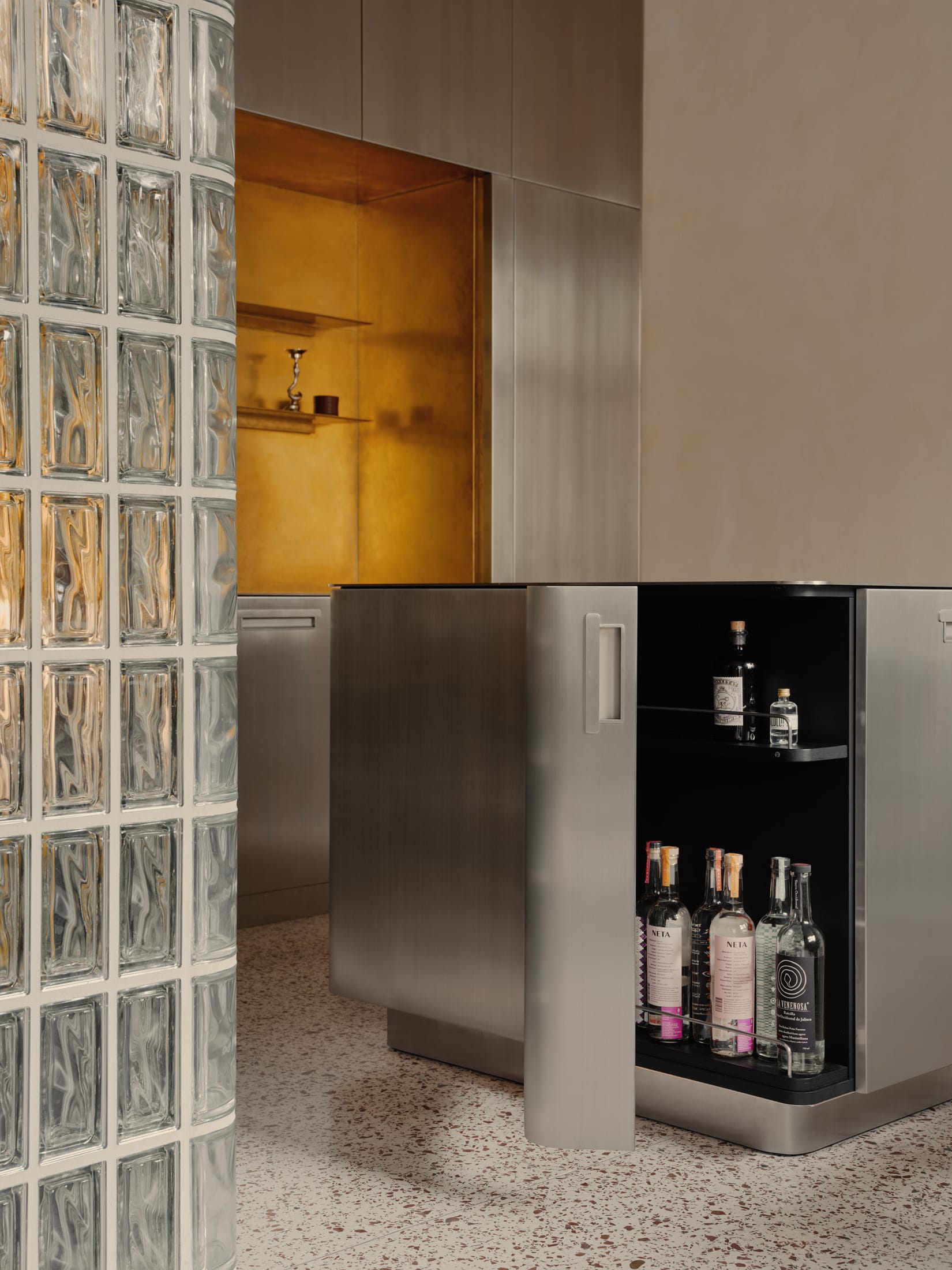
In the kitchen, which they've dubbed the "Kitchen of the Future," raw stainless steel dominates the cabinetry. However, it is punctuated by untreated brass alcoves. As the brass patinas over time, it adds a layer of organic warmth and "imperfection" to the clinical steel.
The Material Contrast Framework
| Industrial / Techno Element | Softening / "Fantasy" Element | Result |
|---|---|---|
| Raw Stainless Steel | Untreated Brass Patina | Future-Vintage Elegance |
| Exposed Concrete Walls | Kvadrat Velvet Upholstery | Soft Brutalism |
| Metal Grid Ceilings | Textured Lime Plaster | Urban Sanctuary |
| Glass Blocks | Dimmable Neon Warmth | Luminous Intimacy |
To soften the hard edges, Karhard incorporates materials reminiscent of 1960s Milanese luxury. Think lush Kvadrat velvets and hand-applied lime plaster walls that catch the light with a subtle, earthy texture. This juxtaposition is what makes the space feel like a home rather than a set.
Designing by 'Light Scenes'
One of the core tenets of nightclub design is the mastery of the "Light Scene." In a club, lighting tells you where to dance, where to rest, and where to hide. Studio Karhard brings this philosophy home by contrasting bright, sun-drenched social hubs with darker, moody sanctums.
- The Social Hub: The living and dining areas utilize natural light filtered through the glass diaphragm, supplemented by architectural lighting that emphasizes the height of the ceilings.
- The Mystical Powder Room: A pure techno fantasy. Here, Karhard uses metal grid ceilings and shifting color palettes (think deep purples and electric blues) to create a space that feels entirely detached from the outside world.
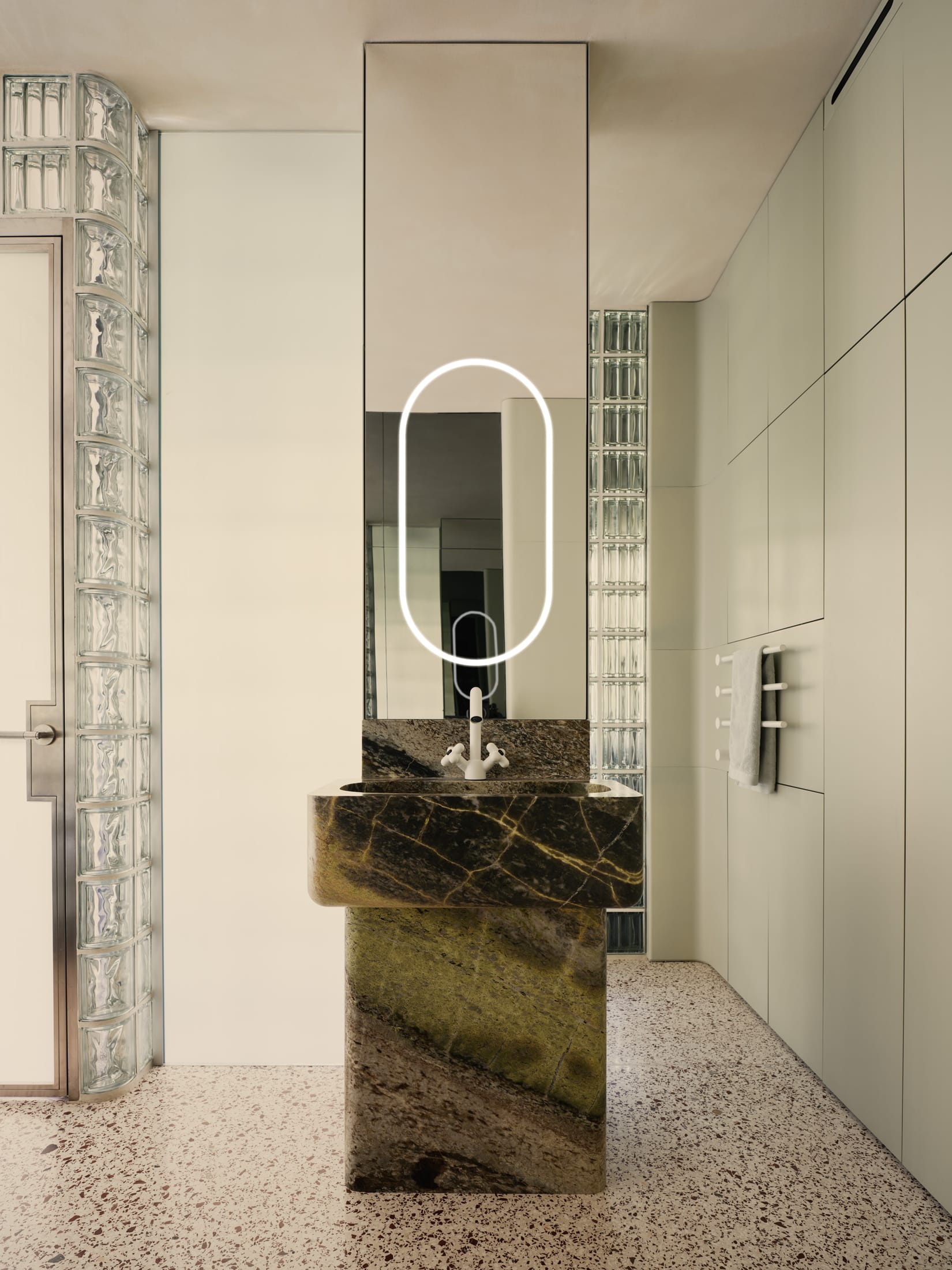
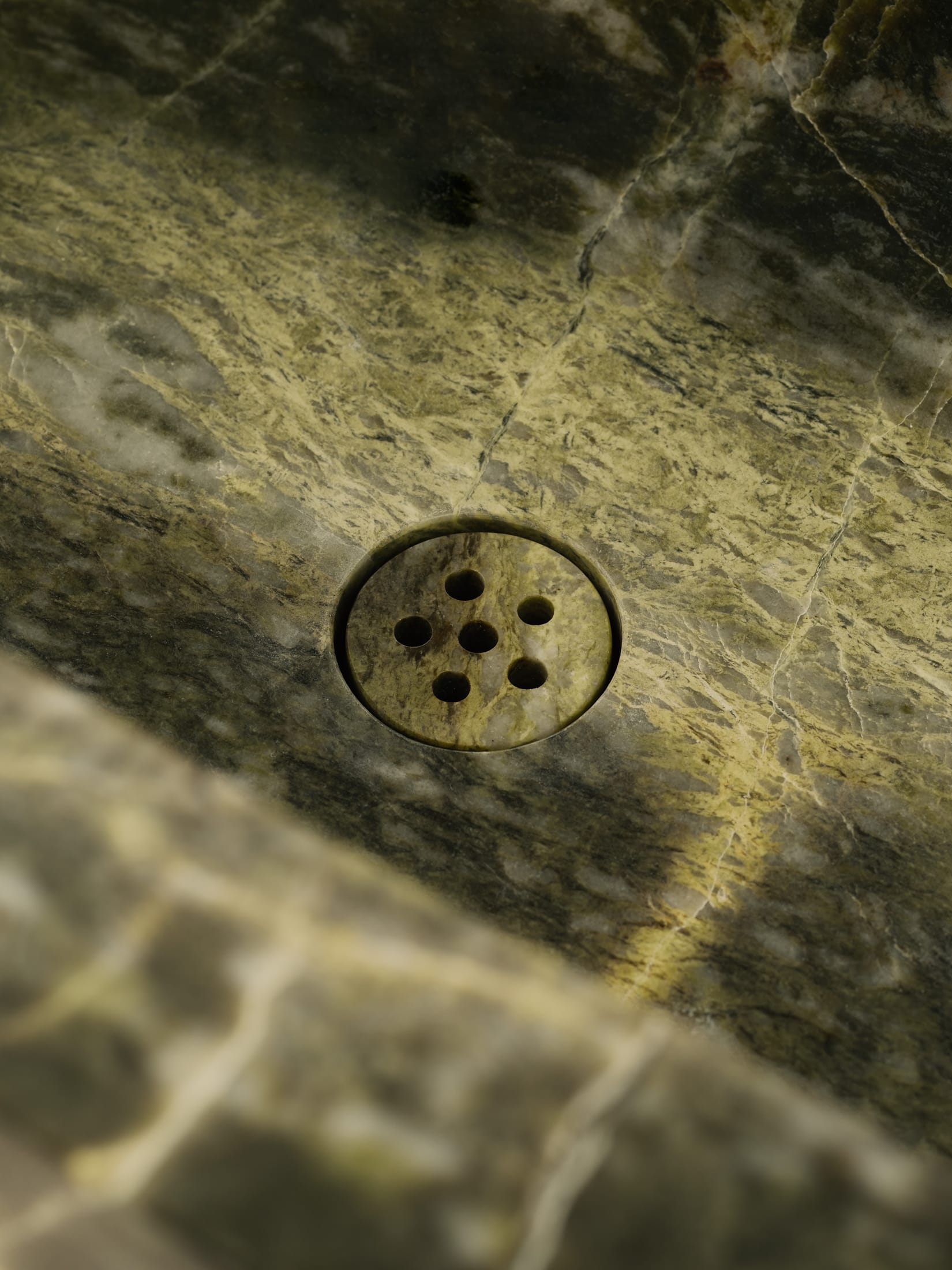
- The En-suite Spa: Moving into the bathroom, the mood shifts to "clinical clarity." The palette turns to refreshing mint-green cabinetry and exquisite green marble washbasins, creating a serene, laboratory-like atmosphere for rejuvenation.
The Furniture of Futurism: Curating the B32 Interior
The furniture in a Karhard-designed space is never an afterthought; it is an extension of the architecture. In the B32 apartment, the furniture pieces favor sinuous, organic forms that provide a counterpoint to the straight lines of the industrial materials.
- Bespoke Integration: A custom-built sofa sits on a stainless steel plinth, seamlessly merging with the floor.
- Design Icons: The space is punctuated with high-end pieces like the Utrecht lounge chair (Cassina) and lighting by Sabine Marcelis, whose work often explores the intersection of light and cast resin.
- Bathroom Fixtures: Integration of Antonio Lupi and Fantin fixtures ensures that even the most functional elements maintain a sculptural quality.
Conclusion: The New Definition of Berlin Luxury
Studio Karhard’s work in the B32 project redefines what "luxury" means in an urban context. It moves away from the purely ornamental—gold leaf and heavy drapes—and moves toward the experiential. It is a design that acknowledges the city's grit and history while offering a futuristic, tactile escape.
By mastering the "Techno Fantasy" aesthetic, Thomas Karsten and Alexandra Erhard have shown us that we don't have to choose between the raw energy of the underground and the comfort of a high-end residence. We can have both. It is a "Warm Brutalism" that feels as good as it looks—a sanctuary for the modern dreamer who isn't afraid of a little steel.
FAQ
Q: What exactly is the 'Techno Fantasy' aesthetic? A: It is a design language pioneered by Studio Karhard that blends industrial, brutalist elements (like stainless steel, concrete, and glass blocks) with futuristic lighting and high-end tactile materials (like velvet and marble) to create a space that feels both edgy and luxurious.
Q: How can I achieve a 'nightclub-inspired' look without it feeling cold? A: The key is "Warm Brutalism." Use industrial materials for your "bones" (shelving, kitchen counters) but balance them with soft textures (velvet sofas, wool rugs) and "light scenes"—using dimmable, colored, or diffused lighting instead of harsh overhead bulbs.
Q: Is Studio Karhard only focused on residential design? A: No. While they have mastered residential "Techno Fantasy," they are world-renowned for their commercial and hospitality work, most notably the Berghain nightclub, Panorama Bar, and various high-end retail spaces in Berlin.
Are you ready to bring a touch of the underground into your home? Whether you're starting a full renovation or just looking to add a piece of "Techno-Futurism" to your living room, remember: it’s all about the contrast.