Quick Facts
- Core Integration Strategy: Successful forest home pool integration relies on floor-to-ceiling glass walls and low-set windows. This creates a visual "infinity" effect that connects the water's surface directly to the woodland floor.
- 2026 Design Dominance: Rectangular, geometric pool shapes now account for 85% of the modern architectural market, signaling a definitive move away from organic, kidney-shaped designs in favor of clean, architectural lines.
- Maximizing Connectivity: Architects recommend 72-foot sliding window systems and central atriums with retractable glass roofs to invite forest scents, natural ventilation, and shifting light into the aquatic space.
- Material Trends: The demand for integrated tanning ledges has grown by 40%, transforming pools into multifunctional "social hubs" rather than just exercise zones.
- Sophisticated Palettes: "Pool Blue" is being replaced by Silver Grey (up 16% in demand) and Graphite Grey to better mirror the shadows and tones of a dense canopy.
The Philosophy of Forest Architecture: Living Deliberately
Designing a home in the forest is an exercise in humility. It is not about conquering the landscape, but rather about "living deliberately," as Thoreau once penned. In the world of high-end interior styling, we often speak of the home as a "Refuge and Archive"—a sanctuary that protects us from the elements while simultaneously archiving our personal journey through curated textures and views. When we approach a modern forest home, the architecture must act as a lens, focusing our attention on the rhythmic growth of the trees and the seasonal shifts of the light.
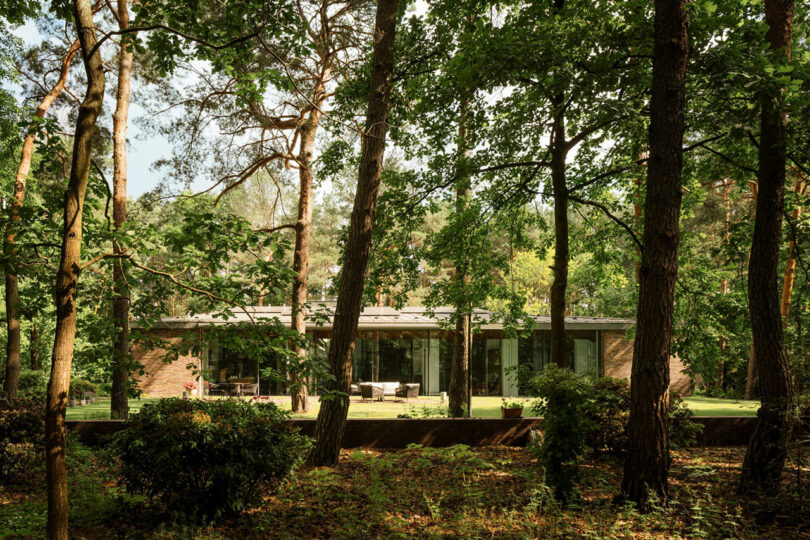
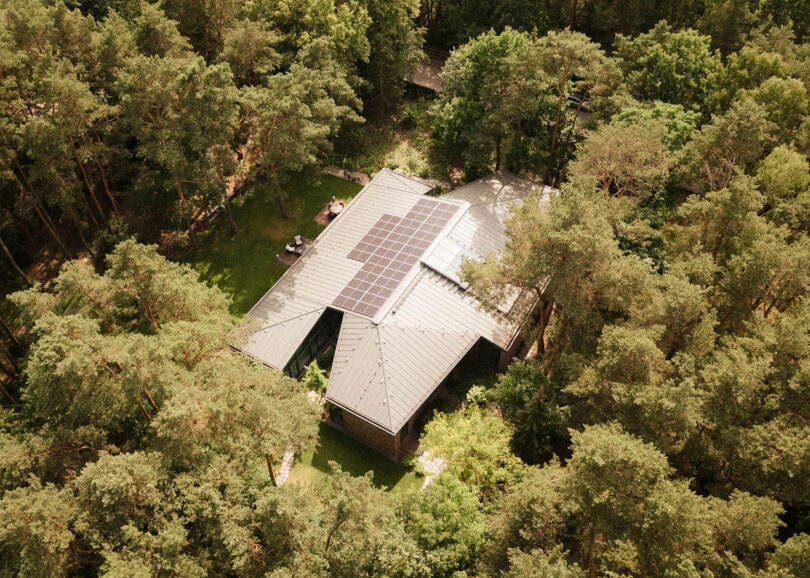
One of the most compelling trends in modern woodland design is the "tent-like" roof structure. This concept involves a large, expansive canopy that covers both indoor and outdoor communal spaces, creating a sense of shared shelter. By using a singular roofline, the home feels like a cohesive unit nestled under the forest’s own ceiling. To preserve the integrity of the wooded environment, we look toward "minimal footprint" designs. Inspired by projects like the "Tower House" or "Tree House Constantia," these structures prioritize verticality or pier-based foundations to ensure that the ancient root systems of the surrounding oaks and pines remain undisturbed.
Seamless Connectivity: Blurring the Indoor-Outdoor Divide
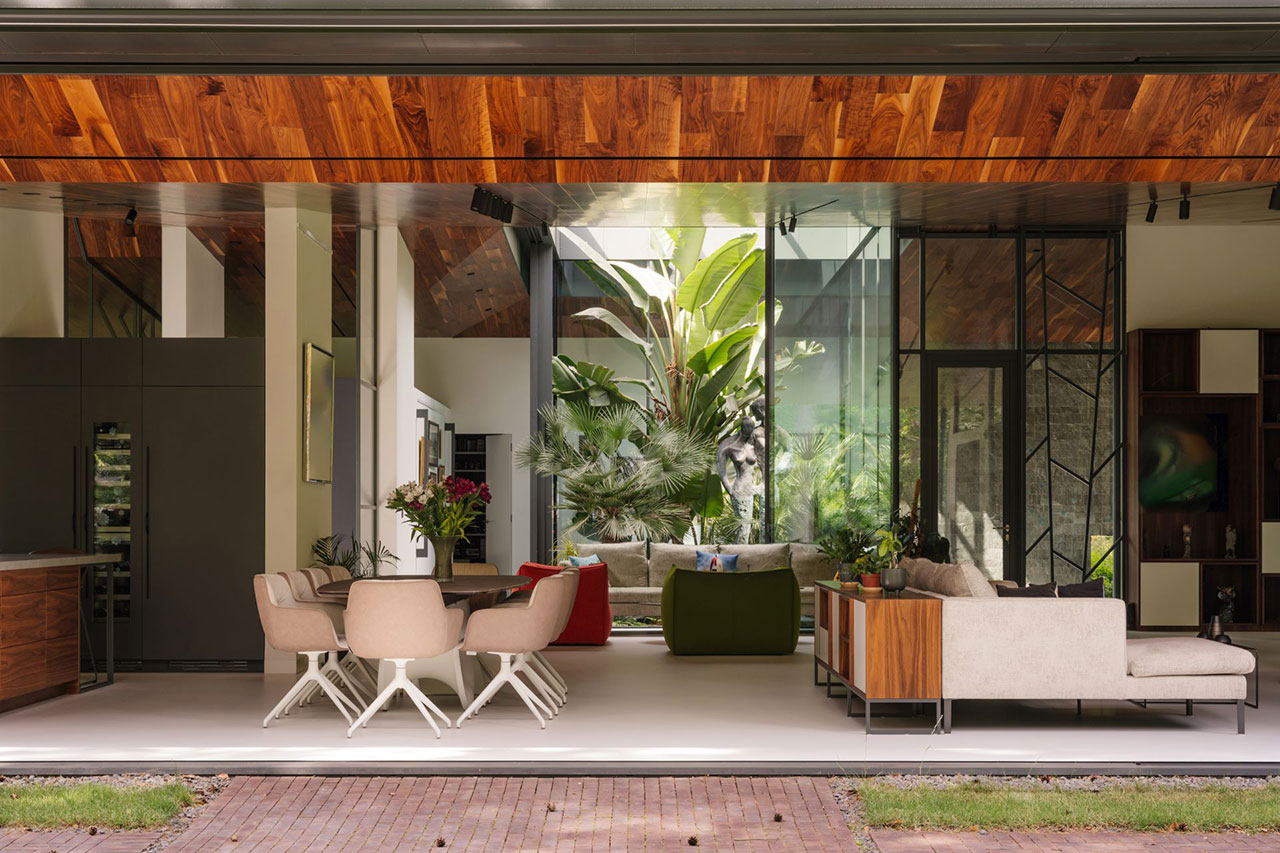
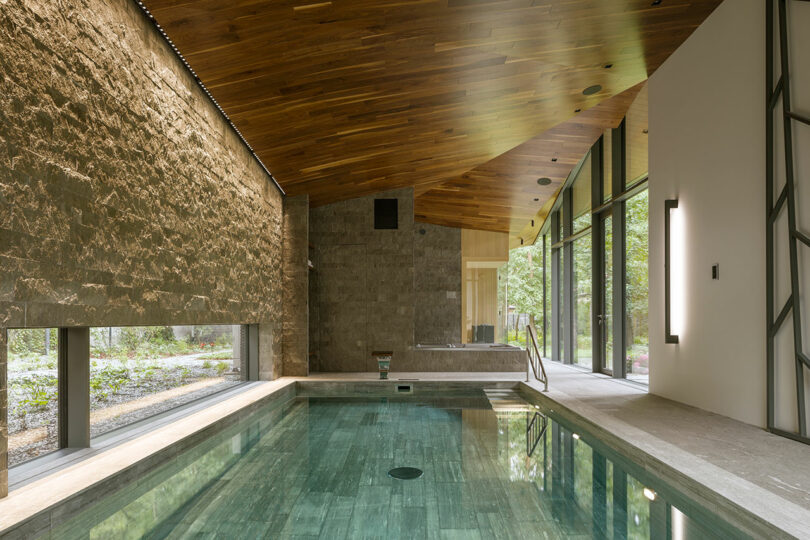
The true hallmark of a sophisticated forest retreat is the dissolution of the boundary between the sanctuary of the indoors and the wildness of the outdoors. Integrating an indoor pool into this equation requires a delicate balance of engineering and aesthetics. To achieve a seamless transition, we move beyond simple windows. The modern standard utilizes floor-to-ceiling glass walls and, crucially, low-set windows that sit flush with the pool deck. This placement ensures that whether you are swimming or lounging, your line of sight is level with the forest floor, creating a profound sense of immersion.
Central atriums are also making a significant comeback in 2025 and 2026 designs. By incorporating a central courtyard with a retractable glass roof, homeowners can invite the sensory experience of the forest—the scent of pine after rain, the sound of wind through the leaves—directly into the heart of the home. This "living lung" provides natural ventilation and allows the pool area to breathe, preventing the humidity often associated with indoor aquatic spaces from feeling oppressive.
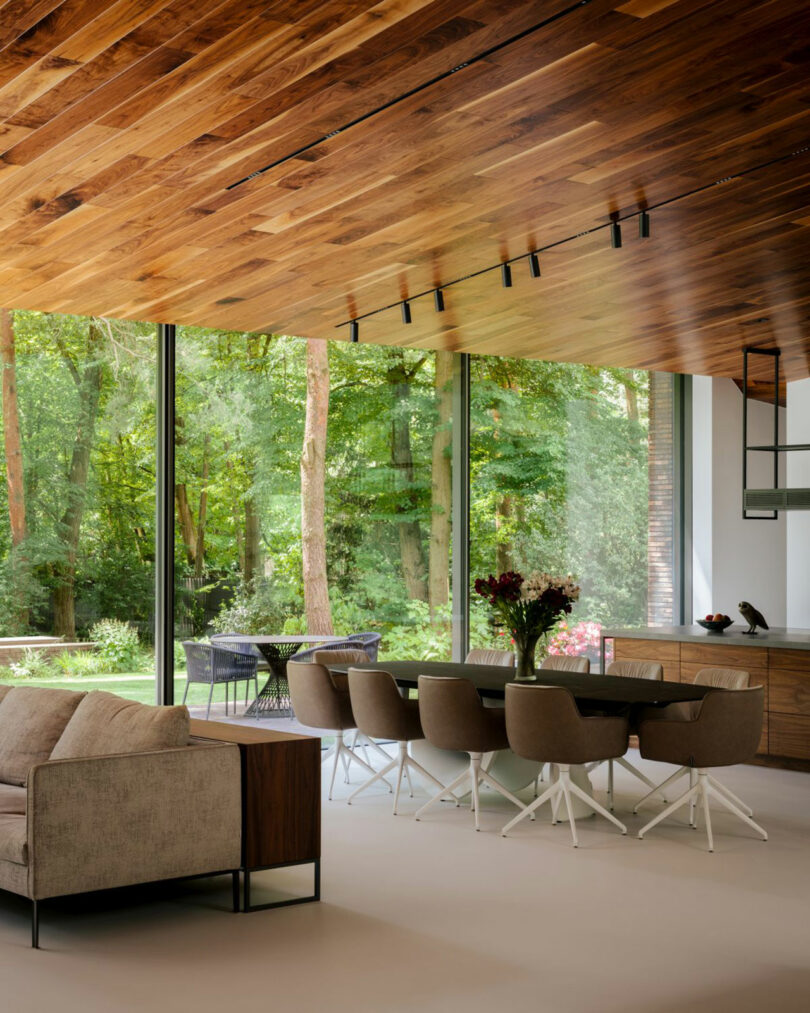
To maximize this connectivity, architects are increasingly specifying massive, 72-foot sliding window systems. These are not merely doors; they are disappearing walls that transform a climate-controlled indoor pool into an outdoor pavilion in seconds. When the glass slides away, the transition from the polished pool coping to the organic forest floor should be as subtle as possible.
Pro Tip: The Material Threshold To enhance the "blur," use the same flooring material for the indoor pool deck as the outdoor patio. Natural stones like Vals Quartzite are ideal; they are slip-resistant, incredibly durable, and their grey-green veining perfectly mirrors the tonality of a shaded forest.
2026 Pool Design Trends: Geometric Precision in Nature
As we look toward 2026, the aesthetic of the residential pool is undergoing a radical transformation. The era of the "lagoon-style" pool is fading, replaced by a preference for geometric precision. In modern forest homes, the pool is treated as an extension of the home’s footprint—an architectural element rather than a separate feature.
Statistics show that rectangular fiberglass pools now account for 85% of the modern architectural market. This shift is driven by the desire for clean lines that provide a sharp, sophisticated contrast to the wild, irregular shapes of the forest. These geometric vessels act as "reflecting ponds," capturing the silhouettes of the trees in a still, mirror-like surface.
Another significant shift is the "Wave" effect—the explosive 40% growth in demand for integrated tanning ledges. Also known as "Baja shelves," these shallow areas (usually 6-12 inches deep) allow for multifunctional use. They are no longer just for sunbathing; in a forest home, they serve as a transitional zone where one can sit partially submerged, perhaps with a book, feeling the temperature of the water while remaining connected to the interior living space.
| Trend | Market Growth / Share | Key Characteristic |
|---|---|---|
| Rectangular Shapes | 85% Market Dominance | Clean lines, architectural alignment |
| Tanning Ledges | 40% Increase in Demand | Multifunctional lounging, social hub |
| Dark Interiors | 22% Rise | Creates a natural "pond" aesthetic |
| Integrated Spas | 35% Rise | Seamless "pool-within-a-pool" look |
Materials and Mood: A Sophisticated Palette
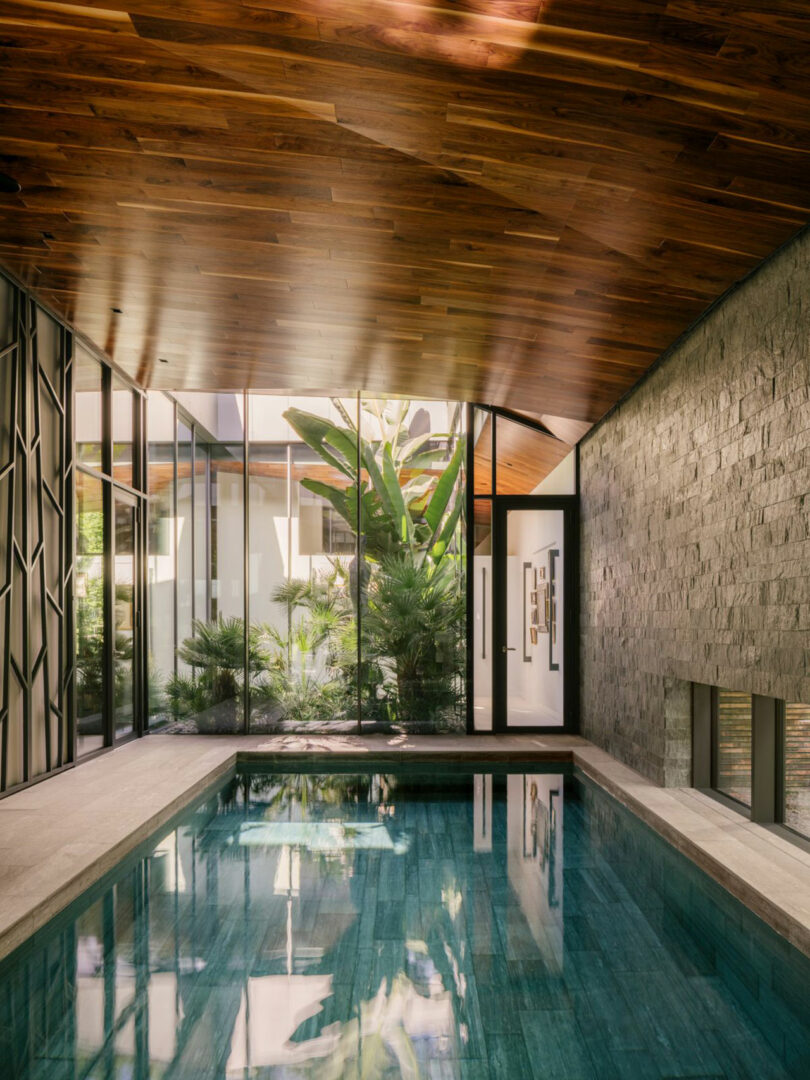
The color of your water is determined largely by the color of your pool’s interior finish. For years, "Caribbean Blue" was the standard, but in a modern forest setting, bright turquoise can feel jarring and artificial. We are seeing a move toward moody, sophisticated tones that allow the pool to settle into the landscape.
Silver Grey and Graphite Grey have seen a 16% increase in specifications this year. These shades transform the water into a deep, emerald, or charcoal mirror that reflects the canopy above. This "reflective" quality is essential for a forest home, as it doubles the visual impact of the trees.
To ground the design, we integrate natural stones and earthy textures:
- Vals Quartzite: Its shimmering, layered appearance mimics the geological strata of the forest.
- Terracotta and Slate: Used in accents to provide warmth and a connection to the earth.
- Verdant Greens: Using dark green tiles for the pool interior can create the illusion of a deep, natural woodland spring.
By choosing a darker palette, you also benefit from passive solar heating, as the darker surfaces absorb more of the sun's warmth—a practical choice for homes shaded by dense foliage.
Wellness and Smart Technology Integration
In a remote forest location, convenience and sustainability are paramount. The modern forest pool is no longer just a luxury; it is a wellness center. We are seeing a rise in "Swim-in-place" systems (laminar flow jets) that allow for a full workout in a smaller footprint, preserving more of the natural land. Hydrotherapy zones with targeted pressure jets are being integrated directly into the steps or tanning ledges, providing a spa-like experience without the need for a separate, bulky hot tub.
Smart Automation has also become a non-negotiable feature for the modern homeowner. Through integrated apps, you can control:
- Water Chemistry: Automated saltwater chlorinators and UV filters ensure the water is pristine with minimal chemical odor.
- Climate Control: Precision heating that adjusts based on the dew point of the forest air.
- Atmospheric Lighting: Dimmable LED systems that can transition from a bright "daylight" mode for swimming to a low, amber "firelight" mode for evening relaxation.
Finally, we must consider climate-smart construction. In a forest, moisture and temperature fluctuations are constant. Choosing heat-resistant and slip-safe materials—such as thermally treated wood decking or non-porous sintered stone—ensures longevity and safety in a high-humidity indoor environment.
FAQ
Q: Does an indoor pool create humidity issues in a timber-framed forest home? A: If not managed correctly, yes. However, by using high-performance vapor barriers, specialized HVAC systems (like dehumidifiers with heat recovery), and the retractable glass roofs mentioned earlier, you can maintain a perfect 50-60% humidity level that protects the wood and your comfort.
Q: How do I maintain privacy with so much glass? A: The forest itself is your primary screen. However, for added security, we often specify "smart glass" (electrochromic glass) that can transition from transparent to opaque with the touch of a button, or use strategic "landscape layers"—planting taller ferns and shrubs close to the glass to create a natural veil.
Q: Are rectangular fiberglass pools better than concrete for forest sites? A: Fiberglass is often preferred in wooded areas because the installation is much faster, requiring fewer heavy machines to stay on-site for long periods, which protects the surrounding tree roots. Additionally, their smooth surface is resistant to the algae that can sometimes thrive in shaded, humid environments.
Conclusion
Designing a modern forest home with an integrated pool is about more than just luxury; it’s about creating a rhythmic dialogue between the built environment and the natural world. By prioritizing geometric precision, seamless glass connectivity, and a sophisticated, earthy palette, you create a space that doesn't just sit in the forest—it becomes part of it. As we move toward 2026, the trend is clear: the most beautiful homes are those that allow us to submerge ourselves in nature, literally and figuratively.