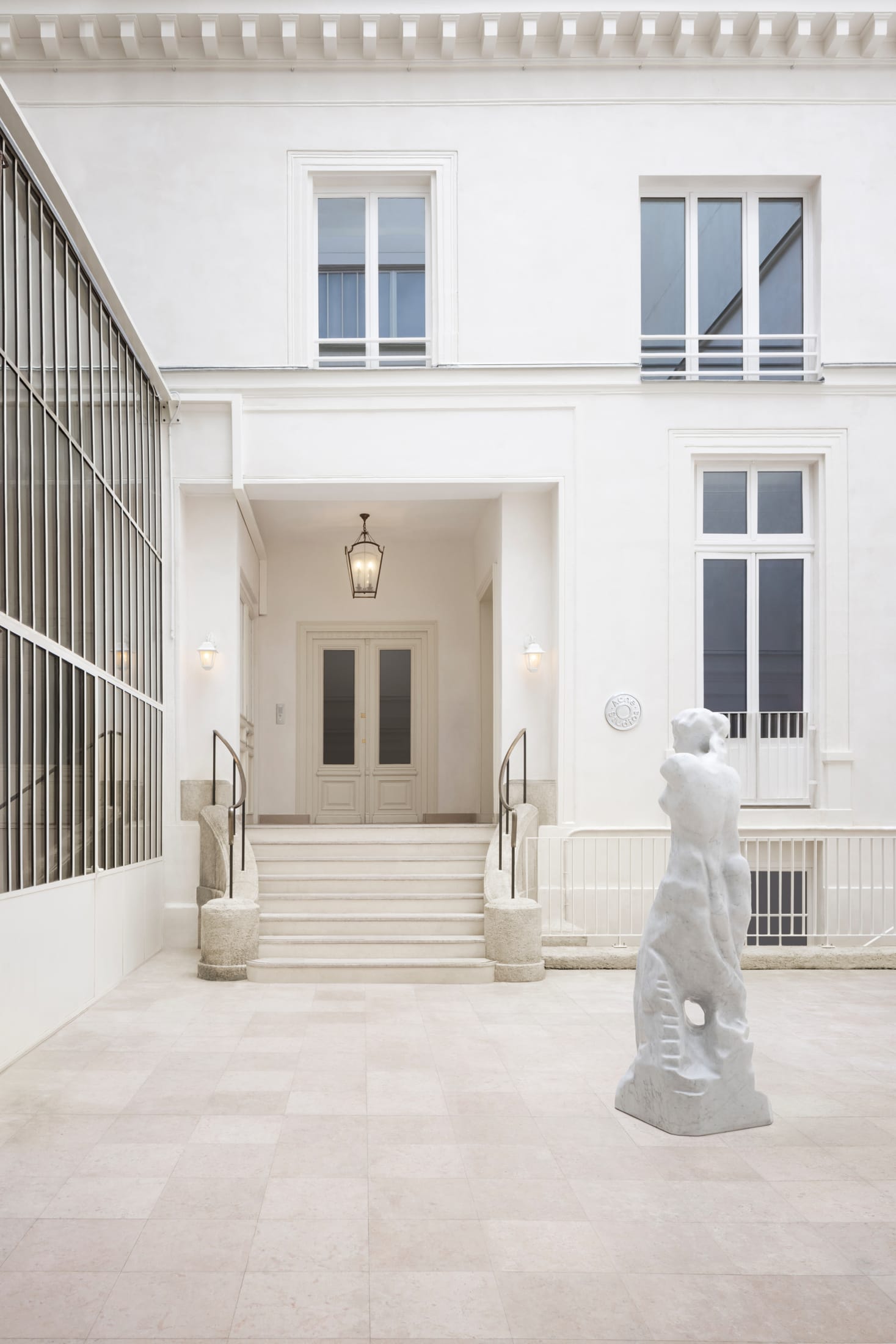
There is a specific kind of magnetism in the way Acne Studios occupies space. If their Stockholm headquarters, "Floragatan 13," is a celebrated exercise in Cold War Brutalism, their new Parisian home is an entirely different species of design. Located at 10 Rue des Petites Écuries in the 10th arrondissement, the headquarters is housed within the former Gomenol Laboratory—a storied complex from the 1920s and 1930s—and an adjoining hôtel particulier. It is a site where the history of pharmaceutical science meets the subversion of modern luxury.
The transition from the grand, bourgeois avenues of the fashion district to the gritty, creative pulse of the 10th reflects the brand’s own trajectory: a move toward something more "honest," more raw, and deeply rooted in the architectural DNA of its surroundings.
A Scientific Heritage: From Gomenol Laboratory to Fashion Hub
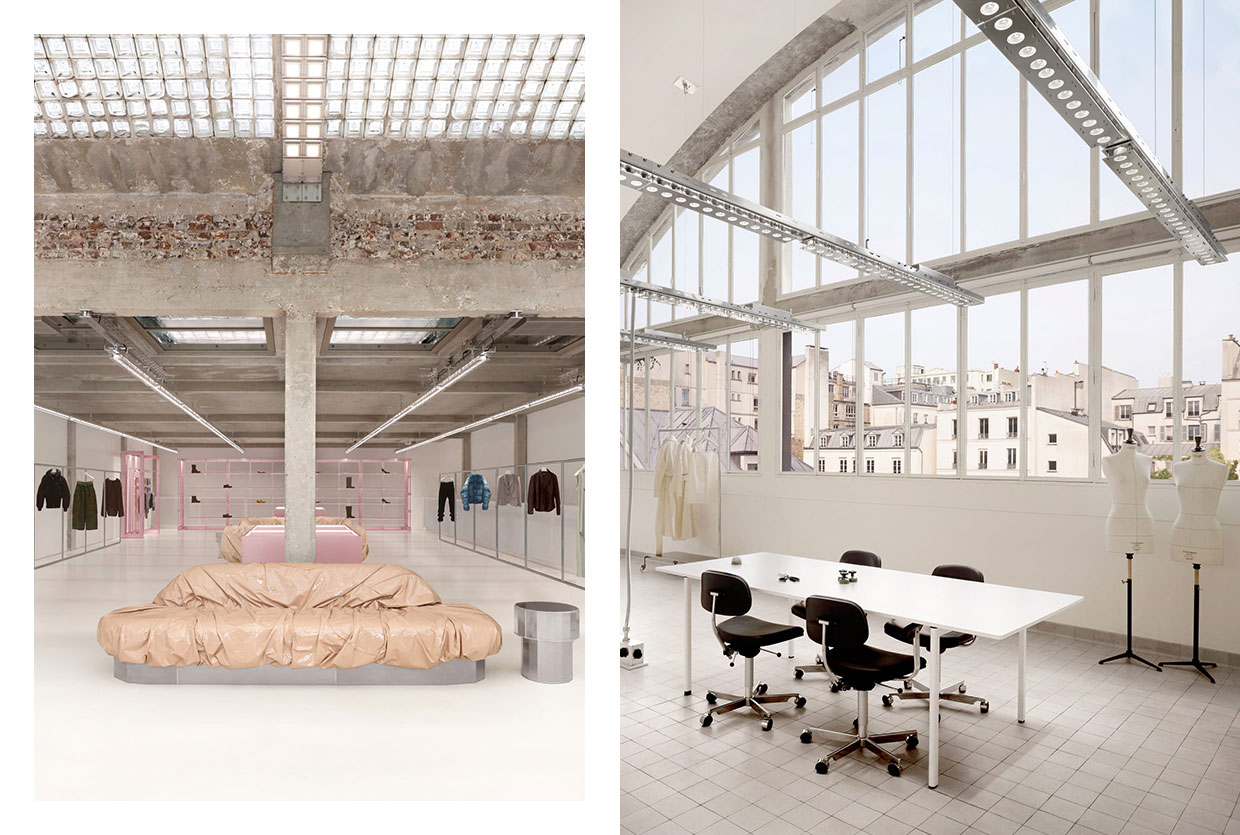
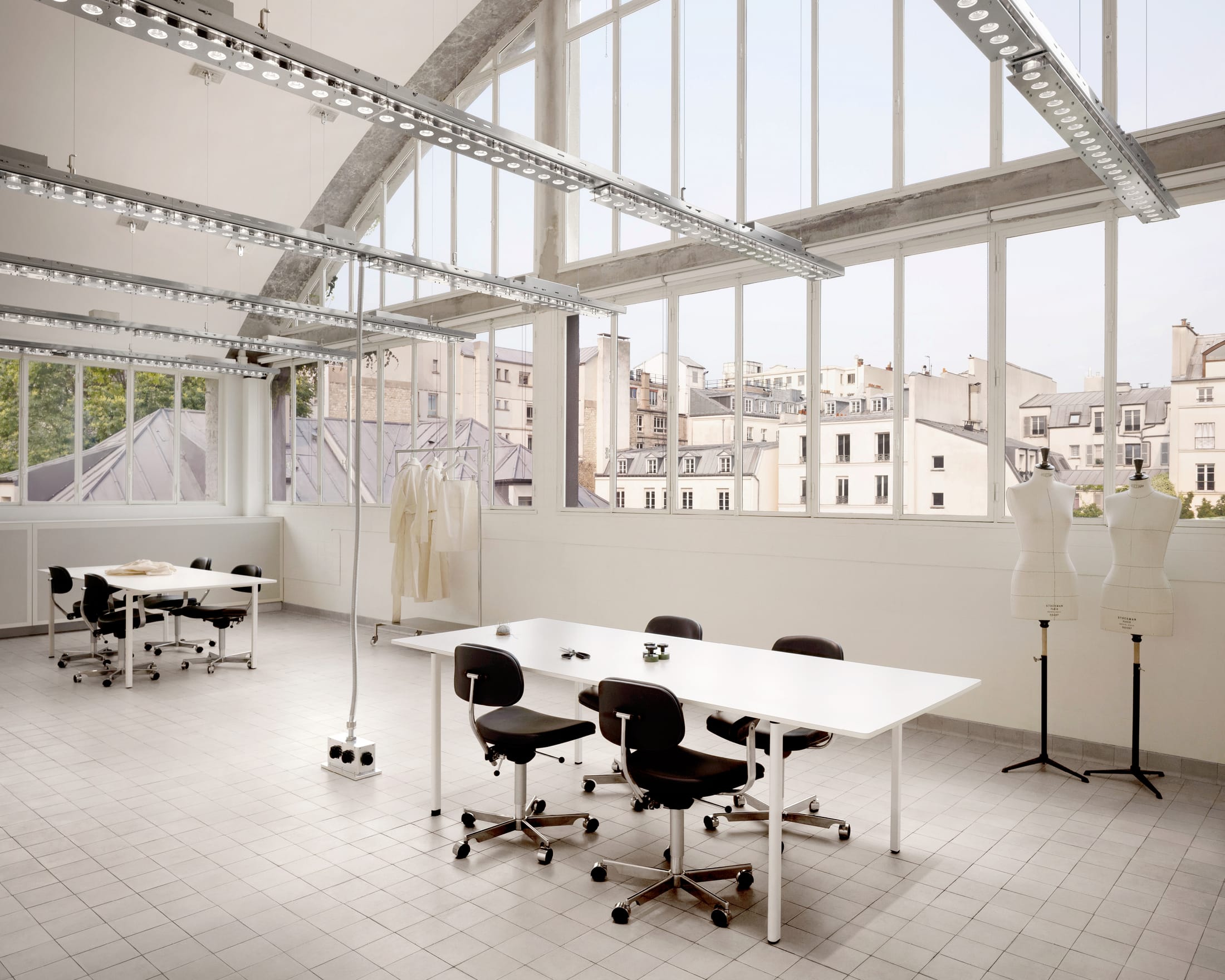
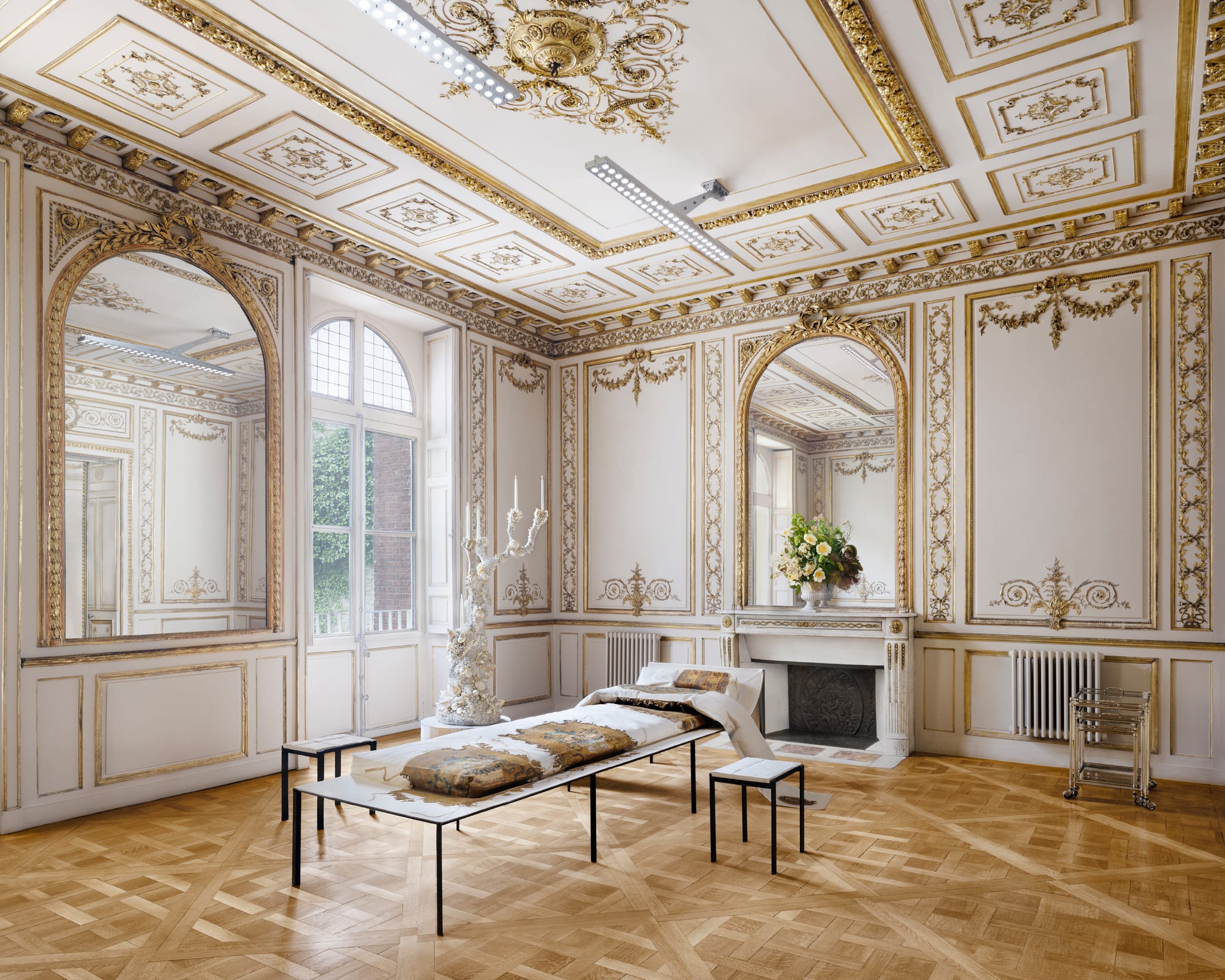
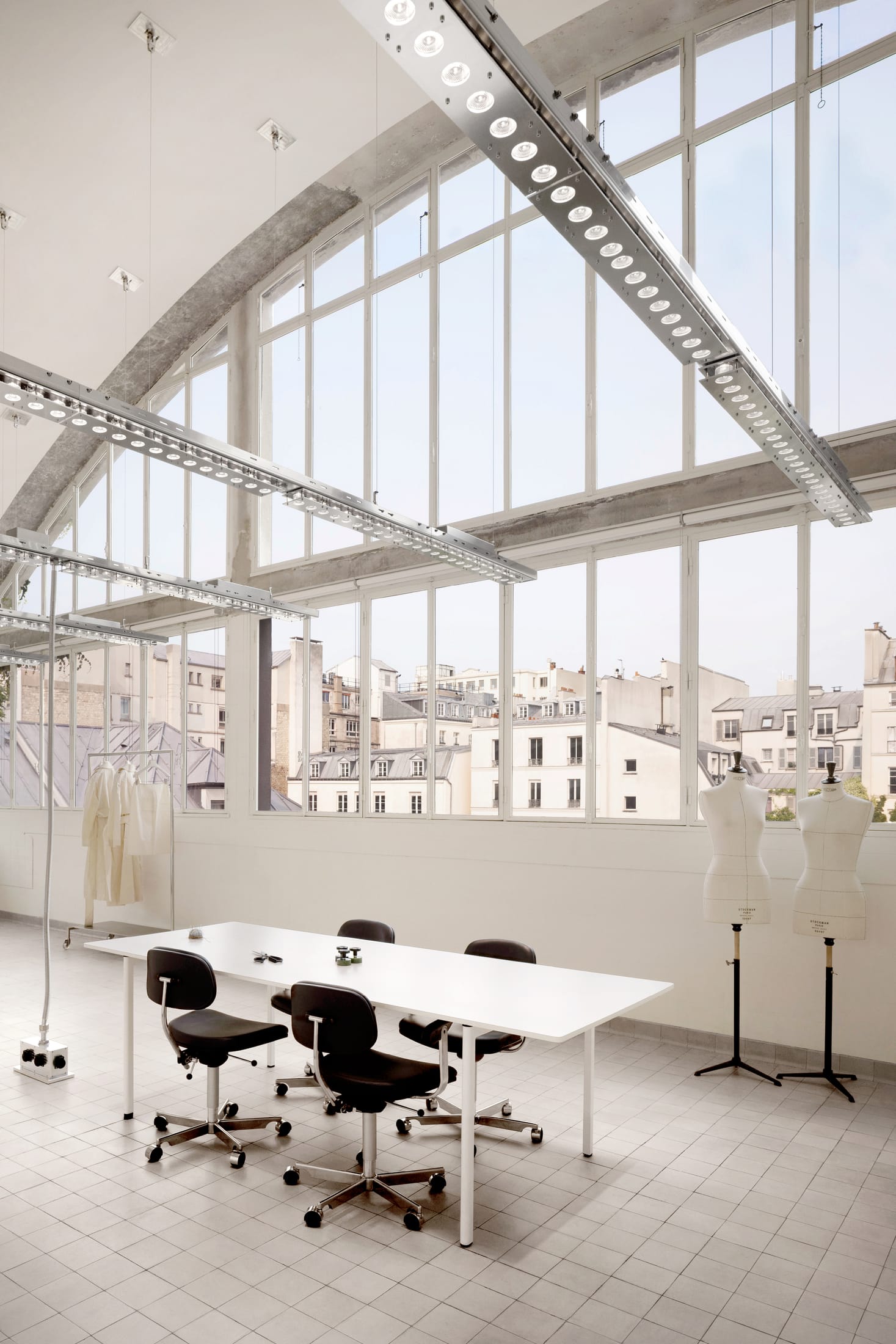
Before it was a sanctuary for high fashion, this site was the epicenter of Gomenol, a pharmaceutical brand famous for its herbal tinctures and antiseptic oils. Established in the late 1920s, the complex was designed with the utilitarian precision of the era. The bones of the building are a gift to any modern designer: soaring vaulted glass ceilings that flood the interiors with a soft, diffused Parisian light, and original parquet floors that carry the scuffs and stories of nearly a century of labor.
Rather than stripping the history to create a "white cube" office, the design team opted for a preservation-first approach. The 100-year-old architectural bones serve as the primary canvas. The industrial soul of the laboratory remains palpable, with the renovation focusing on revealing rather than concealing.
The Design Visionary: Jonny Johansson x Halleroed
The transformation was not the work of a single mind but a collaborative alchemy between Acne Studios creative director Jonny Johansson and the renowned Swedish design firm Halleroed. Christian and Ruxandra Halleroed have long been the architectural translators of Acne’s brand identity, and here, they have pushed the boundaries of the "Swedish-French" dialogue.
Johansson’s vision for the space was never about corporate polish. Instead, it was about creating an environment that feels like an extension of his own creative process—unfiltered, experimental, and occasionally dissonant.
The 'Honest' Philosophy: Where Minimalism Meets History
The design philosophy of the Acne Studios Paris office is centered on the concept of "honesty." In architectural terms, this means that new interventions are inserted rather than integrated. Instead of trying to blend the new with the old, the designers have allowed the two eras to sit side-by-side in high-contrast harmony.
"I wanted the space to feel like we just moved in and started working, without erasing what was there before," says Jonny Johansson. "There is a beauty in the 'ugly' parts of a building's history—the exposed pipes, the worn surfaces. We wanted to celebrate that."
This "honest" approach manifests in the way the office is organized. Glass partitions are used to maintain the openness of the laboratory layout, while stainless steel and raw concrete elements are placed strategically within the historic shell. It is a masterclass in restraint, proving that luxury doesn't always need to be gilded; sometimes, it just needs to be authentic.
The Showroom: A Masterclass in 'Ugly Cool' Aesthetics
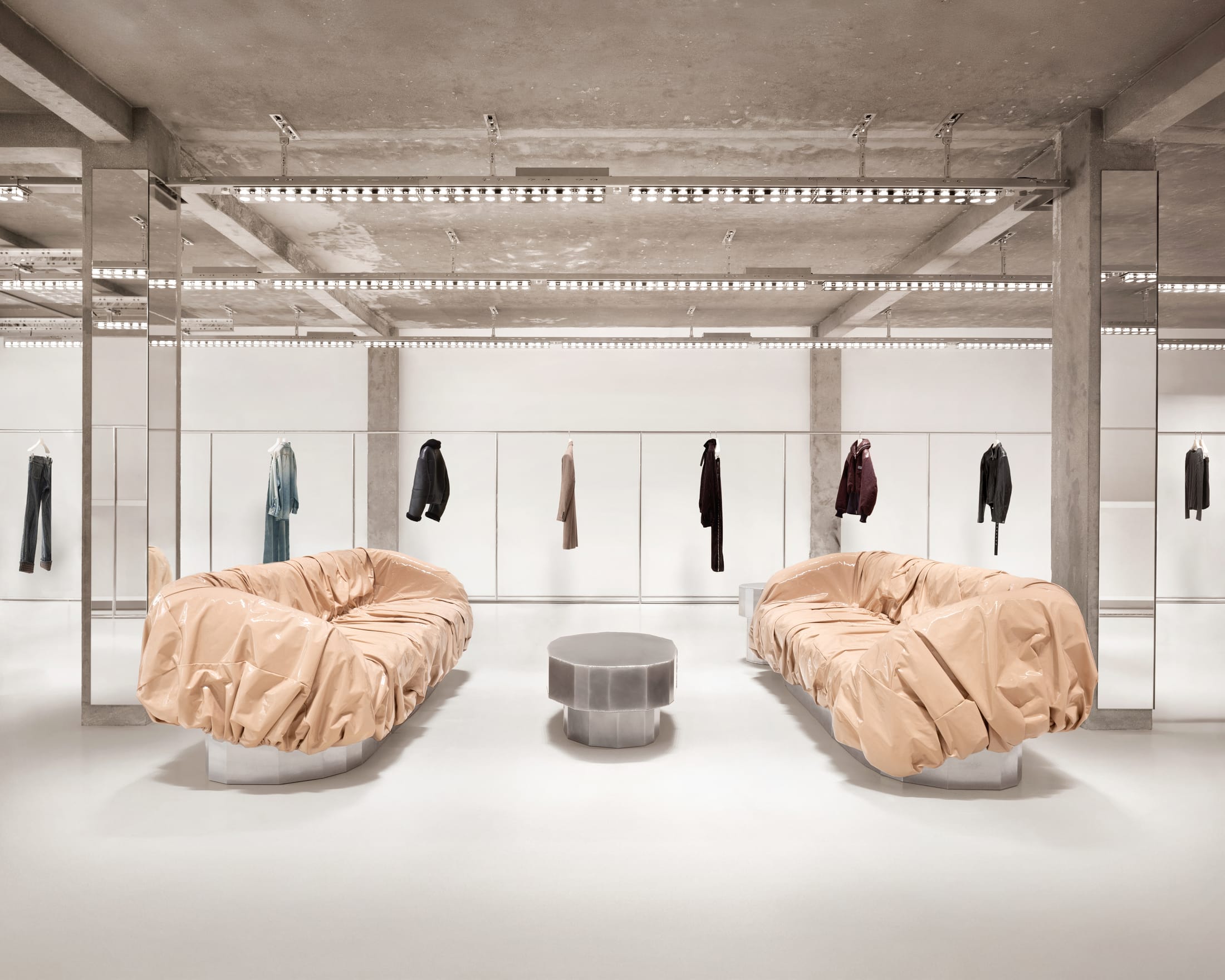
If the offices are about focus, the showroom is about impact. Here, the aesthetic leans heavily into what designers often call "ugly cool"—a deliberate choice of materials that might seem jarring individually but are elevated through expert curation.
The centerpiece of this tension is the juxtaposition of materials. You’ll find raw concrete columns that look as though they’ve just been unearthed, standing alongside high-shine, vibrant pink vinyl sofas. These sofas, designed by long-time collaborator Max Lamb, act as soft, synthetic islands in a sea of hard, historic textures. The walls are kept a clinical white to emphasize the aged patina of the original surfaces, making every piece of furniture and every garment on the rack pop with curated intensity.
Curated Artistry: The Collaborators Within the Walls
Acne Studios has always functioned more like a creative collective than a traditional fashion house, and the Paris HQ is a physical manifestation of this network. The space is filled with custom works that blur the line between furniture and art.
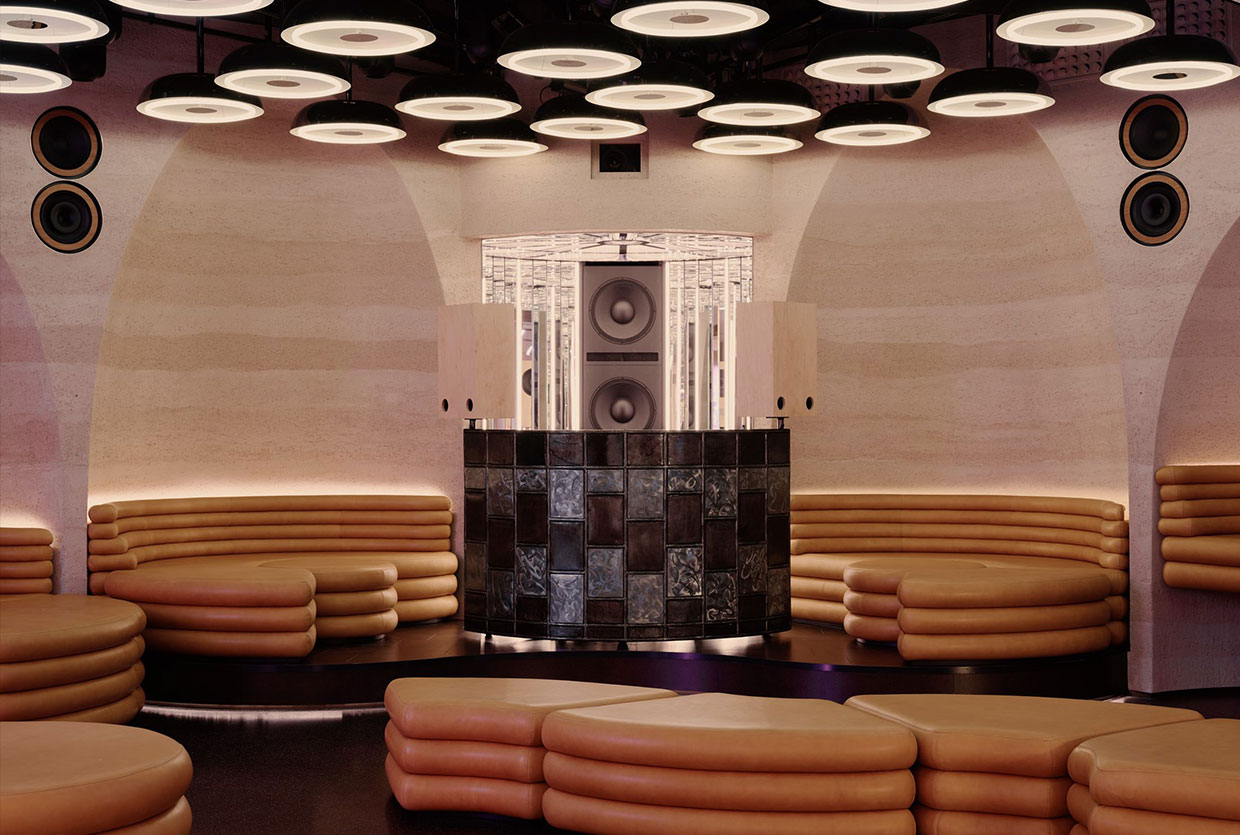
- Lighting by Benoît Lalloz: Custom-designed circular LED units are suspended from the historic ceilings. These futuristic halos provide a sharp, modern glow that contrasts beautifully with the soft natural light from the glass vaults.
- Max Lamb’s Sculptural Seating: Beyond the pink vinyl, Lamb has contributed textured, blocky forms that challenge the traditional notions of office seating.
- Lukas Gschwandtner’s Canvas Daybeds: These pieces bring a tactile, sculptural softness to the communal areas, inviting a moment of pause.
- Daniel Silver’s Marble Works: Bronze and marble sculptures are peppered throughout, acting as anchors that ground the lighter, more industrial elements of the design.
Beyond the Workspace: Swedish Hospitality in Paris
Despite its avant-garde appearance, the Paris HQ is designed with a very human core. In keeping with the brand’s Swedish roots, the communal kitchen is perhaps the most important room in the building. It is here that the tradition of "Fika"—the Swedish ritual of taking a break for coffee and conversation—is observed.
The kitchen design eschews the typical "office breakroom" aesthetic in favor of something that feels like a high-end residential kitchen. It’s a space designed to foster spontaneous meetings and the cross-pollination of ideas between the design, PR, and management teams. By prioritizing these social zones, Acne Studios ensures that their workspace is not just a place for production, but a hub for creative community.
Design Elements Comparison
To understand the specific interplay of materials in the Paris HQ, consider this breakdown of the "Old vs. New" components:
| Feature | Historic Preservation (The 'Bones') | Modern Intervention (The 'Insertion') |
|---|---|---|
| Ceilings | Vaulted glass laboratory roofs from the 1930s | Floating circular LED units by Benoît Lalloz |
| Flooring | Original pharmaceutical-era parquet and stone | Industrial poured concrete and custom rugs |
| Furniture | Antique architectural proportions | Pink vinyl 'Poly' sofas by Max Lamb |
| Walls | Exposed brick and original plaster patina | Sharp white partitions and stainless steel |
FAQ
Can the Acne Studios Paris headquarters be visited by the public? While the headquarters itself is a private working office and showroom for industry professionals, the brand frequently hosts exhibitions and events in nearby spaces, such as their gallery in the Palais Royal, which reflects a similar design language.
What was the most challenging part of the renovation? The primary challenge was modernizing the electrical and climate control systems without damaging the 1930s glass vaults and historic parquet. The solution was the "inserted" design philosophy—keeping new infrastructure visible or minimally invasive rather than cutting into the historic fabric.
How does the Paris office differ from the Stockholm HQ? The Stockholm HQ (Floragatan 13) is a Brutalist masterpiece characterized by concrete and 1970s institutional vibes. The Paris HQ is more delicate and historic, focusing on the pharmaceutical heritage of the 10th Arrondissement and a "scientific" approach to light and space.
Conclusion
The Acne Studios Paris HQ is more than just an office; it is a manifesto on how to handle history with both respect and irreverence. By choosing to inhabit a 1930s laboratory, Jonny Johansson and Halleroed have created a space that mirrors the brand's own identity: a rigorous, almost scientific attention to detail, wrapped in a subversive, "ugly cool" aesthetic.
For the modern creative, this space serves as a reminder that the most inspiring environments are often those that refuse to choose between the past and the future, choosing instead to let them exist in a beautiful, high-contrast tension.