Quick Facts
- Location: 25 Kent, Williamsburg, Brooklyn—a 19,000-square-foot facility within a premier creative office development.
- Design Philosophy: The "Anti-Office"—a workspace designed to eliminate corporate sterility, favoring fluid, collaborative environments that reflect brand energy over traditional branding.
- Architectural Firm: CIVILIAN, led by Nick and Justine Gil-land.
- Key Features: 25-foot-long communal tables, 10 custom upholstered focus nooks, and a hospitality-driven material palette.
- Capacity: Designed to accommodate a growing team while maximizing density through shared workpoints rather than assigned cubicles.
"It’s intentionally designed to be the anti-office," says Chelsea Riggs, CEO of Amika. This isn't just a corporate soundbite; it’s a manifesto for the future of work. As we navigate the post-pandemic landscape, the question for every brand has shifted from "How many desks do we need?" to "How do we earn the commute?" For Amika, the cult-favorite haircare brand known for its vibrant patterns and inclusive ethos, the answer lies in a 19,000-square-foot masterpiece in the heart of Williamsburg. Located at the iconic 25 Kent development, the new Amika Brooklyn HQ is a sophisticated departure from the neon-soaked aesthetics of the past, offering instead a serene, purpose-led environment that balances high-octane collaboration with the quietude of a luxury retreat.
At its core, the 'anti-office' concept at Amika’s Brooklyn HQ is a workspace designed to eliminate the boundaries between work and inspiration. It moves away from the rigid, assigned-seating models of the 20th century toward fluid, collaborative environments that mirror the brand's culture of creativity. By prioritizing shared experiences over individual silos, the space becomes a hub for innovation rather than just a place to check emails.
The CIVILIAN Vision: Identity Over Branding
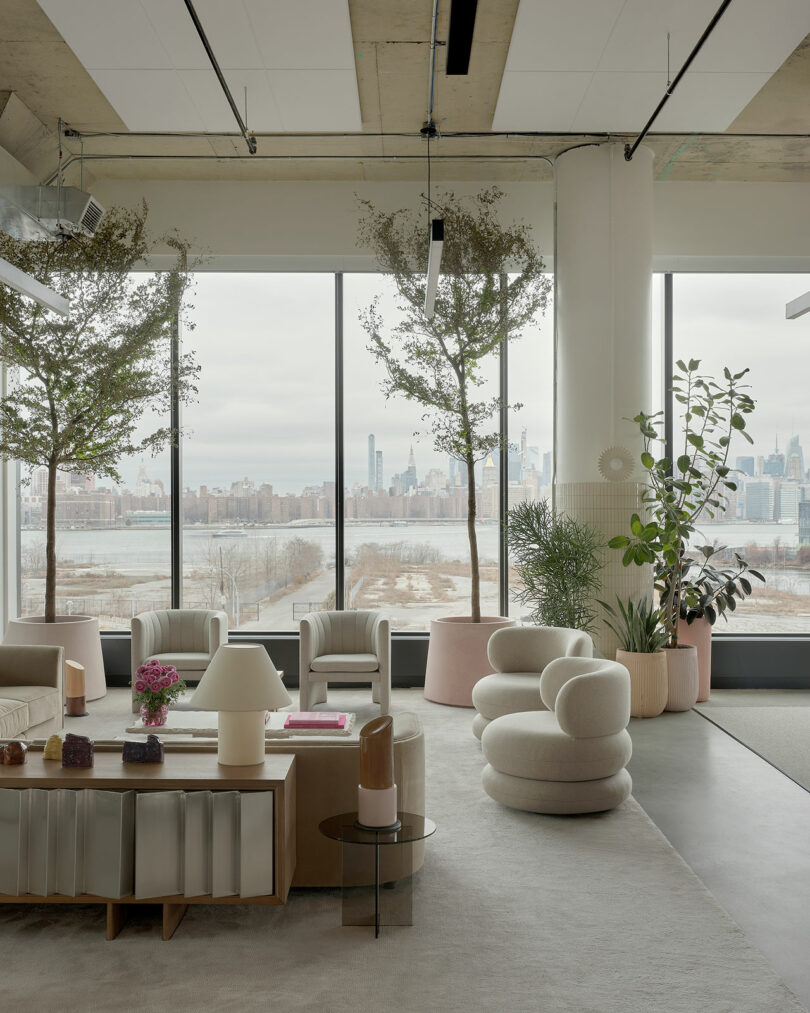
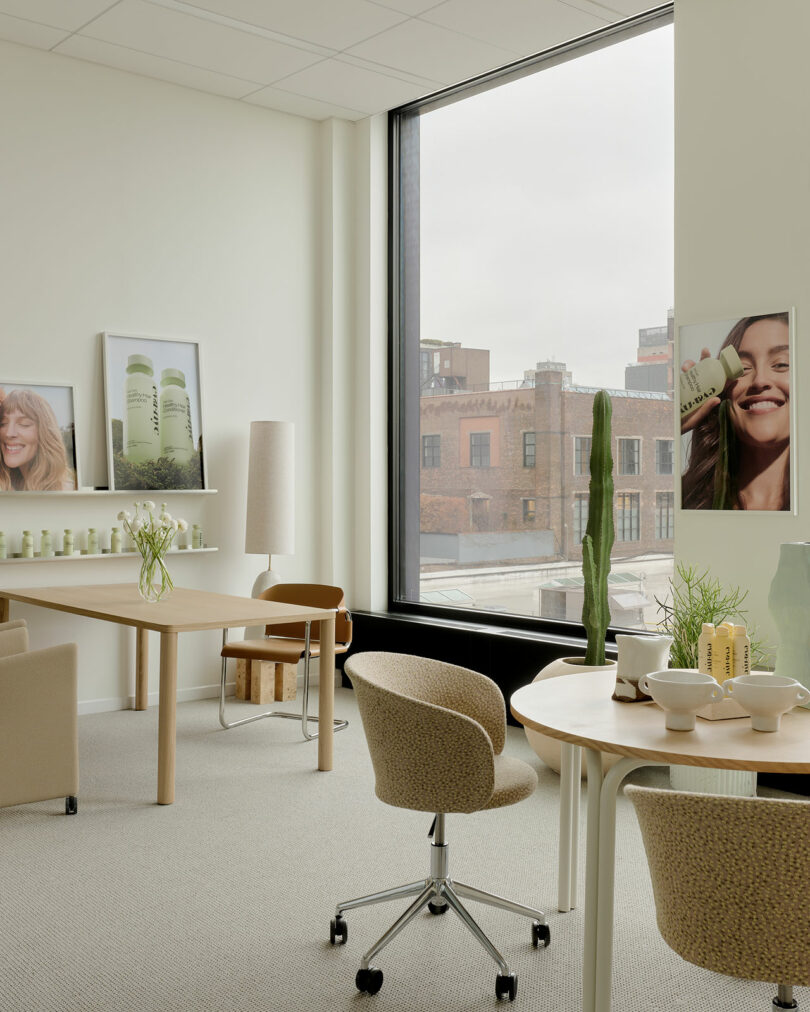
When Amika partnered with CIVILIAN, the Brooklyn-based architecture and design firm, the goal was to translate a high-energy beauty brand into a physical space without relying on "logos on walls." In 2026, the trend in workspace design is moving toward 'quiet luxury' and 'identity over branding.' Instead of plastering the walls with Amika’s signature orange and hot pink patterns, CIVILIAN utilized a sophisticated palette of neutral beige, warm gray, and natural stone.
This shift reflects a growing understanding of sensory ergonomics. In a world of digital overstimulation, the physical office should act as a grounding force. By using a monochromatic base, the designers allowed the people, the products, and the creative process to provide the "color." The materiality is where the brand’s luxury positioning truly shines:
- Limewash Finishes: Walls are treated with textured limewash that catches the afternoon light, providing a soft, tactile depth that paint cannot replicate.
- Travertine and Stone: Custom-cut travertine is used for communal surfaces, grounding the airy space with a sense of permanence and craft.
- Bespoke Millwork: Every curve in the office, from the reception desk to the pantry island, is custom-designed to foster a sense of flow.
The design philosophy here is clear: branding is a feeling, not a sticker. By focusing on high-quality materials and artisanal finishes, Amika creates a space that feels curated rather than manufactured—a key differentiator in 2026 workspace trends.
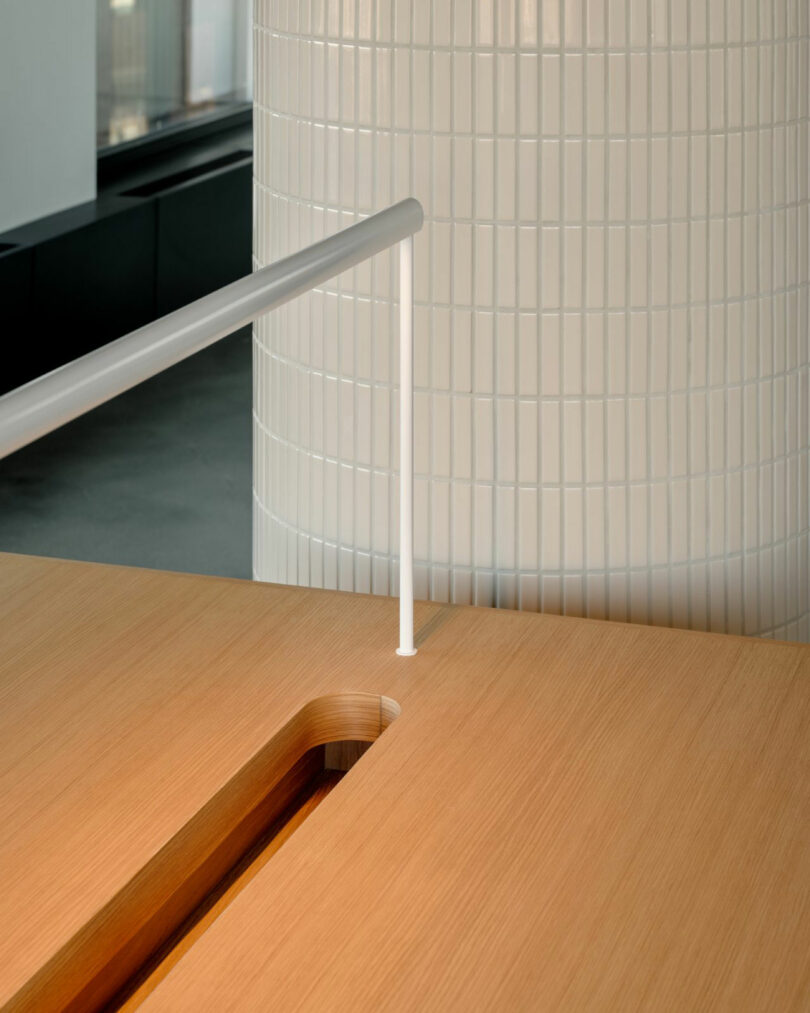
2026 Trend: The Death of the Assigned Desk
The most radical aspect of the Amika HQ is its total rejection of the assigned desk. In traditional layouts, nearly 50% of real estate is wasted on empty cubicles. Amika’s new model replaces individual ownership with "Workpoints." This approach is supported by impressive data: the HQ features 25-foot-long communal tables designed to accommodate 40 people per unit.
This layout significantly increases density for team interaction compared to traditional cubicles while maintaining an open, airy feel. These long tables aren't just furniture; they are social catalysts. By sitting together at a massive, beautifully crafted table, the hierarchy is leveled, and spontaneous cross-departmental conversations become the norm.
The 'Workpoints Over Desks' philosophy relies on several key design elements to remain functional:
- Modular Power Solutions: Integrated charging ports and cable management are hidden within the communal tables to keep the aesthetic clean.
- Acoustic Management: To manage the noise of 40 people at one table, CIVILIAN integrated acoustic ceiling tiles and soft floor coverings to absorb sound.
- Linear Lighting: Long, architectural light fixtures run parallel to the tables, providing focused task lighting that defines the work zone within the larger open plan.
This is a masterclass in balancing density with movement. Employees are encouraged to move throughout the day—starting at a communal table, moving to a lounge for a brainstorm, and retreating to a nook for deep focus.
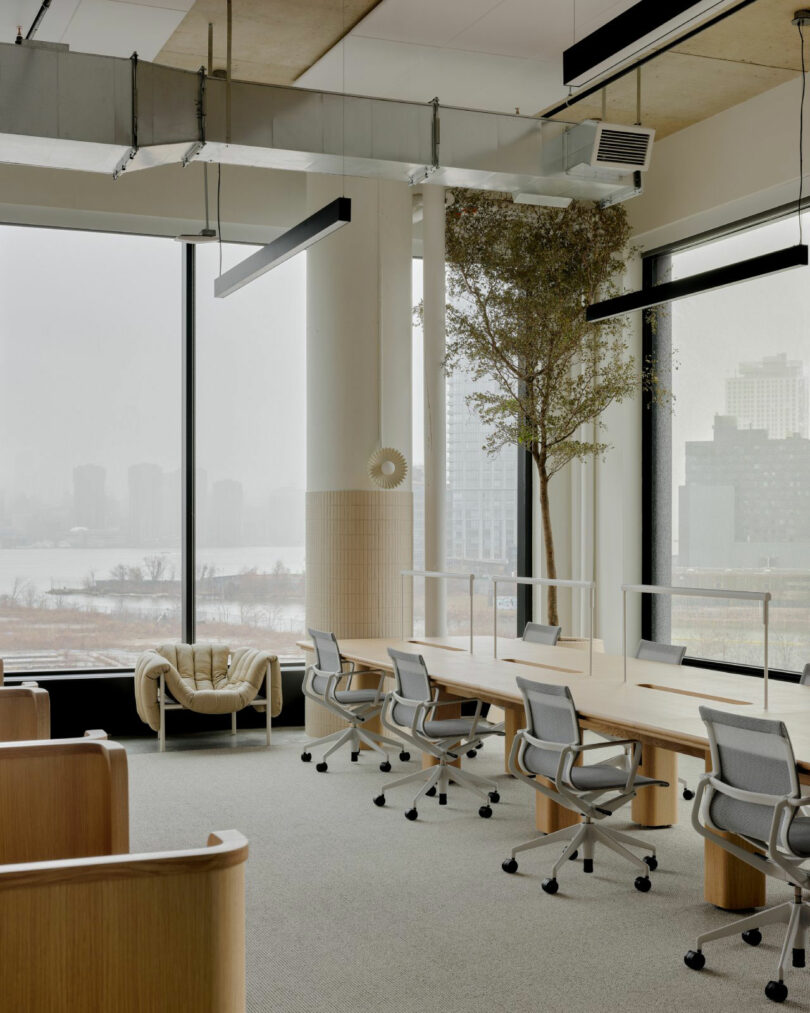
The 'Escape' Infrastructure: 10 Custom Nooks and Huddle Rooms
How does the Amika office incorporate 2026 design trends while ensuring productivity doesn't suffer in an open-plan environment? The answer is "The Escape Infrastructure." While the communal tables handle the "high-energy" work, the 19,000-square-foot facility incorporates 10 custom upholstered nooks and private phone booths to balance focused work with collaborative open spaces.
These nooks are a direct response to the "zoom-room" fatigue of previous years. Rather than sterile glass boxes, these semi-private sanctuaries are built with warm wood and soft textiles. They offer:
- Privacy without Isolation: You are tucked away, but you still feel the pulse of the office.
- Ergonomic Comfort: Deep, upholstered seating allows for a more relaxed posture during long research sessions or private calls.
- Democratized Views: In a departure from corporate norms, the best views of the Manhattan skyline aren't reserved for executive corner offices. Instead, they are given to shared huddle rooms and these focus nooks, ensuring every employee has access to the most inspiring parts of the building.
By moving from executive-led layouts to purpose-led layouts, Amika acknowledges that deep work is a universal requirement, not a perk of seniority.
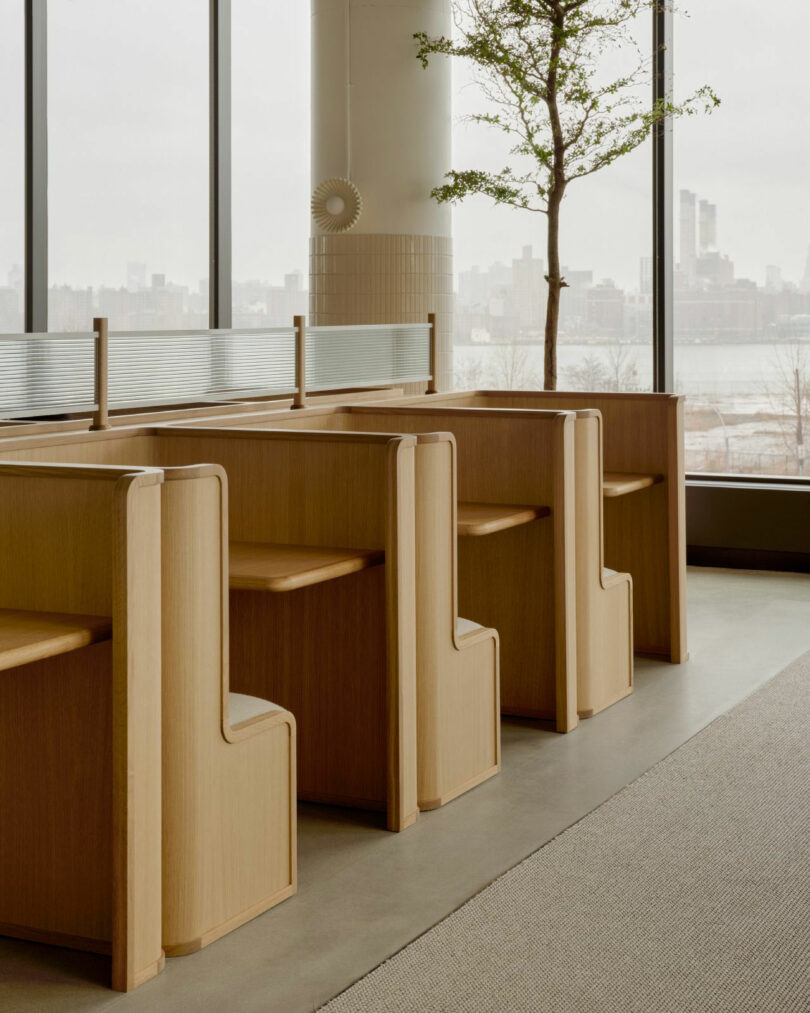
Biophilia and Wellbeing: More Than Just Plants
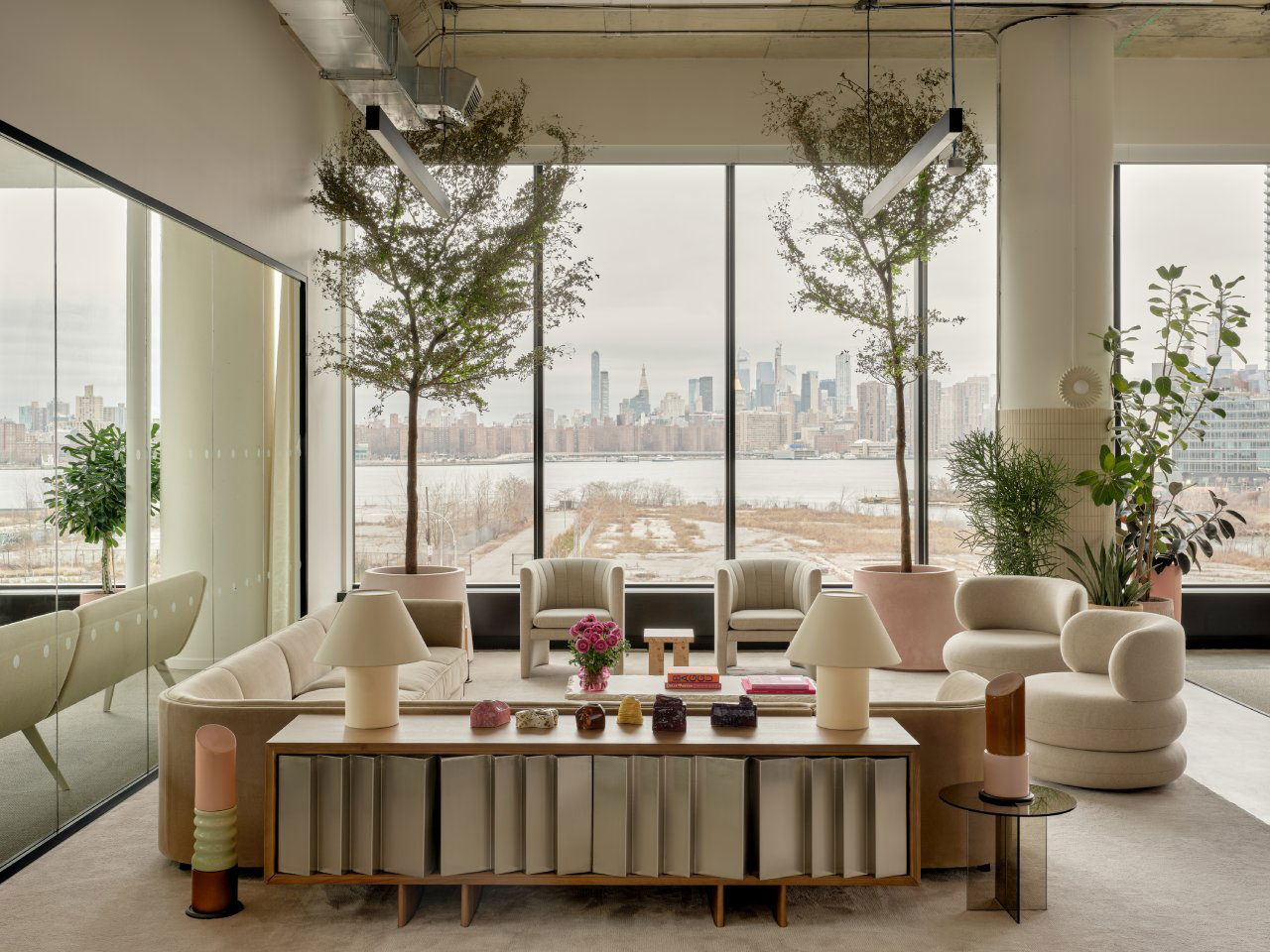
In 2026, biophilic design is no longer just about adding a few potted ferns; it’s about "biophilic productivity"—optimizing the environment for the human biological clock. The Amika HQ is a prime example of this evolution. By positioning the workspace within 25 Kent, the design takes full advantage of massive floor-to-ceiling windows that offer panoramic views of the East River and the Manhattan skyline.
This isn't just about the "wow" factor. Maximizing natural light exposure is critical for maintaining circadian rhythms, which directly impacts mental clarity and sleep quality. The interior palette further supports this:
- Natural Textures: The use of white oak and natural stone counters the industrial concrete of the building’s shell, creating a "warm industrial" vibe that feels organic.
- Sensory Design: Tactile fabrics—from bouclé lounge chairs to velvet-lined phone booths—provide a sensory richness that makes the space feel grounded and "human-scaled."
- The Waterfront Connection: The proximity to the water is pulled inside through the use of cool-toned stones and reflective surfaces that mimic the movement of the East River.
When employees feel connected to the natural world—even while in a bustling Brooklyn development—their stress levels decrease, and their creative output increases. It is design as a form of wellness.
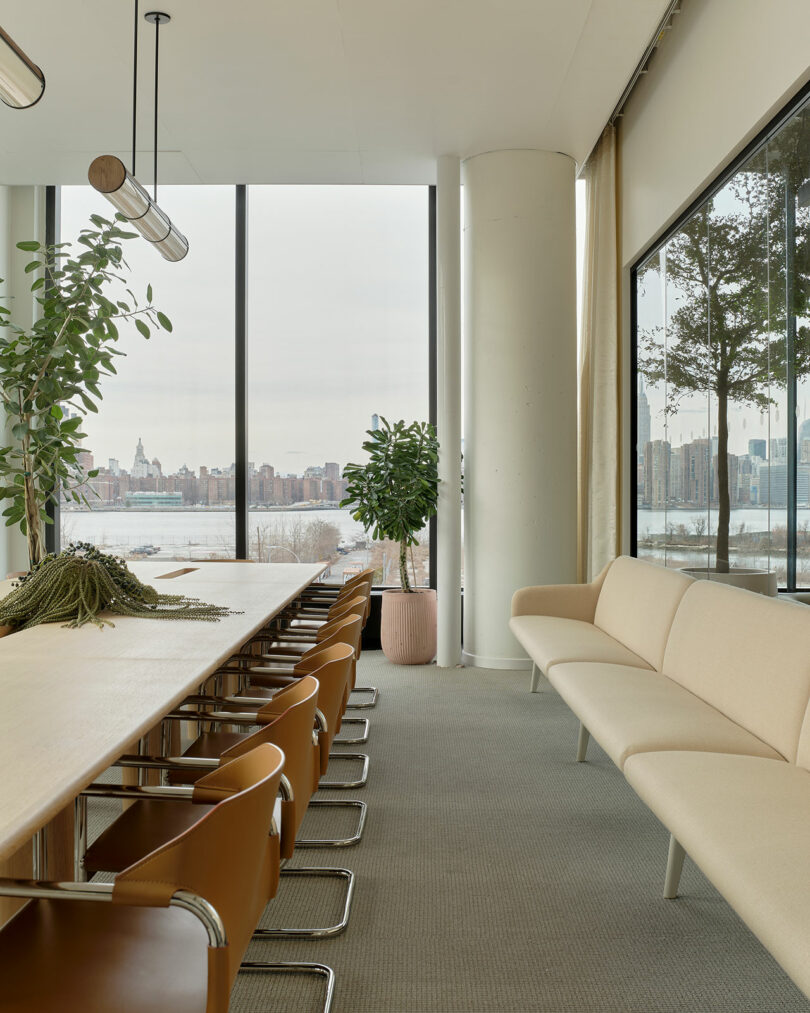
The Office as a Cultural Platform
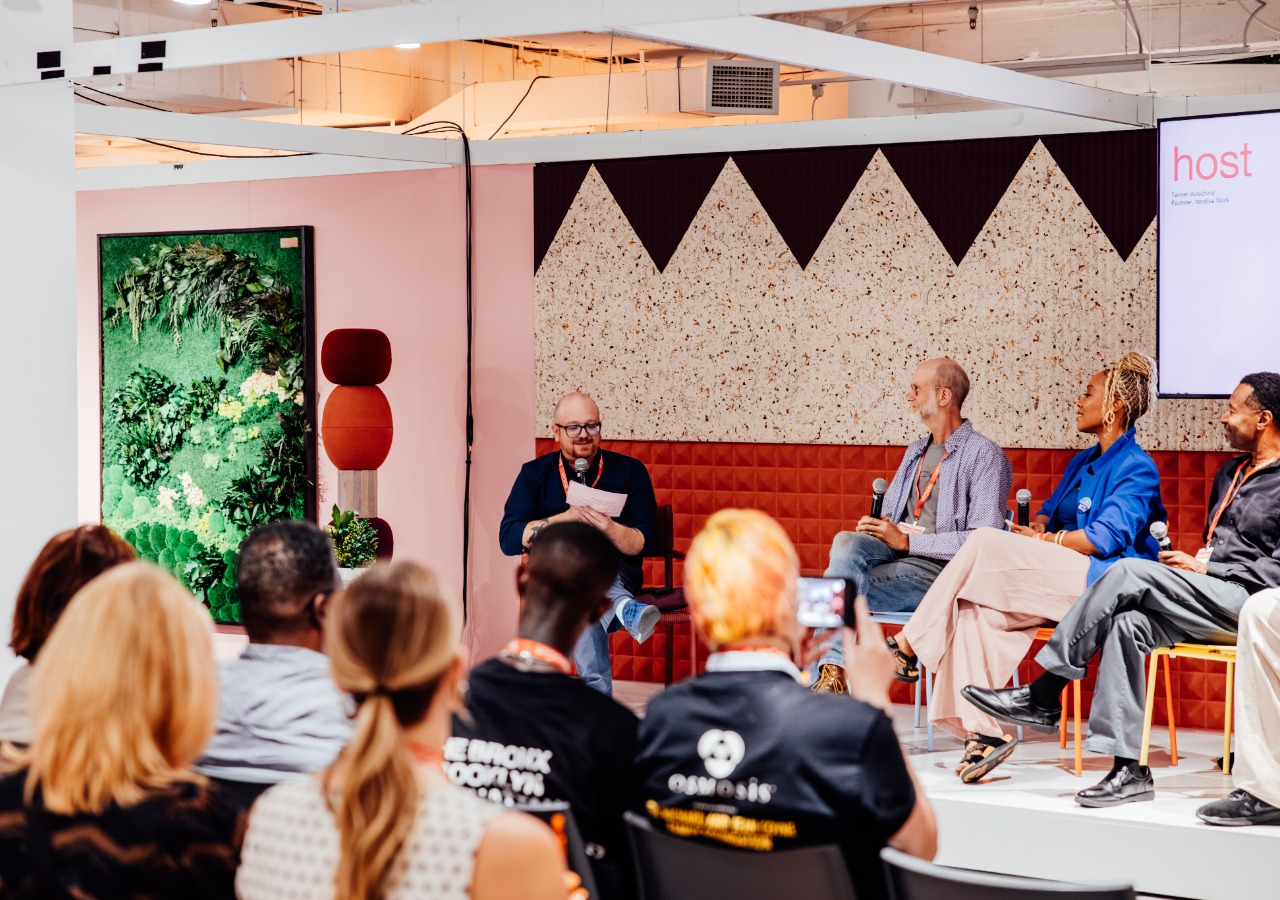
Amika’s HQ is not just a place where people work; it is a live platform for the haircare industry. The flexibility of the layout allows the workspace to transform into an event hub for product launches, stylist training sessions, and community gatherings.
"We didn't want a static office. We wanted a stage for our community," Riggs notes.
This versatility is achieved through:
- Flexible Furniture: Modular seating that can be reconfigured for a cocktail hour or a keynote presentation.
- Integrated Product Testing: Specialized areas that blend professional salon capabilities with high-end office design.
- Artistic Curation: The brand’s identity is subtly integrated through curated product displays and art pieces that reflect its Brooklyn roots and global impact.
The takeaway for 2026 is clear: the office must provide something that the home office cannot. It must offer a sense of belonging, a professional-grade toolkit, and a cultural pulse that inspires.
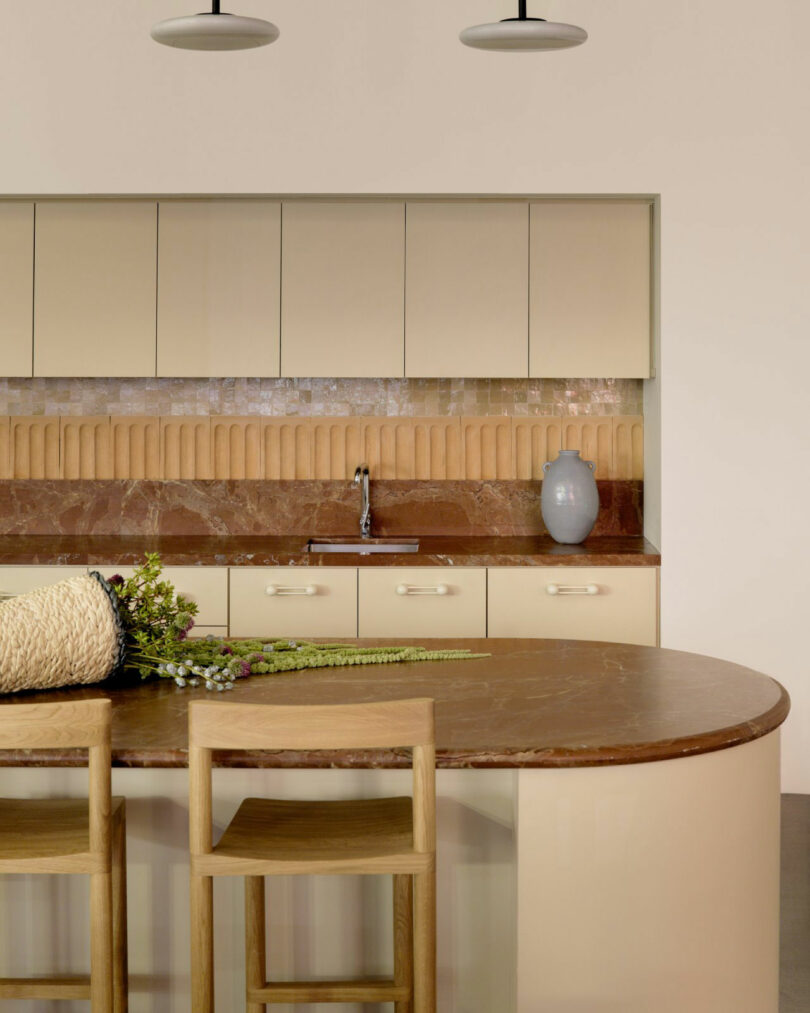
As we look at the social heart of the office—the kitchen—the hospitality influence is undeniable. With high-end materials and a residential feel, the pantry area acts as the town square. It is here where the "anti-office" truly succeeds: it feels less like a place you have to be and more like a place you want to be.
FAQ
Q: Why did Amika choose a neutral palette instead of their famous bright colors? A: To create a "serene backdrop" for creativity. In a workspace, high-intensity colors can lead to sensory fatigue. By using neutrals and natural materials like white oak and stone, the design allows the products and the people to be the focus while providing a calming environment for long workdays.
Q: How does the "Anti-Office" layout help with productivity? A: It utilizes a "Workpoints" model. By providing different zones—25-foot communal tables for collaboration, 10 custom nooks for deep focus, and hospitality-style lounges for brainstorming—employees can choose the environment that best suits their current task, rather than being stuck in one cubicle all day.
Q: What makes 25 Kent a significant location for this HQ? A: 25 Kent is Williamsburg’s first ground-up commercial office development in decades. Its 19,000-square-foot open-plan facility provides the scale and natural light (with East River and Manhattan views) necessary to implement Amika’s biophilic and collaborative design goals.