As urban temperatures continue to climb, we find ourselves trapped in a dangerous cycle. We rely on traditional air conditioning to stay cool, yet these systems account for roughly 9% of global electricity consumption and emit over a billion tons of CO2 annually. It is a "cooling catch-22": the more we try to cool our immediate surroundings, the more we heat the planet. For those of us focused on sustainable living and energy efficiency, the question isn't just how we stay cool, but how we do so without bankrupting our climate future.
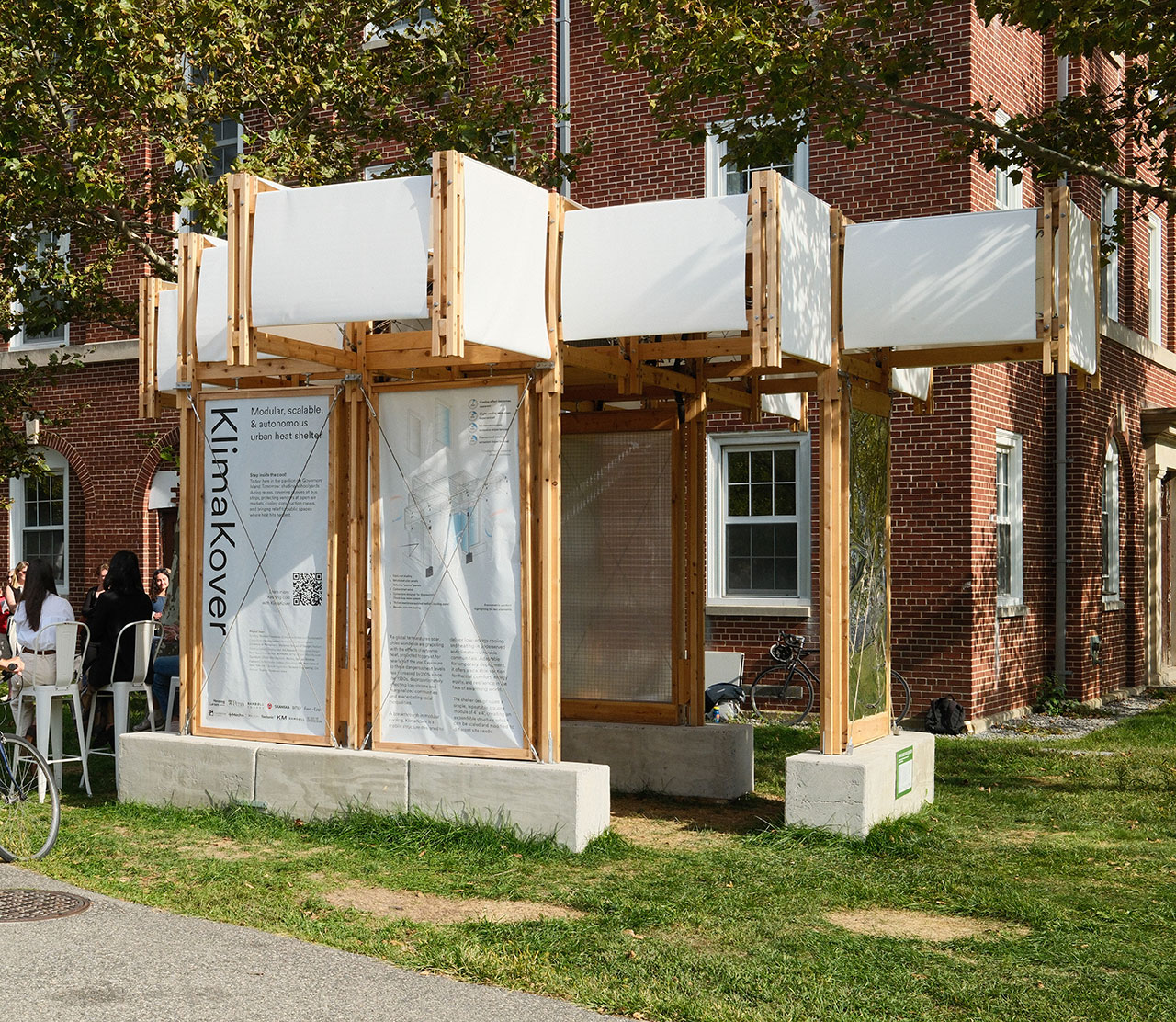
Enter KlimaKover, a breakthrough in urban climate control that challenges the dominance of energy-hungry compressors. Designed through a collaboration between the architectural firm Henning Larsen, the University of Pennsylvania, and AIL Research, this modular public shelter offers a radical alternative. It doesn't just lower the temperature; it rethinks the physics of human comfort.
What is KlimaKover? A New Paradigm for Public Cooling
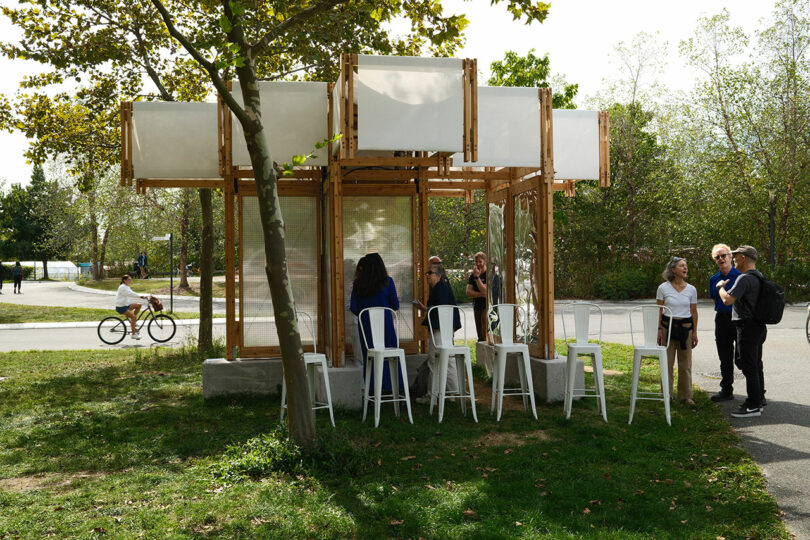
At its core, KlimaKover is a modular, solar-powered public shelter designed to provide heat relief in dense urban environments. Unlike traditional cooling systems that attempt to chill the entire volume of air in a space—a futile and expensive task outdoors—KlimaKover uses radiant cooling technology to target human thermal comfort directly.
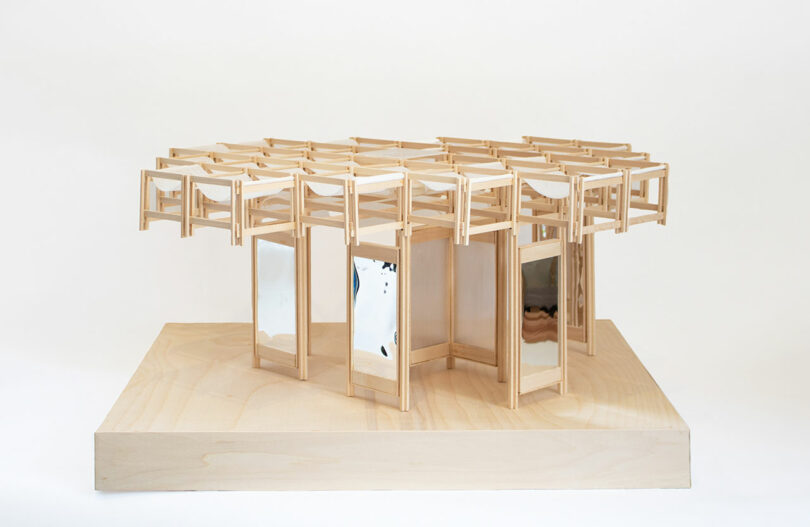
The system is built around 4-by-4-foot radiant panels that can be configured into various structures, from bus stops to schoolyard pavilions. These panels are powered by solar energy, making the entire operation carbon-neutral once installed. Most impressively, research indicates that the KlimaKover operates with 10 times less energy consumption than conventional air conditioning systems required to achieve equivalent comfort levels in an outdoor setting.
Key Statistics at a Glance
- Energy Efficiency: Consumes 10x less power than traditional AC.
- Cost Efficiency: Modular panels estimated at just US $75 each.
- Responsiveness: Cooling effects begin within 5 to 7 minutes of exposure.
- Sustainability: Built using upcycled "Carbon Smart Wood."
The Science of Radiant Cooling: Pulling Heat Away from the Body
To understand why KlimaKover is so efficient, we have to look at how it differs from the air conditioning units we use in our homes. Traditional AC relies on convection—it chills the air and blows it over you. In an open urban space, this is incredibly wasteful because the cooled air immediately dissipates.
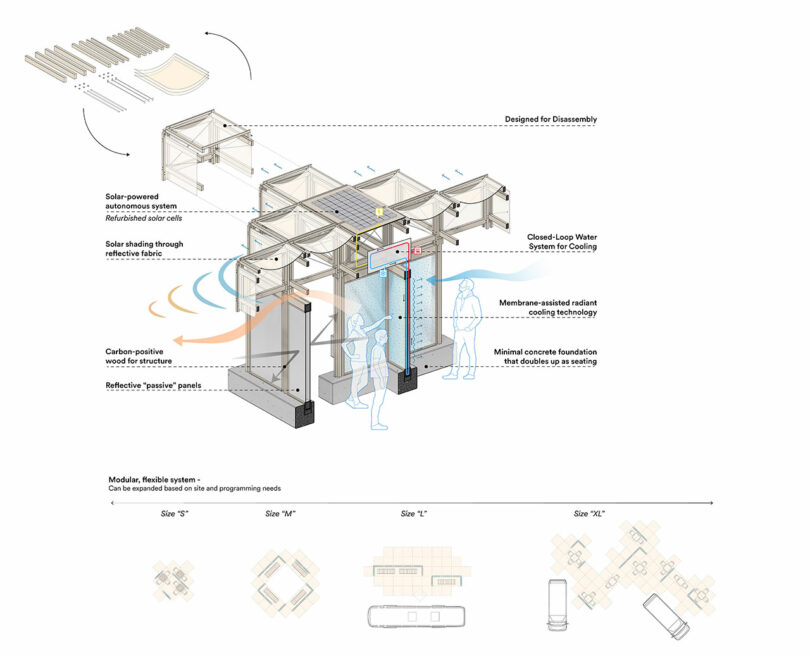
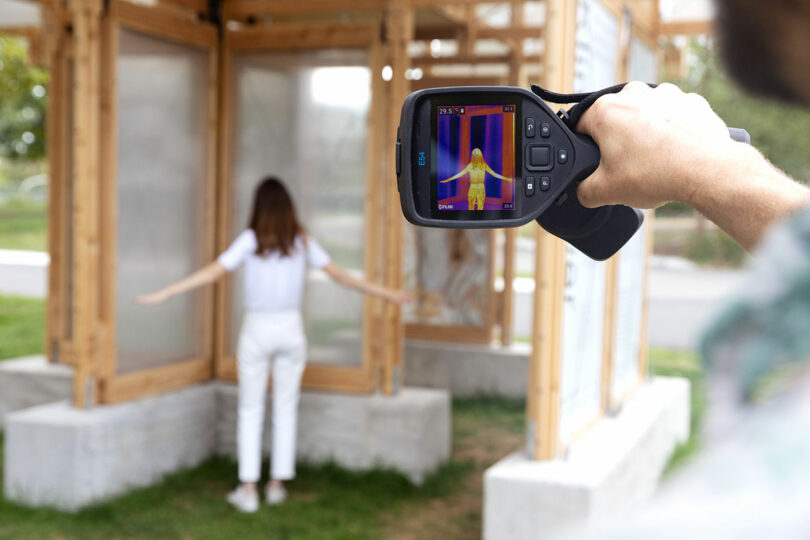
KlimaKover utilizes radiant cooling. Inside the modular panels, a network of "microtubes" carries chilled water. These panels do not blow cold air; instead, they act like a "heat sponge." Because heat always moves from a warmer object to a cooler one, the panels literally "pull" the radiant heat away from the human body.
This method offers several distinct advantages for sustainable urban design:
- Humidity Management: Traditional radiant systems often struggle with condensation in humid climates. KlimaKover uses specialized membranes that allow radiant heat to pass through while keeping moisture out, preventing that "sweating" effect on the panels.
- Solar Integration: The low power requirements mean the system can be entirely off-grid. Solar panels mounted on the roof of the structure provide enough energy to circulate the chilled water and run the internal sensors.
- Eco-Friendly Materials: The frame of the structure is often built from "Carbon Smart Wood"—cedar waste streams that would otherwise be discarded or burned, effectively sequestering carbon within the cooling infrastructure itself.
Performance Comparison: KlimaKover vs. Conventional AC
When we evaluate cooling solutions from an energy-editor perspective, we look at the "Energy Efficiency Ratio" in real-world contexts. In a public plaza, traditional AC is effectively useless. KlimaKover, however, thrives in these open-air settings.
| Feature | KlimaKover Radiant Cooling | Conventional Air Conditioning |
|---|---|---|
| Power Usage | 10x lower consumption | High (heavy compressor load) |
| Primary Mechanism | Radiant (pulls heat from body) | Convective (cools ambient air) |
| CO2 Impact | Minimal (Solar-ready/Off-grid) | Significant (3.2% of global GHGs) |
| Operating Environment | Open outdoor/semi-outdoor | Enclosed indoor spaces only |
| Scalability Cost | $75 per 4x4 panel | High infrastructure/ductwork costs |
Sustainable Tip: For homeowners looking to replicate this efficiency, consider "low-e" window films or radiant barriers in your attic. While they aren't active cooling like KlimaKover, they use the same principles of radiant heat management to reduce your AC load by up to 15%.
User Experience: From First Contact to Full Comfort
One of the most impressive aspects of the research conducted by the University of Pennsylvania is the speed of relief. In a city like New York or Phoenix, a resident moving from a sweltering sidewalk into a KlimaKover shelter doesn't have to wait long for their core temperature to stabilize.
The cooling sensation is described as "soft" and "even," lacking the harsh, dehydrating blast of a typical AC vent.
- The Initial Phase (5-7 Minutes): Within minutes of stepping under the panels, the body’s skin temperature begins to drop as the radiant exchange commences.
- The Steady State (20 Minutes): After twenty minutes, the full cooling effect becomes pronounced. The user feels a deep sense of thermal relief, even if the surrounding air temperature remains high.
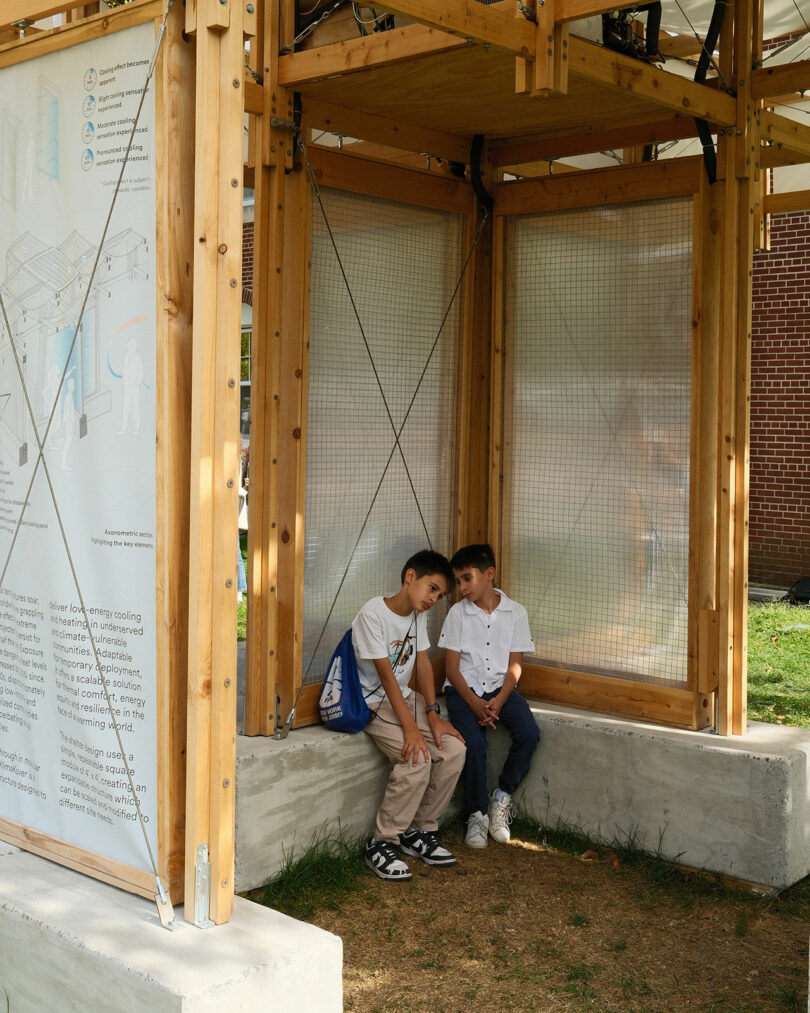
This makes KlimaKover an ideal solution for "transient" public spaces. Think of a parent waiting at a bus stop with a toddler, or students gathering in a schoolyard during recess. It provides a democratic cooling solution—one that doesn't require an expensive membership or a ticket to an air-conditioned mall.
Cost-Efficiency and Urban Scalability
From a municipal budgeting perspective, KlimaKover is a game-changer. Historically, providing public cooling meant opening "cooling centers" in libraries or gymnasiums—facilities that are expensive to run and often underutilized because they require people to travel away from their daily routes.
The modularity of KlimaKover allows for "point-of-need" cooling. Because each 4x4 foot panel can be mass-produced for an estimated US $75, cities can deploy these systems at scale.
- Low Barrier to Entry: The panels are designed for easy assembly and disassembly. If a construction zone creates a temporary "heat island," a KlimaKover station can be erected for the duration of the project and then moved elsewhere.
- Customizable Footprints: The grid system allows architects to wrap cooling around existing trees, fit them into narrow alleyways, or create large-scale "cooling cathedrals" in public parks.
Looking Ahead: The 2026 NYC Expansion
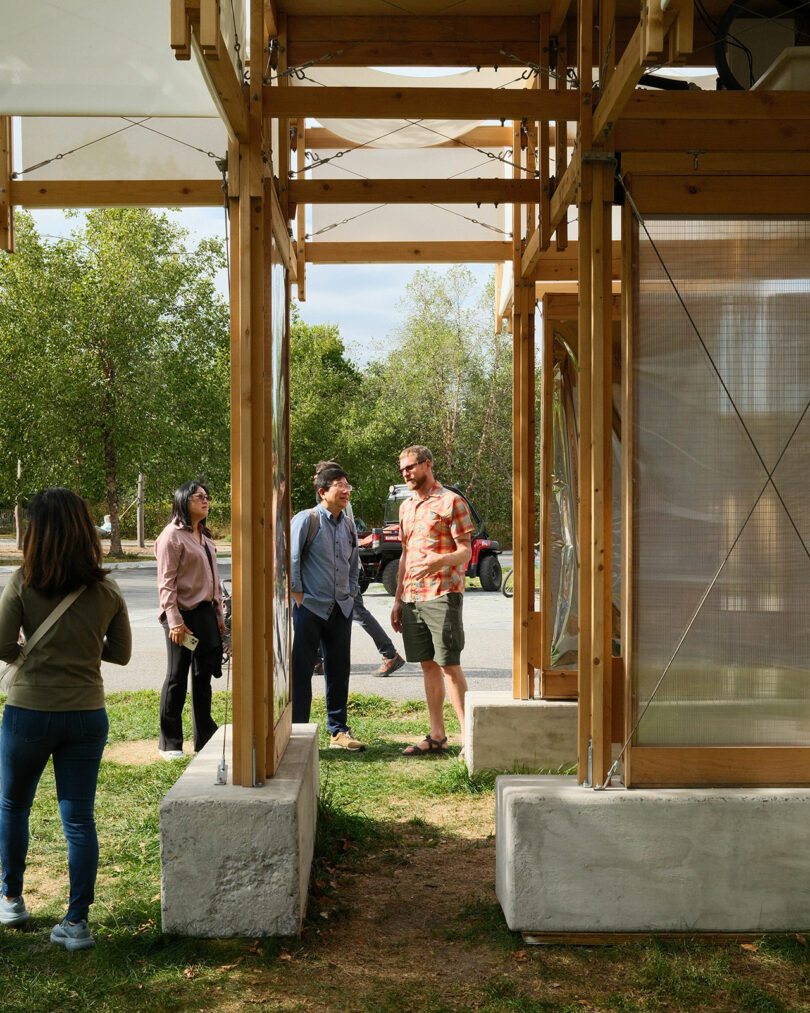
The prototype of KlimaKover has already seen success during its installation on Governors Island in New York City. Through late 2025, researchers are collecting data on how the system performs under varying humidity levels and heavy public use.
The roadmap for 2026 is even more ambitious. The project aims to expand into the diverse "micro-climates" of New York City, testing the panels in high-traffic construction zones, near street vendor stalls, and within schoolyards in underserved neighborhoods. This expansion will be a critical test for how low-energy, radiant cooling can become a standard part of urban infrastructure.
As we look toward a future with more frequent heatwaves, the KlimaKover represents the kind of innovation we need: technology that prioritizes human health, urban equity, and the long-term health of our planet.
FAQ
Q: Does KlimaKover actually lower the air temperature? A: Not significantly. Its primary goal is to cool the human body via radiant exchange. By focusing on people rather than the air, it achieves comfort with 90% less energy than traditional AC.
Q: Will the panels get wet or drip in humid weather? A: No. The system uses a specialized membrane that is transparent to thermal radiation but prevents moisture in the air from condensing on the chilled surfaces.
Q: Can this technology be used in residential homes? A: Yes, radiant cooling panels for ceilings and walls are an emerging trend in high-efficiency home design. KlimaKover's innovation lies in making this technology rugged and efficient enough for the outdoor public realm.
As an editor focused on energy-efficient solutions, I believe the KlimaKover is a masterclass in "doing more with less." It reminds us that comfort doesn't have to come at the cost of our environment. For more guides on sustainable living and the future of urban energy, stay tuned to our weekly updates.