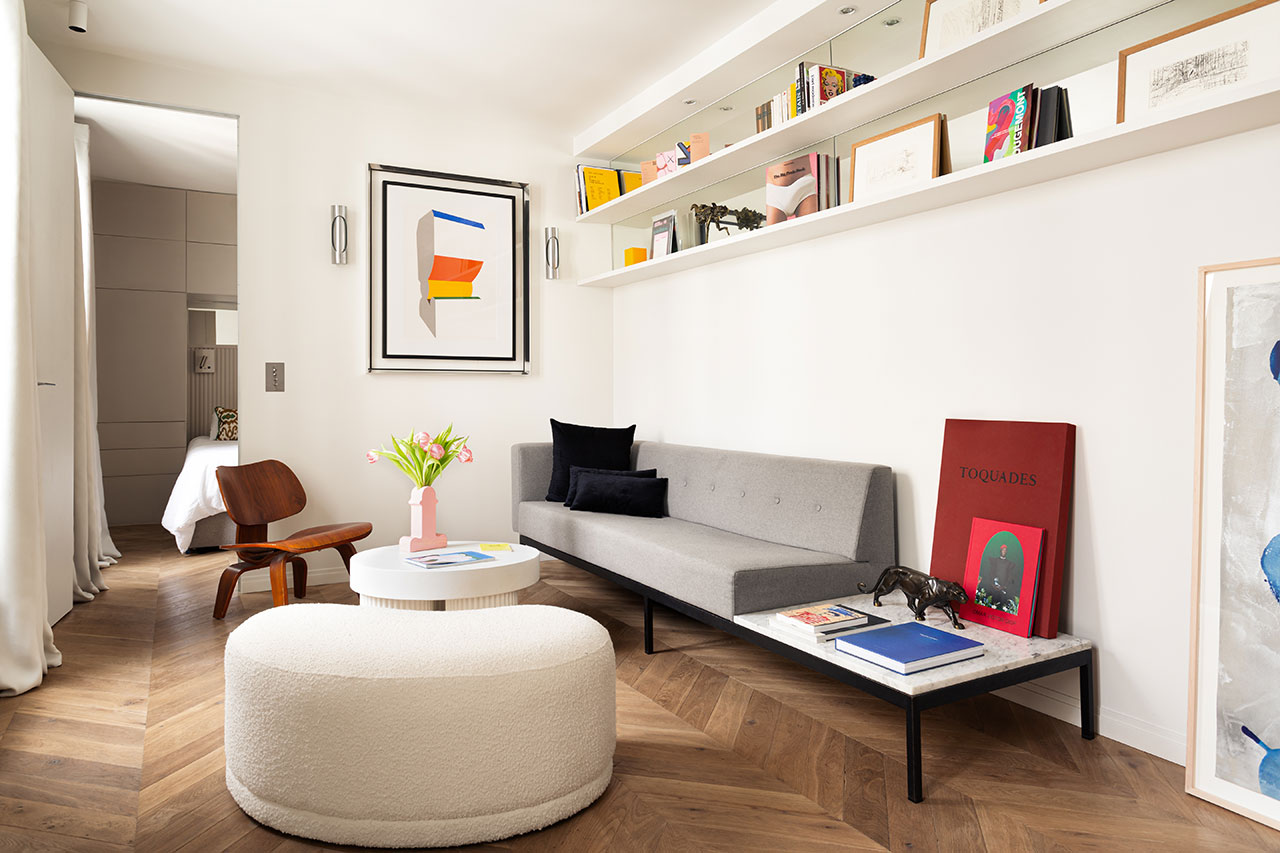
In the heart of Paris's bustling 9th arrondissement, a silent revolution is occurring within the confines of the city's historic Haussmannian walls. We are witnessing a shift where the prestige of a home is no longer measured by its sprawling footprint, but by the intelligence of its "spatial choreography." The BERGÈRE project—a 344-square-foot (32-square-meter) apartment transformed by Emilie Magdelaine Interiors—serves as the ultimate blueprint for this new era of compact luxury.
To make a small apartment feel like a luxury hotel suite, we must pivot from "decorating" to "architectural tailoring." By prioritizing a disciplined neutral palette—such as Farrow & Ball’s 'Strong White'—and integrating high-end materials like Carrara marble and brushed stainless steel, we can blur the boundaries of a room. When we combine these aesthetic choices with custom, floor-to-ceiling cabinetry that conceals the friction of daily life, the result isn't just a studio; it is a high-performance sanctuary that feels significantly larger than its physical dimensions.
I. The Parisian Palette: Neutral Foundations with Depth
The secret to a 344-square-foot Paris apartment feeling airy rather than claustrophobic lies in the "chromatic flow." For the BERGÈRE project, the choice of Farrow & Ball’s 'Strong White' provides a crisp, architectural backdrop that catches the soft Parisian light without the starkness of a true gallery white. To create depth, we often layer this with 'Elephant's Breath' on woodwork or transition areas, providing a subtle warmth that mimics the sophisticated atmosphere of a boutique hotel.
In compact luxury interior design, we must also balance the visual temperature. While the walls may be cool and expansive, the furniture should provide tactile warmth. We recommend a "Cool vs. Warm" strategy: link the bedroom and bathroom through a shared aesthetic of stone and glass, but soften the living areas with natural wood herringbone flooring.
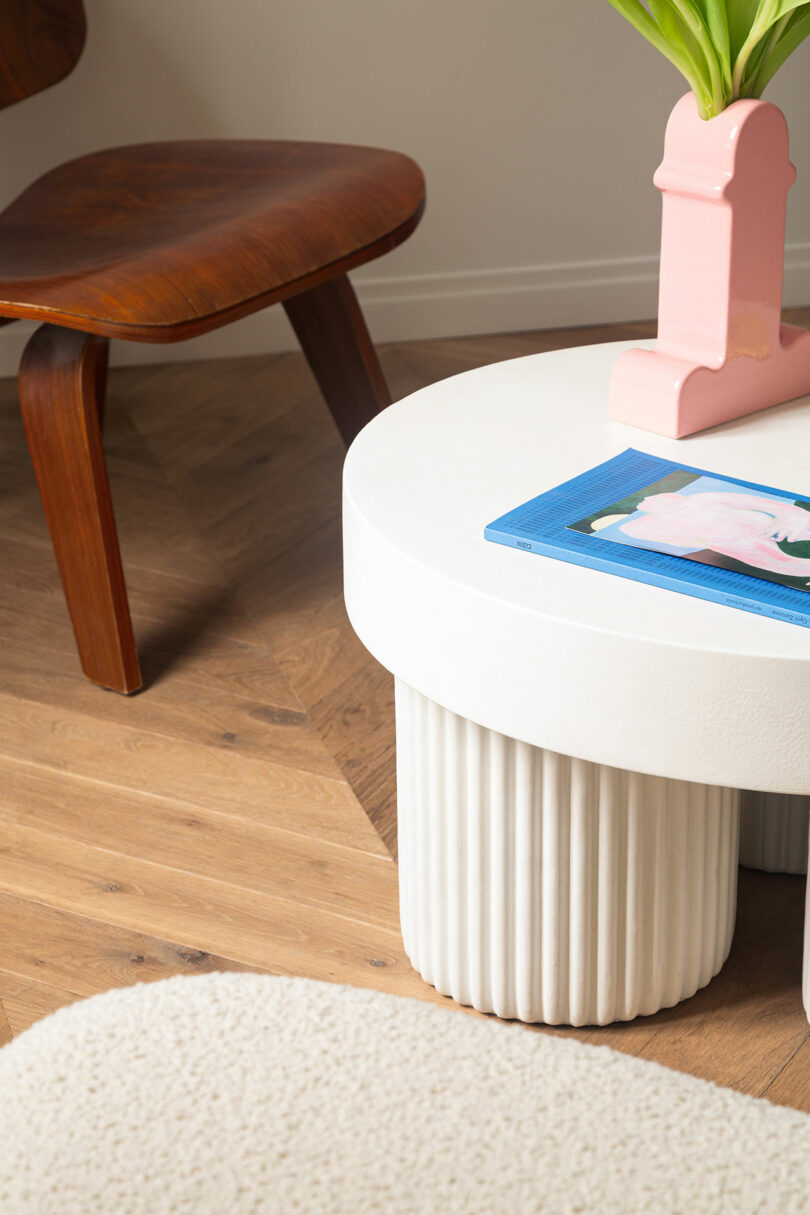
Designer’s Secret: The Rule of Contrast When working with the rigid, straight lines of a small floor plan, we always introduce curved silhouettes to break the visual tension. A rounded coffee table or a soft-edged headboard prevents the space from feeling like a series of boxes.
II. Material Continuity: The Luxury Trio
Luxury in small spaces is defined by the continuity of premium materials. When we use the same high-end finishes throughout different "zones," the eye perceives the apartment as one continuous, expensive suite rather than a collection of tiny rooms.
We focus on three primary materials to anchor a hotel-inspired home renovation:
- Carrara Marble: This is our "prestige thread." By using it for both the kitchen backsplash and the bathroom vanity, we create a sensory link between the two most functional areas of the home.
- Brushed Stainless Steel: We move away from generic chrome. Brushed steel for light switches, hardware, and curtain rods adds a contemporary, industrial edge that feels intentional and bespoke.
- Sintered Stone and Solid Oak: For high-traffic surfaces, we look toward brands like Povison, whose Pandora Sintered Stone offers the look of natural marble with the scratch-resistant durability required for multi-functional living.
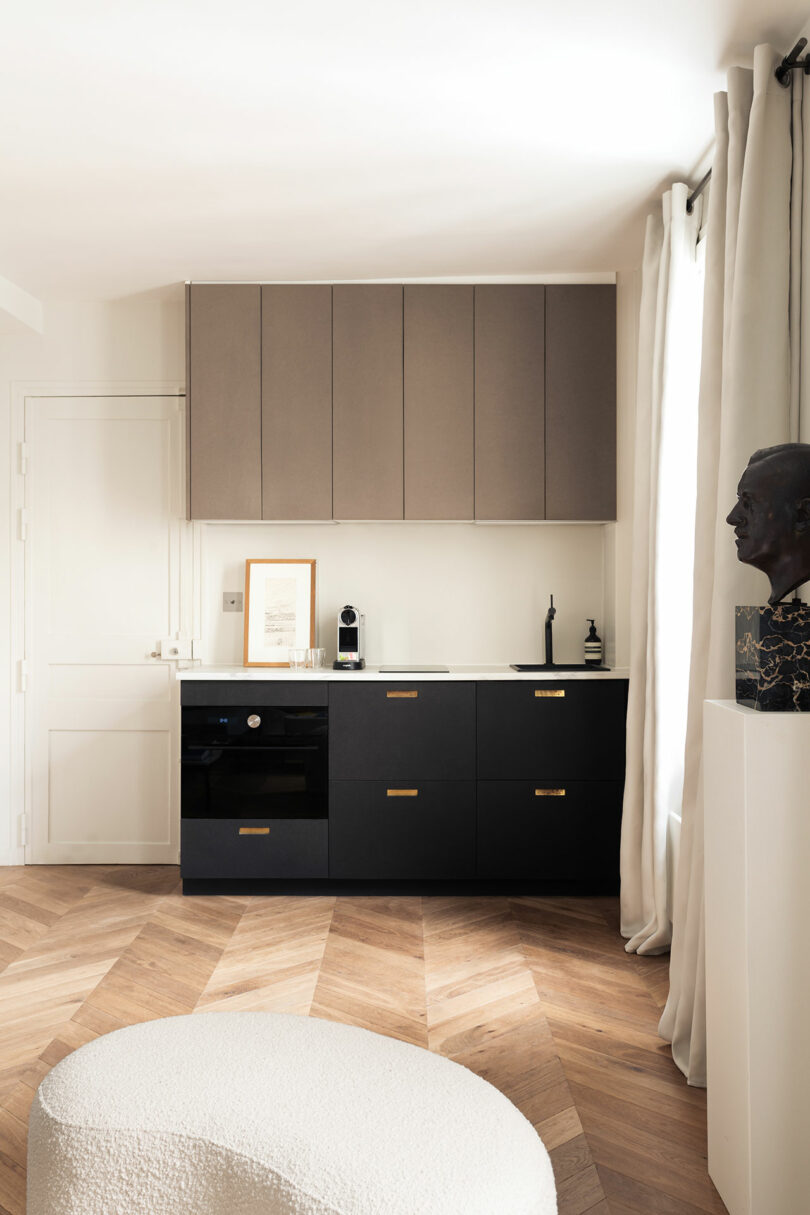
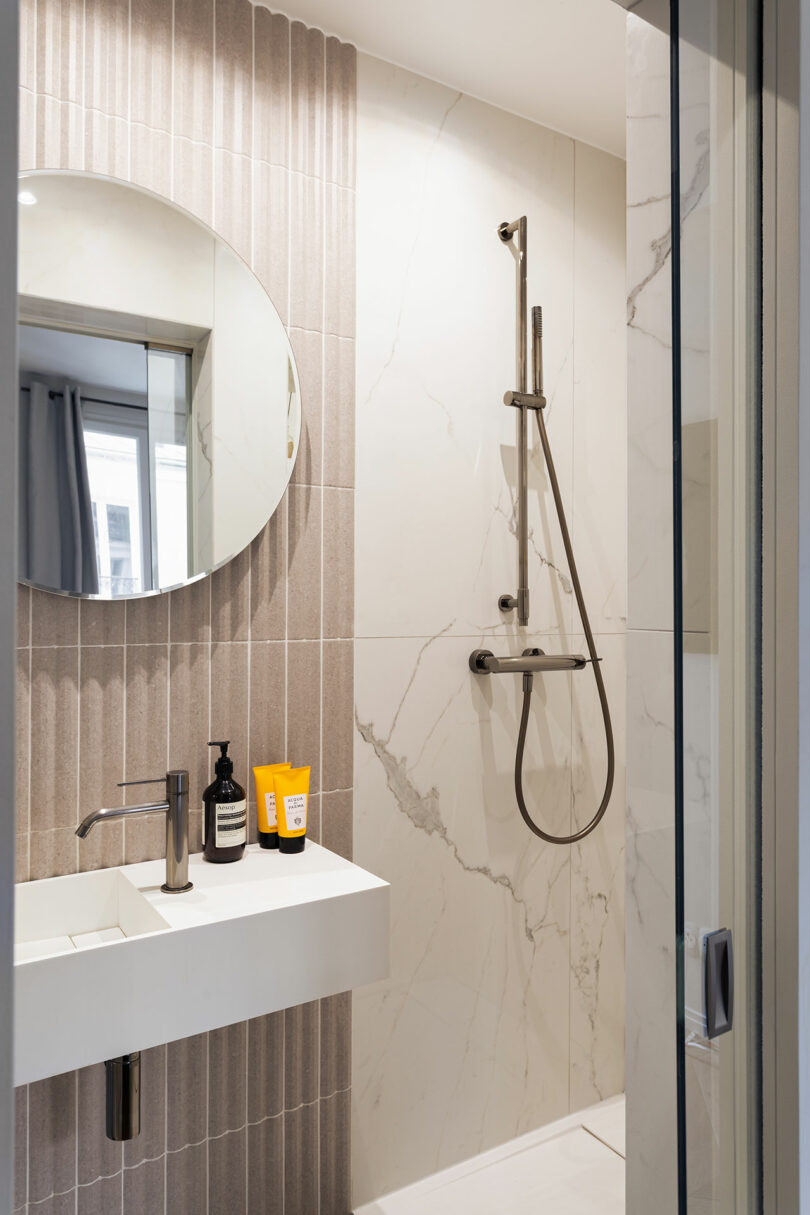
As we extend these materials into the private quarters, the transition should feel seamless. In the bathroom, the marble shouldn't just be a detail; it should be the protagonist. This creates a spa-like retreat that defies the home's small square footage.
III. Strategic Layout: Reclaiming the Floor Plan
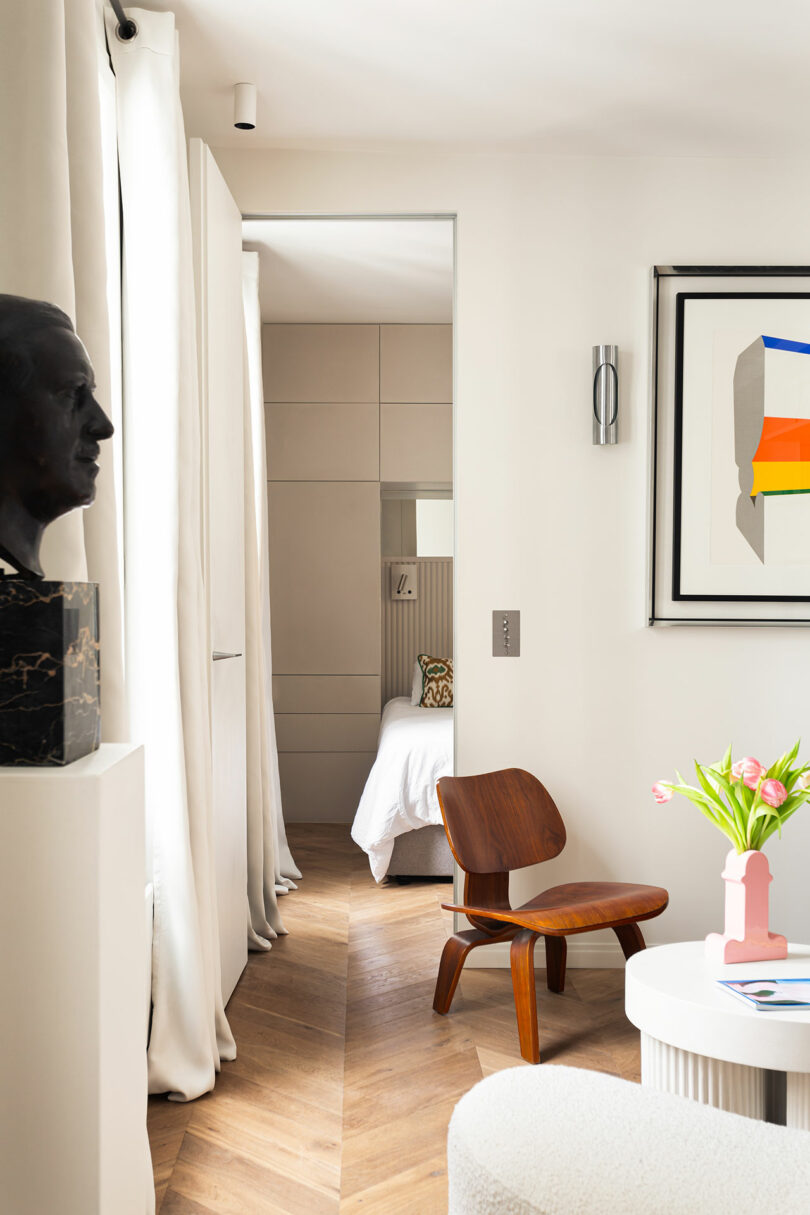
In the BERGÈRE project, the most radical move was the relocation of the "Night Zone." By moving the bedroom to where the kitchen was originally situated, Emilie Magdelaine created a logical flow that mimics a hotel layout—public spaces (living/dining) are flooded with natural light, while the sleeping quarters are tucked away as a private alcove.
To maximize every inch, we utilize space-saving architectural features:
- Roller Shutter Doors: These are game-changers for tiny bathrooms. Unlike swing doors that require a clearance arc, or pocket doors that need thick wall cavities, a sleek roller shutter disappears into the ceiling or side, saving precious square footage.
- Transparent Partitions: Using glass or dichroic glass between the bedroom and living area allows light to permeate the entire depth of the 344-square-foot Paris apartment while maintaining a clear boundary.
IV. Integrated Storage: The 2026 Intelligence Trend
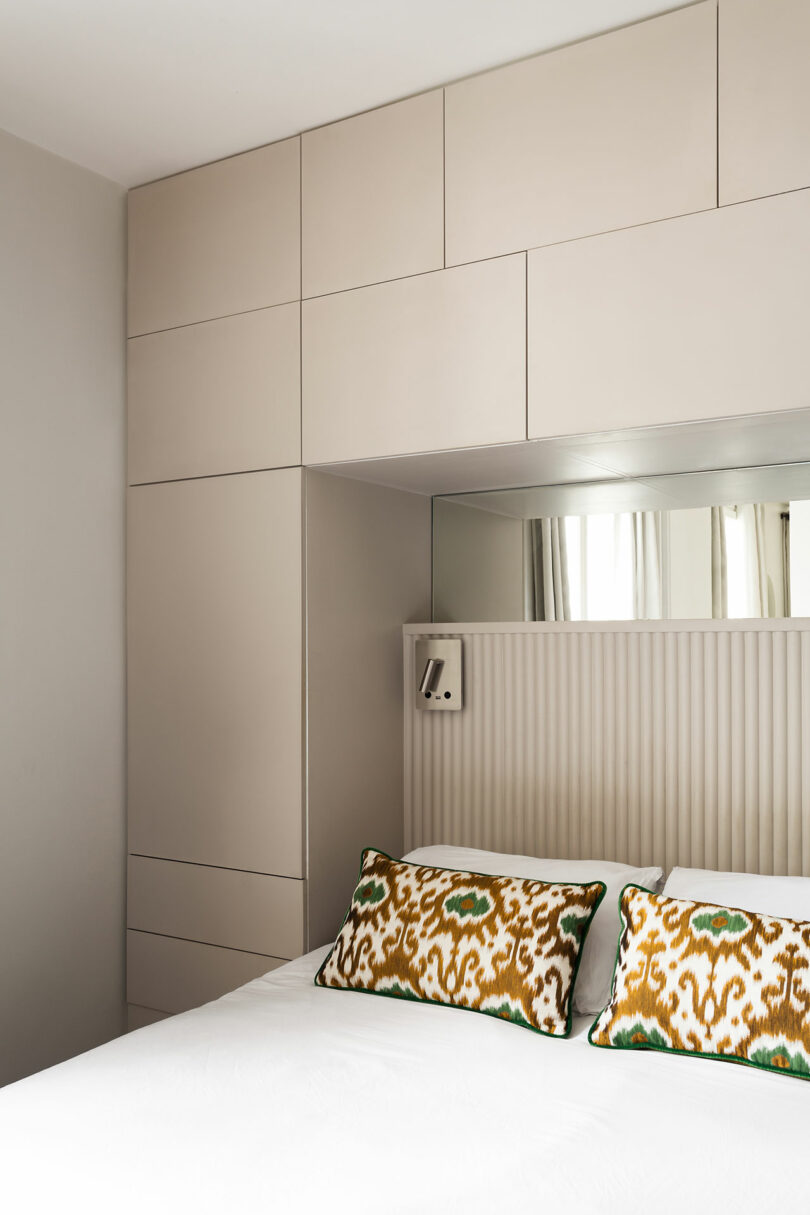
The hallmark of small apartment storage solutions for 2026 is "invisible utility." If you can see the storage, the room feels smaller. We advocate for custom floor-to-ceiling cabinetry that integrates seamlessly with the walls.
A cost-effective yet high-end approach involves using IKEA Metod pedestals as a base, then elevating them with premium fronts from designers like &SHUFL or Reform. This "hacking" allows for a bespoke look without the five-figure price tag of traditional custom millwork.
| Feature | Standard Studio Layout | Compact Luxury Suite (2026 Trend) |
|---|---|---|
| Bed Storage | Under-bed bins | Integrated "Trunk Bed" with hydraulic lift |
| Cabinetry | Free-standing wardrobes | Floor-to-ceiling custom millwork |
| Dining | Permanent 4-seat table | Gate-leg or pull-out hidden console table |
| Bathroom Door | Standard swing door | Space-saving roller shutter or sliding glass |
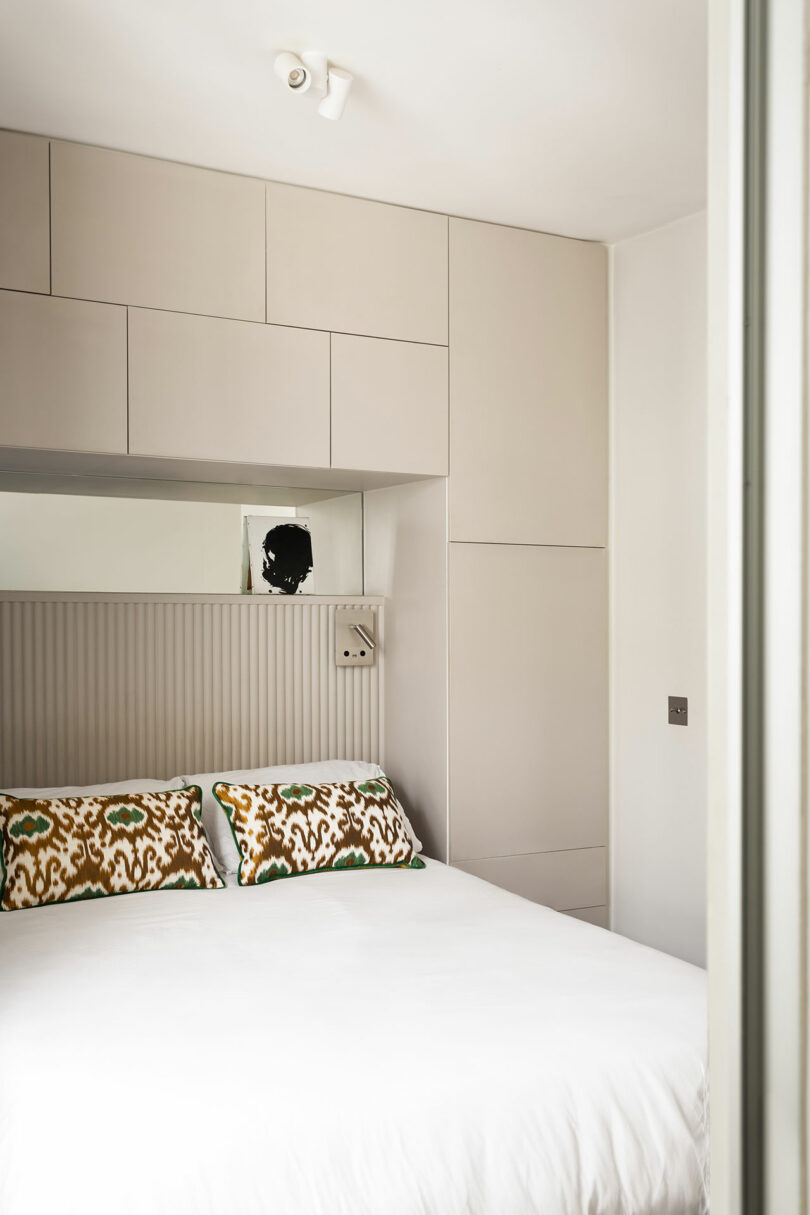
We must also utilize the vertical footprint. In the bedroom, a custom-designed headboard can act as a nightstand, a bookshelf, and a lighting mount all at once. For those sourcing ready-made pieces, Wayfair-inspired storage sofas and nesting stools allow for guest flexibility without permanent clutter.
V. The Art of Reflection: Mirrors and Lighting
Mirrors are more than just functional objects; they are architectural windows. Strategic mirror placement is the most effective way to deepen a room's perspective. By placing a large-format mirror above a headboard or behind shelving, we effectively double the visual depth of the room.
According to 2026 interior design trends, we are seeing a move toward "Dynamic Reflections." This involves using dichroic glass—a material that shifts color and transparency depending on the angle of light—to create an ethereal glow. This keeps the apartment feeling "alive" and avoids the flat, static look of many small rentals.
VI. The Statistical Impact of Smart Renovation
Investing in high-end, compact design isn't just an aesthetic choice; it’s a financial one. Recent data from the Parisian real estate market indicates that bespoke renovations in the 9th arrondissement that utilize multifunctional furniture and integrated storage show a 15% higher property valuation compared to traditional studio layouts.
Furthermore, luxury-integrated storage solutions are projected to increase the perceived floor space by up to 25%. In a city where every square meter is worth a premium, smart design literally pays for itself.
FAQ
How can I make a 344-square-foot apartment feel like a luxury hotel suite? The key is "Material Continuity." Use high-end finishes like Carrara marble and brushed stainless steel consistently throughout the space. Eliminate visual clutter with custom, floor-to-ceiling cabinetry and use a sophisticated neutral palette (like Farrow & Ball's 'Strong White') to maximize light.
What are the best storage solutions for a 300-400 sq ft apartment? Focus on multifunctional furniture such as "trunk beds" with hydraulic lifts and custom headboards that integrate lighting and shelving. Use roller shutter doors for bathrooms to save floor space, and opt for gate-leg tables that can expand or contract based on your needs.
How do mirrors improve small space design? Mirrors act as "internal windows." By reflecting natural light and extending the sightlines of a room, strategic mirror placement can make a living area feel twice as deep. Placing mirrors opposite windows or above headboards is particularly effective.
Conclusion
Living big in a small footprint is an art form that requires us to be ruthless with clutter and generous with quality. By treating a 344-square-foot Paris apartment with the same architectural respect as a grand estate—focusing on materiality, lighting, and invisible storage—we create spaces that don't just house our lives, but enhance them.
Are you ready to redefine your square footage? Whether you're embarking on a full-scale renovation or simply looking to upgrade your current storage, remember: in 2026, luxury is measured by how well your home works for you, not how much room it takes up.