In the golden, shifting light of the Pacific coast, the traditional "backyard" is undergoing a radical metamorphosis. As we look toward 2026, the humble patio is no longer a secondary thought—a mere concrete slab for a grill—but has evolved into a sophisticated architectural extension of the home. For the discerning California homeowner, the goal is "LA Cool," a design ethos that marries the disciplined minimalism of mid-century modernism with the rugged, tactile luxury of the coastal landscape.
Projections for 2026 indicate a seismic shift in the luxury market: 85% of high-end California residential landscape investments are moving away from simple outdoor seating areas toward fully integrated "outdoor rooms." These spaces function as year-round living quarters, mirroring the interior’s comfort while embracing the horizon. Whether you are navigating the "renovate vs. move" dilemma in today's competitive market or simply looking to anchor your lifestyle in the beauty of the outdoors, mastering the California Modernist patio is the ultimate investment in both equity and well-being.
The Anatomy of a California Modernist Patio
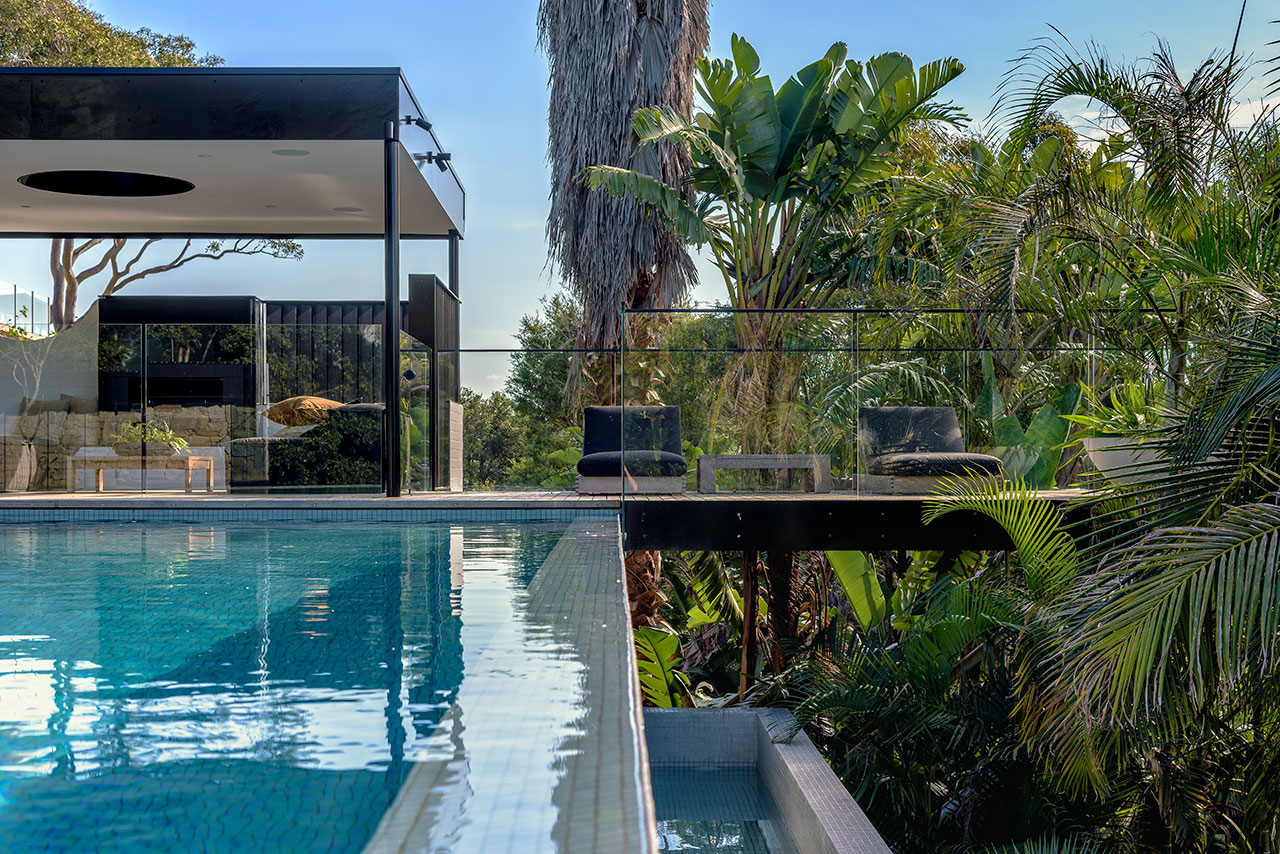
The essence of the California Modernist aesthetic lies in its effortless ability to blur the lines between shelter and nature. To achieve this, one must look to the pioneers—Richard Neutra and Pierre Koenig—who mastered the art of the "transparent" home. The core elements of this style are rooted in a minimalist aesthetic characterized by clean, geometric lines that mimic the horizon and expansive glass walls that dissolve the boundary between the living room and the terrace.
A true LA Cool patio relies on a curated natural material palette. We are seeing a move toward raw, honest materials: sand-blasted stone, sustainably sourced timber like Ipe or reclaimed teak, and a neutral color story inspired by the canyons and the coast—think bone, driftwood, and slate. The goal is to create a visual continuum where the flooring of your interior flows uninterrupted to the edge of your property.
Ivy’s Style Tip: When choosing stone for your patio, opt for large-format pavers with minimal grout lines. This reduces visual "noise" and enhances the geometric purity that defines the modernist movement.
Designing the Year-Round "Outdoor Room"
How can you ensure your outdoor space remains functional through every season? The answer lies in the transition from "patio" to "outdoor room." In 2026, luxury is defined by usability. To create a space that serves you in both the heat of a Santa Ana wind and the chill of a January evening, you must invest in structural permanence.
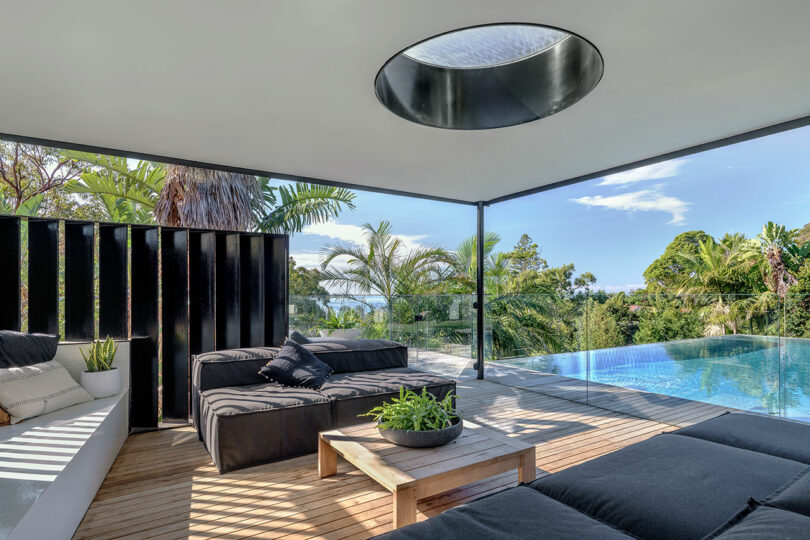
- Integrated Pavilion Structures: Move beyond the retractable awning. Modernist design favors solid roof structures or cantilevers that appear to float over the lounge area. These provide essential shade while housing integrated recessed lighting and audio systems.
- Climate Control: To achieve true year-round functionality, incorporate climate-responsive elements. This includes sleek, linear outdoor fireplaces or fire pits that serve as a social anchor, alongside high-performance, oversized ceiling fans integrated into the pavilion ceiling to circulate air during the summer months.
- Smart Infrastructure: 2026 is the year of the "invisible" smart home. Ensure your outdoor room is pre-wired for app-controlled fire features, automated lighting conduits, and even weather-sensing irrigation for the surrounding greenery.
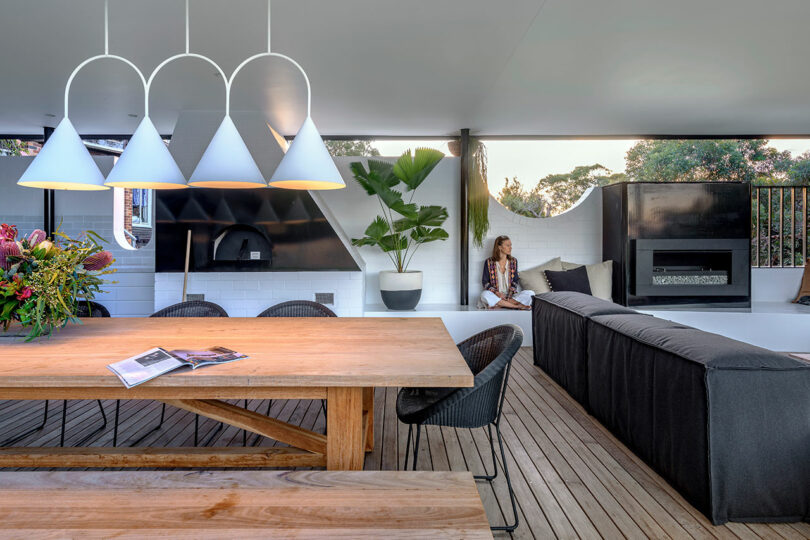
By treating the patio as an architectural volume rather than a flat surface, you create a sanctuary that feels as intentional as your primary suite.
Hardscaping for Resilience: The Concept of "Defensible Space"
In California, design is never just about aesthetics; it is about resilience. Hardscaping plays a critical role in modern landscape design, particularly regarding wildfire safety. The concept of "defensible space" has become a cornerstone of luxury development. This involves creating a non-combustible buffer—typically 30 to 100 feet—around the home to protect it from heat and embers.
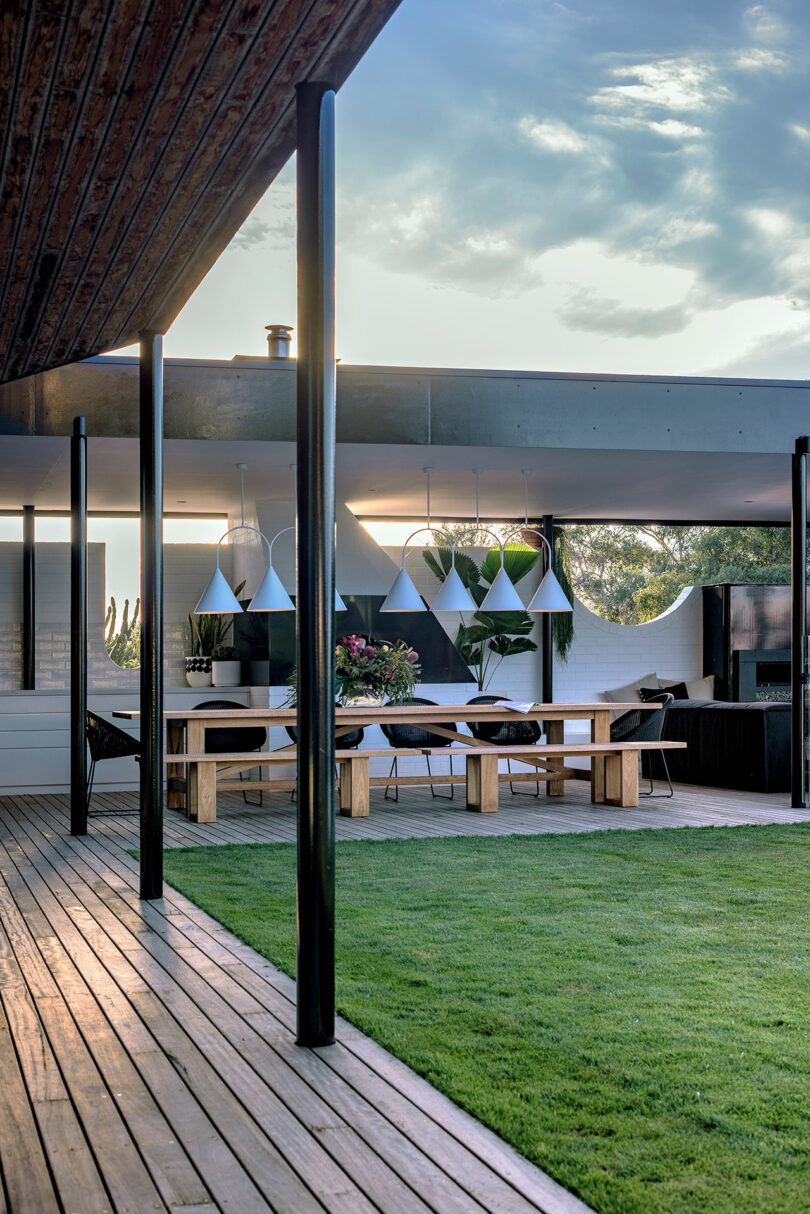
Strategic hardscaping uses stone, masonry, and concrete pavers as elegant firebreaks. Far from being a clinical necessity, these elements offer a low-maintenance, drought-tolerant environment that feels grounded and permanent. Navigating strict California building codes and insurance requirements is no longer just a chore for your contractor; it is a design opportunity. Using tiered stone retaining walls or gravel-filled "riverbeds" can define different zones of your patio while serving as a tactical defense against the elements.
Sustainable Luxury: Minimalism Meets Drought Tolerance
As we move toward 2026, sustainability is the new status symbol. The modern minimalist landscape is no longer about lush, water-hungry lawns; it’s about "Xeriscaping with Style." By adhering to minimalist principles, homeowners can reduce residential outdoor water usage by up to 60%, significantly lowering maintenance costs and environmental impact.
The 2026 trend emphasizes Mediterranean-inspired, drought-tolerant species that complement the modernist palette. Think sculptural olive trees, fragrant lavender, and silver-hued rosemary. These plants offer texture and movement against the rigid lines of the hardscaping.
| Feature | Traditional Patio | 2026 Modernist Outdoor Room |
|---|---|---|
| Primary Material | Poured concrete or wood deck | Natural stone, masonry, high-tech composites |
| Water Usage | High (lawn-focused) | Low (60% reduction via drought-tolerant flora) |
| Safety Profile | Combustible materials common | Fire-resilient "Defensible Space" buffers |
| Functionality | Seasonal / Weather-dependent | Year-round (Integrated climate control) |
| Market Value | Standard ROI | High (21.4% CAGR market growth) |
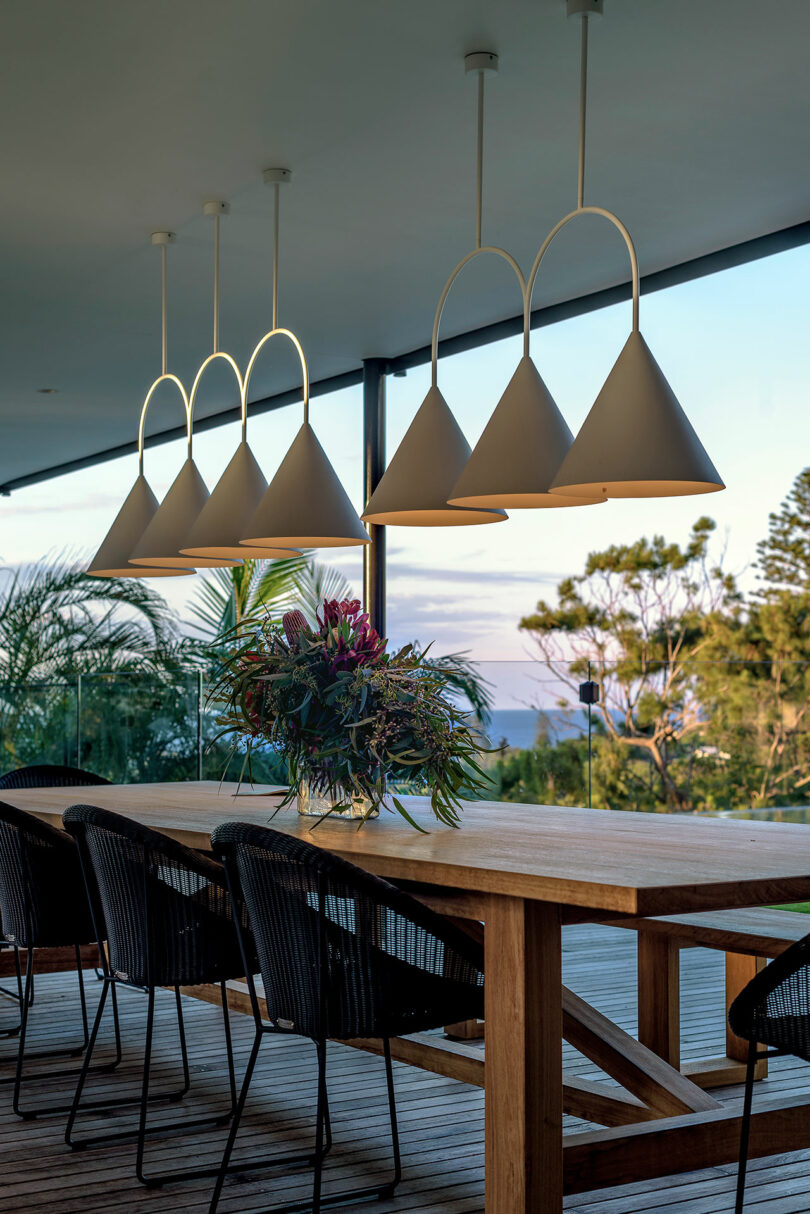
When selecting furniture, the shift is toward high-density polyethylene (HDPE) made from recycled materials or sustainably harvested teak. These materials provide the longevity required for the California sun without sacrificing the sophisticated "LA Cool" aesthetic.
Curating the Aesthetic: Furniture and Layout
The layout of your California Modernist patio should be as carefully zoned as an open-plan loft. Avoid cluttering the space with oversized sets; instead, curate "zones" that facilitate different modes of living.
- The Dining Zone: Centered around a long, low-profile table with sculptural seating. Look for brands like Roche Bobois for luxury silhouettes or Loll Designs for sustainable, modern durability.
- The Quiet Retreat: A secluded corner featuring a pair of iconic lounge chairs—perhaps a nod to the Eames era—framed by large-scale planters.
- The Social Pit: A sunken or slightly elevated area focused on a fire feature, designed for evening conversation.
The silhouette of your furniture should remain low to the ground to preserve sightlines and ensure the focus remains on the surrounding landscape.
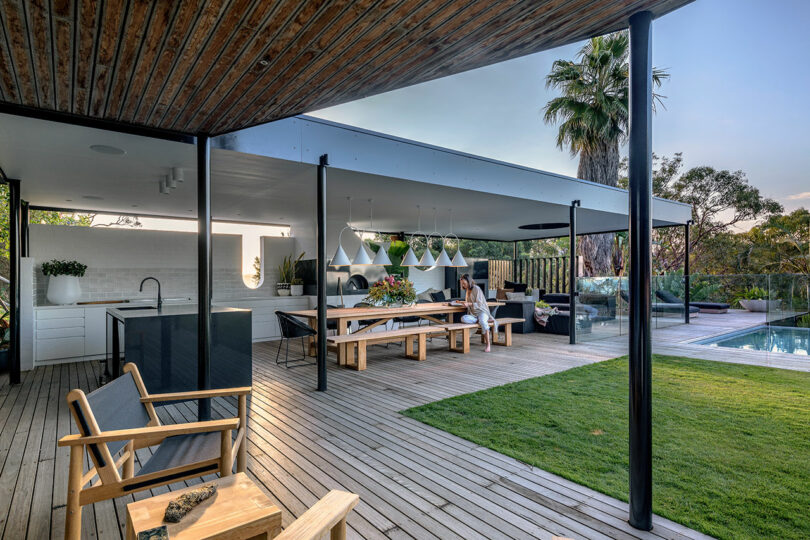
Expert Insight: "Zoning isn't just about furniture placement; it's about lighting. Use layered lighting—under-bench LEDs, path lights, and subtle uplighting for trees—to define these zones after the sun sets." — Ivy Chen
The Financial Case: ROI and Property Value
In the current California real estate climate, the "Renovate vs. Move" dilemma is real. With the outdoor living market projected to see a 21.4% CAGR growth through 2028, investing in a high-end modernist patio is one of the most effective ways to increase property value. A well-executed "outdoor room" can offer a return on investment that rivals a kitchen or primary suite remodel.
However, the key to maximizing this ROI lies in expert craftsmanship. Navigating California’s complex zoning and environmental regulations requires professionals with C-27 (Landscaping) or C-29 (Masonry) licensing. Unique architectural details—such as custom skylights in a pavilion or seamless "zero-edge" pool transitions—are what differentiate a standard renovation from a market-leading estate.
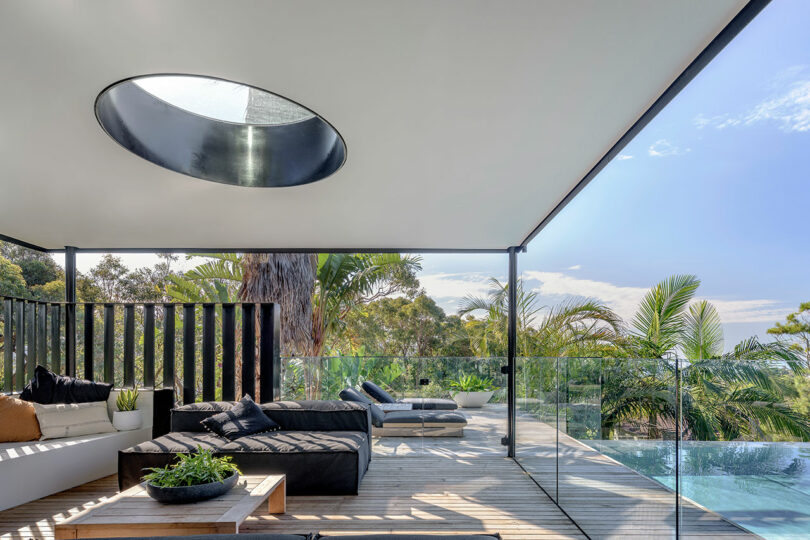
By focusing on high-quality materials and structural integrity, you aren't just building a patio; you are future-proofing your home for the lifestyle demands of 2026 and beyond.
FAQ
What are the key elements of a California Modernist patio? The hallmark of this style is a minimalist aesthetic with clean, geometric lines. It emphasizes the "indoor-outdoor" flow through expansive glass walls and a natural material palette of stone, timber, and neutral tones that reflect the local landscape.
How can I create an outdoor space I can use all year? To ensure year-round usability, treat the area as an "outdoor room" by installing a solid roof structure or pavilion. Incorporate climate-control elements like linear outdoor fireplaces for winter and integrated ceiling fans for summer, along with weather-resistant materials and smart lighting.
Why is hardscaping so important for California homes? Beyond aesthetics, hardscaping is vital for safety. It creates a "defensible space"—a non-combustible buffer of stone, gravel, or masonry that protects the house from wildfires. Additionally, it provides a low-maintenance alternative to lawns, reducing water consumption in drought-prone areas.