True luxury is rarely impulsive. In the leafy, modernist enclaves of South Pasadena, one 1958 classic stood for two decades, its owners observing the play of light against its post-and-beam skeleton before a single hammer was swung. This South Pasadena sanctuary project, helmed by the visionary Kirsten Blazek of A1000XBetter, represents the culmination of a 20-year functional planning phase—a masterclass in patience that resulted in a home that feels less like a "renovation" and more like an "evolution."
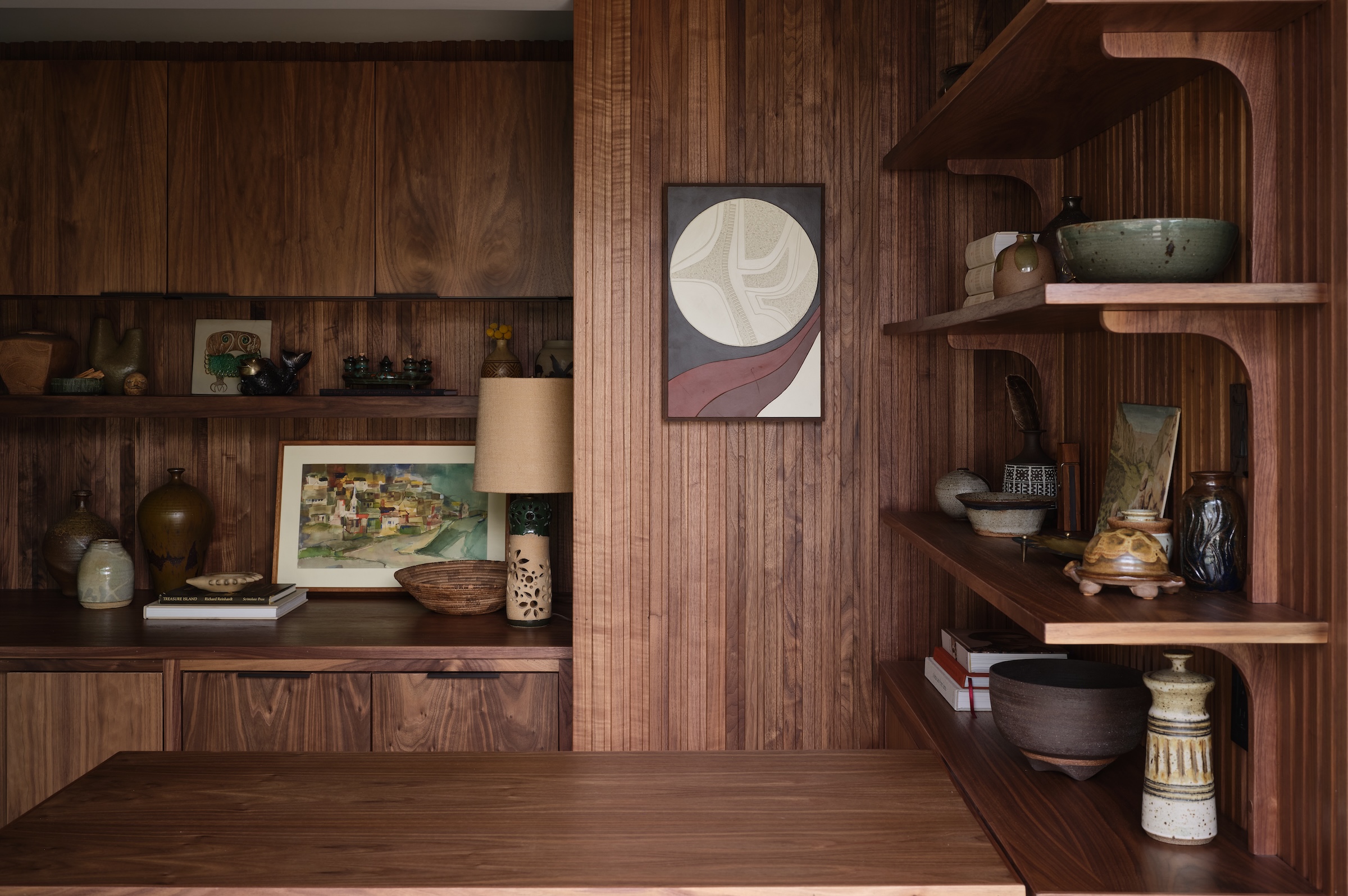
What truly defines this South Pasadena mid-century sanctuary remodel is its sophisticated bridge between eras. It is characterized by slatted walnut paneling, a distinct 1970s Big Sur warmth, and a meticulous selection of materials that honor the original 1950s structure. The design prioritizes custom millwork and a soulful blend of vintage studio pottery with modern Heath ceramic tiles, creating a space that feels deeply personal yet architecturally rigorous.
Maintaining Architectural Integrity: More Than Just a Facade
In an era of "gut renovations" and generic trends, maintaining the architectural integrity of a mid-century home is a radical act of preservation. The goal is to ensure new additions remain compatible with the historic form without mimicking it so closely that the history is lost.
To maintain integrity in a mid-century renovation, designers must focus on matching the original massing and scale of the structure. This means preserving character-defining features such as exposed ceiling joists, tongue-and-groove ceilings, and the iconic post-and-beam framework that allows for those expansive glass walls. In the South Pasadena project, Blazek ensured that the spirit of 1958 was not just kept, but amplified through the use of natural materials that would have been celebrated by the original architects.
Pro Tip: The Respectful Addition When extending a footprint or reconfiguring rooms, always align the new rooflines and window headers with the existing structure. Disruption in the "datum line"—the horizontal line where windows and doors end—is the fastest way to ruin a mid-century aesthetic.
The Design Lair: A Home Office Reinvented
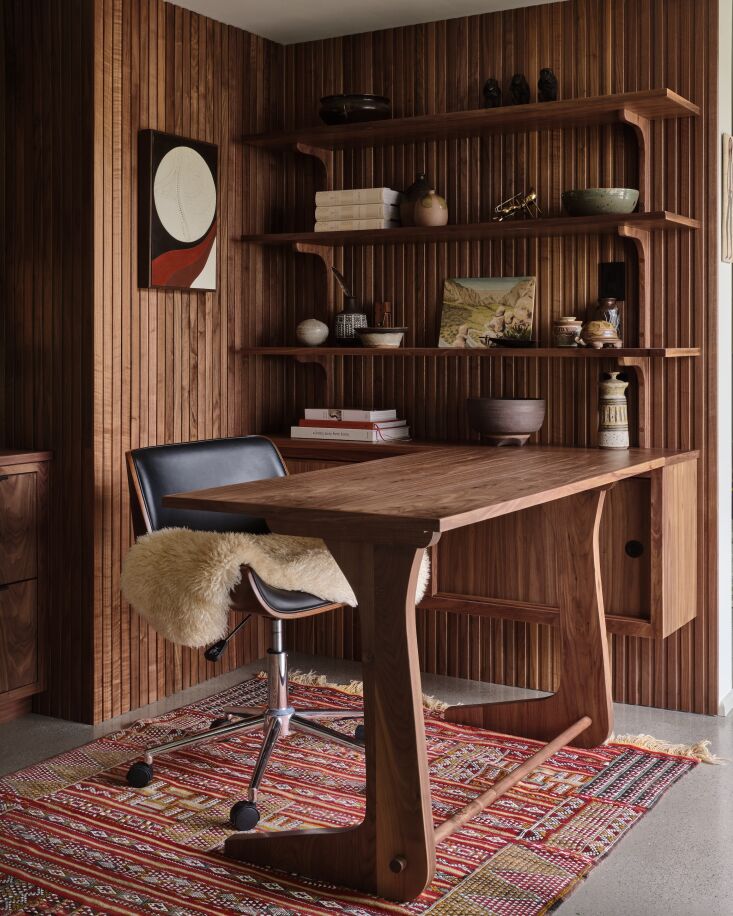
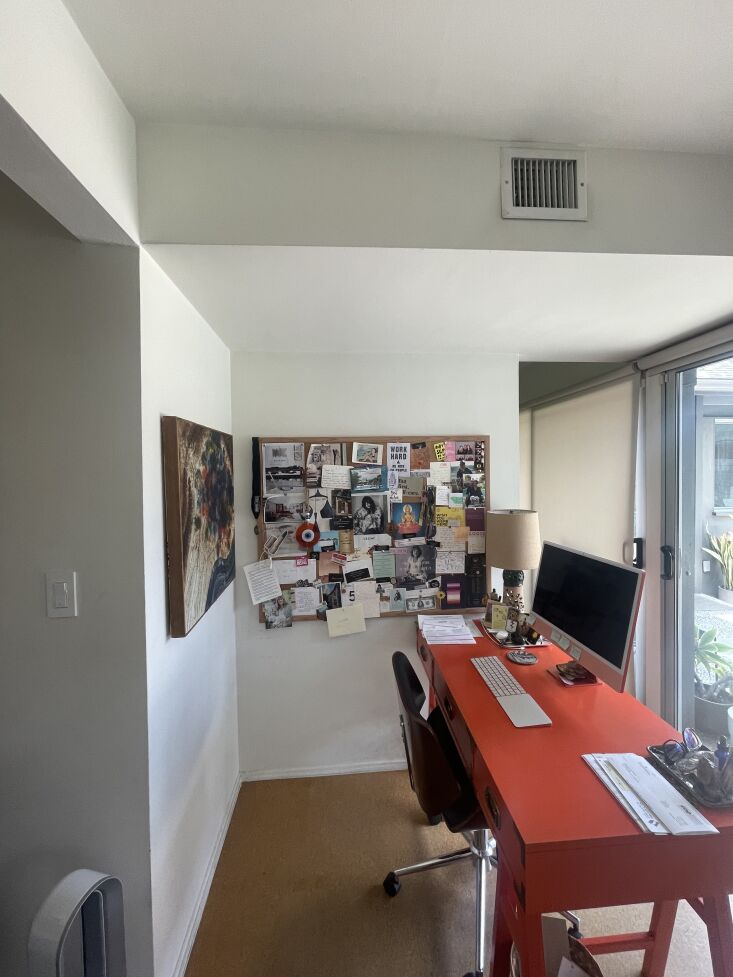
The most profound transformation in this sanctuary occurred in the transition from a neglected "dressing area" into what is now known as the "Design Lair." In many 1950s floor plans, secondary spaces were often treated as afterthoughts, lacking the intentionality of the public living areas.
The redesign centered on the power of custom-milled walnut cabinetry. By utilizing continuous wood paneling across the walls and integrating custom pocket doors, the design achieves a 100% uninterrupted visual flow. This eliminates the aesthetic disruption of standard painted door frames, allowing the eye to travel across the rich grain of the walnut without pause.
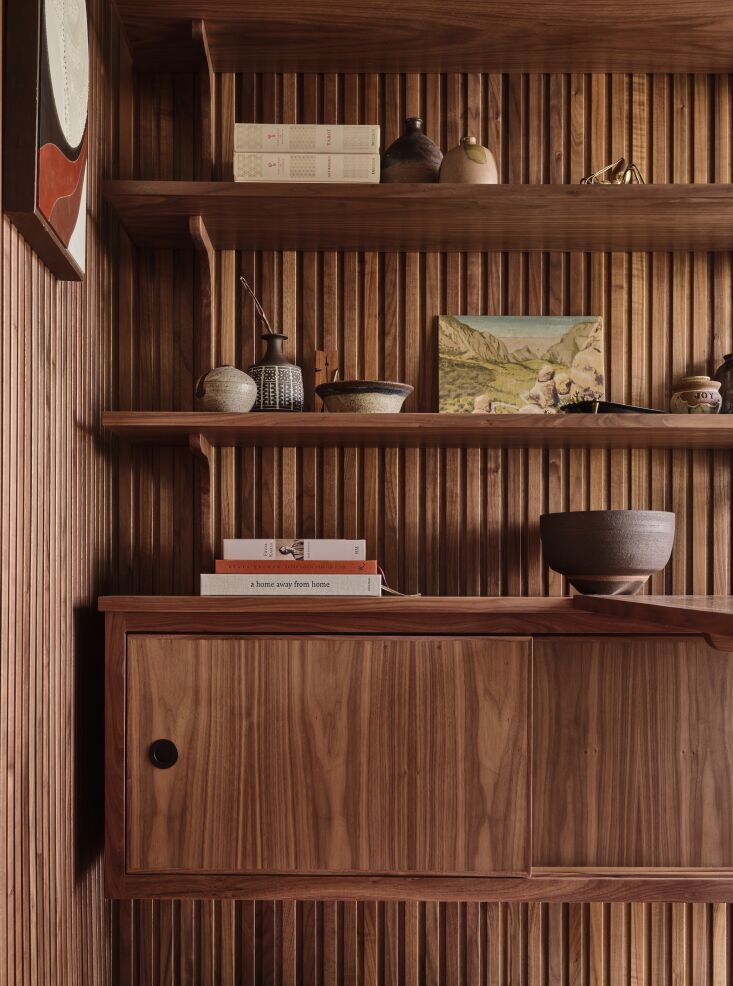
This workspace isn't just a place of productivity; it's a curated gallery. The "Design Lair" incorporates vintage studio pottery and 1970s oil paintings, grounding the modern function in a layer of personal history and "nubby" textures.
The Bathroom Sanctuary: Mixing Wood and High-Gloss Ceramics
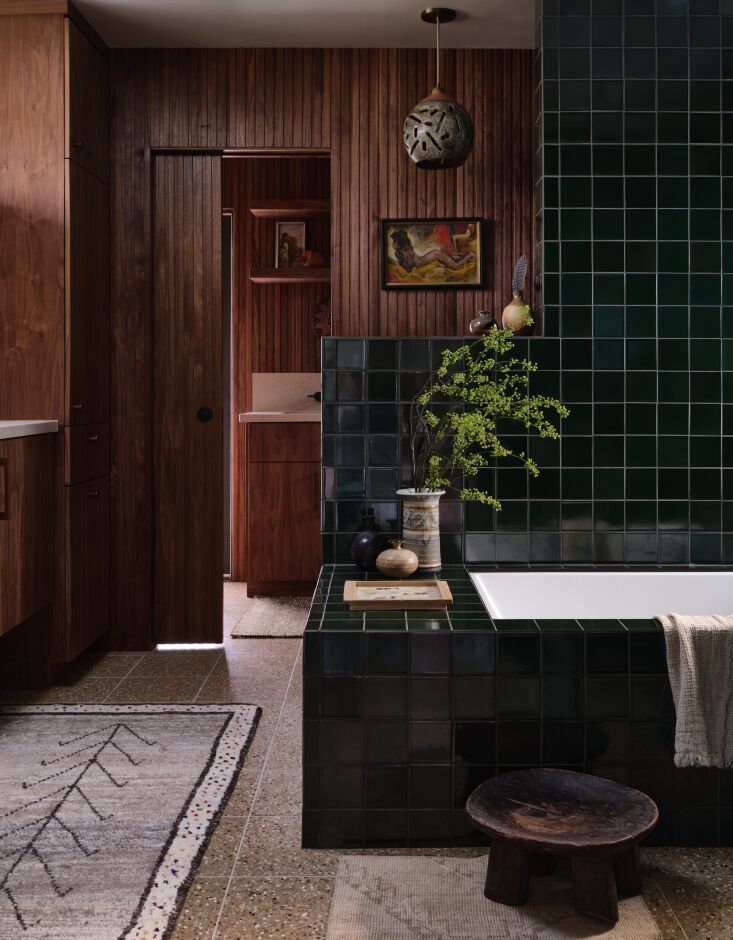
The bathroom in the South Pasadena project is perhaps the best example of "Material-to-Mood" linking. To create a sanctuary that felt both grounded and elevated, the team chose a palette that feels extracted directly from a California forest.
The use of slatted walnut paneling in a damp space might seem daring, but when executed with precision and proper ventilation, it provides a textural warmth that traditional tile cannot match. This is juxtaposed with the glossy, deep hues of Heath Ceramics—specifically the 'Jade Manganese' green tiles that have become a hallmark of the A1000XBetter aesthetic.
A Material Palette of the South Pasadena Sanctuary
| Material | Application | Design Intent |
|---|---|---|
| Custom Walnut | Wall Paneling & Millwork | To provide warmth and 1970s "Big Sur" soul. |
| Heath 'Jade Manganese' | Bathroom Walls | High-gloss ceramic to reflect light and add depth. |
| Clé Forage Terrazzo | Flooring | A modern take on mid-century cement-based floors. |
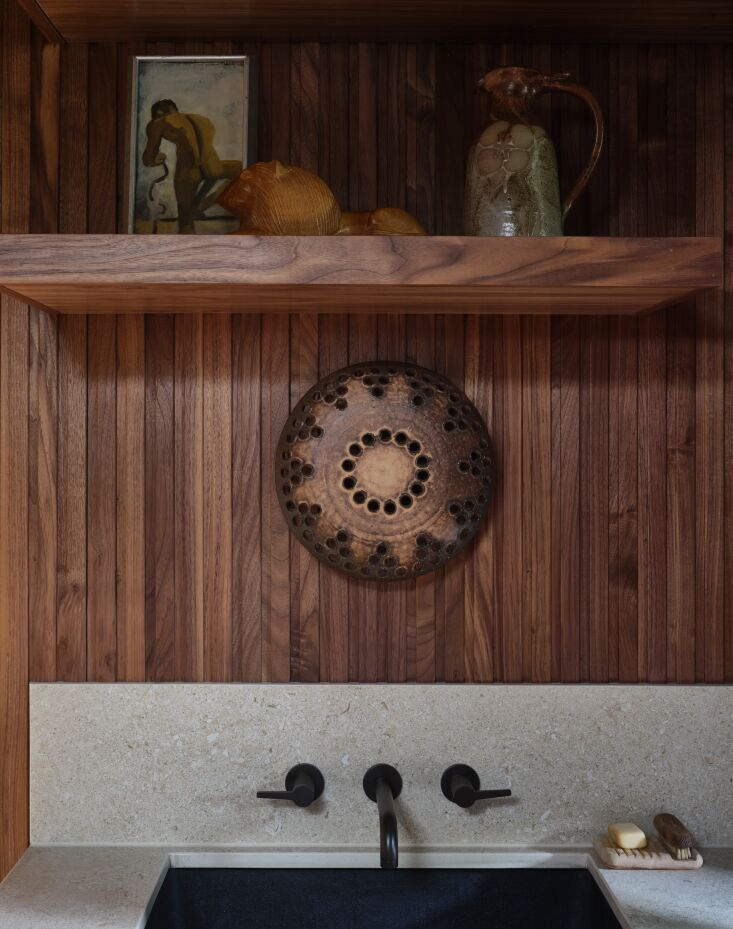
| Dekton Pietra Kode | Countertops | Extreme durability with the look of honed natural stone. |
| California Faucets | Fixtures | Clean, modernist lines in a matte finish. |
Integrating modern technology into a vintage shell requires a light touch. For the vanity surfaces, the team utilized Dekton Pietra Kode countertops, which offer the timeless look of travertine but with the non-porous resilience required for daily life. The look is completed with vintage-inspired lighting, such as 1970s ceramic sconces found in the high-desert boutiques of Yucca Valley.
The Laundry & Utility Transition: Formal Whimsy
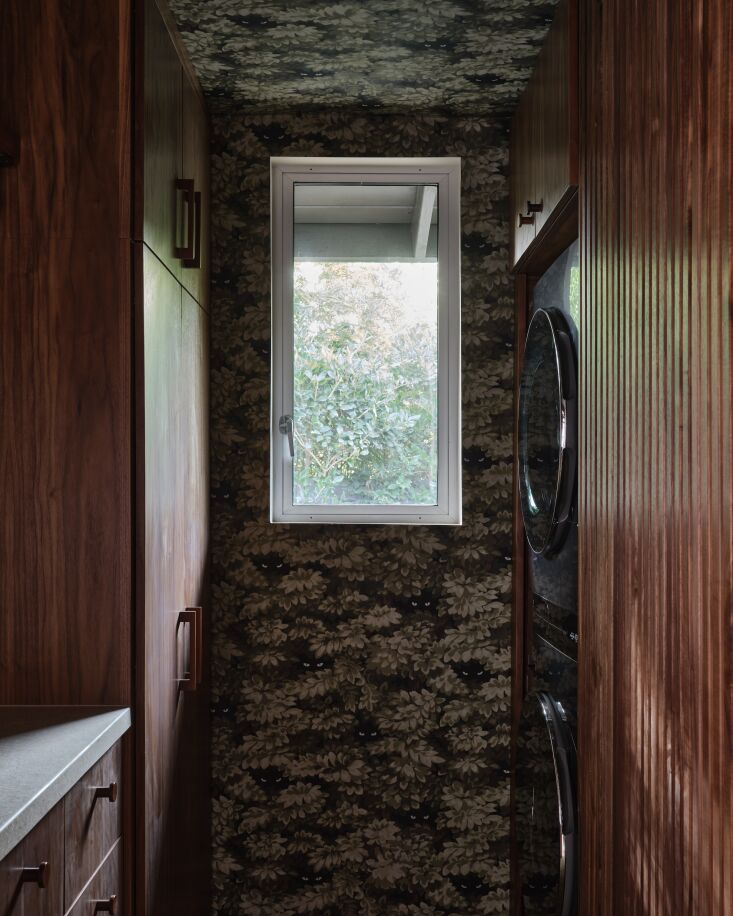
Often, the laundry and utility areas are where design goes to die. In this South Pasadena sanctuary, however, these transitional spaces are treated with the same reverence as the primary suite.
The strategy was to move from "everything on view" to a streamlined system of pocket door storage. To inject a sense of "formal whimsy" into these hardworking zones, Blazek selected the 'Creatures of the Night' wallpaper by Zak + Fox. This choice acts as a delightful palate cleanser between the high-contrast wood and tile of the bathroom and the functional utility of the laundry.
Professional Do's and Don'ts for MCM Remodeling
When embarking on a project of this scale, the difference between a successful "evolution" and a regrettable "remodel" lies in the details. Here are my essential guidelines for any mid-century modern project:
- DO: Spend quality time in the space. As seen in this South Pasadena project, living in the home—or at least visiting it at different times of the day—allows you to understand the sun's path and how the original architecture intended to manage light.
- DON'T: Install Shaker Cabinets. While popular in transitional homes, Shaker doors are an architectural mismatch for MCM homes. Stick to flat-panel (slab) doors to maintain the clean, horizontal lines characteristic of the era.
- DO: Mix your lighting sources. Don't rely on recessed "can" lights. Mix vintage finds from places like Yucca Valley or Palm Springs with bespoke pieces from Etsy vendors to create a layered, warm glow.
- DON'T: "Granitize" the kitchen. Avoid the heavy, speckled granites of the early 2000s. Opt for matte, honed surfaces or authentic terrazzo that aligns with the modernist palette.
Conclusion: Creating a Sanctuary for Daily Living
The South Pasadena sanctuary is more than just a beautiful house; it is a testament to the power of thoughtful, long-term design. By honoring the 1958 structure while layering in the warmth of the 1970s and the technology of today, Kirsten Blazek and her clients have created a space that feels timeless. It reminds us that a home is a living organism—one that should be nurtured with quality materials, respect for history, and the patience to get every detail just right.
FAQ: Mid-Century Modern Remodeling
How do I choose the right wood for a mid-century remodel?
Walnut is the gold standard for MCM design due to its rich, warm tones and elegant grain. However, teak and white oak are also historically appropriate. The key is using a flat-panel construction to emphasize the wood’s natural beauty without distracting ornamental details.
Are Heath tiles worth the investment for a modernist bathroom?
Absolutely. Heath Ceramics offers a depth of glaze and organic variation that machine-made tiles cannot replicate. In a modernist home where the surfaces are large and flat, the "hand-crafted" imperfection of Heath tiles provides essential visual interest and soul.
Can I add a home office to an MCM home without ruining the flow?
Yes, by using "hidden" elements like pocket doors and integrated cabinetry. As seen in the South Pasadena project, using continuous wall paneling allows the office to blend seamlessly into the architecture when not in use, preserving the open-concept feel typical of mid-century layouts.