Quick Facts
- Location: Bangalow, Byron Bay Hinterland, Australia
- Estate Concept: Part of 'The Range Estates'—a collection of luxury retreats focused on architectural silence and environmental harmony.
- Architecture: A collaboration led by Story Design Collective, blending Spanish Hacienda silhouettes with Australian Heritage sensibilities.
- Core Materials: Darwin stringy bark timber, natural Ibiza lime plaster, Corten steel, copper, and recycled brick.
- Sustainability Credentials: Fully off-grid solar array, rainwater harvesting system, and 100% responsibly sourced timber from indigenous-led programs.
- Accommodation: 5-bedroom main homestead, separate luxury stables, and a 25-meter mineral lap pool.
In the rolling hills of the Bangalow hinterland, where the air smells of crushed eucalyptus and salt spray, a new architectural language is being spoken. It is a language of restraint, a deliberate "turning down of the volume" in a world of increasing digital noise. This is Copperstone Estate—the latest masterpiece from The Range Estates. As an editor specializing in interior styling and modern living, I am often asked what defines "luxury" as we move toward 2026. The answer isn't found in gold leaf or excess; it is found in the architectural silence of Copperstone. This property is a unique fusion of Spanish hacienda aesthetics and Australian heritage style, designed by Story Design Collective to create an eco-conscious retreat that breathes with the land rather than sitting upon it.
The Architectural Vision: Spanish Hacienda meets Australian Heritage
The genius of Copperstone Estate lies in its ability to bridge two distinct worlds. The silhouette draws heavily from the Spanish Hacienda—think thick walls, colonnaded walkways, and a rhythmic repetition of arches—yet the material palette is quintessentially Australian. The exterior is finished in a naturally tinted sand and cement render, specifically color-matched to the local volcanic soil of the Byron Bay hinterland. This ensures that as the sun sets over the ridge, the building almost disappears into the horizon.
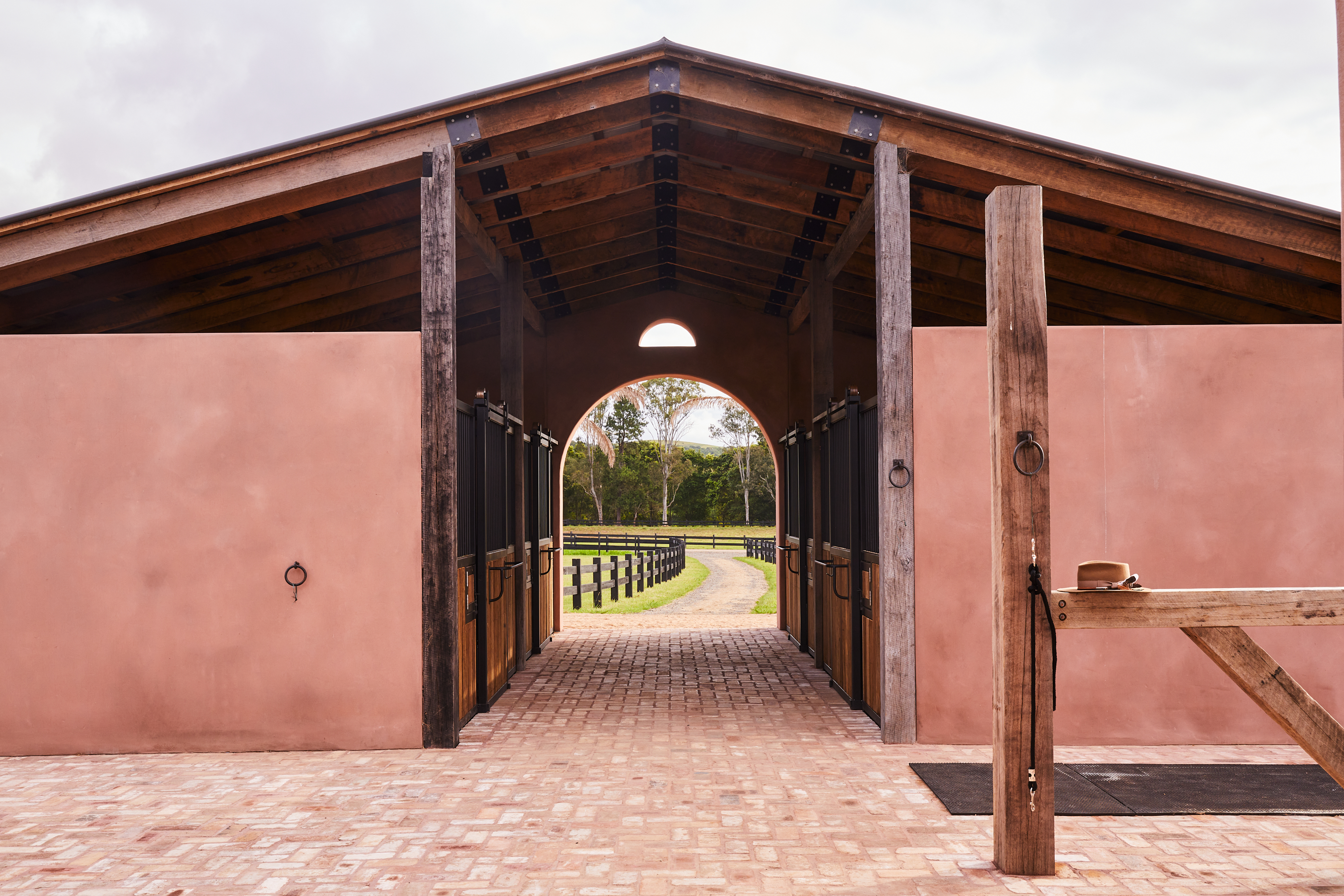
One of the most striking features of the site is the continuity between human and animal dwellings. The design of the horse stables was treated not as an afterthought, but as a seamless extension of the main homestead. The same arched motifs and high-end finishes are applied to the equestrian facilities, elevating the utilitarian to the level of art.
Materiality as Narrative: Darwin Stringy Bark & Indigenous Roots
In high-end design, every material must tell a story. At Copperstone, the narrative is one of reconciliation and restoration. In a remarkable commitment to ethical sourcing, 100% of the homestead's timber flooring and exposed beams consist of Darwin stringy bark. This isn't just a choice of aesthetic warmth; these materials were sourced through indigenous-led forest regeneration programs in Cape Tribulation.
By utilizing timber from these programs, the architecture supports the economic sovereignty of the Traditional Owners while ensuring the longevity of the forest. The stringy bark provides a dense, tactile grounding to the interiors, its deep honey tones providing a necessary contrast to the cool, monastic feel of the lime-plastered walls. This is what I call "Responsible Luxury"—the knowledge that the beauty beneath your feet has contributed to the healing of the landscape.
The Eco-Conscious Backbone: Off-Grid Sophistication
While the aesthetic of Copperstone is undeniably romantic, its "nervous system" is purely high-tech. The property prioritizes sustainability through a sophisticated infrastructure that allows it to operate as a self-sufficient ecosystem. The estate utilizes a standing seam metal roof—a nod to Australian rural vernacular—integrated with high-capacity solar arrays and state-of-the-art battery storage.
Water is treated as a precious resource here. The estate relies on extensive rainwater harvesting systems and underground tanks, which support not only the household but also the 25-meter mineral pool and the surrounding Tuscan-style gardens. In an era where climate resilience is the ultimate luxury, Copperstone stands as a blueprint for off-grid living that sacrifices nothing in the way of comfort.
Interior Design: The 'Welcoming Minimalism' of 2026
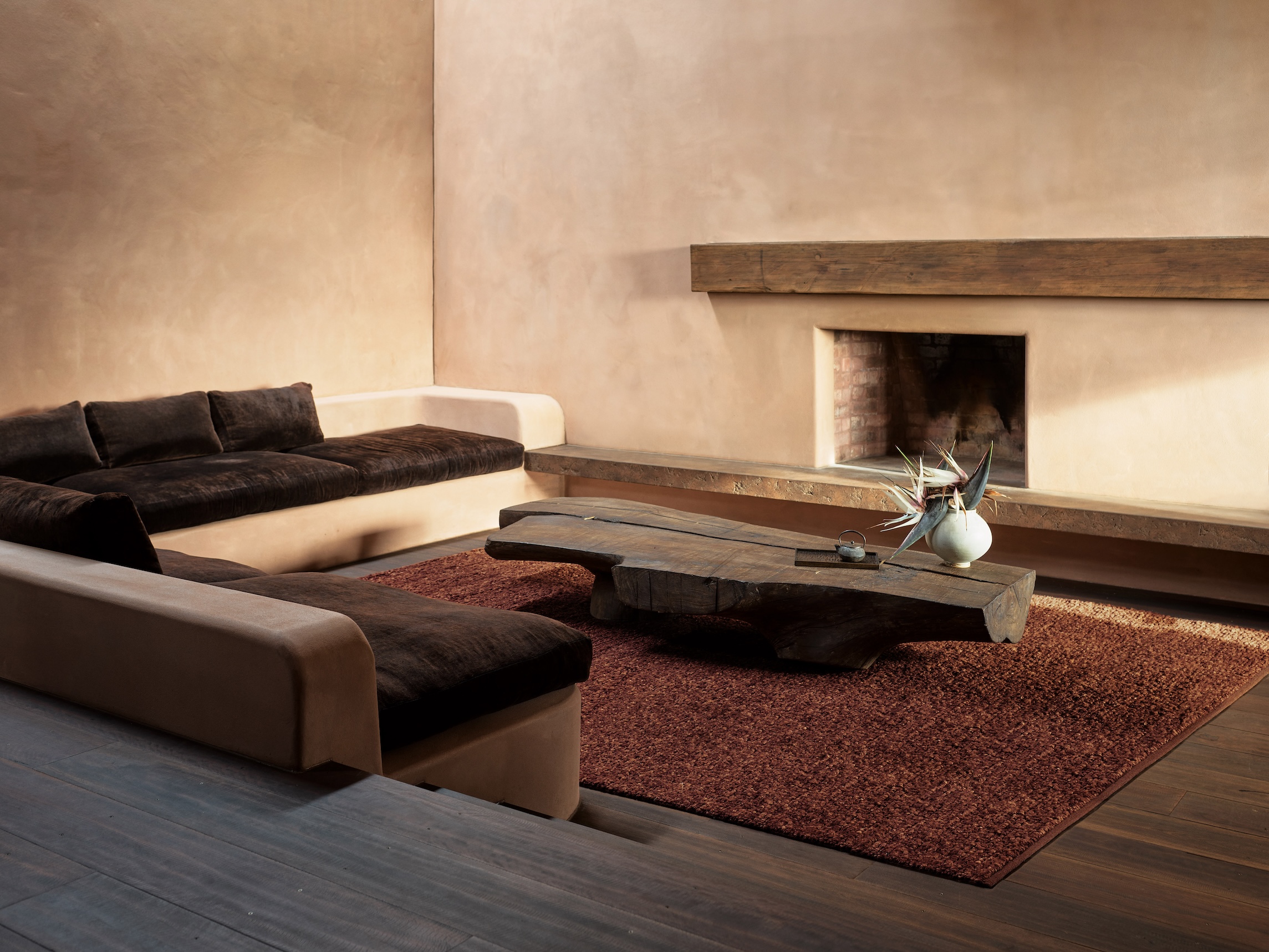
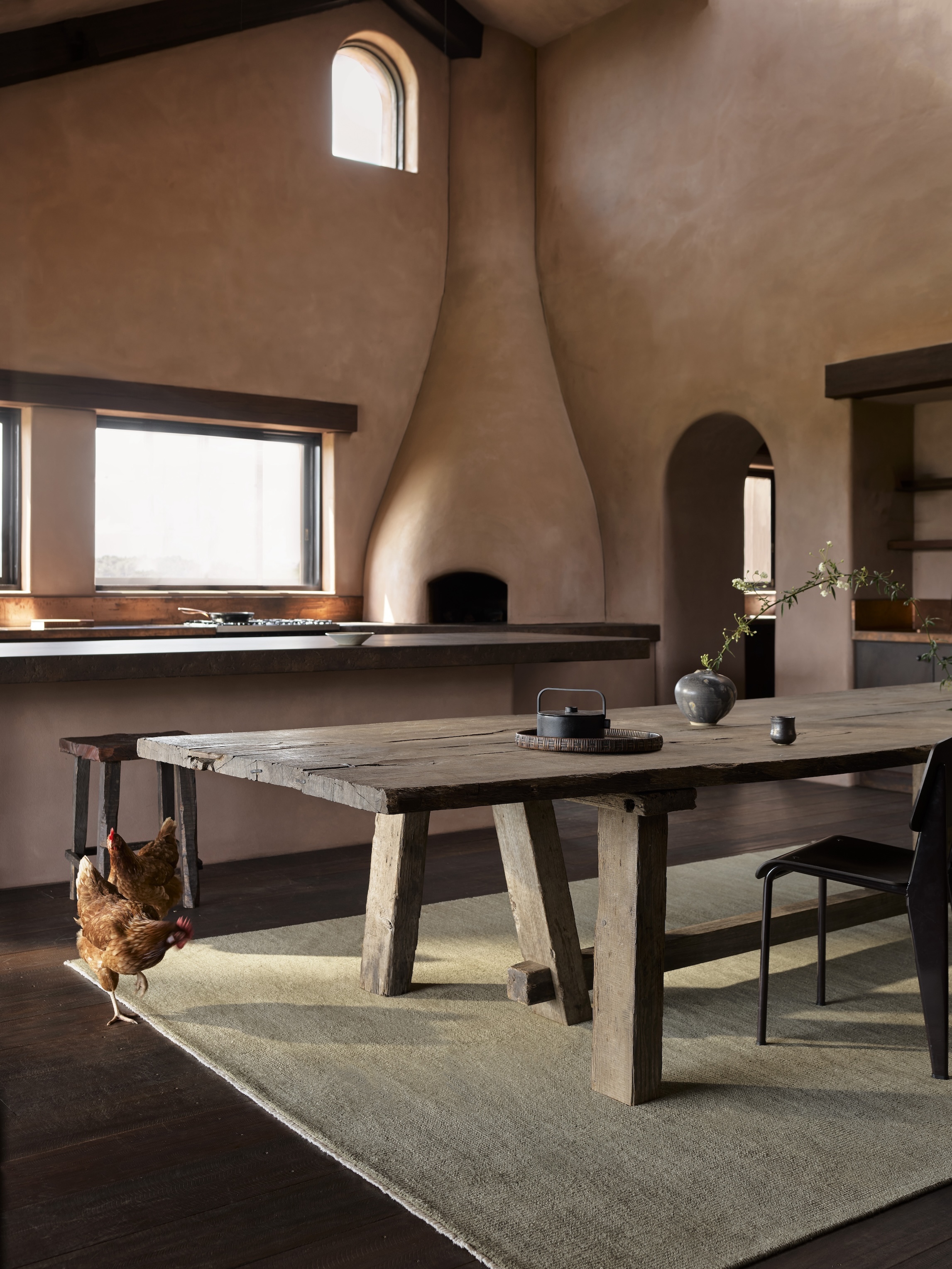
As we look toward the design trends of 2026, the shift is moving away from "Cold Minimalism" (the sterile, white-box aesthetic) toward what I define as "Welcoming Minimalism." Copperstone is the textbook example of this movement. Key interior design elements include natural lime-mineral plaster walls, custom Corten steel cabinetry, copper countertops, and recycled Australian hardwoods.
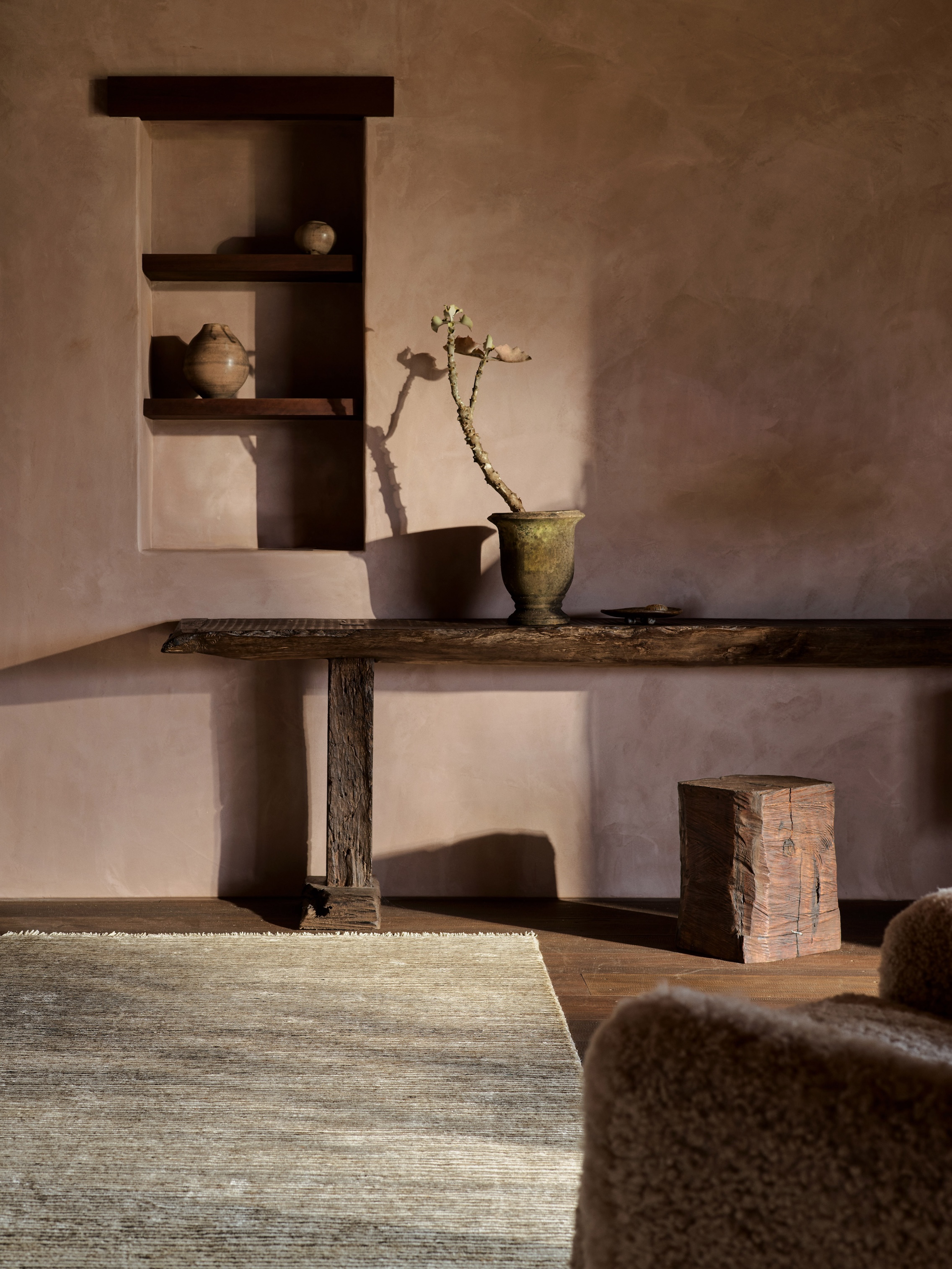
The interior palette is intentionally limited to allow textures to shine. The walls are finished in "Ibiza Plaster" by Mineral Fox, a material that reacts to the shifting light of the hinterland, casting soft shadows that move throughout the day. Beneath the feet, Armadillo’s Panorama rugs provide a sensory bridge between the hard surfaces of the architecture and the soft comfort of the home.
The kitchen is perhaps the most innovative space in the house. Moving away from marble or quartz, the designers opted for copper countertops and Corten steel accents. This choice is both aesthetic and functional; copper is naturally antimicrobial, and both metals develop a rich patina over time, ensuring the kitchen looks better after a decade of use than it did on day one.
Comparing Design Philosophies
| Feature | Traditional Luxury (Pre-2020) | Welcoming Minimalism (2026) |
|---|---|---|
| Primary Palette | High-contrast black/white/gold | Tonal ochres, sands, and oxides |
| Key Material | Polished marble & brass | Patinated copper & Corten steel |
| Wall Finish | Flat emulsion paint | Tactile lime-mineral plaster |
| Sustainability | Aesthetic-first, tech-second | Integrated off-grid systems |
| Spatial Goal | Grandeur and scale | Intimacy and sensory flow |
Lifestyle and Layout: A Masterclass in Spatial Flow
The layout of Copperstone Estate is designed to facilitate a "slow living" lifestyle. The heart of the home is the sunken living room—a design choice that psychologically signals a transition into a place of rest and intimacy. By lowering the floor level, the architecture creates a cozy sanctuary within the larger open-plan space, perfectly framing the views of the 25-meter mineral pool outside.
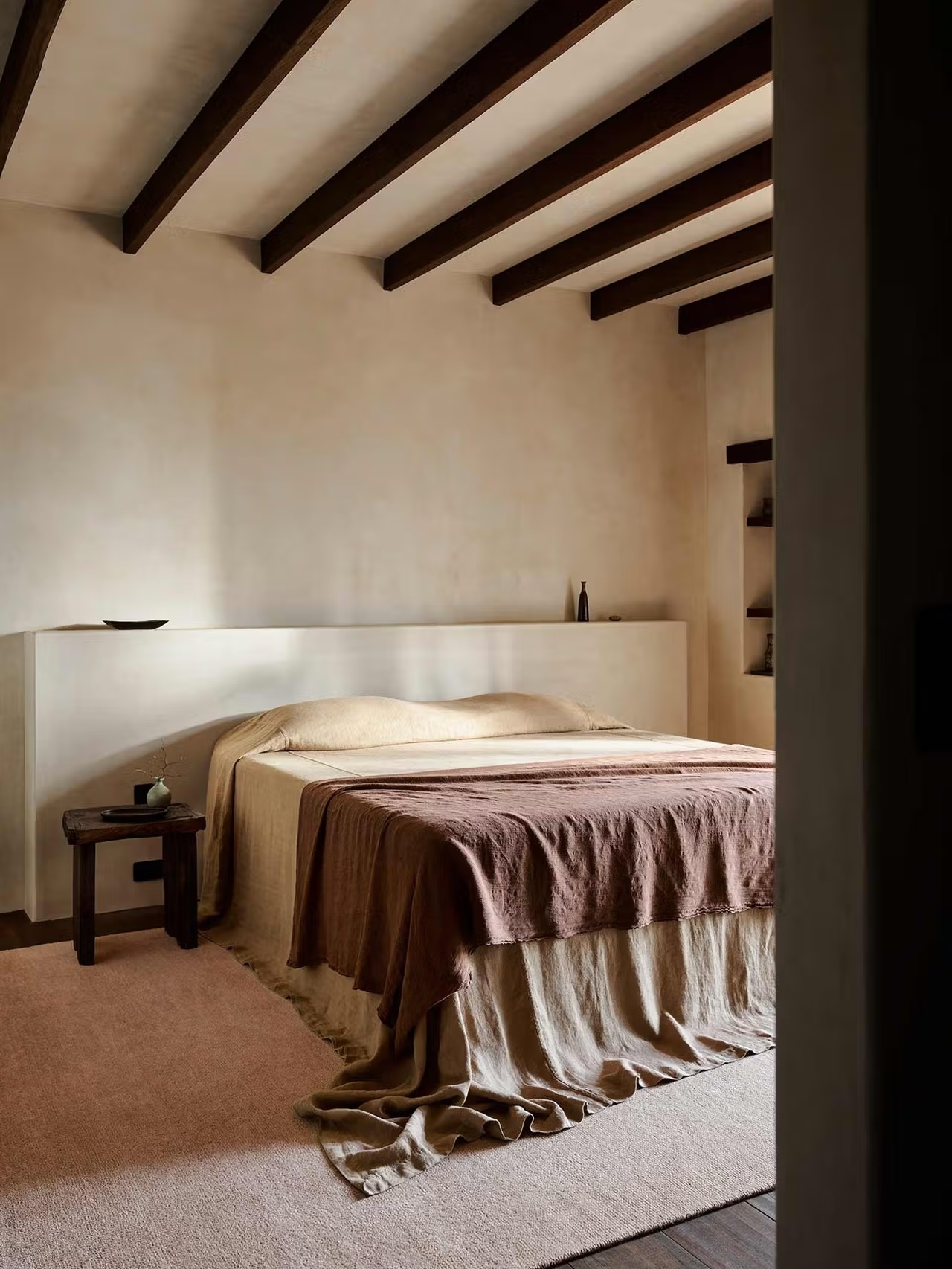
The private quarters consist of five thoughtfully configured bedrooms. Eschewing traditional furniture-heavy layouts, the rooms feature built-in headboards and custom cabinetry that feels like a part of the architecture itself. Each suite opens onto a private deck, blurring the line between the indoor sanctuary and the Tuscan-inspired walking trails that weave through the property.
The transition between the interior and exterior is handled with masterful subtlety. Repurposed brick decking surrounds the pool area, providing a rugged, weathered texture that complements the smooth plaster of the house. It is a space designed for long afternoons and quiet reflection, proving that the most successful architecture is that which encourages us to simply be.
FAQ
How does the off-grid system handle the high energy demands of a luxury estate? Copperstone utilizes a massive standing seam metal roof to maximize solar collection. The energy is stored in a large-scale battery bank, allowing the property to run its climate control, 25-meter mineral pool, and high-end kitchen appliances without drawing from the main grid.
Can I stay at Copperstone Estate? Yes, Copperstone is part of The Range Estates luxury rental portfolio. It is available for exclusive stays, equestrian retreats, and high-end location shoots, offering a rare opportunity to experience "Rural Minimalism" first-hand.
What is the significance of using Darwin stringy bark? Beyond its durability and beautiful grain, the Darwin stringy bark was sourced from indigenous-led regeneration programs in Cape Tribulation. This ensures that the construction of the home directly supports sustainable land management and provides economic opportunities for First Nations communities.