Quick Facts
- Location: Hudson Valley, New York (Base of the Catskill Mountains)
- Design Firm: Takatina (Takaaki and Christina Kawabata)
- Property Type: 1980s Modernist Woodframe House
- Core Philosophy: Japanese minimalism meets local Hudson Valley craftsmanship
- Key Features: 12-foot honey-stained oak island, onsen-style bathing pavilion, green roof
- Primary Materials: Reclaimed Antique Terracotta tiles, Douglas Fir, Perlato stone, rift-cut oak
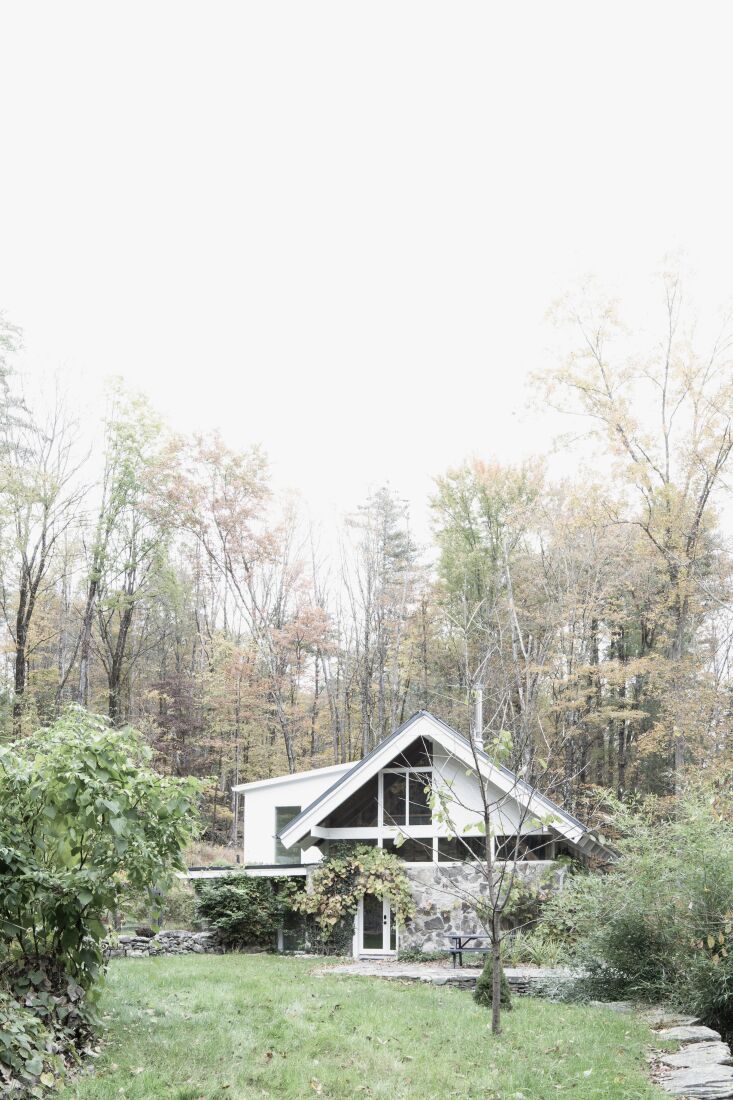
The 1980s architecture of the Hudson Valley often occupies a strange, liminal space—too young to be "historic," yet too old to feel effortlessly modern. These homes, characterized by their angular cedar siding and soaring, often drafty interiors, possess a rugged modernist DNA that many contemporary renovators find daunting. However, when the design duo at Takatina—Takaaki and Christina Kawabata—approached a 1980s modernist house at the foot of the Catskills, they didn’t see a relic of a past era. They saw the "Modernist bones" as a canvas for a sanctuary. By focusing on preserving exposed wood framing while introducing deeply tactile materials like reclaimed terracotta and a 'rustic-sophistication' color palette, they have provided the definitive blueprint for modernizing 80s architecture. What was once a scattered weekend getaway has been distilled into a "pulled-together" sanctuary of light and texture.
The Takatina Design Philosophy: Japanese Minimalism Meets Hudson Valley
At the heart of every Takatina project is a concept they describe as the "quiet pleasures of life." It is an aesthetic that avoids the clinical coldness often associated with minimalism, opting instead for a "serene order" that celebrates the inherent honesty of materials. In their Upstate New York renovations, this philosophy manifests as a bridge between the disciplined simplicity of Japanese design and the raw, artisanal craftsmanship native to the Hudson Valley.
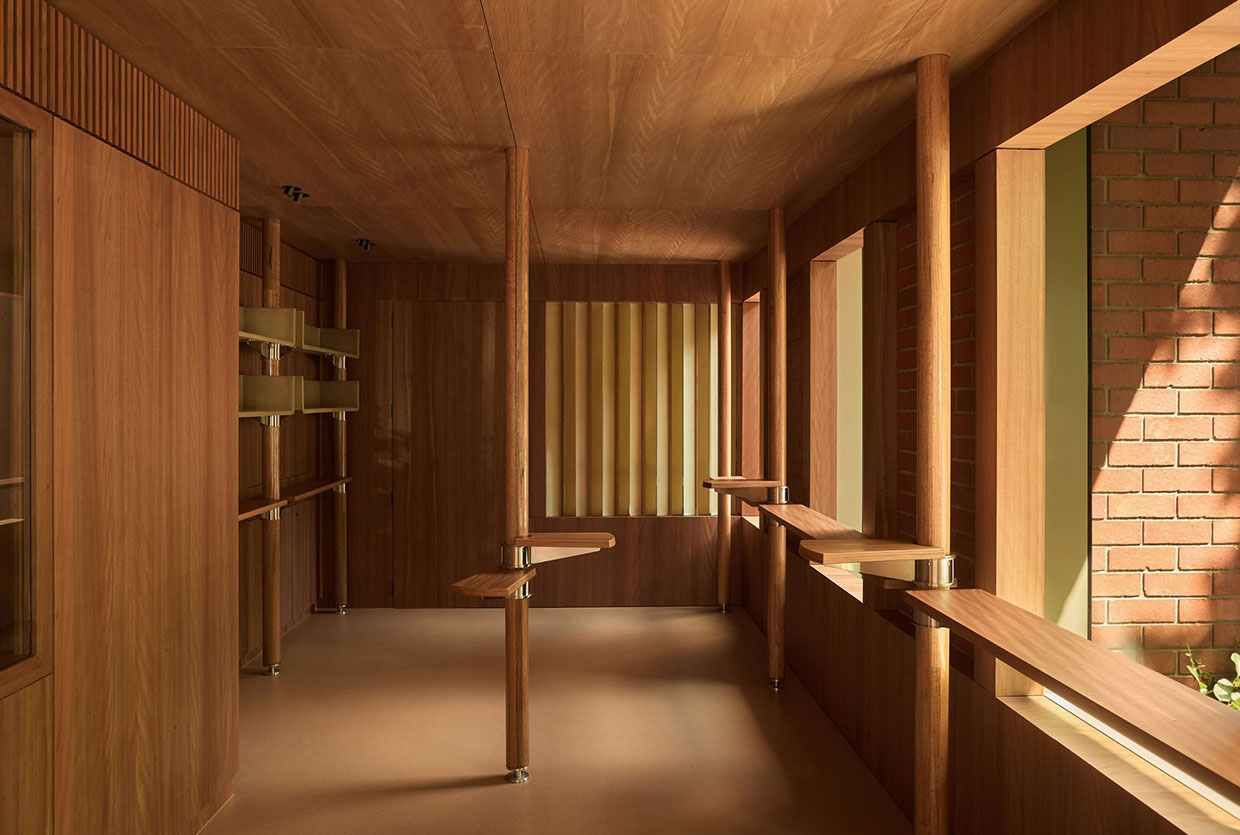
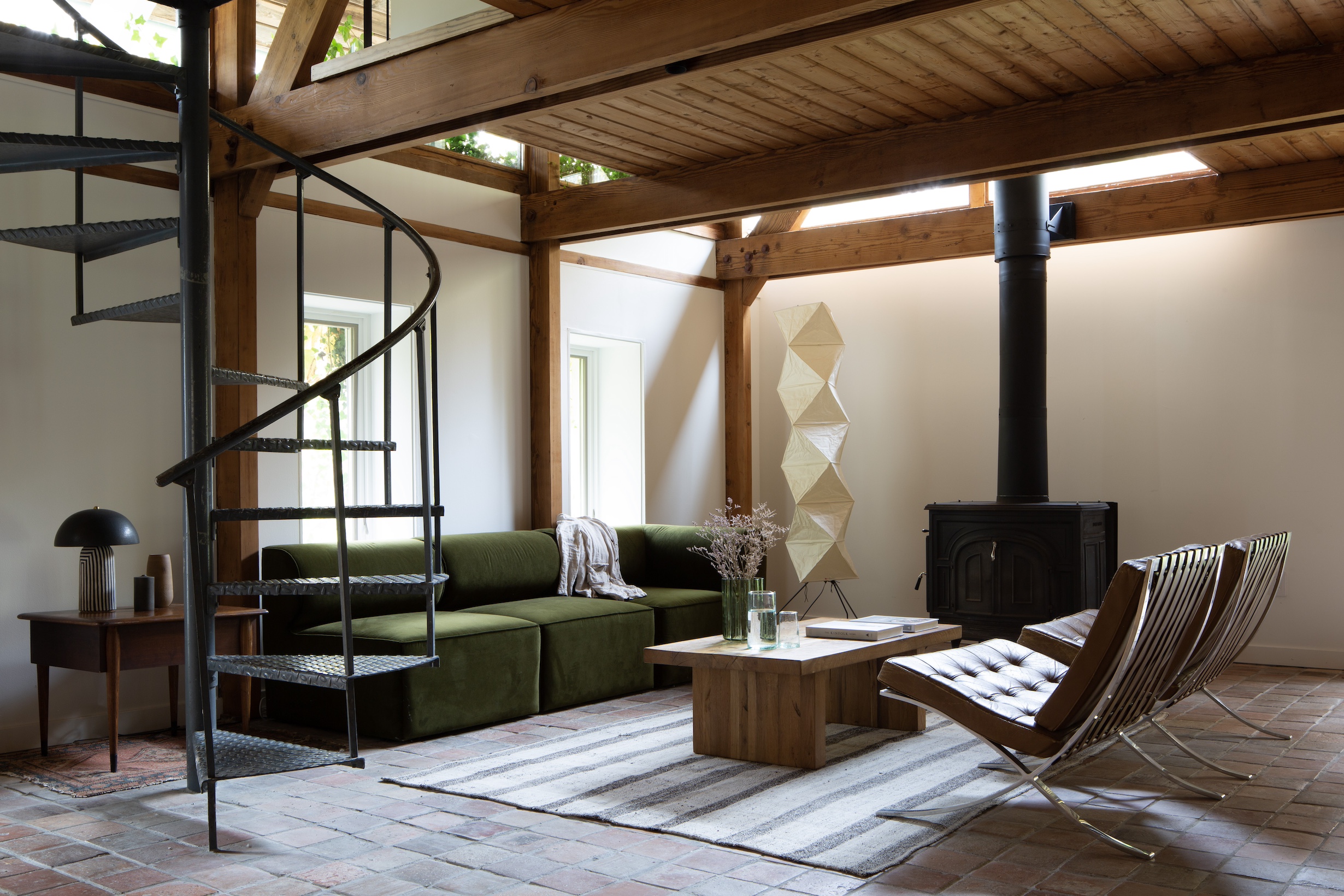
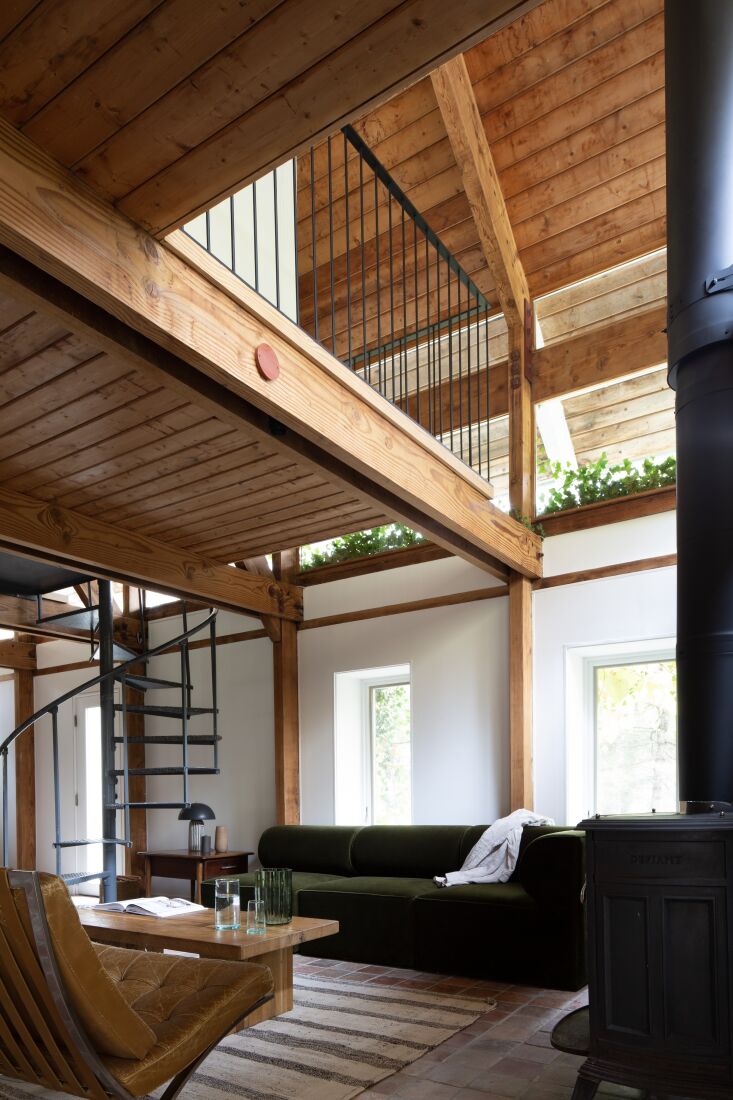
For this 1980s renovation, the primary challenge was to honor the original structure without being beholden to its dated aesthetics. Takatina’s approach centered on "material honesty." Rather than covering up the history of the house, they chose to emphasize the exposed Douglas Fir framing and Pine paneling. These woods provide a rhythmic, warm skeleton for the home, grounding the vast, airy volumes that are so typical of 80s design. By pairing these existing elements with local craftsmanship, they created a space that feels both rooted in its environment and globally sophisticated.
"Modernizing an 80s house isn't about erasing its identity; it’s about refining its voice. We look for the 'quiet pleasures'—the way light hits a grain of wood or the cool touch of stone—and we build the house around those moments." — Takatina
The Reclaimed Palette: Texture Over Color
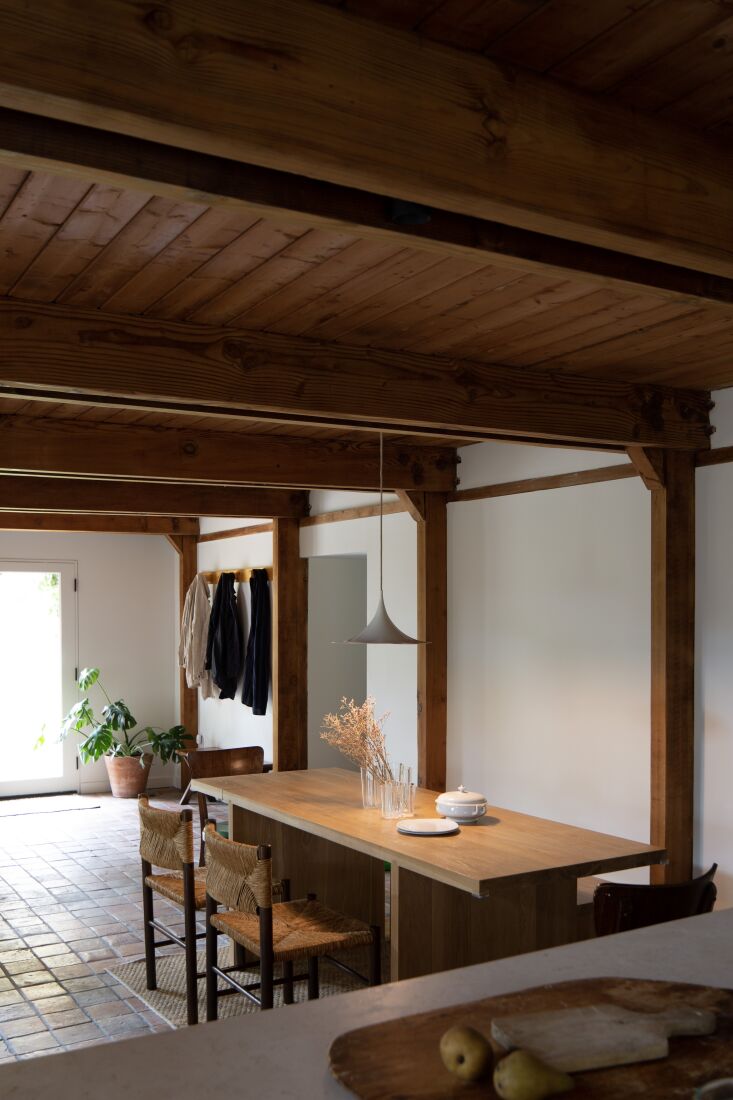
In a world saturated with "millennial gray" and sterile white-box renovations, Takatina leans into a palette defined by texture. The standout element in this project is the flooring: 100% reclaimed Antique Terracotta Tiles from Clé. These tiles bring a sense of history and "lived-in" soul to a house that originally felt somewhat transient. Each tile is unique, offering a variegated spectrum of ochre, sienna, and dusty rose that feels as though it was pulled directly from the Hudson Valley soil.
But the beauty of these tiles isn't just skin-deep. To bring the home into the 21st century, Takatina integrated modern radiant floor heating systems beneath the terracotta. This provides a gentle, consistent warmth that the original 1980s HVAC systems could never achieve. To balance the earthy richness of the floors, the walls were finished in what designers often call "Architects’ White"—specifically Benjamin Moore’s Decorator’s White. This particular shade provides a visual softness and a neutral backdrop that allows the wood grains and the terracotta textures to take center stage without feeling stark.
The Social Core: A 12-Foot Statement Kitchen
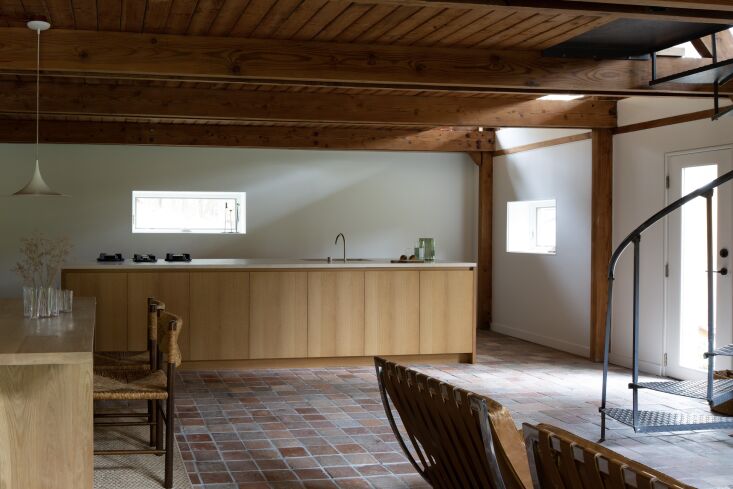
The kitchen is perhaps the most radical transformation in this renovation. In the 80s, kitchens were often compartmentalized or suffered from an abundance of "wall-to-wall" cabinetry that felt heavy and imposing. Takatina completely dismantled this concept. They eliminated traditional overhead cabinets in favor of an open-plan social core centered on a massive, 12-foot-long custom kitchen island.
Designed in collaboration with Rexhill Studio, the island is veneered in honey-stained rift-cut oak. This choice of wood provides a tight, linear grain that complements the modernist lines of the house while adding a golden warmth that glows in the afternoon sun. The island is not just a prep station; it is a multifunctional piece of furniture. It houses a high-performance PITT cooktop—where the burners are integrated directly into the countertop—and a minimalist Vola one-handle faucet. This reduction of visual clutter allows the kitchen to function as a gathering space, a "stage" for the culinary arts, and a bridge between the living and dining areas.
| Material / Element | Specification | Brand / Partner |
|---|---|---|
| Kitchen Island | 12-foot custom rift-cut oak | Rexhill Studio |
| Cooktop | Integrated gas burners | PITT |
| Faucet | One-handle minimalist design | Vola |
| Countertops | Honed natural stone | Local Sourcing |
| Flooring | Antique Reclaimed Terracotta | Clé Tile |
The Onsen Pavilion: A New Standard for Wellness
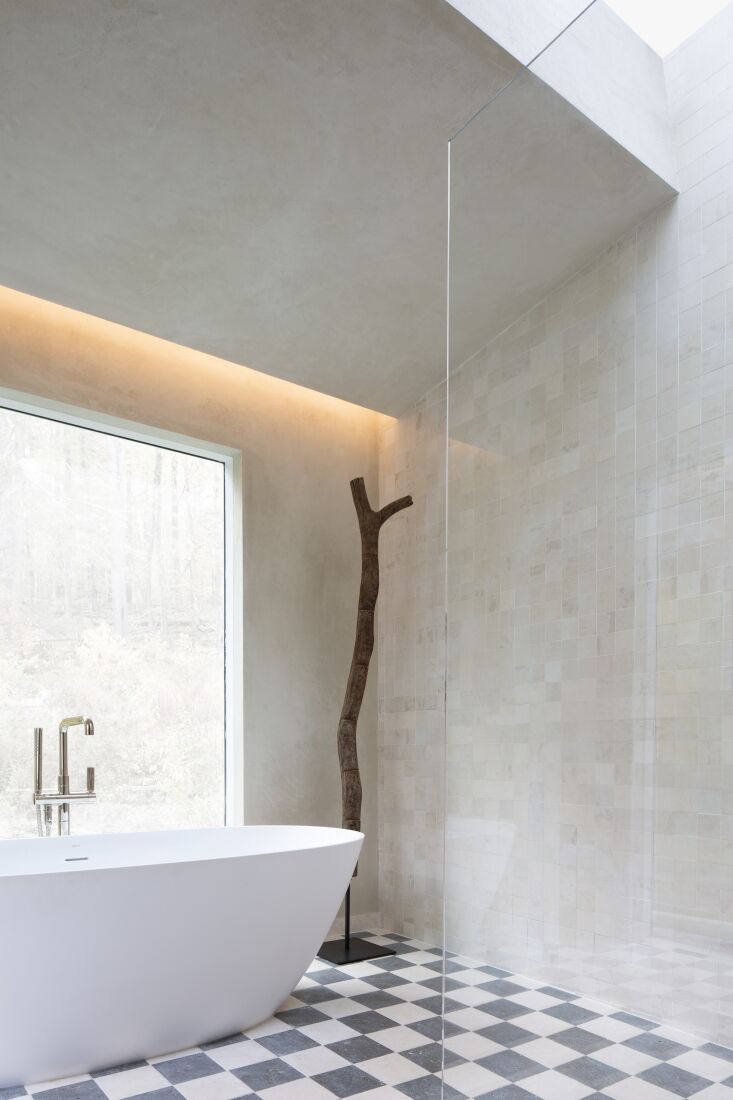
If the kitchen is the social heart, the new "Bathing Pavilion" is the spiritual soul of the home. Takatina added a new extension to the house, designed as an onsen-style sanctuary. This addition is a masterclass in blurring the line between the interior and the surrounding woods. Large windows and the clever use of ribbed glass allow light to filter in while maintaining a sense of profound privacy.
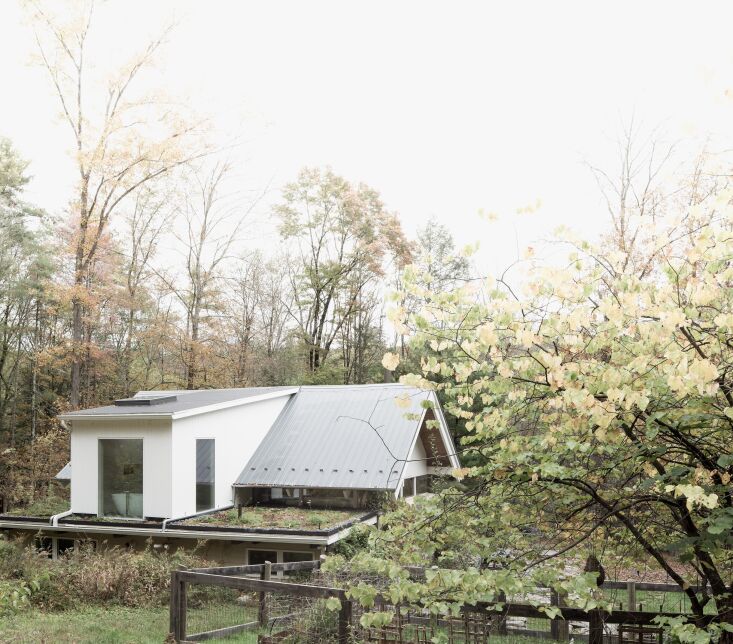
The pavilion features a monolithic custom vanity carved from limestone and a Perlato freestanding tub that feels more like a sculpture than a fixture. The design encourages a slow, ritualistic approach to bathing. To ensure the new addition felt like a natural extension of the landscape, Takatina installed a green roof over an EPDM roofing system. This not only provides superior insulation but also creates a visual continuity where the forest floor seems to climb right over the architecture.
Future-Proofing: 2026 Design Trends in Renovations
Looking ahead toward 2026, the Takatina project serves as a precursor to several emerging trends in high-end residential design. We are seeing a decisive shift away from the "All-Gray" minimalism of the 2010s toward a more "Lived-in Maximalism" of texture. It’s not about having more things, but having things with more depth.
- Warm Earth Tones & Biophilia: The move toward terracotta and honeyed woods reflects a desire for "grounded" spaces. The inclusion of green roofs and large-scale glazing points toward a future where "Dreamy Rooms" are defined by their connection to nature.
- Dedicated Wellness Spaces: The Onsen Pavilion highlights the rise of the "Home Spa." We anticipate that dedicated wellness spaces—including saunas, steam showers, and cold plunges—will become standard requirements for luxury Upstate renovations by 2026.
- Sustainable Luxury: The use of energy-efficient HVAC systems paired with reclaimed materials and eco-friendly roofing (like the EPDM/Green Roof combo) shows that luxury and sustainability are no longer mutually exclusive. Homeowners are increasingly looking for "future-proof" designs that respect the environment as much as the inhabitant.
FAQ
Q: How do you handle the dated cedar siding common in 1980s Hudson Valley homes? A: Rather than replacing it, consider staining it in a dark, charcoal tone or a natural "weathered" finish. This modernizes the silhouette while preserving the original modernist intent. Takatina often focuses on the contrast between the dark exterior and the warm, light-filled interior.
Q: Is reclaimed terracotta difficult to maintain with radiant heating? A: Not at all. In fact, terracotta is an excellent thermal conductor, making it ideal for radiant systems. The key is ensuring the tiles are properly sealed to protect against moisture while allowing the natural patina to develop over time.
Q: How can I achieve the 'Takatina Look' on a smaller budget? A: Focus on "Hero Elements." You may not be able to afford a 12-foot custom oak island, but you can choose one high-quality tactile material—like a terracotta backsplash or a single rift-cut oak vanity—and pair it with a crisp "Architects' White" paint to create a similar sense of serene order.