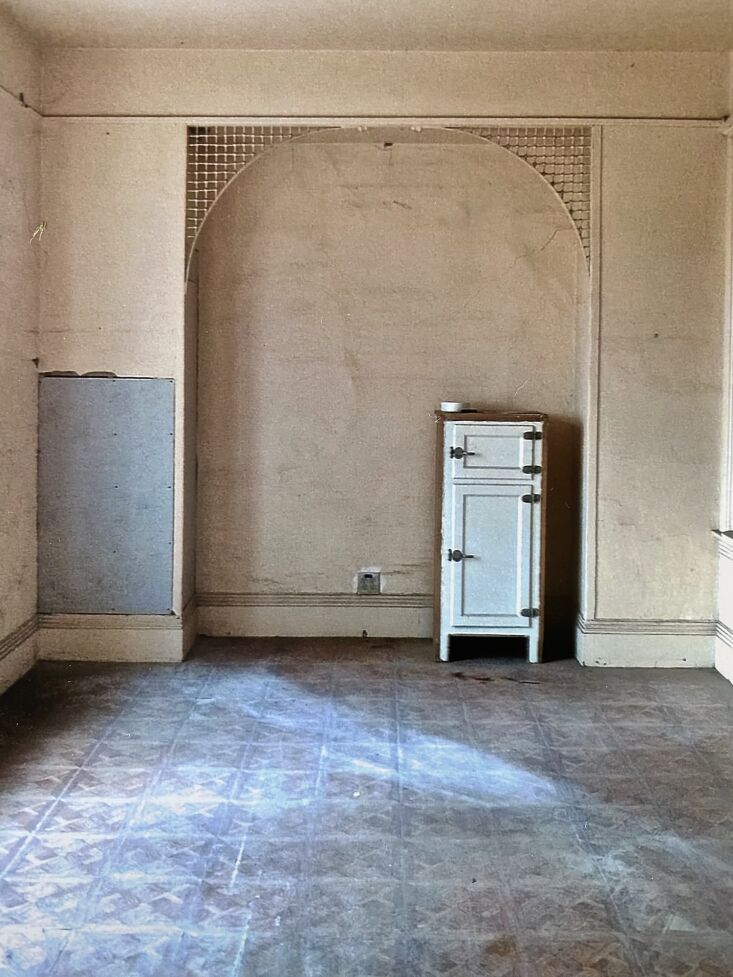
Standing on the sun-bleached hills of Lincoln Heights, looking out toward the Hollywood sign, you might miss it at first glance—a modest, square-plan structure that seems to have grown directly out of the East LA soil. But for architect Pat Bernatz and his wife Shannon, this wasn't just another fixer-upper; it was a rescue mission. When they first encountered the 1890 Pyramidal Victorian, it was in a state of "serious neglect," buried under decades of debris, abandoned vehicles, and a landscape that had surrendered to the elements.
The journey to revive this historic gem was anything but a weekend DIY project. It required a meticulous 24-month architectural planning phase—a period of structural sketching and soul-searching—followed by an 18-month construction timeline. The goal wasn't just to "flip" a house, but to honor a piece of Old California history while retrofitting it for a modern, growing family.
Defining the Architecture: What is a Pyramidal Victorian?
In the late 19th century, before the sprawling Craftsman bungalows took over Los Angeles, the Pyramidal Victorian was a popular "spec house" style.
Definition for the Design Mind: A Pyramidal Victorian is a vernacular architectural style characterized by its strictly square floor plan and a distinctive, four-sided pyramid-shaped roof. Unlike the more ornate Queen Anne Victorians with their turrets and sprawling porches, the Pyramidal variety is prized for its geometric purity and efficient use of space.
Perched on its East LA hill, the Bernatz home is a masterclass in this specific typology. Pat’s philosophy was to preserve the "wavy glass" of the original windows and the intricate wainscoting that had managed to survive a century of wear. These "historical quirks" aren't just aesthetic choices; they are the soul of the home.
The Restoration Journey: Structural Integrity First
When a house is over 130 years old, you don't start with the kitchen cabinets. You start with the bones. The Bernatz team had to manage a structural crisis: the house originally sat on a foundation of boulders and loose earth.
To transition from a neglected relic to a safe family home, the restoration followed a systematic hierarchy:
- Foundation & Roof: Stabilizing the square footprint and securing the pyramid roof was the first priority to prevent further water damage.
- Historical Replication: Pat worked with specialized historical mill shops to replicate damaged lattice and fretwork that could no longer be salvaged.
- Scaling Up: The home originally featured only one bathroom. The redesign involved cleverly reconfiguring the interior to accommodate a modern layout without losing the integrity of the square plan.
Interior Design: The 'Old California' Aesthetic
In my years as an editor, I’ve seen many "modern farmhouse" interiors, but what Pat Bernatz has achieved here is something much more profound: the Old California style.
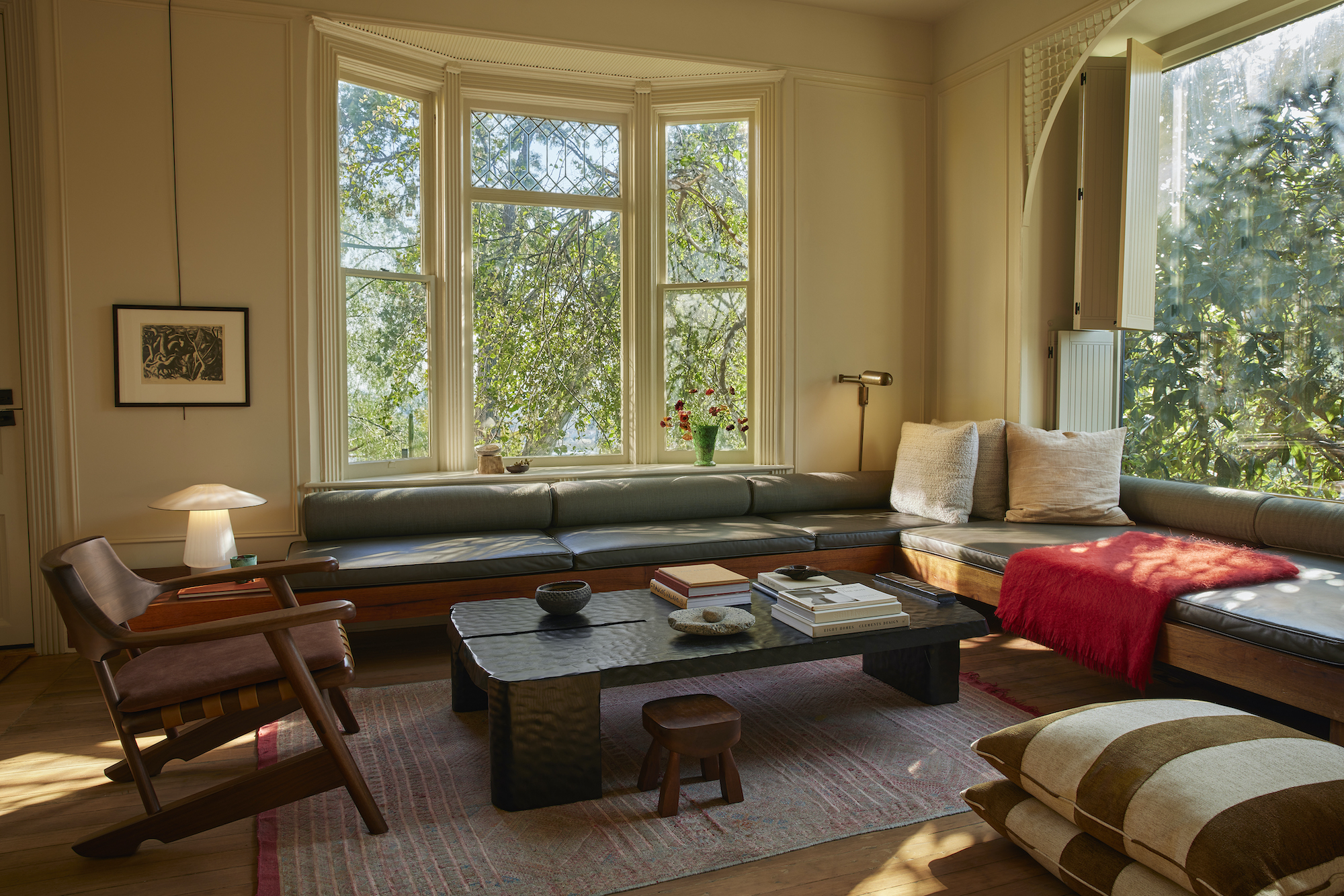
What defines the Old California aesthetic? It is a design language that prioritizes a warm, earthy palette using site-derived materials to create a seamless flow between the indoors and the natural landscape. Think of it as a conversation between the rugged hills of LA and the refined interiors of the late 1800s.
Material Spotlight
The interior palette is a tactile dream, utilizing:
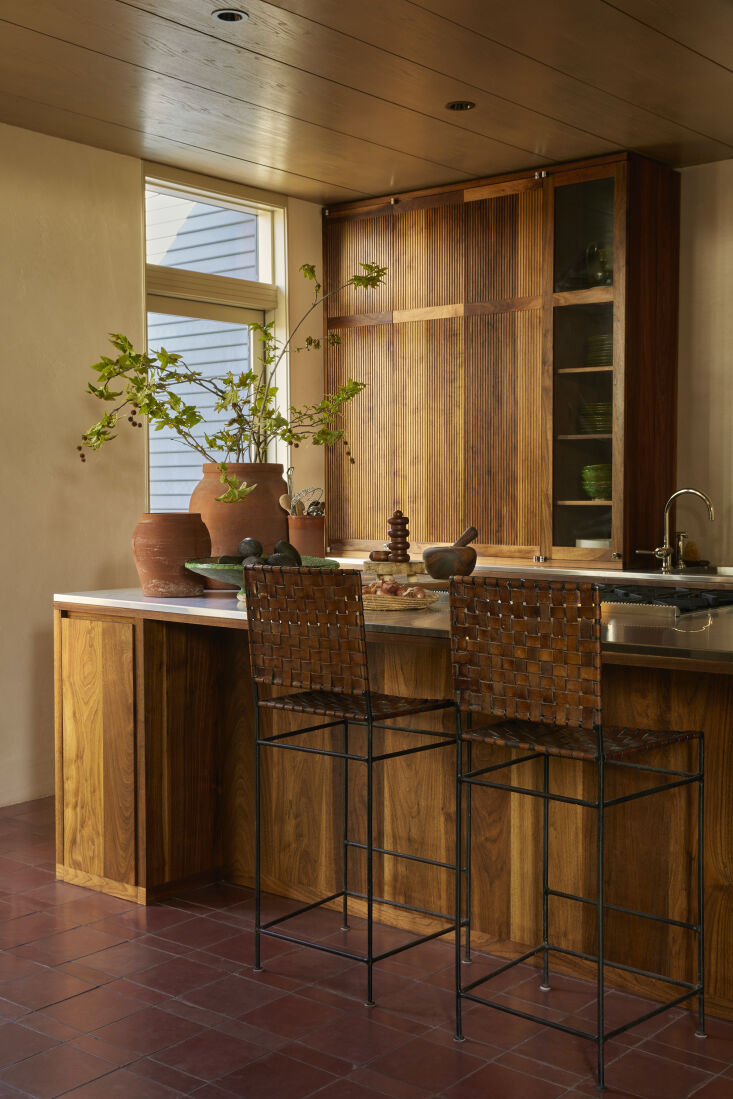
- California Sycamore: Used for cabinetry and millwork, providing a local, golden-hued grain.
- Terra-cotta Tiles: Salvaged or artisanal tiles that ground the space in Mediterranean warmth.
- Hand-Applied Plaster: Walls that catch the shifting California light with a soft, velvet-like texture.
Curated Living: The Furniture
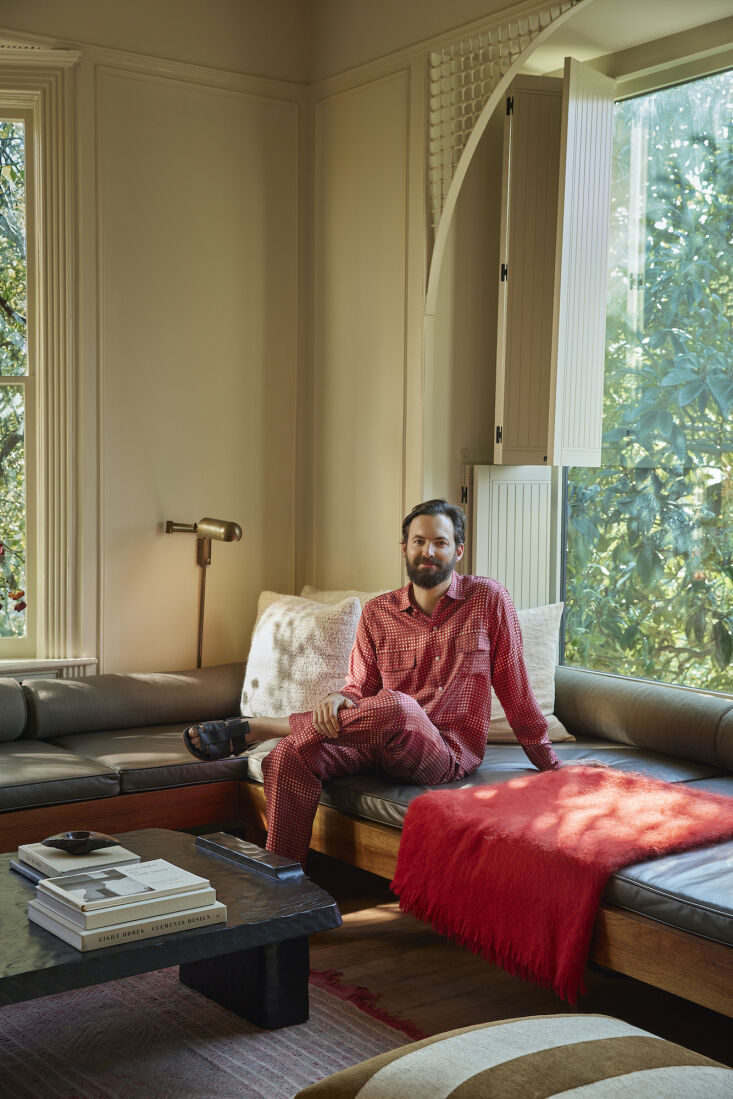
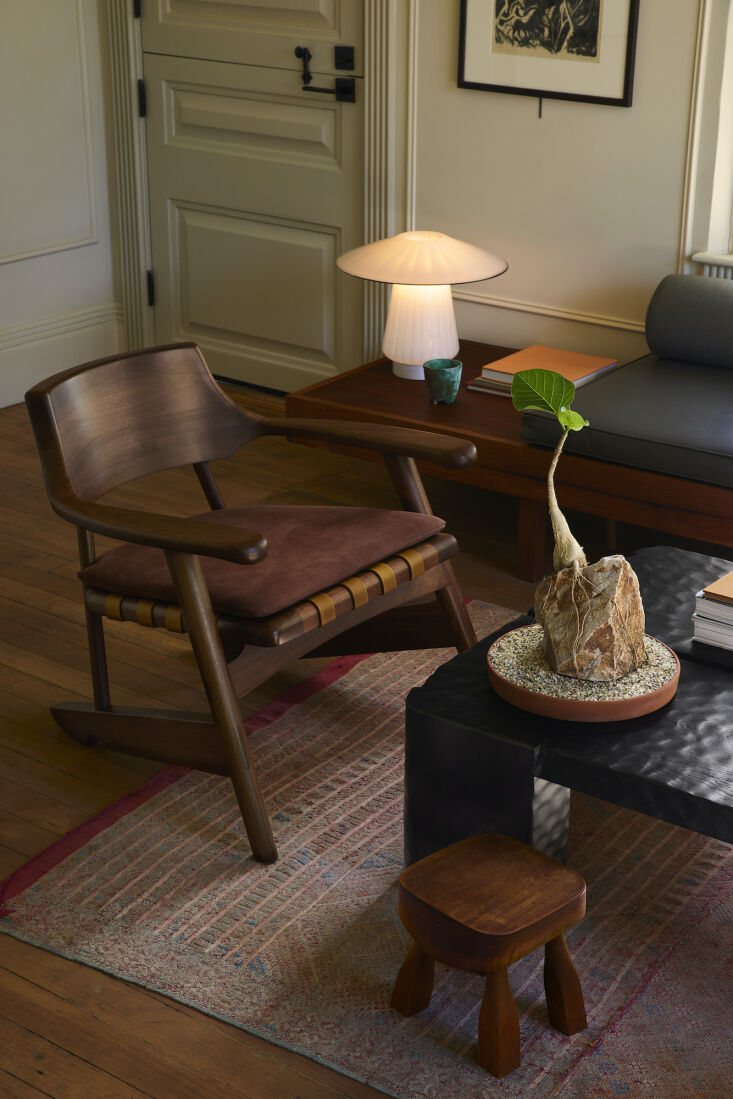
The furniture within the home acts as a bridge between eras. Pat didn't just source vintage pieces; he designed custom elements to fit the home’s unique scale. Featured pieces include a custom black walnut captain’s chair and a deep leather sectional by Dusk Design, which offers a contemporary counterpoint to the historic architecture.
Sustainable Historic Preservation: Eco-Friendly Retrofitting
One of the biggest challenges in historic preservation is energy efficiency. How do you make a drafty 1890s house meet 21st-century standards without stripping its character?
Pat Bernatz utilized several sustainable historic preservation techniques:
- Natural Insulation: Replacing old, inefficient materials with modern, eco-friendly insulation within the walls.
- Heat Pumps: Installing high-efficiency electric heat pumps for climate control.
- Low-E Glazing: While the "wavy" glass was preserved where possible, other windows were upgraded to double-glazed versions that mimic the original profiles.
- Passive Cooling: Borrowing from the past, Pat utilized operable redwood screens and transom windows to facilitate natural cross-ventilation, a traditional method used long before the invention of air conditioning.
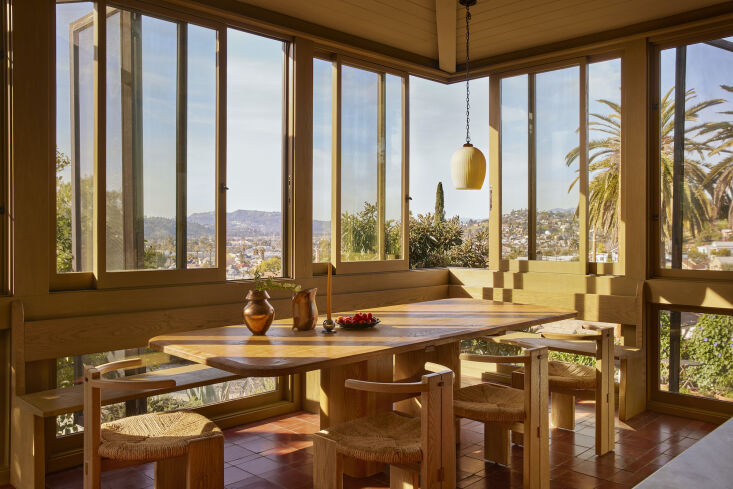
Pat’s Pro Tip: "Don't fight the house's original ventilation. Those high ceilings and transom windows were designed for a reason. Restore them to working order, and you'll find your energy bills dropping naturally."
The Landscape: A Drought-Tolerant Haven
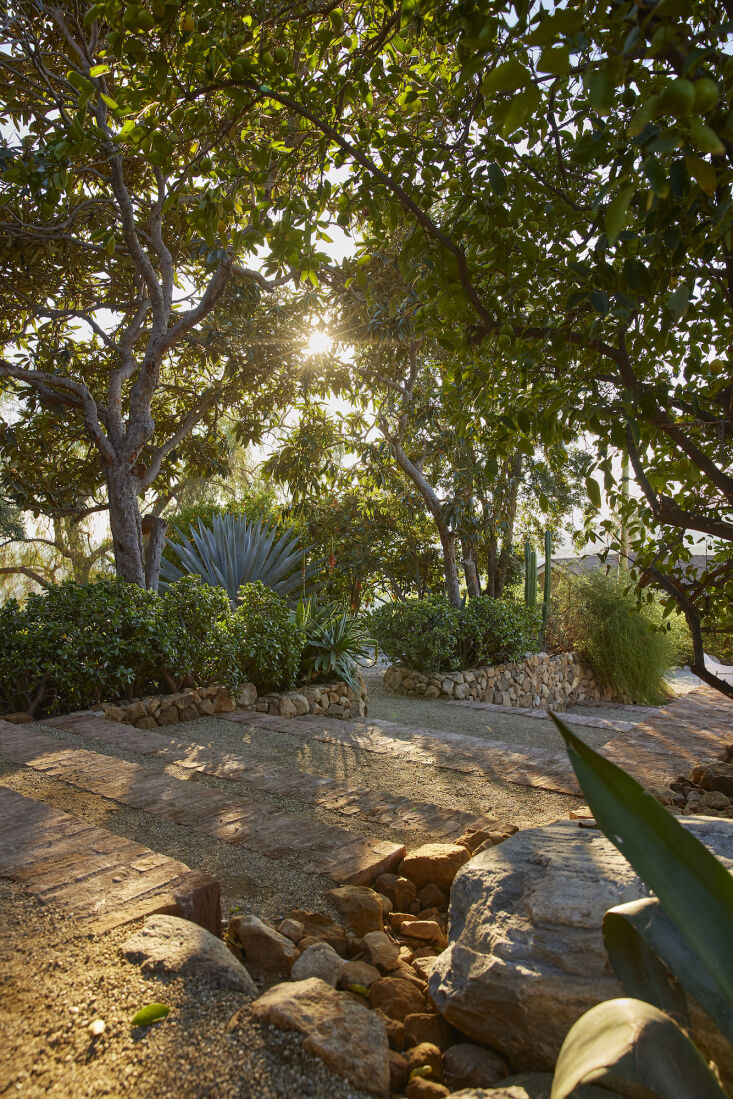
The exterior of the Lincoln Heights house is as much a part of the story as the interior. The project successfully preserved 100% of the site's century-old heritage trees, including olive, palm, and pepper trees that have stood guard over the hill for decades.
The new landscaping is a masterclass in California-native gardening:
- Materials: A mix of Mexican bricks, sandstone, and decomposed granite.
- Water Conservation: By integrating a gray water system and drought-tolerant planting, the project significantly reduced external water dependency.
- Functionality: The garden is designed to be child-friendly, offering a safe space for the Bernatz children to play while framed by the iconic Los Angeles skyline.
Comparison: Historic Restoration vs. Modern Build
| Feature | Bernatz Restoration (1890 Victorian) | Standard Modern Construction |
|---|---|---|
| Foundation | Retrofitted boulder to concrete | Standard slab/crawlspace |
| Cooling | Passive transom & redwood screens | Central AC dependent |
| Material Sourcing | Local sycamore & salvaged terra-cotta | Mass-produced lumber & stone |
| Planning Time | 24 months (Architectural focus) | 6-12 months |
| Ecological Impact | Low (Preserved heritage trees) | High (Often clear-cut sites) |
FAQ: Historic Home Restoration & Pyramidal Victorians
Q: Is it more expensive to restore a historic home than to build new? A: Often, yes. The 18-month construction timeline and the need for specialized millwork can drive costs up. However, the value of historic homes—especially in LA—often appreciates faster due to their scarcity and architectural significance.
Q: Can I install solar panels on a Victorian roof? A: Yes, but it requires careful planning to ensure the panels don't disrupt the sightlines of the pyramid roof. Pat Bernatz focuses on "invisible" sustainability, like heat pumps and gray water systems, first.
Q: Where can I find materials like California sycamore? A: Local timber yards that specialize in salvaged or native woods are your best bet. Always ensure the wood is sustainably harvested or "urban salvaged" from trees that had to be removed for safety.
The salvation of the Lincoln Heights Pyramidal Victorian is a reminder that we don't always need to build more—sometimes, we just need to see the beauty in what's already there. Through the lens of Pat Bernatz, a house on the brink of destruction became a testament to the enduring power of Old California design.