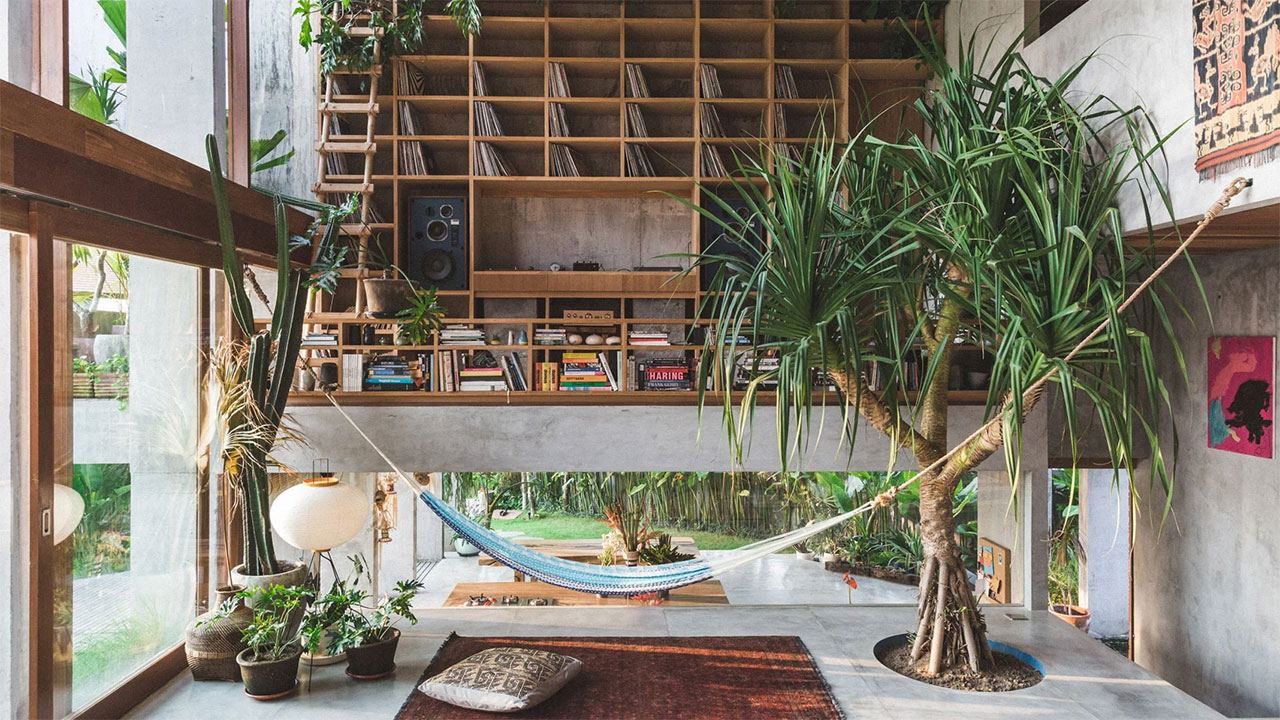
As the boundaries between our interior sanctuaries and the wild world outside continue to dissolve, the role of greenery has undergone a radical transformation. We are moving beyond the era of the "potted plant" tucked into a corner. In 2026, we are witnessing the rise of Natural Zen—a design philosophy where indoor trees are treated not as accessories, but as living architectural infrastructure. Whether it is a gnarled, century-old olive tree anchoring a Mediterranean Modernist courtyard or a soaring Ficus softening the raw edges of a brutalist concrete loft, these botanical giants are redefining the modern home. They provide a "Quiet Luxury" that is felt as much as it is seen, connecting us to the rhythmic pulse of nature within the stillness of our own walls.
The Shift from Decor to Living Infrastructure
The current design landscape is dominated by two major movements: Quiet Luxury and Mediterranean Modernism. In both, the focus has shifted from high-contrast ornamentation to textural depth and organic forms. The "Natural Zen" aesthetic leverages indoor trees to bridge the gap between human-made structures and the organic world.
Psychologically, these central living sculptures act as more than just air purifiers; they are visual anchors that lower cortisol levels and foster a sense of permanence. In an increasingly digital age, the presence of a monolithic living entity—something that grows, changes, and reacts to the light—provides a grounding effect that static furniture simply cannot replicate.
Architectural Integration: Bringing the Outdoors In
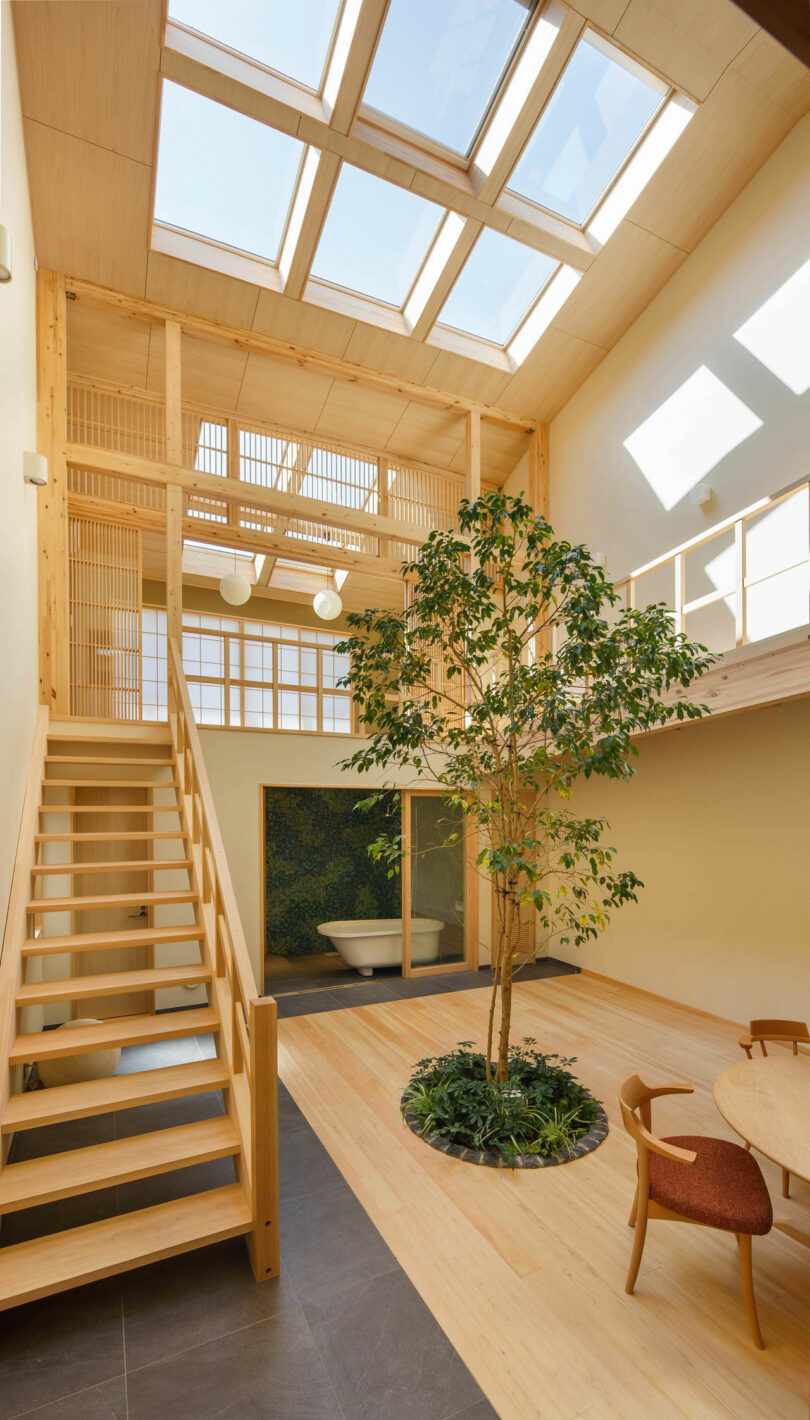
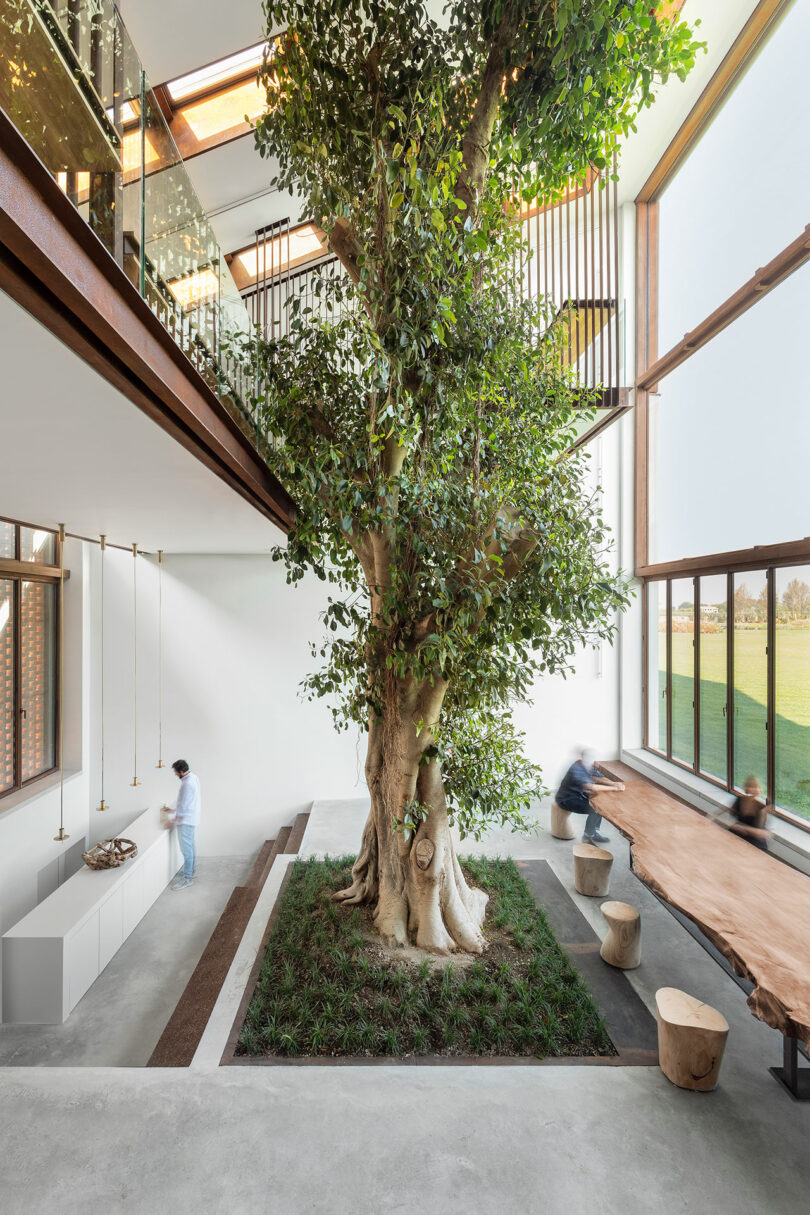
To truly achieve a Zen atmosphere, the integration of a tree must feel intentional rather than an afterthought. Leading designers are no longer placing trees on top of floors; they are placing them within them. To integrate a live tree into home architecture, designers utilize double-height courtyards, skylights for light filtration, and specialized pits embedded directly into concrete or wooden flooring.
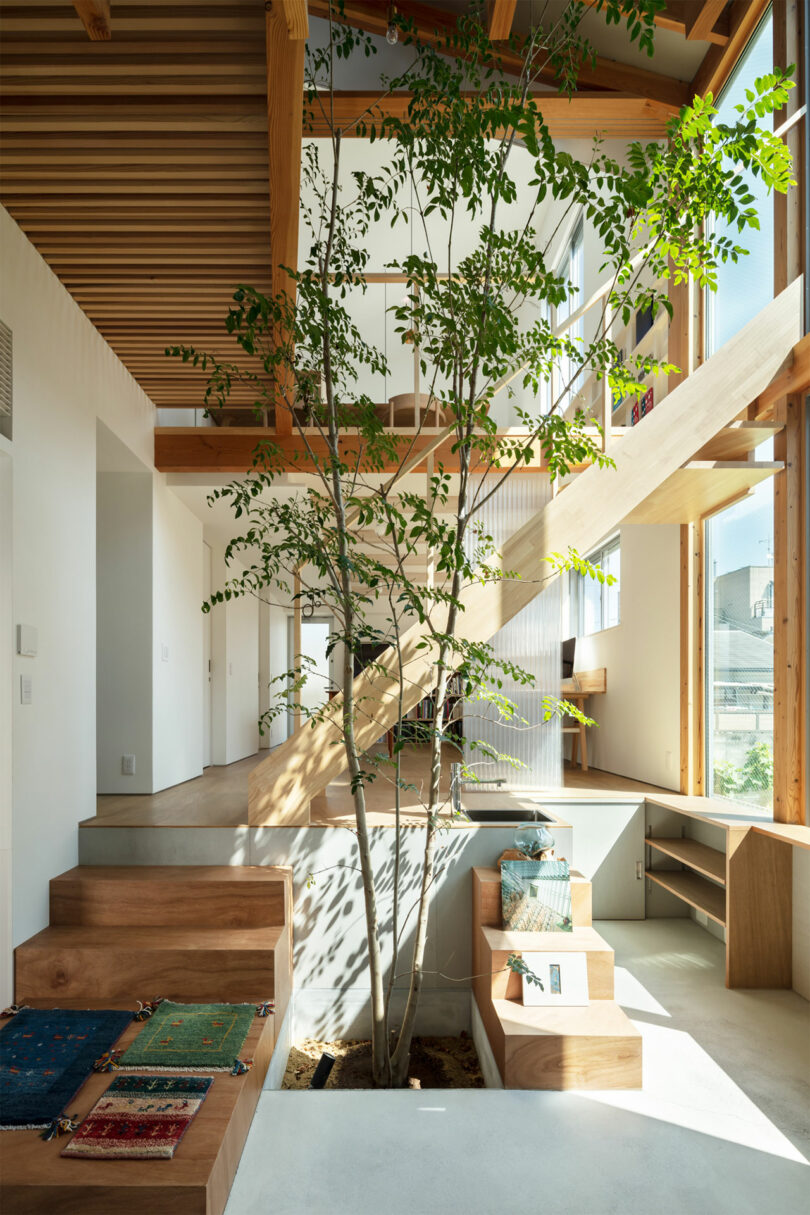
By creating a "void" in the floor plan—often a double-height space that allows light to pour down from a glass ceiling—a tree becomes the heart of the home. This technique, popularized by Japanese residential architecture like the "Melt House," allows the canopy to be enjoyed from the second floor while the trunk grounds the ground level.
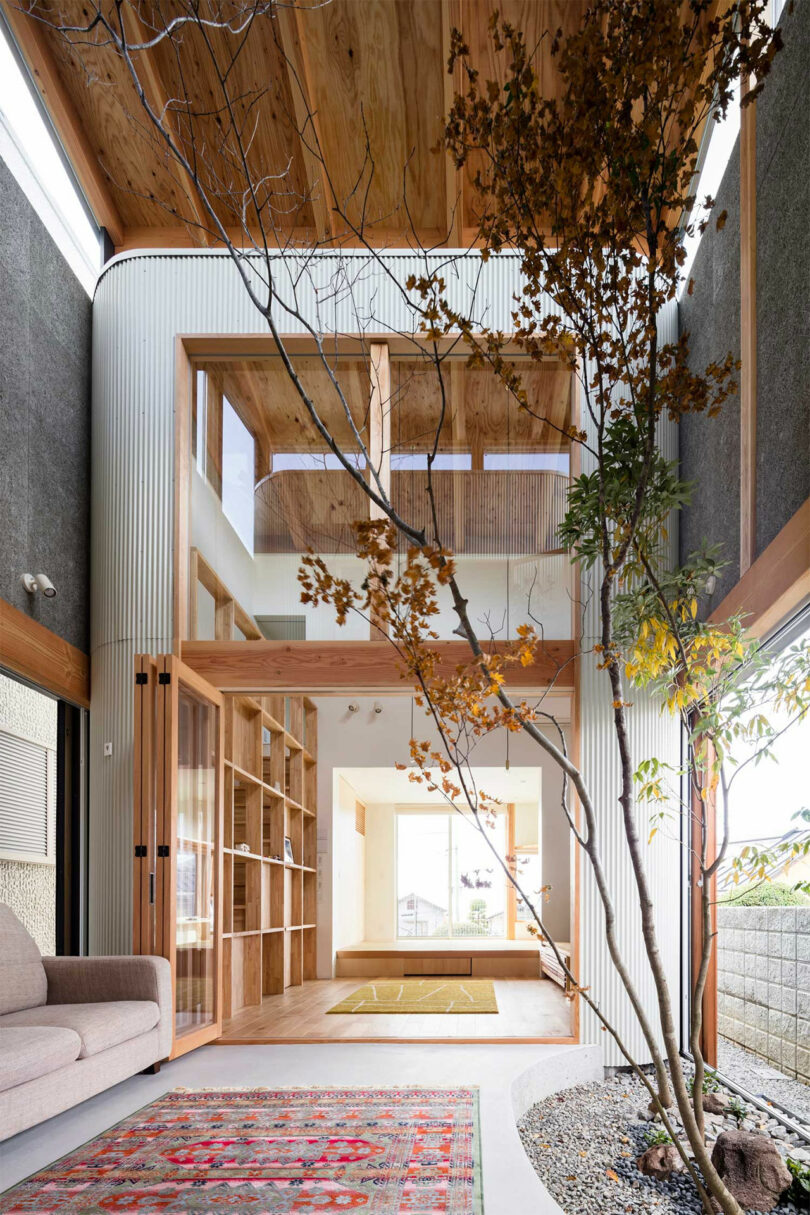
For a seamless transition, "Embedded Growth" is the gold standard. This involves engineering a planting pit directly into the foundation. In high-end projects, these pits are often lined with waterproof membranes and integrated drainage systems, allowing a large-scale tree to grow from the same level as your Cumaru wood or polished concrete floors.
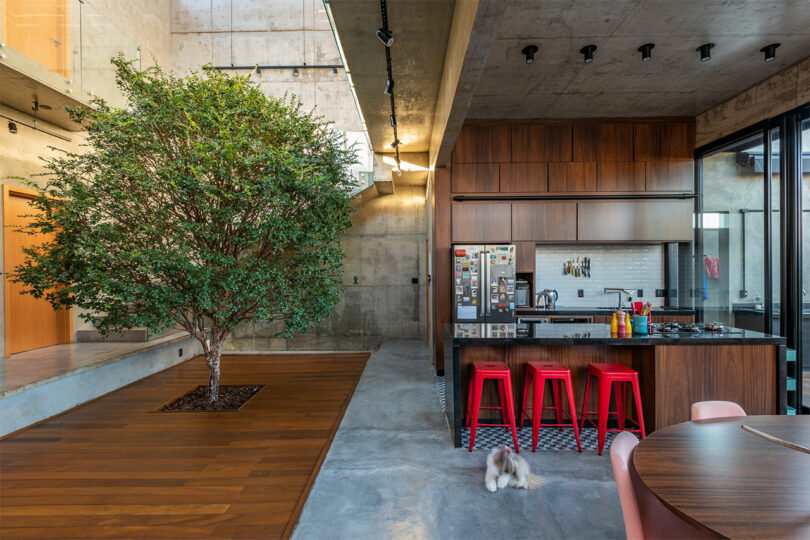
Editor’s Tip: If you are retrofitting an existing space, you can mimic this "embedded" look by using oversized, low-profile stone planters that match your flooring material exactly, creating the illusion that the tree is rising directly from the earth beneath the house.
2026 Design Trends: Mediterranean Modernism & The Olive Tree
If 2020 was the year of the Fiddle Leaf Fig, 2026 belongs to the Olive Tree (Olea europaea). This shift is driven by the "Mediterranean Modernism" trend, which favors a palette of warm ochre, limestone, and weathered wood. The olive tree’s silvery-green foliage and sculptural, twisted trunk provide a sophisticated, muted color story that aligns perfectly with the Quiet Luxury movement.
The aesthetic pairing is specific: the sage-hued leaves of the olive tree create a soft dialogue with natural stone surfaces. Unlike the glossy, dark greens of tropical plants, the olive tree feels ethereal and airy, allowing light to filter through its branches rather than blocking it.
Trend Spotlight: 2026's Most Coveted Species
- The Weeping Willow (Salix babylonica): Emerging as a favorite for indoor water features or "sunken" lounges, its cascading branches provide a sense of movement and "Soft Zen."
- The Black Olive (Bucida buceras 'Shady Lady'): A high-end favorite for its delicate, zig-zagging branches and airy canopy that doesn't overwhelm minimalist spaces.
- Sculptural Pine Bonsai: Large-scale, floor-standing bonsai trees are being used as "living art" in foyers to establish an immediate sense of discipline and tranquility.
Sculptural Statements: Ficus and Pine Bonsai as Art
Indoor trees promote a Zen atmosphere by softening industrial architectural lines, introducing biophilic elements, and serving as central living sculptures that connect interior spaces with nature. In expansive living areas, a single, towering Ficus lyrata or a multi-stemmed Ficus benjamina can act as a monolithic design element.
The goal is to treat the tree as you would a piece of fine sculpture. This means paying attention to the "negative space" between the branches. A well-pruned, sculptural tree provides a focal point that draws the eye upward, highlighting the height of a room and making the ceiling feel infinite.
The Rise of High-End Faux: Maintenance-Free Zen
While the dream is a living, breathing forest inside the home, the reality of light requirements and root maintenance can be daunting. The 2026 interior design forecast highlights 'Quiet Luxury' and 'Mediterranean Modernism,' emphasizing architectural faux trees like the weeping willow and sculptural pine bonsai as maintenance-free design infrastructure.
Market analysis for 2026 indicates that 85% of high-end commercial spaces—from boutique hotels to luxury residential lobbies—are transitioning to "sculptural faux botanicals." The technology has advanced to a point where "real-touch" trunks made from preserved natural wood are paired with precision-engineered silk or polymer leaves. This allows for a Zen aesthetic in low-light corners or high-traffic areas where a live tree would struggle to survive.
| Feature | Premium Live Tree | High-End Sculptural Faux |
|---|---|---|
| Aesthetic Vibe | Dynamic, evolving, organic | Consistent, curated, "perfect" |
| Light Requirement | High (Requires skylights/UV) | Zero |
| Maintenance | Pruning, watering, pest control | Occasional dusting |
| Longevity | Indefinite (with proper care) | 10+ years (no leaf drop) |
| Infrastructure | Requires drainage/integrated pits | Can be placed anywhere |
Biophilic Architecture by the Numbers
The integration of nature into home design is no longer a niche preference; it is a measurable market driver. Architectural integrations of indoor trees in premium residential projects have seen a 40% increase in global design submissions between 2024 and 2026. This surge is attributed to the increasing value placed on "Wellness Real Estate."
Homes that feature biophilic elements—specifically large-scale indoor trees—command higher resale values. Beyond aesthetics, the presence of these trees has been shown to improve air quality and provide sound dampening in open-concept homes, where hard surfaces like glass and concrete often create echoes.
Designing for Zen: Placement and Texture
When placing a tree, think about the "Japandi" principles of balance and minimalism. Zen is achieved through a careful balance of minimalist furniture and the organic presence of nature.
- Juxtaposition: Place a "Soft" tree with cascading branches, such as a Weeping Willow or a delicate Fern Tree, against "Hard" industrial lines like a steel-framed window or a poured concrete wall. The contrast creates a visual tension that is inherently modern.
- Focal Points: In an open-concept room, use a single large tree to define a zone. A tree placed near a kitchen island can delineate the transition from "utility" to "relaxation" without the need for walls.
- Lighting as Drama: Use floor-mounted uplights to cast shadows of the leaves onto the ceiling at night. This "shadow play" adds a layer of kinetic art to the room, enhancing the Zen feeling of movement and life.
FAQ
Q: Can I plant a tree directly into my floor if I don't have a basement? A: Yes, but it requires professional engineering. If you are on a concrete slab, a pit must be jackhammered out and reinforced. For most homeowners, it is easier to build a "false floor" or a raised platform to house the root ball and drainage system.
Q: Which indoor tree is best for a low-light "Zen" corner? A: If you have low light, a live Olive or Ficus will not thrive. In these instances, a high-quality "sculptural faux" tree is the best choice. If you insist on a live plant, the Kentia Palm or Dracaena Reflexa can tolerate lower light while still offering a sculptural, tree-like silhouette.
Q: How do I prevent pests in an indoor architectural tree? A: Prevention starts with the soil. Use sterile, high-quality potting mixes and ensure your integrated pit has excellent drainage. For 2026, many designers are using "Self-Watering Sub-Irrigation" systems that keep the top layer of soil dry, which discourages gnats and other pests.
Redefine Your Space
Natural Zen is more than a trend; it is a commitment to living better. By integrating trees into our architectural vocabulary, we create spaces that breathe and evolve. Whether you choose the path of a live, centuries-old olive or a curated, maintenance-free faux masterpiece, the result is the same: a home that feels like a sanctuary, a piece of the forest brought inside to ground your modern life.