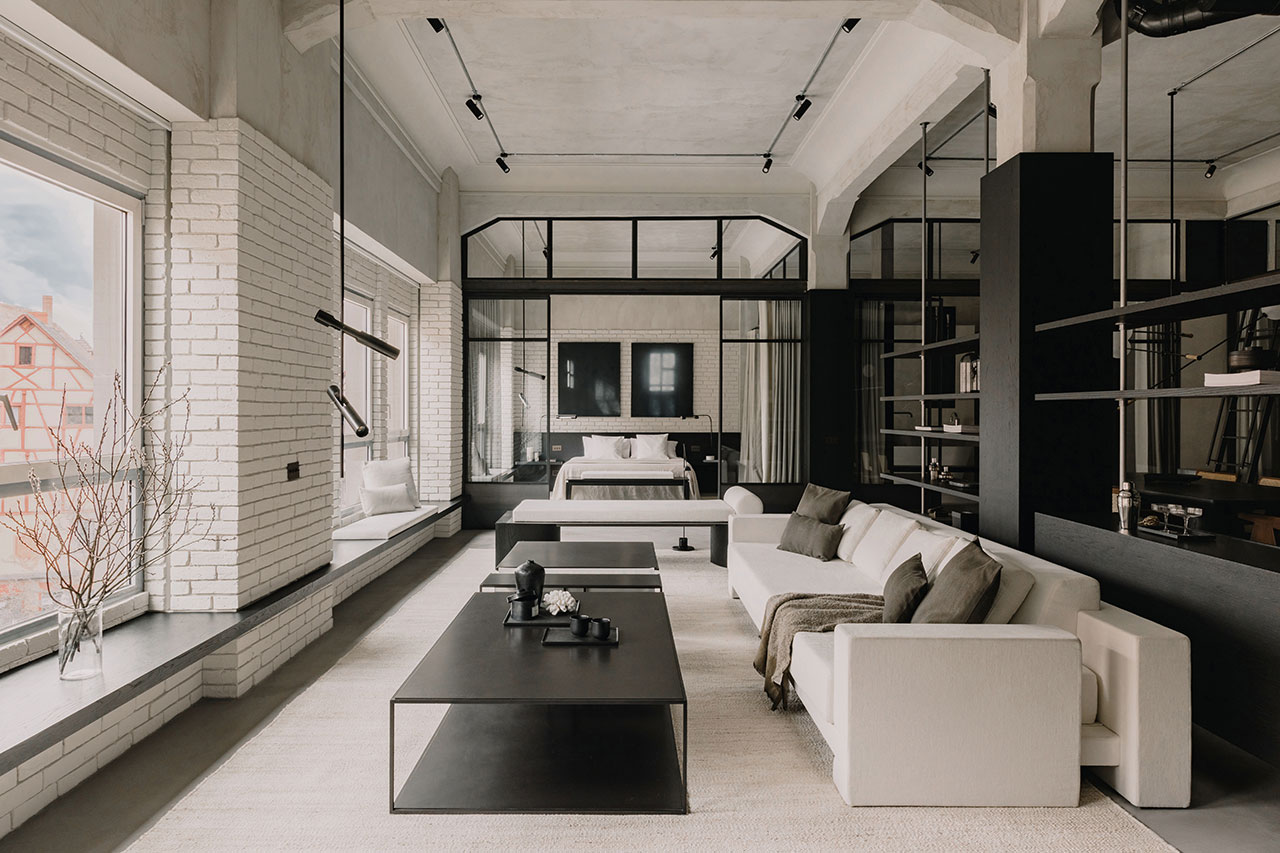
When we speak of "Structural Art," we evoke the legacy of nineteenth-century engineering icons like Gustave Eiffel—men who saw no boundary between the mathematical rigidity of iron and the soaring grace of a monument. In the contemporary landscape of interior architecture, this dialogue between efficiency and elegance has found a new, compelling voice. OZA Design, led by the visionary duo Özge Öztürk and Alexandre Simeray, has redefined this concept within the walls of a historic residence in Colmar, France. Their Milo Apartment project isn't merely a renovation; it is a manifestation of a new architectural language that balances artisanal craftsmanship with the raw, brutalist properties of a century-old structure.
Quick Facts: The Milo Apartment
- Location: Colmar, France (Place des Martyrs de la Résistance)
- Designer: OZA Design (Özge Öztürk & Alexandre Simeray)
- Building Date: 1912 (Reinforced concrete structure by Georg Bloch)
- Size: 2,700 square feet (Residential)
- Ceiling Height: 12 feet in public areas
- Special Feature: 860 square feet of "hidden" mezzanine storage
- Palette: Monochrome (Black stained wood, white gypsum, raw iron)
The Philosophy of OZA Design: Form Meets Function
At the heart of OZA Design’s practice is the belief that a home should be a sanctuary of "Comfort via Minimalism." Özge Öztürk and Alexandre Simeray do not view minimalism as an absence of detail, but rather as the presence of essential, high-quality elements. Their philosophy draws heavily from the concept of Structural Art as defined by David Billington: a discipline that emphasizes structural efficiency and material economy to create an expressive, personal style.
The founders often refer to their "Warrior" collection metaphor—a design ethos that suggests persistence and resilience. In the Milo Apartment, this translates to a space that is both aesthetically commanding and profoundly practical. By utilizing natural materials and sophisticated craftsmanship, OZA Design creates a timeless environment that avoids the pitfalls of fleeting trends. Their approach is about finding the "soul" of a site and leaning into its inherent strengths rather than masking them.

A Historic Canvas: The 1912 Reinforced Concrete Building
The Milo Apartment occupies a significant architectural site in Colmar, situated on the Place des Martyrs de la Résistance. Built in 1912 by Georg Bloch, the building was a pioneer in its time, utilizing a reinforced concrete structure that was revolutionary for the early 20th century. Preserving this 113-year-old architectural heritage was a primary objective for OZA Design.
The site retains a factory-like atmosphere, characterized by its "brutalist" properties—exposed structural elements and a sense of industrial weight. Instead of concealing these features, the designers integrated them into the modern urban dwelling. The result is a home that feels anchored in history while breathing with the lightness of contemporary design.
Material Focus: The Industrial Heritage The design leans into the building’s original "skeleton." By keeping the reinforced concrete elements visible or hinted at through the interior geometry, OZA Design honors the structural honesty of early modernism.
The Milo Apartment: A Case Study in Structural Efficiency
Managing a 2,700-square-foot floor plan requires more than just furniture placement; it requires a surgical understanding of space. The Milo Apartment’s greatest challenge—and opportunity—was its verticality. With 12-foot ceilings in the public areas, the volume of the space was immense, yet the risk of "dead space" was high.
OZA Design’s solution was to utilize the vertical volume for both aesthetic and practical purposes. They created an 860-square-foot "hidden" storage solution, a massive mezzanine-style space tucked above secondary areas like bathrooms and hallways. This allowed the primary living zones to remain uncluttered and expansive, preserving long sightlines that make the apartment feel even more palatial.
| Architectural Metric | Measurement | Purpose |
|---|---|---|
| Total Living Area | 2,700 sq. ft. | Expansive urban living |
| Ceiling Height | 12 ft. | Creating monumental volume |
| Hidden Storage | 860 sq. ft. | Maintaining minimalist aesthetics |
| Heritage Age | 113 Years | Preserving industrial history |
Materiality and The Artisanal Touch
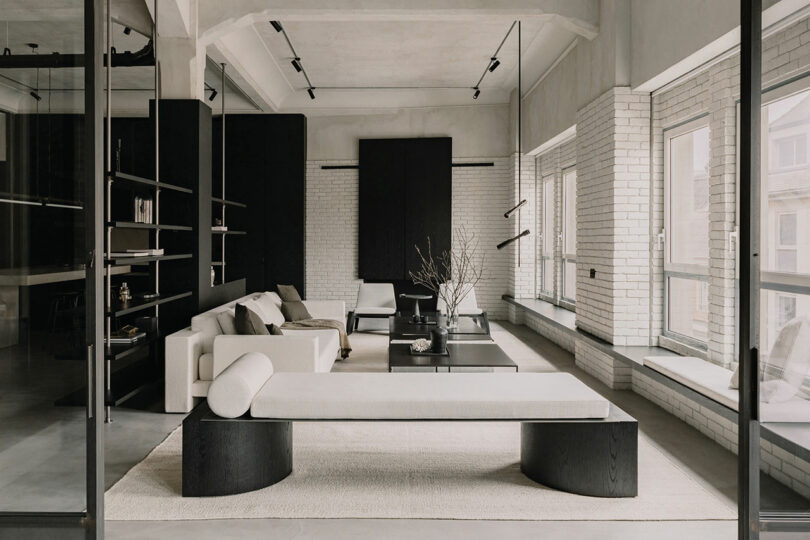
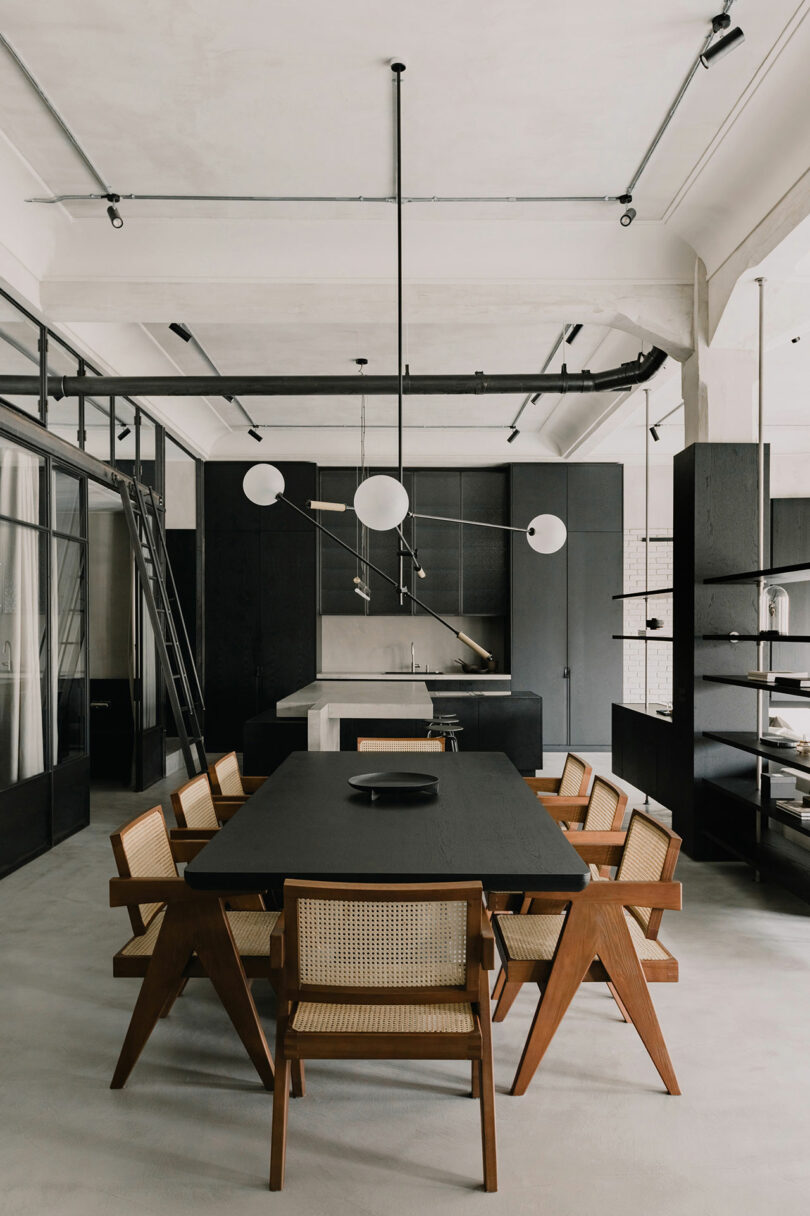
The sensory experience of the Milo Apartment is defined by its monochrome palette. This isn't the cold, sterile white-and-black of a gallery, but a rich, tactile interplay of textures. OZA Design juxtaposes black stained wood with pristine white gypsum walls, creating a high-contrast landscape that highlights the architectural mullions and shadows.
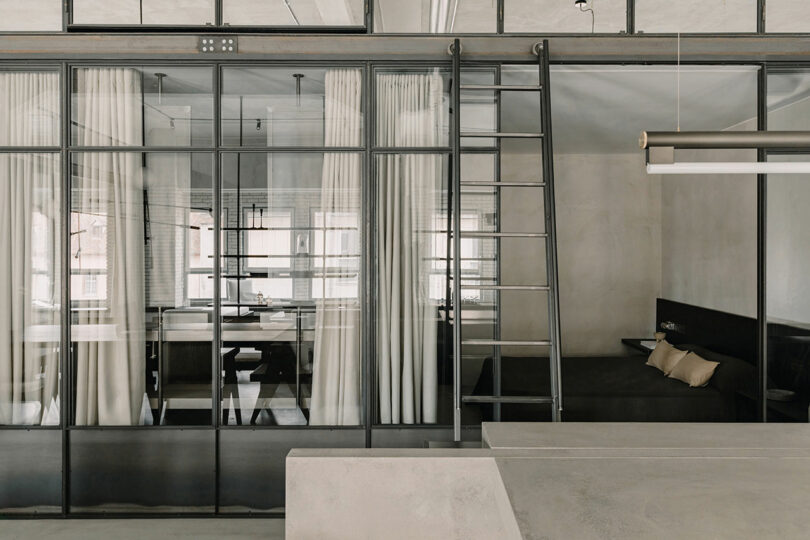
A standout feature is the bespoke artisanal metalwork. Colmar has a deep historical connection to the iron industry—it is the birthplace of Frédéric Auguste Bartholdi, the designer of the Statue of Liberty. OZA Design pays homage to this legacy through custom-forged elements:
- Matte Metal Mullions: Used to define glass partitions without blocking light.
- Raw Iron Accents: Providing a grounded, heavy counterpoint to light linen curtains.
- Bespoke Lighting: Sculptural fixtures that act as "Structural Art" in their own right.
Living the Layout: Public vs. Private Spaces
The layout of the Milo Apartment follows a rhythmic flow, heavily influenced by the open-plan philosophies of Frank Lloyd Wright. The "Great Room"—comprising the entryway, kitchen, and dining areas—is designed for social fluidity. Here, the 12-foot ceilings and floor-to-ceiling windows allow natural light to wash over the dark wood surfaces, creating a dramatic interplay of light and shadow throughout the day.
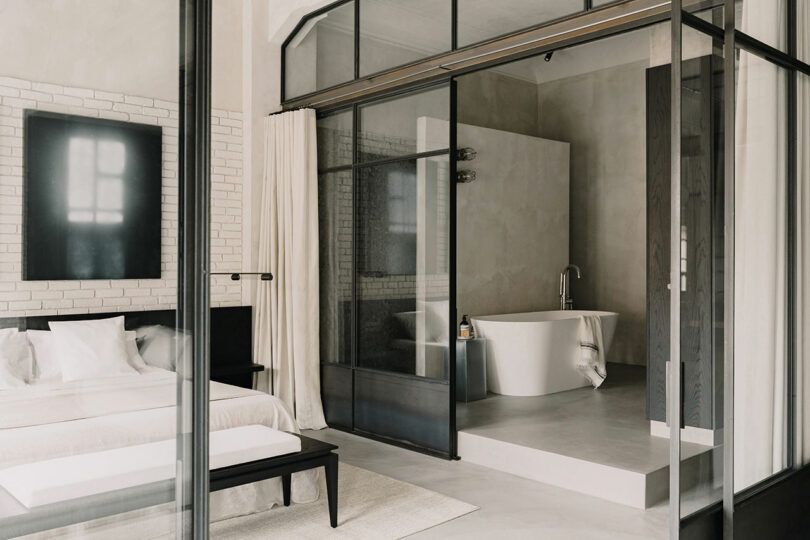
Transitioning to the private quarters, the atmosphere becomes more intimate, yet the architectural language remains consistent. The Primary Suite is a masterclass in "Structural Art" for residential use. Using architectural devices like glass partitions and floor-length cotton-linen panels, OZA Design provides privacy without sacrificing the sense of openness.
The Primary Suite & Ensuite
- Spatial Dividers: Glass mullions separate the sleeping area from the dressing room, maintaining sightlines while defining function.
- Acoustic Softening: The use of heavy linens and soft-textured rugs contrasts with the hard concrete and metal, creating a "nest" within the industrial shell.
- The Spa Experience: The ensuite features geometric concrete surfaces and custom vanities that echo the building's brutalist roots.
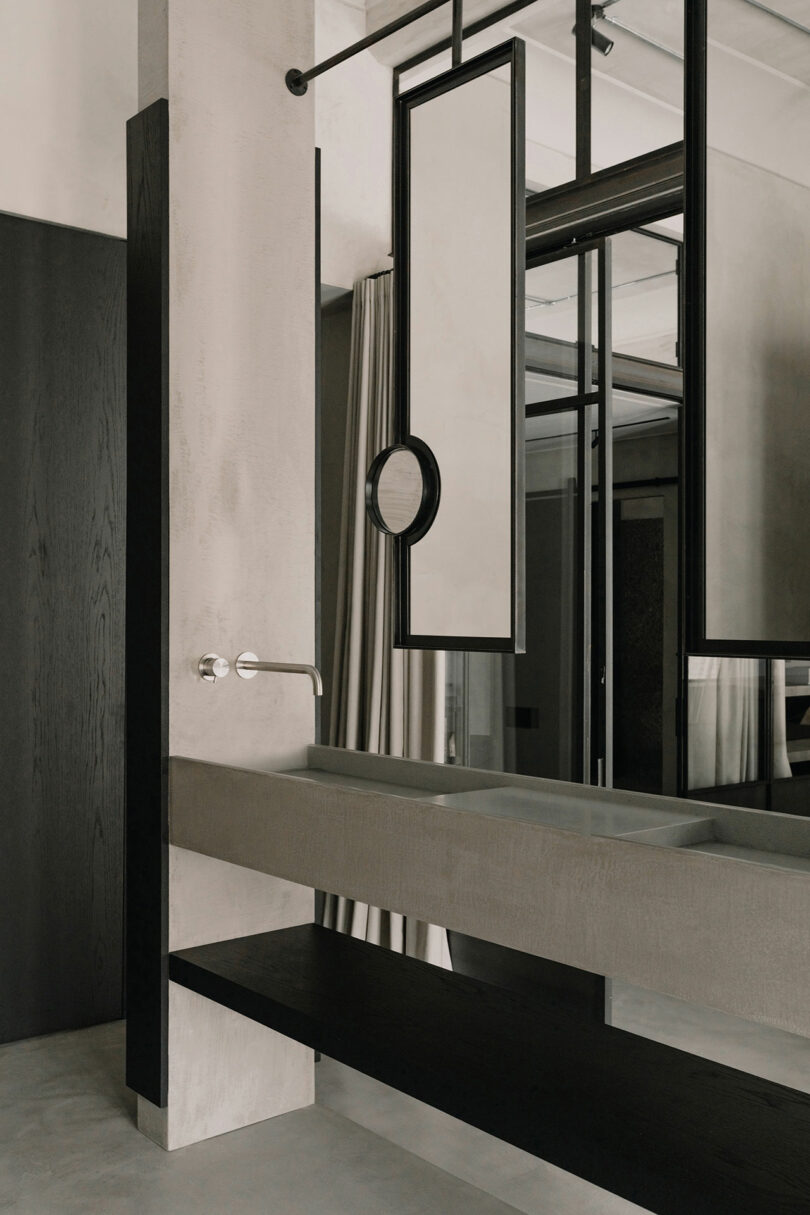
The material play continues in the bathrooms, where the tactile quality of the surfaces takes center stage. Dark wood cabinetry provides a warm, organic contrast to the cool gray of the concrete and the reflective surfaces of geometric mirrors. It is a space designed not just for utility, but for a ritualistic experience of light and form.
Conclusion: The Future of Interior Architecture
The Milo Apartment serves as a blueprint for how we might treat historic industrial spaces in our modern cities. OZA Design has successfully bridged the gap between a 1912 factory aesthetic and a luxury residential experience. By focusing on "Structural Art"—the efficient, poetic use of materials and space—they have created a home that is as enduring as the reinforced concrete it is built upon.
For the modern dweller, the Milo Apartment offers a lesson in restraint: that true luxury isn't found in excess, but in the perfect balance of light, history, and craftsmanship.
FAQ
1. What exactly is "Structural Art" in the context of OZA Design? Structural Art refers to a design philosophy where the beauty of a space is derived from its structural efficiency and material honesty. Inspired by engineering icons, OZA Design uses the "bones" of a building (like the 1912 concrete frame in the Milo Apartment) as the primary decorative element, rather than covering them up with superficial finishes.
2. How did OZA Design manage storage in such an open-plan, high-ceiling apartment? To keep the 2,700-square-foot living area minimalist and clean, they utilized the 12-foot ceiling height to build 860 square feet of "hidden" storage. This mezzanine-style storage is located above secondary spaces like the dressing rooms and bathrooms, keeping the primary sightlines clear.
3. Is the monochrome palette too cold for a residential home? Not when executed with "Material Play." OZA Design uses natural, tactile materials like light linen, black-stained wood, and artisanal iron. These textures add warmth and a "human touch" that softens the high-contrast black and white aesthetic, making it feel cozy yet sophisticated.
Are you planning a renovation for a historic or industrial space? Whether you are working with a brutalist concrete loft or a traditional apartment with high ceilings, remember that the most beautiful features are often the ones already built into the structure. Look for ways to celebrate the "bones" of your home.