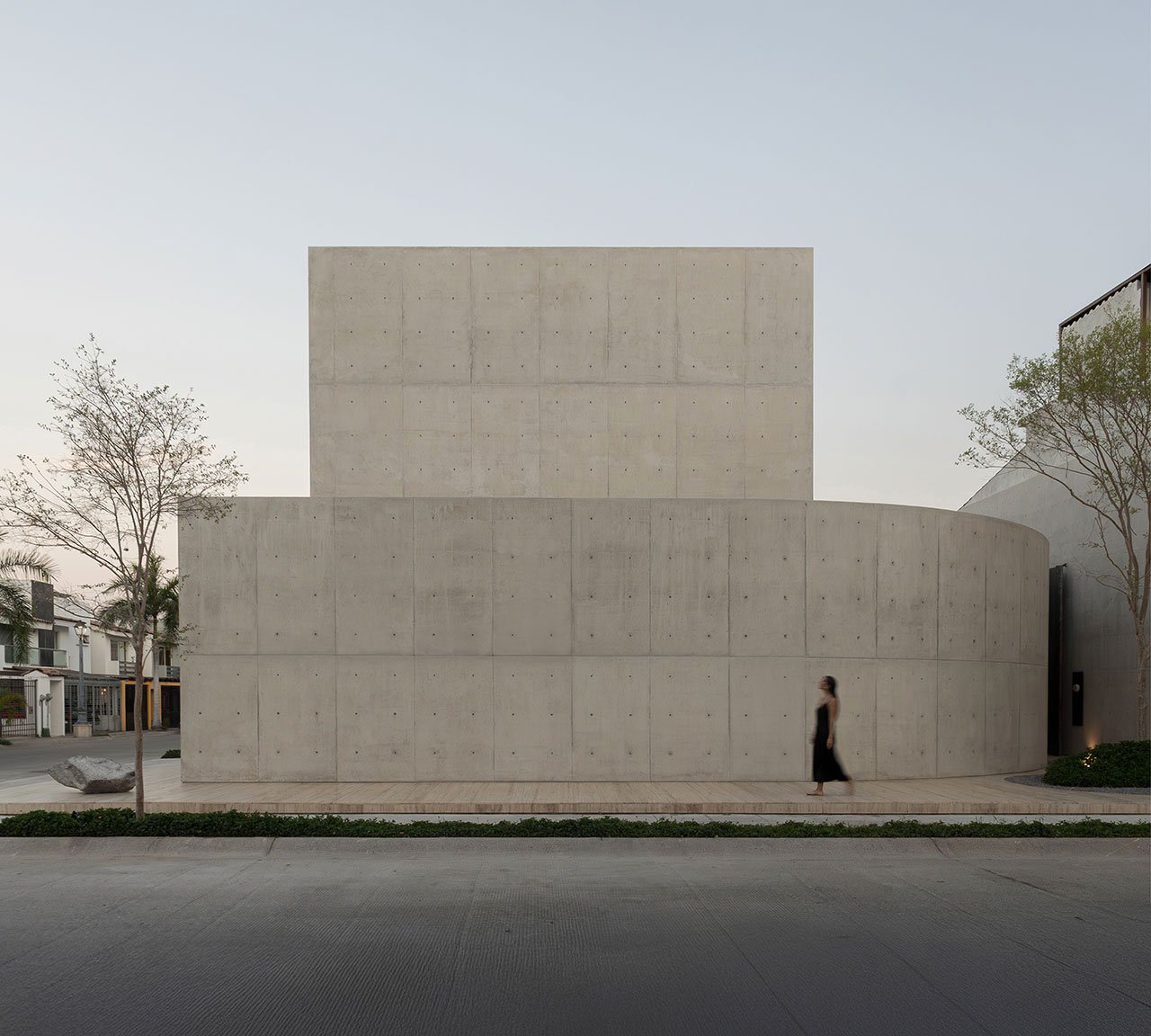
In the coastal heat of Puerto Vallarta, where the sun dictates the pace of the day and the light can be as blinding as the ocean is blue, shade is not a mere amenity—it is a necessity. For many, luxury in this Mexican paradise is defined by expansive floor-to-ceiling glass and panoramic views of the Pacific. But for HW Studio, the architects behind the ethereal Casa Tao, luxury is found in the quietude of a shadow. It is found in the "architecture of memory," a philosophy that turns the home inward, creating a sanctuary that feels less like a residence and more like a meditative retreat.
Casa Tao is a minimalist masterpiece that prioritizes atmosphere and personal history over traditional spectacle. Influenced deeply by Japanese discipline and the owners' desire for a "living museum," the residence stands as a testament to the power of restraint. By allocating approximately 40% of its total footprint to open-air courtyards and terraces, the design emphasizes environmental resonance over enclosed volume, proving that the most profound spaces are often those where the wind and light are allowed to breathe.
A Cultural Synthesis: Japanese Minimalism Meets Mexican Heritage
The genesis of Casa Tao was a unique brief: the owners, well-traveled and deeply moved by the quiet discipline of Japanese aesthetics, wanted to live inside a "Japanese Museum" in the heart of Mexico. This wasn't a request for a stylistic imitation, but rather a spiritual one. They sought a space for contemplation, a home that functioned as a vessel for their memories and a shield against the chaotic outside world.
The architecture reflects a synthesis of two seemingly disparate worlds. From Japan, it takes the principle of Ma (the space between things) and a focus on essentialism. From Mexico, it draws on the tradition of the central courtyard and a profound respect for raw, tactile materials. The result is a home that uses minimalism not as a sterile aesthetic, but as a tool for emotional clarity.
This synthesis is perhaps most evident in the way the house handles its history. The owners' childhood memories—marked by resourcefulness and an appreciation for the intrinsic value of objects rather than their price tags—are woven into the very fabric of the building. The architecture doesn't demand attention; it observes quietly, providing a backdrop for a life lived with intention.
| Design Element | Japanese Influence | Mexican Heritage | Casa Tao Synthesis |
|---|---|---|---|
| Spatial Focus | Internal focus & "Ma" (negative space) | Central courtyard & social hubs | Inward-turning courtyards that act as social lungs. |
| Materiality | Natural wood, paper, stone | Concrete, vibrant textures, clay | Raw white concrete with warm wood accents and tactile surfaces. |
| Light Play | Filtered, soft light through screens | Sharp shadows and high-contrast sun | Deep overhangs and curved walls that create rhythmic "shade." |
| Philosophy | Discipline and Wabi-Sabi | Emotional resonance and vibrancy | "Curated Nostalgia" – a museum-like space for personal history. |
Casa Tao and the 2026 'Curated Nostalgia' Trend
In the world of interior design, we are seeing a significant shift away from the "show-home" sameness that dominated the early 2020s. As we look toward 2026, the trend of Curated Nostalgia is taking center stage. This movement isn't about kitsch or retro-clutter; it is about translating personal histories and travel experiences into a disciplined, museum-like living environment.
Trend Alert: Curated Nostalgia (2026) This trend focuses on "emotional minimalism." It prioritizes pieces and spatial layouts that evoke a specific memory or feeling. The home becomes a gallery of one’s own life, where every void is as intentional as every object.
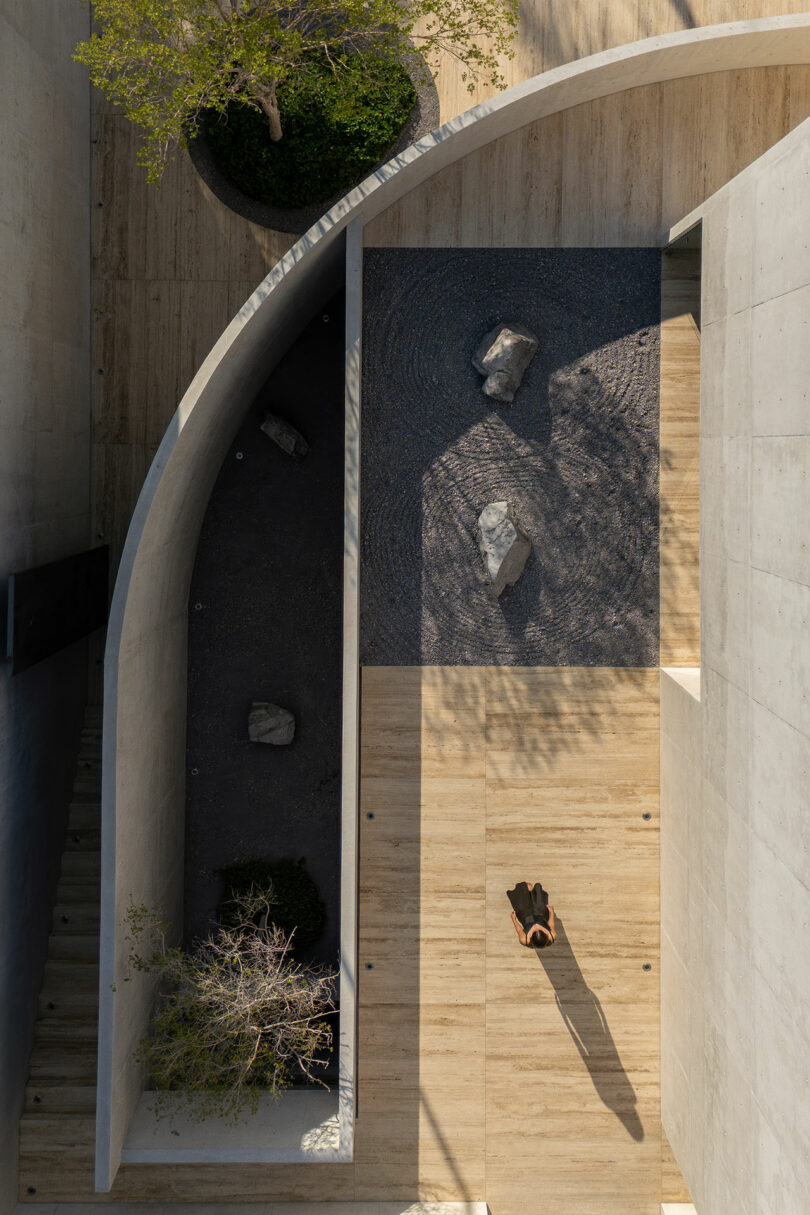
Casa Tao is a textbook example of this evolving trend. Instead of filling the home with "on-trend" decor, the owners and HW Studio curated an environment that echoes the stillness of the museums they loved during their travels. The house itself acts as a frame for the inhabitants' lives. By stripping away the unnecessary, the architecture allows the "nostalgia"—the scents of the local flora, the sound of the wind through the courtyard, the specific way the light hits a concrete curve—to become the primary decor.
Spatial Layout: The Inward-Turning Sanctuary
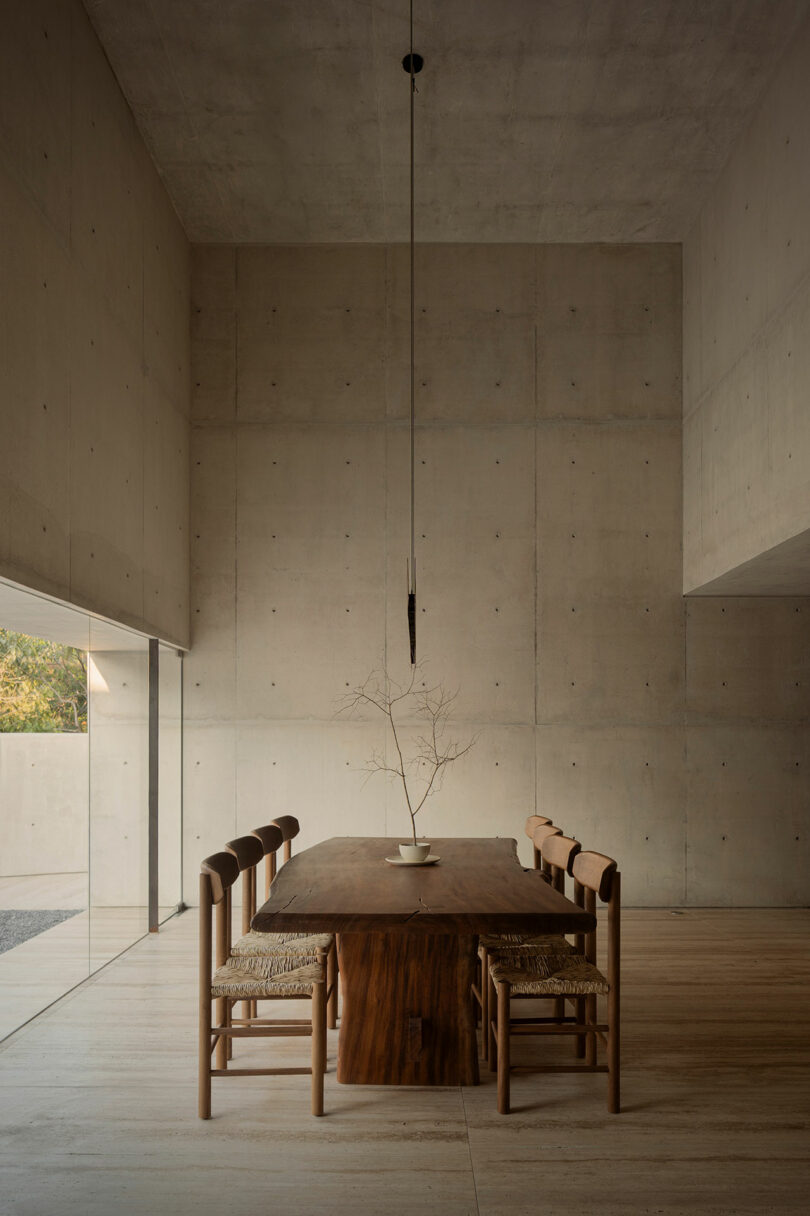
Structurally, Casa Tao is a study in levels and protection. To escape the noise and visual clutter of the street, the main living areas are elevated. This creates a "hovering" effect, where the social volume feels detached from the mundane world below.
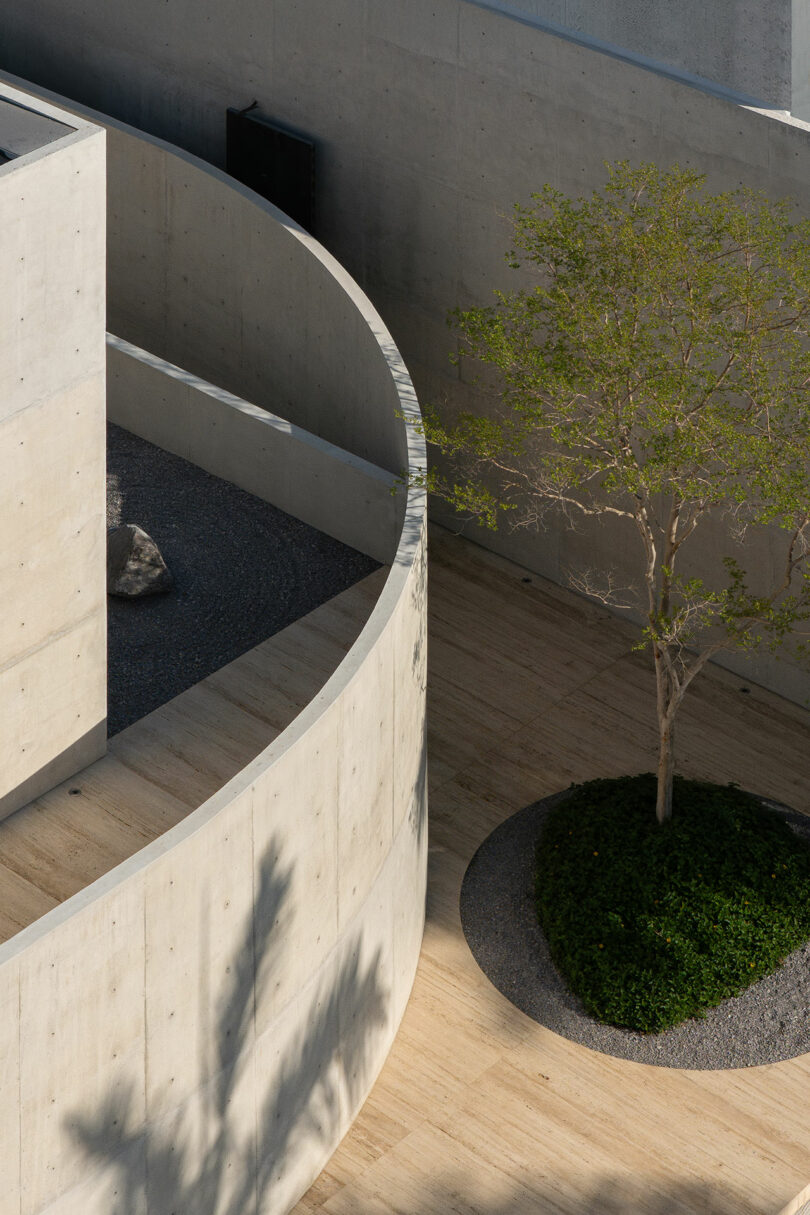
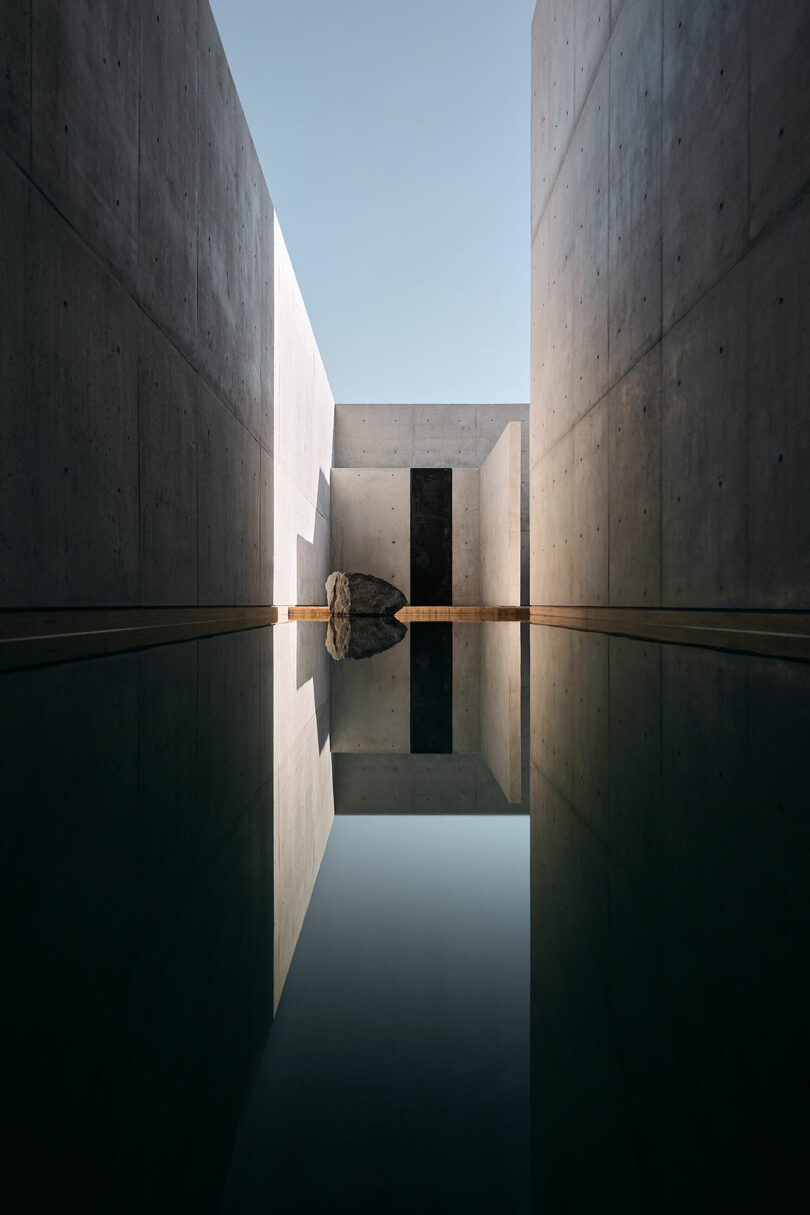
The home utilizes massive, curved concrete walls that serve a dual purpose: they are sculptural elements that catch the light in soft gradients, and they are protective barriers that create a hushed, private world.
- The Ground Level: This area is dedicated to service spaces and private entries, acting as a sturdy pedestal for the sanctuary above.
- The Upper Level: Here, a double-height social volume creates an airy, light-filled environment. It is not a closed box; rather, it interacts constantly with the outdoors through filtered openings.
- The Open-Air Ratio: In a bold move for a private residence, 40% of the footprint is allocated to non-enclosed spaces. These courtyards are not "extra" space; they are the heart of the home, facilitating a constant dialogue with nature.
Environmental Resonance and Material Honesty
One of the most impressive technical feats of Casa Tao is its environmental intelligence. In Puerto Vallarta, heat gain is a constant struggle. HW Studio addressed this by adopting a diagonal orientation toward the local plaza. This specific alignment is not just for aesthetics; it effectively reduces direct solar exposure by 30%.
This orientation, combined with the central courtyard, creates a natural "chimney effect" for ventilation. As the warm air rises in the courtyard, it pulls cooler air through the shaded social spaces, reducing the need for mechanical cooling and immersing the inhabitants in the natural rhythm of the coastal breeze.
The material palette is equally honest:
- White Concrete: Used for its thermal mass and its ability to reflect light without the harsh glare of traditional white paint.
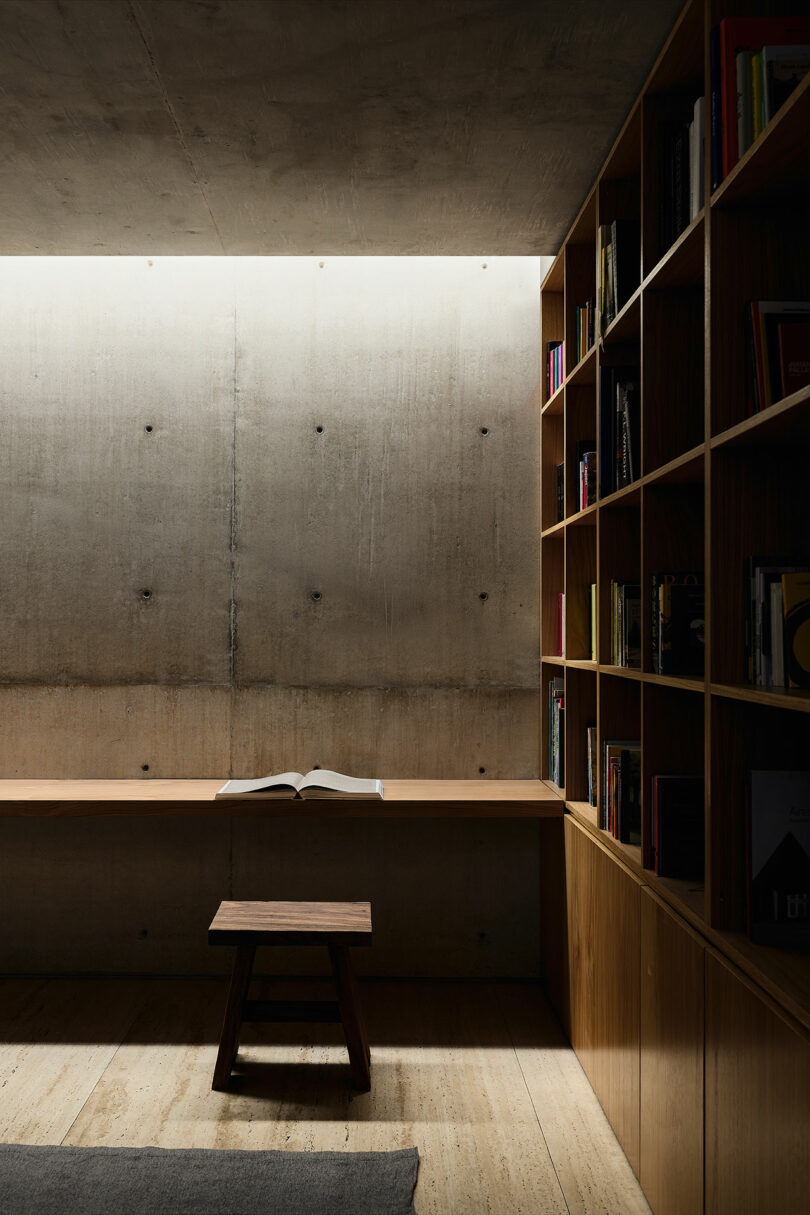
- Local Wood: Adds warmth to the monochromatic concrete, appearing in millwork and accents to ground the minimalist spaces.
- Water Features: Reflective pools are strategically placed to naturally regulate temperature and provide a soothing acoustic backdrop.
The focus here is on "Designing to Feel." It’s about the tactile texture of the concrete, the scent of floral breezes passing through the open terraces, and the way the acoustics of the curved walls soften the sounds of the city.
Implementing the Casa Tao Aesthetic in Modern Homes
You don’t need to build a concrete fortress in Mexico to capture the spirit of Casa Tao. The "Architecture of Memory" and "Curated Nostalgia" can be implemented in any home by focusing on a few core principles.
1. Bending the Trend: The Power of Curves
If your space feels too "boxy," look for ways to introduce soft, architectural curves. This could be through a curved sofa, an arched doorway, or even a large-scale circular mirror. Curves help to soften the light and create a sense of flow that mimics the "hushed" atmosphere of Casa Tao.
2. Embracing the 'Maximum Dimension'
In 2026, we are seeing the rise of Maximum Dimension walls—large, uninterrupted surfaces that celebrate the raw beauty of a single material. Whether it's a lime-wash finish, a large-format stone slab, or a perfectly poured concrete wall, allowing a material to "speak" without the interruption of art or shelving creates a museum-like gravitas.
3. Creating Intention Through "The Void"
Most homeowners feel the urge to fill every corner. To channel Casa Tao, embrace the void. Leave a wall blank. Keep a corner empty to let the shadows play. Minimalism is about what you don't include as much as what you do.
4. Materials That Patina
Avoid "perfection." Choose materials that will age and show the passage of time—unlacquered brass, natural wood, or stone. These materials hold memories; they show where hands have touched them and how the sun has kissed them over years.
FAQ
Q: How does Casa Tao stay cool without massive air conditioning? A: The home uses a combination of its diagonal orientation (reducing sun exposure by 30%), high-thermal-mass concrete, and a central courtyard that facilitates natural cross-ventilation and the "stack effect" to pull heat away from living areas.
Q: What is the "Architecture of Memory"? A: It is a design philosophy used by HW Studio that prioritizes the emotional and historical background of the inhabitants over traditional architectural trends. It focuses on how a space makes one feel and remember, rather than just how it looks.
Q: How can I achieve a "museum-like" feel in a small apartment? A: Focus on "Curated Nostalgia." Choose 3-5 high-quality, meaningful objects and give them plenty of physical space. Use lighting to highlight textures rather than just to illuminate the room, and prioritize a neutral, tactile color palette.
Conclusion
Casa Tao reminds us that the most powerful architecture isn't the kind that shouts for our attention, but the kind that holds space for our silence. By blending the discipline of Japanese minimalism with the soul of Mexican heritage, HW Studio has created more than just a house; they have built a vessel for memory.
As we move toward a future where our homes must serve as sanctuaries from an increasingly digital and chaotic world, the lessons of Casa Tao—shade, silence, and the curation of our own histories—become more relevant than ever. Whether you are designing a new build or simply refreshing a corner of your home, remember: luxury isn't what you see out the window; it's the peace you find inside.