For years, the interior design world has largely overlooked a significant demographic of homeowners: the rabbit parents. Despite rabbits being the third most popular indoor pet in many urban regions, the market for rabbit-specific gear has remained significantly underserved compared to the booming "pet-furniture" industries for cats and dogs. As an editor specializing in modern living, I’ve seen countless beautifully curated apartments marred by the "visual bulk" of primary-colored plastic cages and unsightly wire enclosures.
But we are currently witnessing the rise of "Rabbitcore"—a design movement that treats the rabbit habitat not as a utility to be hidden, but as a piece of the home’s architectural fabric. To live harmoniously with a lagomorph in a small space, we must move toward the "Furniture Hybrid." These are enclosures that serve dual purposes: a side table that houses a hay feeder, or a media console that doubles as a luxury burrow.
Before diving into the aesthetics, we must address the golden rule of rabbit welfare: the 4-to-1 space ratio. A healthy rabbit enclosure must provide at least four times the space of the rabbit when fully stretched out, with enough height for them to stand on their hind legs. For modern apartment living, this usually translates to a minimum of 12 square feet of living space, plus several hours of free-roam time.
1. The Ultimate Furniture Hybrid: Bink Rabbit Goods Credenza
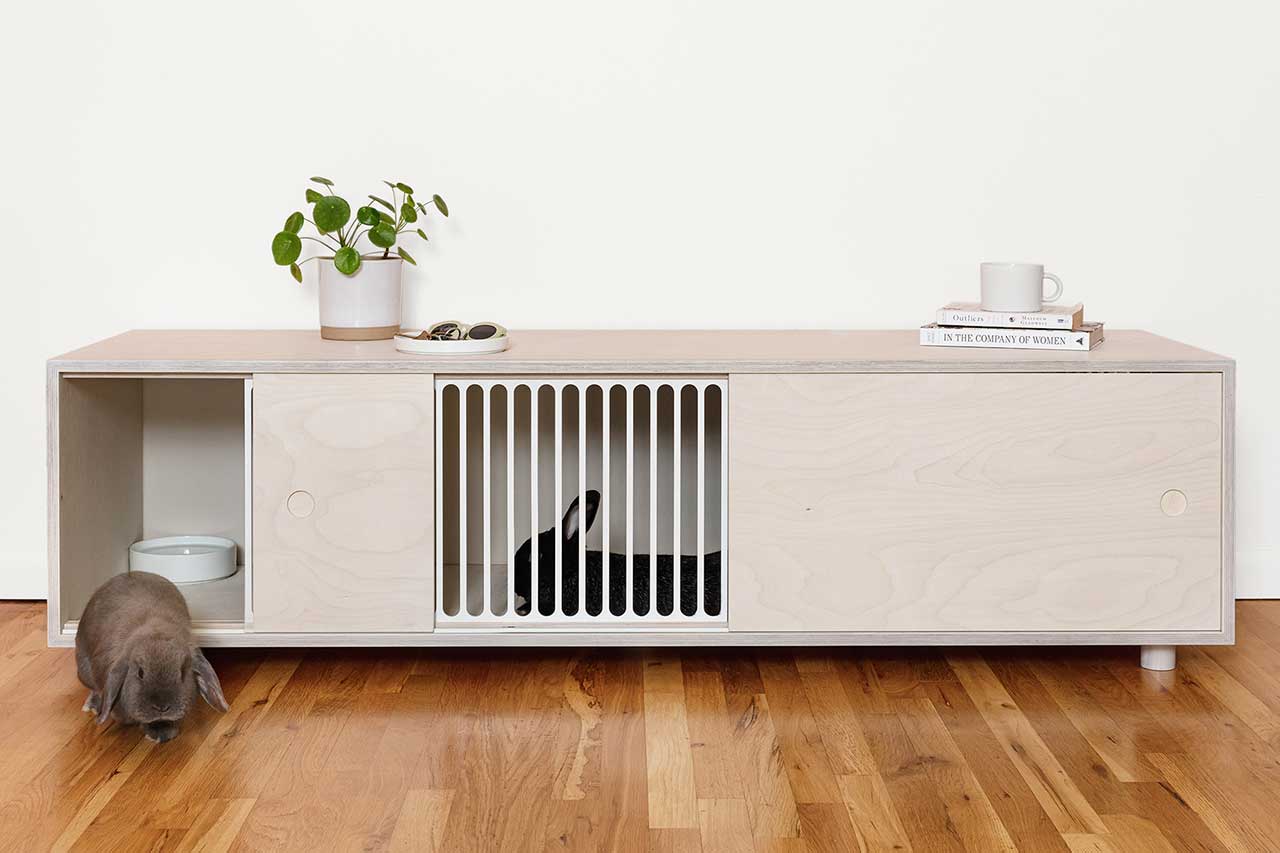
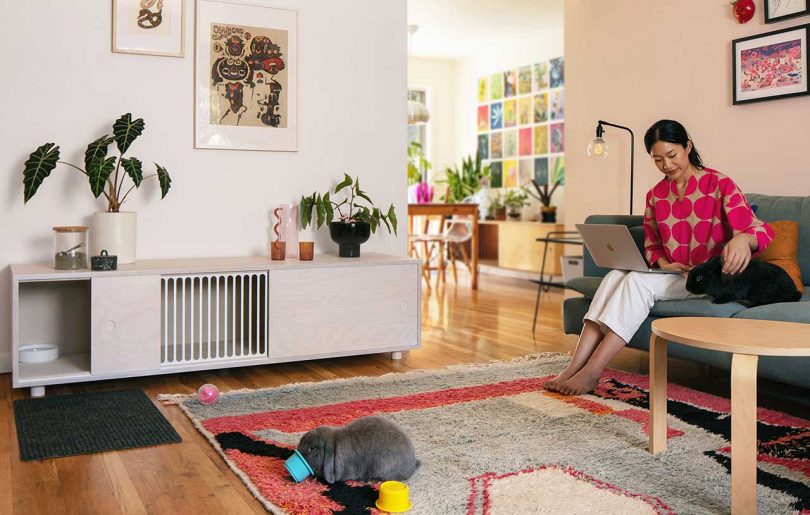
When we talk about "hidden rabbit litter box credenzas," Bink Rabbit Goods is the name that has revolutionized the industry. Their Credenza is less of a pet cage and more of a high-end sideboard that happens to have a five-star suite inside.
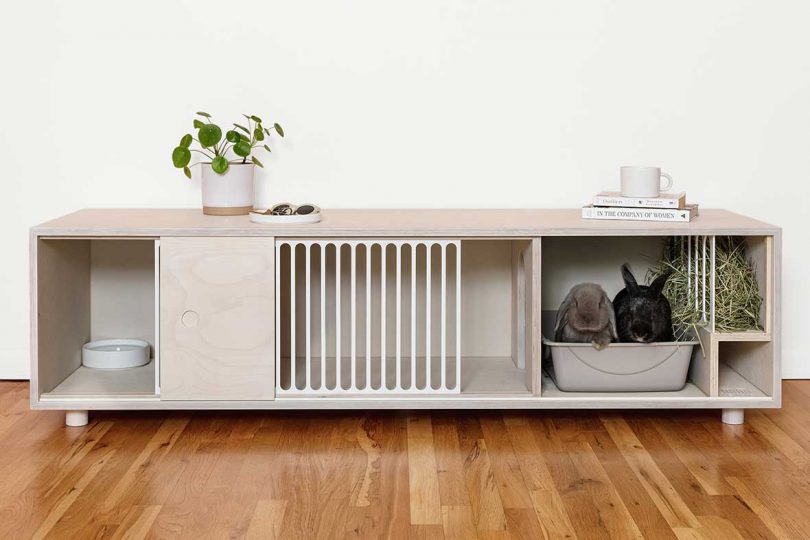
Handcrafted from ethically sourced wood, this piece addresses the three biggest design hurdles of rabbit ownership: the hay mess, the litter box visibility, and the clash of materials. The Credenza features integrated hay feeders and a discrete compartment for a litter tray, ensuring that the "business" side of pet ownership is tucked away behind sleek, mid-century modern lines.
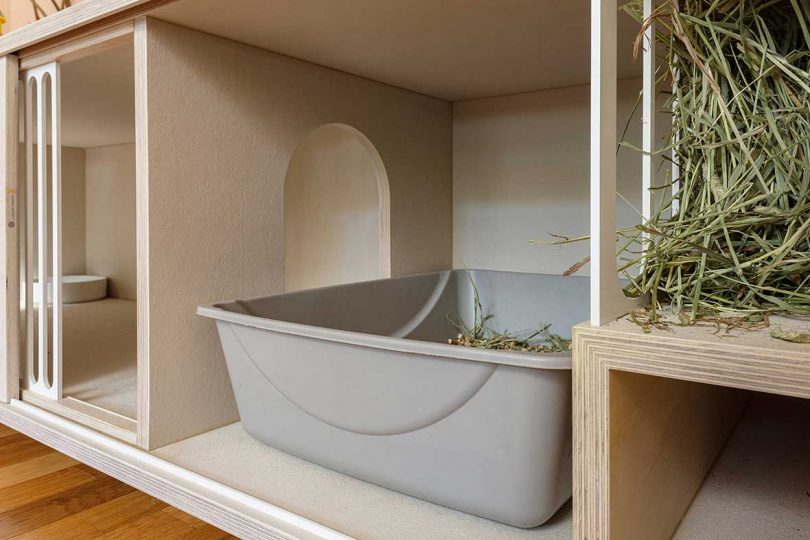
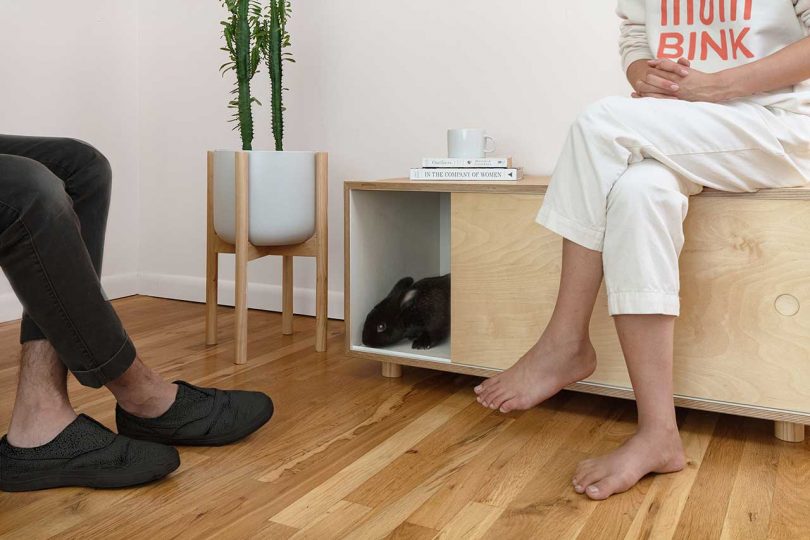
From a styling perspective, this piece functions beautifully as a focal point in a living room. You can style the top with coffee table books and ceramic vases, and visitors would never guess it’s a rabbit habitat. The ventilation is handled through precision-cut slats that offer both airflow and a sense of security for the rabbit, mimicking a natural burrow environment.
Editor’s Choice: If you are investing in one "forever" piece for your rabbit, this is it. The durability of the hardwood means it won’t succumb to the chewing habits that destroy cheaper particle-board alternatives.
2. The Smart DIY Hack: IKEA BESTÅ and KALLAX Enclosures
For the budget-conscious decorator, the "IKEA rabbit cage hack" has become a staple of the stylish indoor rabbit hutch community. The IKEA BESTÅ cabinet system is particularly popular for "furniture hybrids." Because the BESTÅ is modular, you can create a long, low-profile habitat that mimics the look of a built-in window seat.
To transform a BESTÅ into a sleek, hidden habitat, you replace the solid center panels of the doors with furniture-grade wire mesh. This provides the necessary ventilation while maintaining the outer frame’s clean aesthetic. Inside, you can use adhesive vinyl flooring to protect the wood from accidents and create multiple levels using KALLAX inserts.
Pro-Tip for IKEA Hacks:
- Seal the Edges: Use non-toxic, pet-safe silicone to seal the interior joints of the cabinet. This prevents urine from seeping into the MDF and causing odors.
- Ventilation is Key: Don't just mesh the front; consider adding circular vents to the sides to ensure a cross-breeze.
- The 3-to-1 Rule: For vertical hacks using the KALLAX, ensure each "floor" is high enough for the rabbit to stand. We recommend a 3-to-1 efficiency ratio: three horizontal squares for every one vertical level.
3. Best for Maximum Exercise: Krolik 160 XXL with Wire Extension
If your design aesthetic leans more toward industrial minimalism, or if you have a larger breed like a Flemish Giant, you need square footage that most "furniture" can't provide. Advanced rabbit enclosures for small spaces, like the Krolik 160, now offer over 10 square feet of living space while maintaining a footprint suitable for modern apartment living.
What makes the Krolik 160 a design-friendly choice is its low profile and the ability to detach the wire extension. Unlike traditional cages that feel like "visual clutter," the Krolik features a deep 5.5-inch base. This is crucial for keeping bedding and hay inside the cage rather than on your rug. To integrate this into a stylish home, I recommend placing it within a designated "Bunny Nook" framed by potted (pet-safe) plants like Spider Plants or Boston Ferns to soften the wire edges.
4. The 'Invisible' Solution: Clear Acrylic Habitats
In small studios, the goal is often to maintain "visual flow"—the ability for the eye to move across a room without being stopped by heavy, dark objects. Traditional black or white wire pens create "visual bulk." The solution? Clear acrylic habitats.
These enclosures are essentially high-walled transparent playpens. They provide superior containment for hay and litter mess compared to wire grids, and because they are clear, they "disappear" into the room. This allows you to monitor your rabbit’s health and behavior from across the room without any visual barriers.
| Feature | Acrylic Enclosure | Traditional Wire Pen |
|---|---|---|
| Visual Impact | Minimal/Invisible | High/Industrial |
| Mess Containment | Excellent (Solid Walls) | Poor (Hay falls through) |
| Cleaning | Wipe down with acrylic cleaner | Dusting individual wires |
| Ventilation | Open-top only | 360-degree airflow |
5. Multi-Level Modernity: Aivituvin Two-Story Wooden Hutch
For those who prefer a more traditional "cottagecore" or rustic modern look, the Aivituvin two-story wooden hutch is a fantastic furniture-style rabbit enclosure. It features locking caster wheels, allowing you to move the habitat for cleaning or to reposition it when you're hosting guests.
The natural wood finish acts as a warm focal point. To make this piece truly blend into a curated home, I suggest swapping the standard hardware (handles and latches) for matte black or brushed gold hardware that matches your kitchen or closet pulls. This simple "designer touch" bridges the gap between pet furniture and home decor.
6. Small-Space Layout Strategies: Utilizing 'Dead Space'
Sometimes the best modern rabbit furniture isn't a new purchase, but a clever use of existing architecture.
- The Under-Bed Retreat: In tiny apartments, the space under the bed is often wasted. By using 6-inch or 12-inch bed risers, you can create a private "Bunny Suite." Use a stylish low-profile rug and some C&C grids to secure the perimeter.
- The Nook/Closet Conversion: I recently worked on a project where we removed the doors from a standard reach-in closet and turned the bottom half into a rabbit habitat using a custom-fitted acrylic tray. The top shelves remained for storage, and we added a small curtain that could be drawn for when the rabbit needed "quiet time."
- Vertical Thinking: If you cannot go "out," go "up." Use safe, carpeted ramps to connect different levels of a furniture hybrid, effectively doubling the square footage without increasing the footprint.
7. Aesthetic Accents: Rabbitcore Decor for the Grown-Up Home
To truly lean into the "Rabbitcore" aesthetic without it looking like a child's playroom, you must be selective with your accents. Avoid plastic toys and opt for natural materials.
- High-Design Motifs: Incorporate pieces like the Miffy Floor Light for a touch of Dutch minimalism, or MacKenzie-Childs 'Warren' collection for a more eclectic, maximalist vibe.
- Whimsical Details: Rabbit-themed bookends in heavy brass or stone, and framed botanical prints of meadow grasses (the rabbit's natural habitat) create a sophisticated thematic link.
- The Forage Tray: Instead of a plastic bowl, use a shallow handmade ceramic tray for their daily greens. It's easier to clean and looks beautiful on a countertop.
Practical Maintenance & Protection for Renters
A stylish home isn't just about the furniture; it’s about the upkeep. Rabbits are meticulous, but their hay is not. To protect your floors and maintain your security deposit, I recommend the Three-Layer Flooring System:
- The Base: A heavy-duty waterproof vinyl mat (cut to size).
- The Absorbent Layer: An oversized washable pee pad (often marketed for dogs).
- The Aesthetic Layer: A low-pile, washable rug (like a Ruggable) that provides traction for the rabbit's furry feet.
Additionally, protect your mid-century modern furniture legs with clear acrylic shields or furniture edge guards. Rabbits are "creatures of the edge" and love to nibble on corner moldings. Using clear, adhesive-free guards keeps your sightlines clean and your furniture intact.
FAQ
What are the minimum space requirements for an indoor rabbit? The "bare minimum" is often cited as 12 square feet for a single small rabbit, but more is always better. Remember the 4-to-1 rule: the enclosure should be four times the length of the rabbit when fully stretched out.
Can I use regular furniture for my rabbit's home? Yes, with modifications. Any furniture used must be "rabbit-proofed" with non-toxic finishes, proper ventilation (mesh inserts), and interior protection against moisture (vinyl lining).
How do I stop my rabbit from chewing my modern furniture? Provide ample "legal" chew alternatives like seagrass mats, apple sticks, and cardboard. Additionally, use clear furniture guards on the legs of your favorite pieces to deter "curiosity chewing."
Conclusion
Creating a home that is both rabbit-friendly and high-design is no longer a trade-off. By investing in furniture-hybrids like the Bink Credenza, mastering the IKEA hack, or utilizing clear acrylic for visual flow, you can create a sanctuary for your pet that enhances—rather than detracts from—your living space. Remember, the best design is one that serves all the inhabitants of the home, regardless of how many legs they have.