Quick Facts
- Project Name: EMIT Technologies Headquarters
- Location: Sheridan, Wyoming
- Architect: CLB Architects
- Size: 120,000 square feet
- Original Use: Abandoned big-box retail (Kmart)
- Core Design Concept: "No Collar" architecture (unifying fabrication and administration)
- Key Materials: Laser-perforated steel, birch plywood, exposed concrete, and custom fabrication.
When we look at the rugged, windswept plains of Sheridan, Wyoming, we often see a landscape defined by its distance—the vast space between the horizon and the mountains. For EMIT Technologies, that distance was also internal. Before their move, the company’s operations were fractured across four separate facilities, creating physical and cultural silos between the people who designed their products and the people who built them.
The challenge was monumental: how to transform a nearly 120,000-square-foot abandoned Kmart building into a high-performance industrial and administrative hub that feels like a single, cohesive ecosystem. To design a seamless factory and office campus, CLB Architects integrated fabrication and administrative zones into a single structure with shared lobbies and a "no collar" floor plan. This approach encourages interaction across all employment levels, ensuring that the CEO and the master welder share the same morning coffee and the same front door. The result is more than just a headquarters; it is a blueprint for the future of American manufacturing, where transparency and craftsmanship are the primary design drivers.
The 'No Collar' Philosophy: Architecture as a Social Equalizer
In traditional industrial design, there is often a physical "border" between the office and the factory floor. One is usually clean, carpeted, and climate-controlled; the other is loud, raw, and tucked away in the back. At the EMIT headquarters, CLB Architects intentionally dismantled this hierarchy through what we call the "no collar" philosophy.
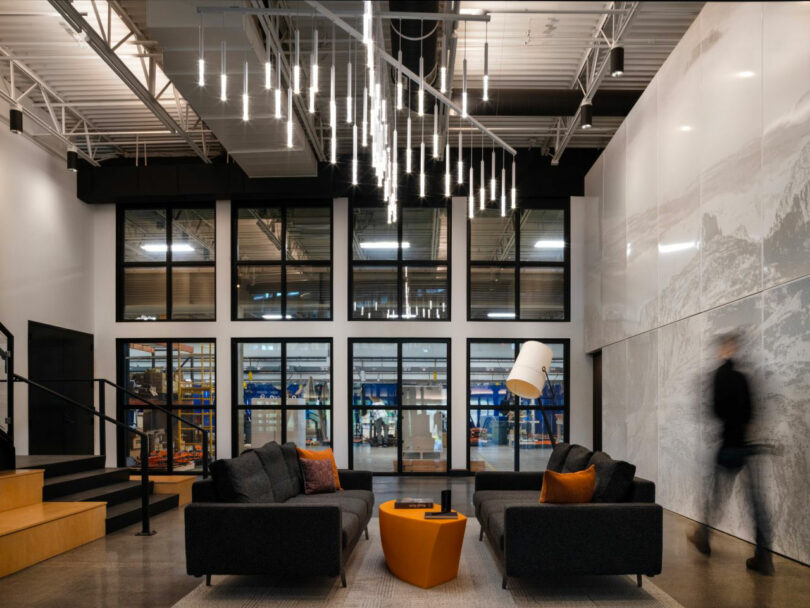
By consolidating four separate facilities into one central campus, EMIT Technologies achieved a unified culture where 100% of staff share the same main entrance and amenities. This isn't just a symbolic gesture; it’s a spatial strategy. The layout funnels every employee—regardless of their title—through a central, light-filled lobby.
Design Tip: To foster equality in a hybrid workspace, eliminate "executive wings." Use shared social hubs and transparent glass partitions to connect different departments visually and socially.
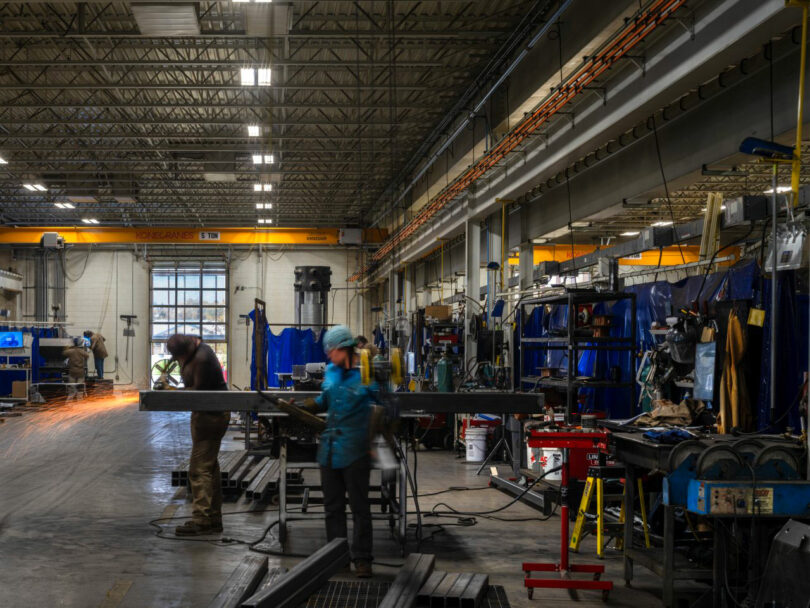
This spatial layout fosters equality between executive and fabrication teams by ensuring that the work of the hand is never hidden from the work of the mind. Large-scale interior glazing allows office workers to look directly onto the shop floor, celebrating the sparks of the welding torches as part of the daily office view. It reminds everyone that the core of the business happens on that floor, while giving the fabrication team a sense of being valued and visible.
Industrial Artistry: The Custom Scrim and Material Palette
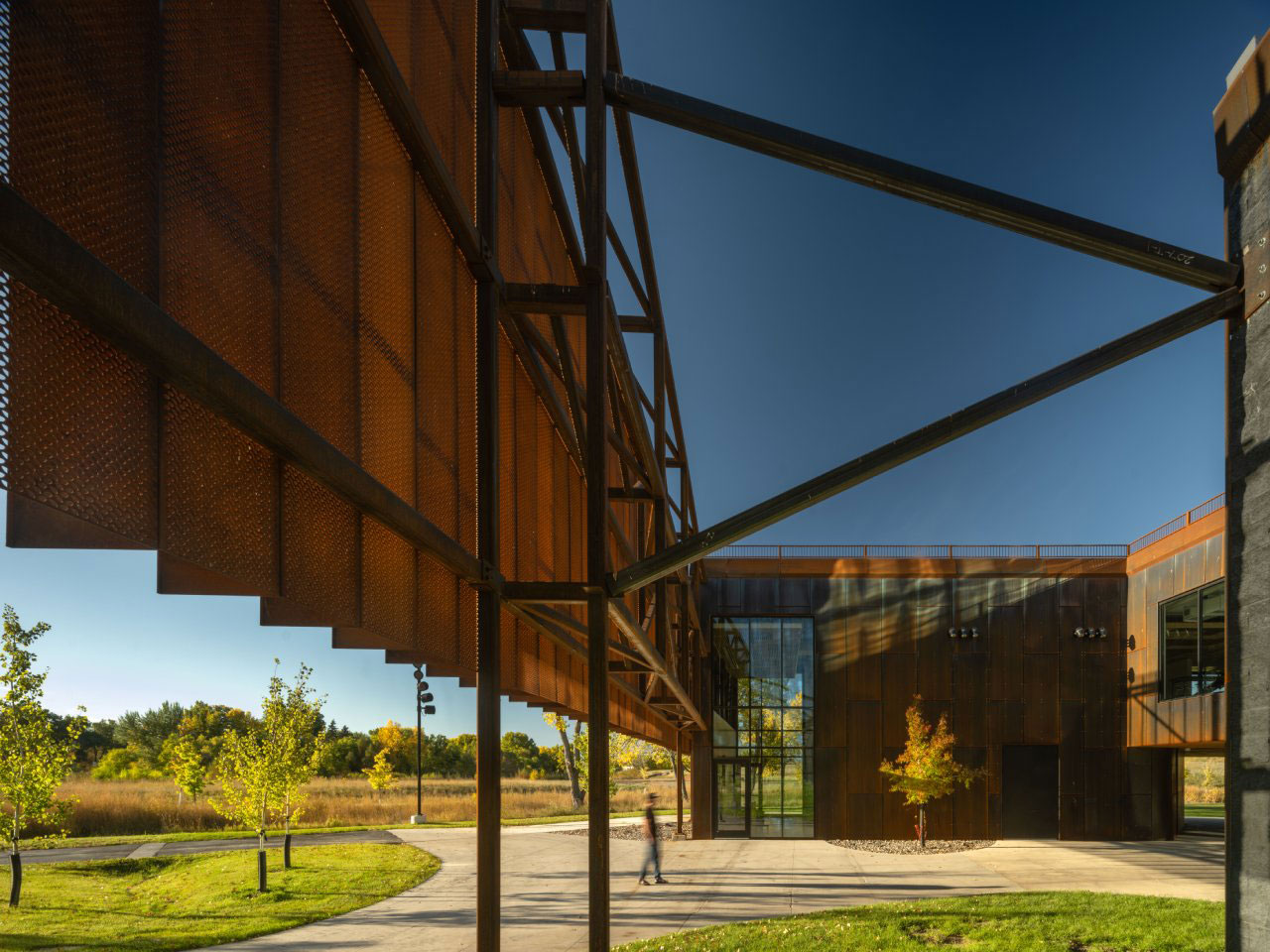
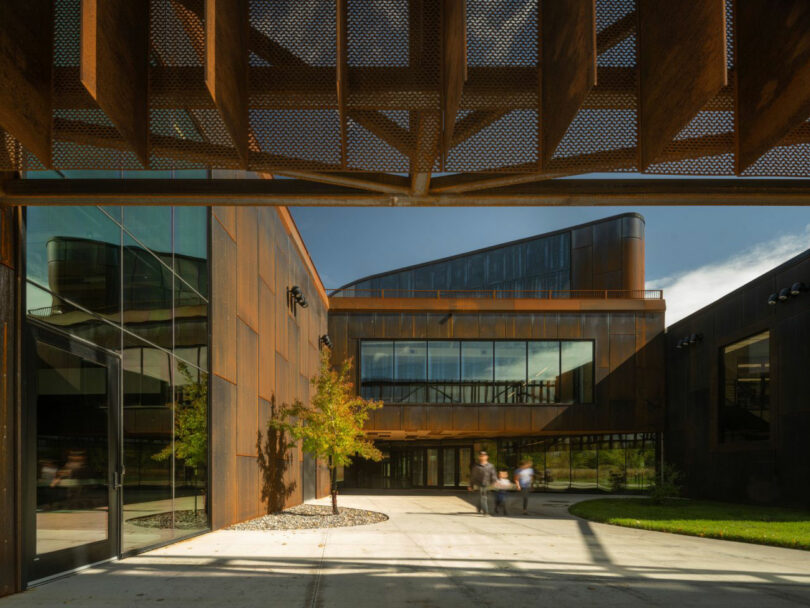
One of the most striking elements of the EMIT campus is its exterior skin. CLB Architects chose to honor EMIT’s own expertise in metal fabrication by involving them in the building's creation. The result is a custom laser-perforated metal scrim that wraps the exterior, acting as both a solar shade and a monumental piece of branding.
The material palette is a sophisticated blend of raw industrialism and refined interior styling:
- The Scrim: A weathered, rust-colored steel that mirrors the iron-rich Wyoming soil.
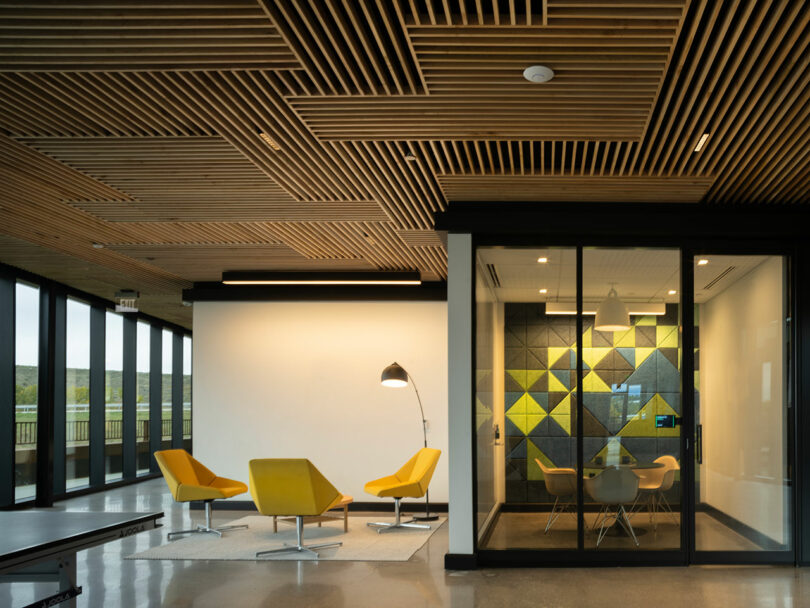
- Birch Plywood: Used extensively in the lobby and office areas to provide warmth and acoustic dampening against the metal and concrete.
- Raw Steel: Left exposed in the structural columns and custom-built furniture to maintain a "honest" industrial aesthetic.
- Custom Craftsmanship: EMIT’s own team fabricated the interior workstations and ceiling panels, integrating their craft into the very DNA of their workspace.
Inside, the transition from the exterior’s rugged steel to the interior’s warm wood creates a sense of "interiorized landscape." The curved glass of the lobby mimics the organic flow of the nearby Big Horn Mountains, while the polished concrete floors provide a durable, high-performance surface that spans both the administrative and industrial zones.
2026 Workplace Trends: How the Wyoming Campus Pre-empts the Future
As we look toward 2026, the definition of a "modern office" is shifting. We are moving away from rows of assigned desks toward "destination workspaces" that prioritize neurodiversity, acoustic health, and AI integration. The EMIT headquarters is an early adopter of these principles.
| Trend for 2026 | Application at EMIT Campus |
|---|---|
| Acoustic Excellence | Strategic use of birch plywood and acoustic felts to separate factory noise from deep-work office zones. |
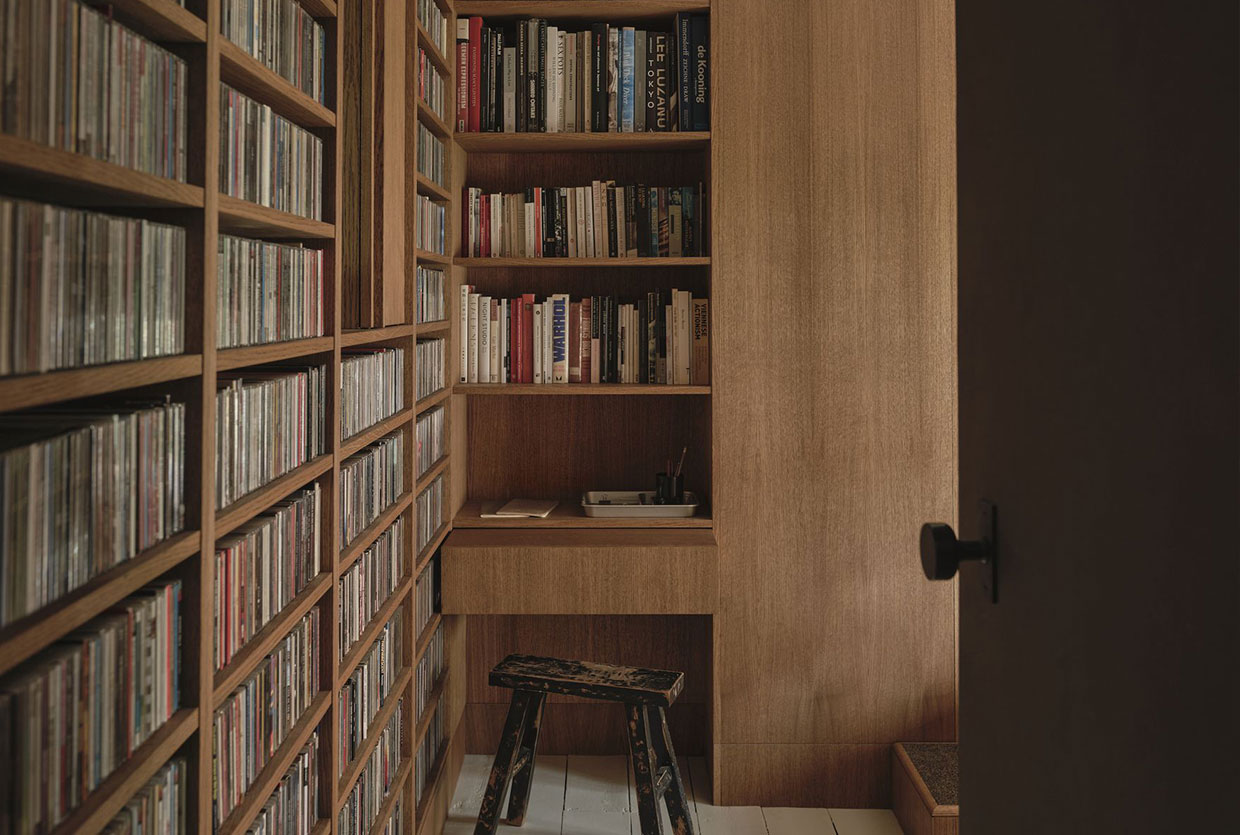
| Neurodiversity Support | A mix of "high-energy" collaborative zones (the lobby) and "low-energy" quiet zones (the library). |
| Biophilic Design | Internal courtyards and massive windows that frame the Wyoming sky, reducing stress and boosting productivity. |
| Hybrid Preparedness | Flexible 'Teams-ready' conference rooms with integrated AI-driven AV systems for global collaboration. |
Modern office trends for 2026 emphasize that the physical office must offer something the home cannot: community and specialized environments. For EMIT, this means providing high-performance industrial zones that feel as considered and comfortable as a high-end design studio. We are seeing a surge in "integrated fabrication and office architecture" as companies realize that keeping their talent requires a workspace that supports mental well-being as much as mechanical output.
Beyond Work: Amenities that Build Community
Perhaps the most radical part of the EMIT campus is what happens after the shift ends. The project was designed as a "Destination Office," a place where staff choose to come not just because they have to, but because it enriches their lives.
To achieve this, CLB Architects incorporated a suite of amenities that are rare in industrial settings:
- The On-Site Barbershop: A nod to traditional community hubs, offering convenience and a moment of self-care.
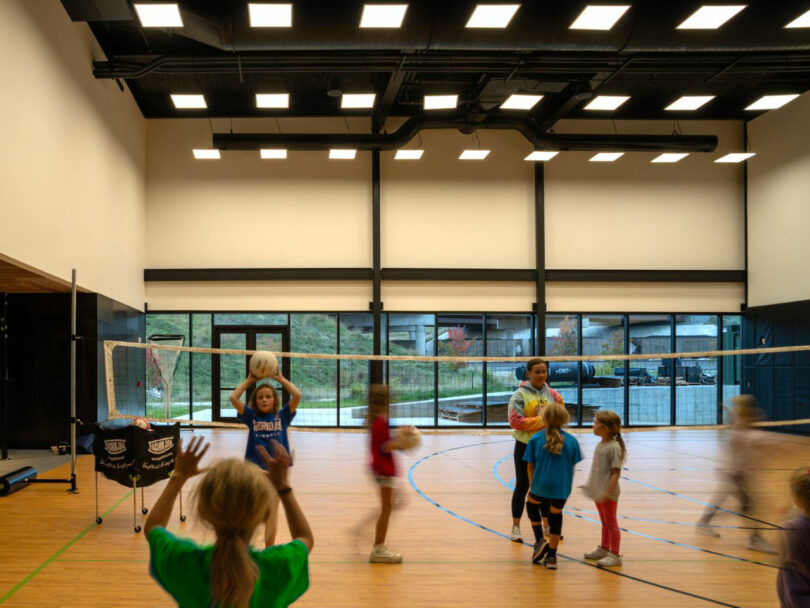
- The Gym and Basketball Court: Promoting physical health and providing a space for team-building.
- The Auditorium: Used for both professional training and local community events, making the campus a civic asset.
- Public Engagement: The outdoor areas, including a volleyball court and walking paths, are designed to be used by employees' families and local residents, turning a private headquarters into a community anchor.
This focus on hospitality within an industrial framework is a masterful move. It acknowledges that employees are whole people with lives outside of their job descriptions. By providing these spaces, EMIT fosters a level of loyalty and culture that a standard factory-plus-office-park could never achieve.
Conclusion: The Future of Integrated Fabrication Architecture
The EMIT Technologies headquarters is a masterclass in adaptive reuse and cultural transformation. By taking a derelict big-box retail space and infusing it with architectural vision, CLB Architects has created a seamless Wyoming campus that bridges the gap between the welder's torch and the designer's desk.
The unified "no collar" model is the blueprint for 2026 industrial design because it recognizes that efficiency and empathy are not mutually exclusive. As we move into an era where the workplace must compete with the comfort of the home, spaces like EMIT—which offer community, beauty, and a deep connection to local craftsmanship—will become the gold standard. For the modern resident or business leader, the lesson is clear: your workspace should not just house your work; it should reflect your values.
FAQ
What is 'no collar' architecture?
'No collar' architecture is a design philosophy that removes physical and social barriers between administrative (white collar) and industrial/manual (blue collar) workers. It typically involves shared entrances, communal dining areas, and visual transparency between the office and the shop floor to create a unified company culture.
How does CLB Architects incorporate sustainable materials in industrial settings?
At the EMIT headquarters, sustainability was achieved through "adaptive reuse"—repurposing an existing 120,000-square-foot building rather than building from scratch. They also used locally relevant, durable materials like steel and birch plywood that require minimal maintenance and have a long lifecycle.
Why is biophilic design important in high-performance factories?
In environments that are often loud or visually sterile, biophilic design (integrating nature) is crucial for mental health. Access to natural light, views of the landscape, and the use of natural materials like wood have been shown to reduce cortisol levels, improve focus, and lower the risk of workplace accidents in industrial settings.