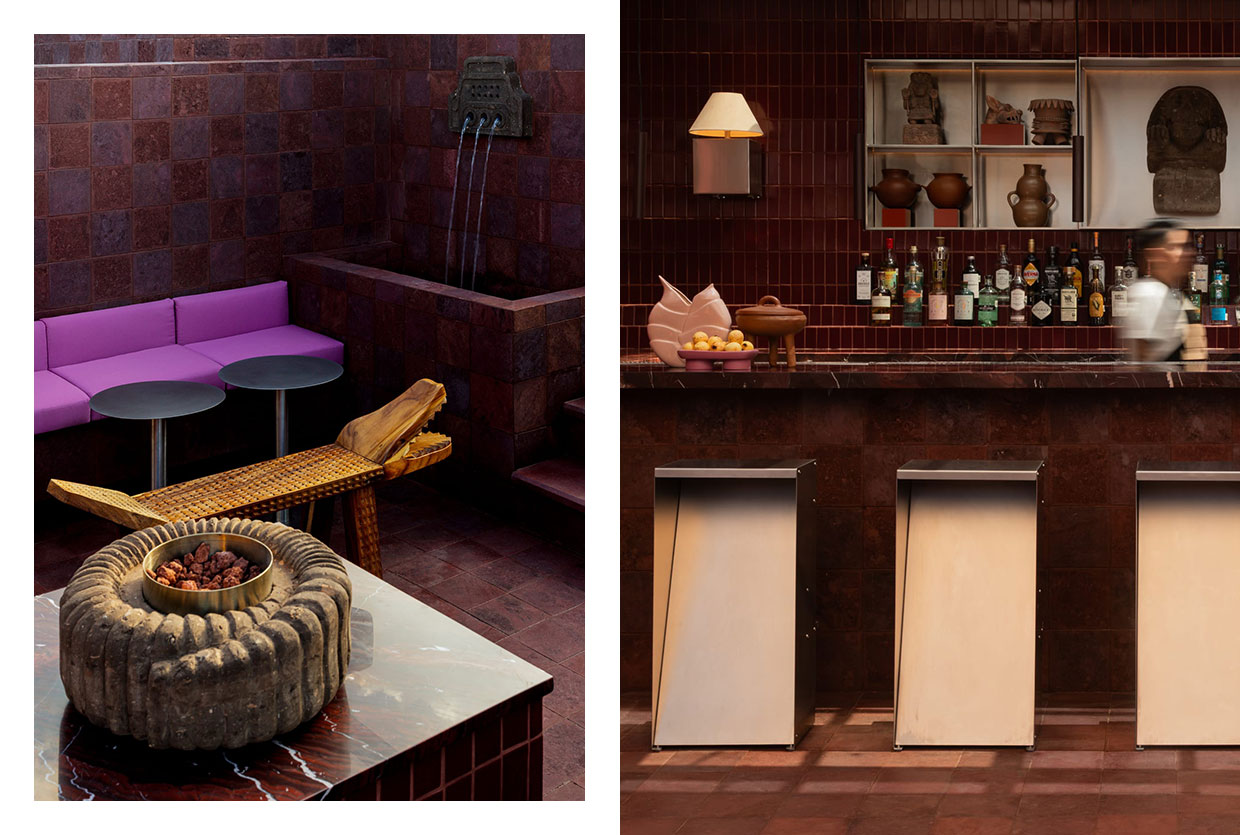
High above the cobbled streets of San Miguel de Allende, where the colonial skyline meets the infinite Mexican sky, a new architectural dialogue is unfolding. Atop the iconic Casa Hoyos Hotel, Tonana is not merely a rooftop bar; it is a 270-square-meter sanctuary where geological history and contemporary hospitality collide. Here, the air is thick with the scent of botanical infusions and the weight of ancient myth, anchored by a material that defines the very soul of the Mexican landscape: Tezontle.
As an editor focused on the intersection of design and modern living, I am often asked how spaces can feel both "new" and "timeless." Tonana provides the answer through its masterful use of Tezontle, a porous, red volcanic rock often referred to as the "volcanic blood of the earth." This material serves as the literal grounding for a design inspired by Tonantzin, the Aztec Mother Goddess. By blending prehispanic mythology with the sharp edges of modern luxury—think gleaming brass and polished marble—designer Andrés Gutiérrez has created a space that feels like a living, breathing entity.
The Goddess in the Stone: The Spirit of Tonantzin
The name "Tonana" is a poetic truncation of Tonantzin, the Nahuatl term for "Our Sacred Mother." In Aztec mythology, she represents the earth in its most visceral form. The design of the rooftop bar reflects a fundamental cosmic cycle: Life gives, life devours, life renews. This duality is woven into the very fabric of the space, moving away from the cold minimalism often found in modern lounges toward an energy that feels warm, feminine, and profoundly ancestral.
Mythological Deep Dive: Tonantzin
Often associated with the Earth and fertility, Tonantzin was the "Great Mother" to the Aztecs. In modern Tonana, her presence is felt through the "womb-like" warmth of the color palette—deep ochres, wine reds, and the constant presence of volcanic stone—which reminds visitors of our inescapable connection to the earth beneath our feet.
Tezontle: The ‘Volcanic Blood’ of Mexican Architecture
To understand Tonana, one must understand Tezontle. This rock is formed from the cooling of volcanic lava, and its porous nature makes it surprisingly lightweight yet incredibly durable. For centuries, it has been a cornerstone of Mexican construction, from the pyramids of Tenochtitlan to the colonial cathedrals of Mexico City.
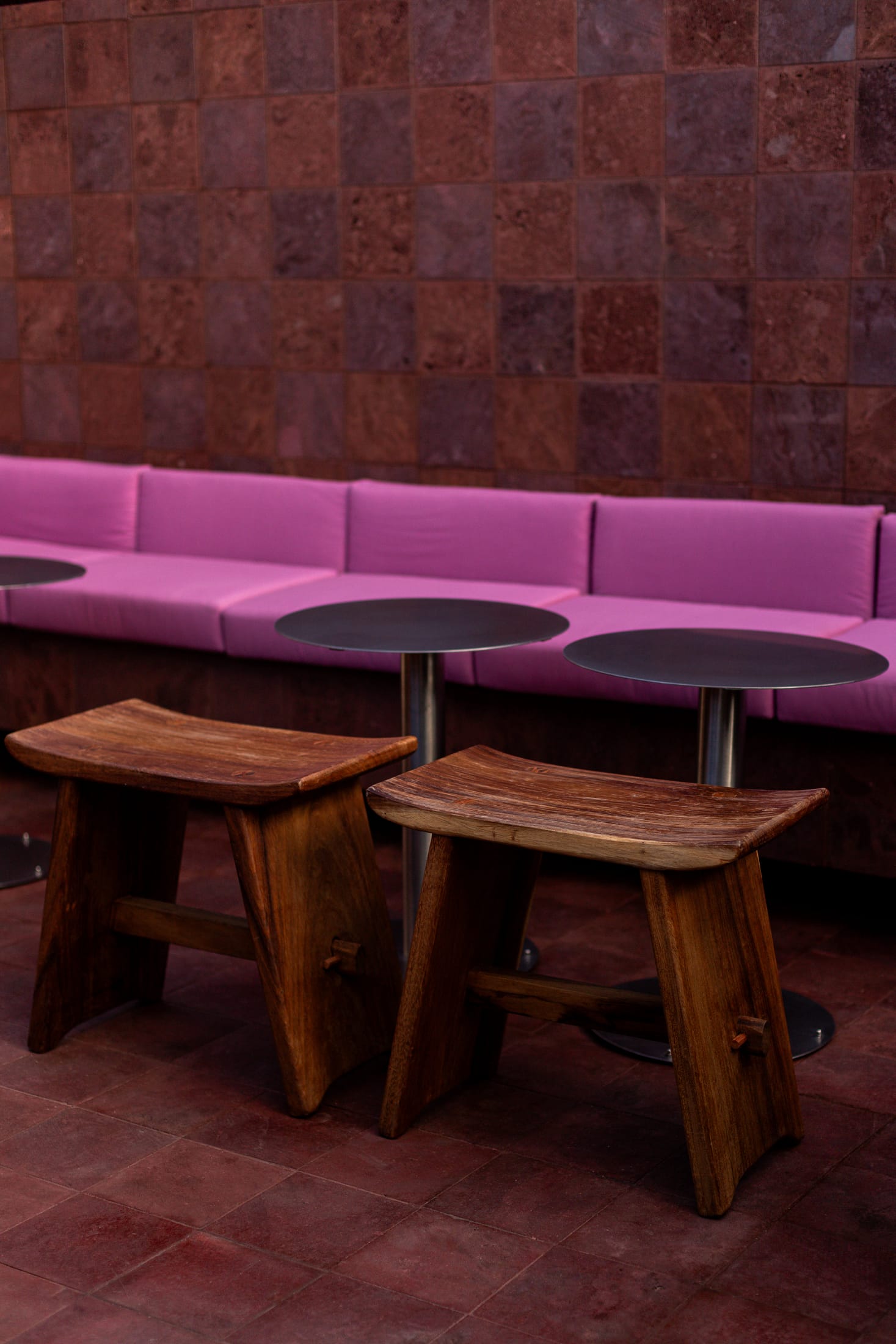
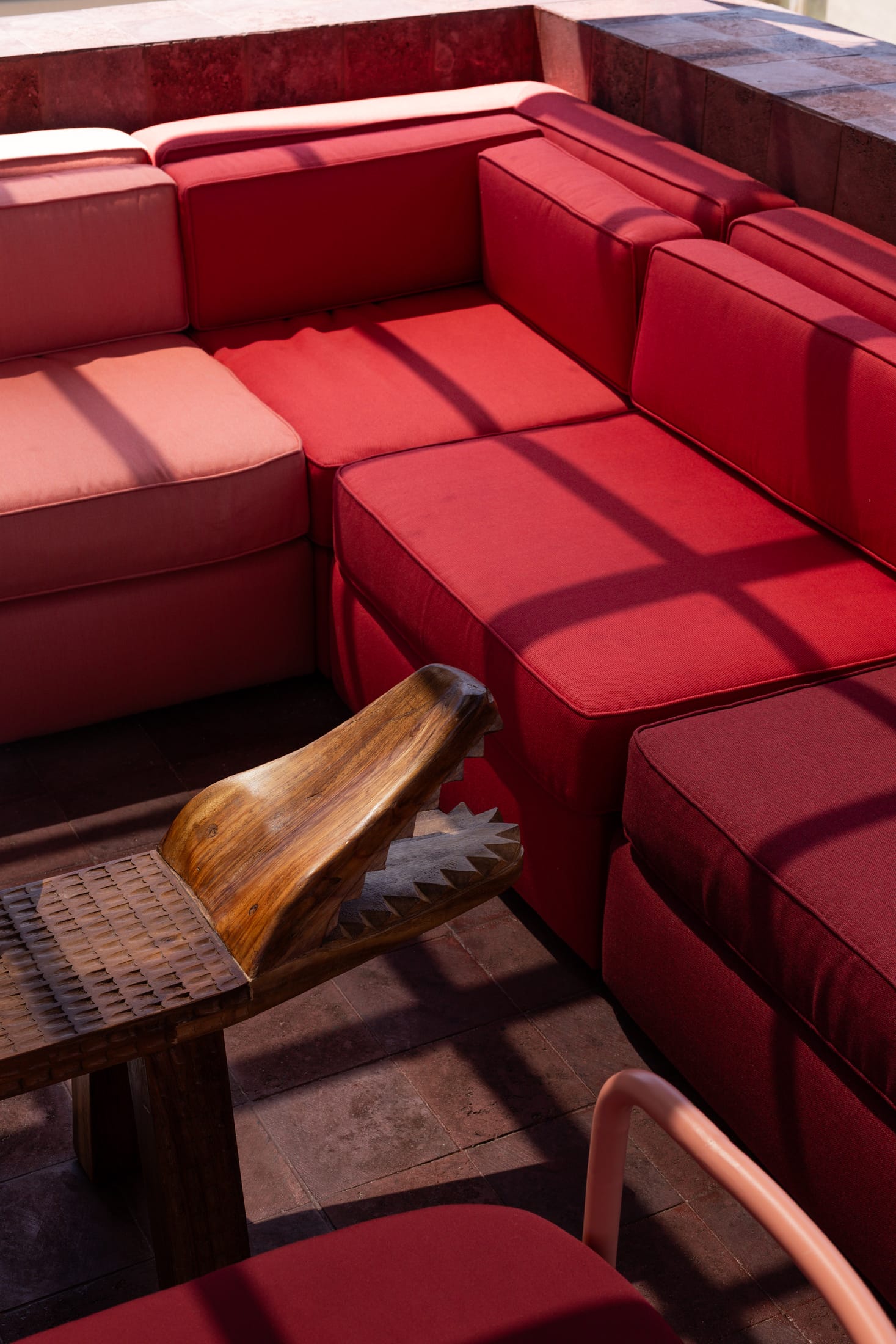
At Tonana, the use of Tezontle is staggering. Over 80% of the bar’s 270-square-metre surface area is covered in this ancient material. It isn’t just an accent; it is the atmosphere. By utilizing Tezontle on both floors and walls, Gutiérrez creates a monochromatic, textural landscape that provides a literal grounding in Mexico’s geological history. The stone’s natural ability to retain heat and its rugged, tactile surface offer a sensory experience that smooth, synthetic materials simply cannot replicate.
Raw Meets Refined: The Design Alchemy of Andrés Gutiérrez
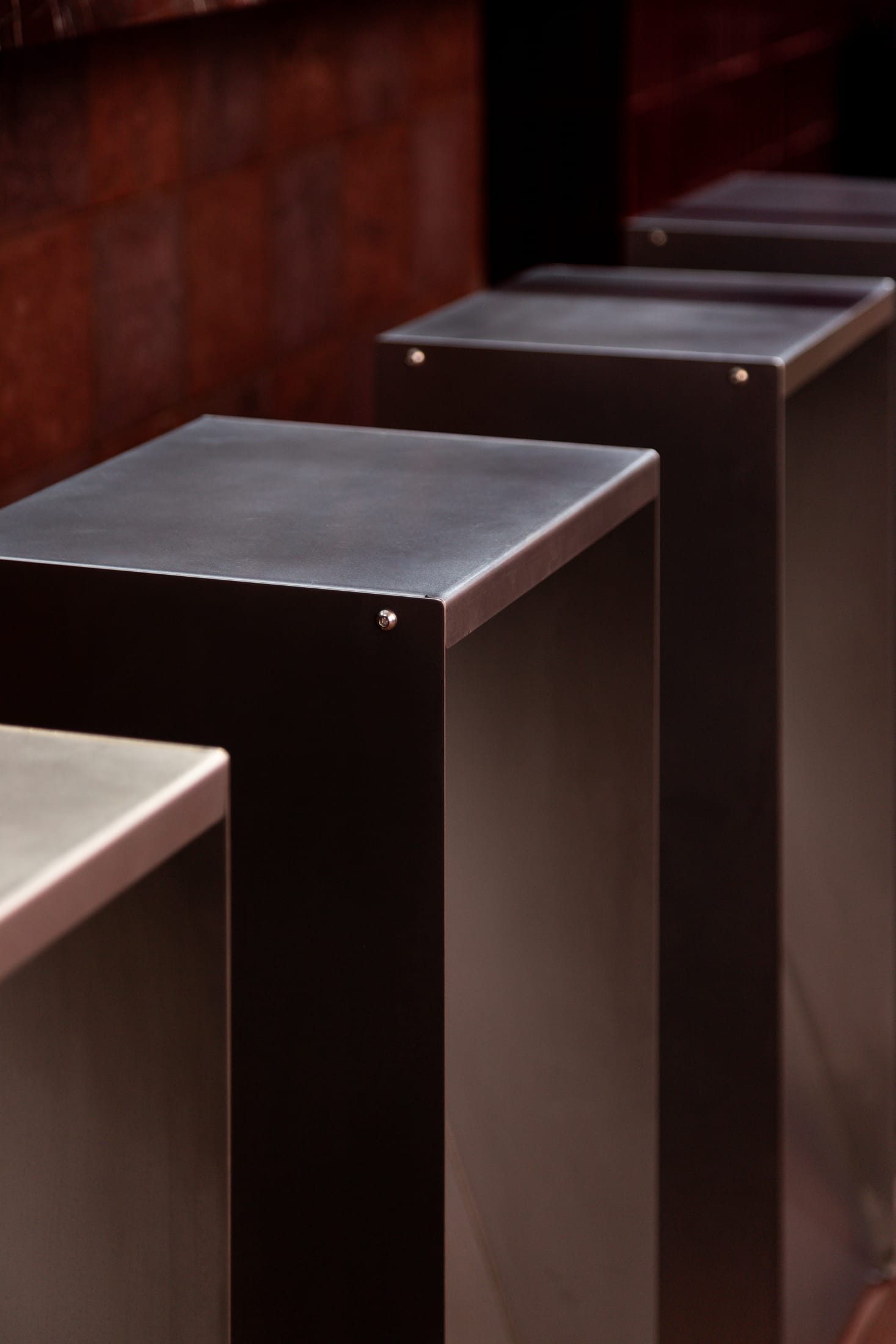
The genius of A-G estudio’s approach lies in the "Raw meets Refined" aesthetic. While the Tezontle provides a rugged, primordial backdrop, it is balanced by high-end finishes that signify modern luxury. This visual alchemy is achieved through a carefully curated material palette:
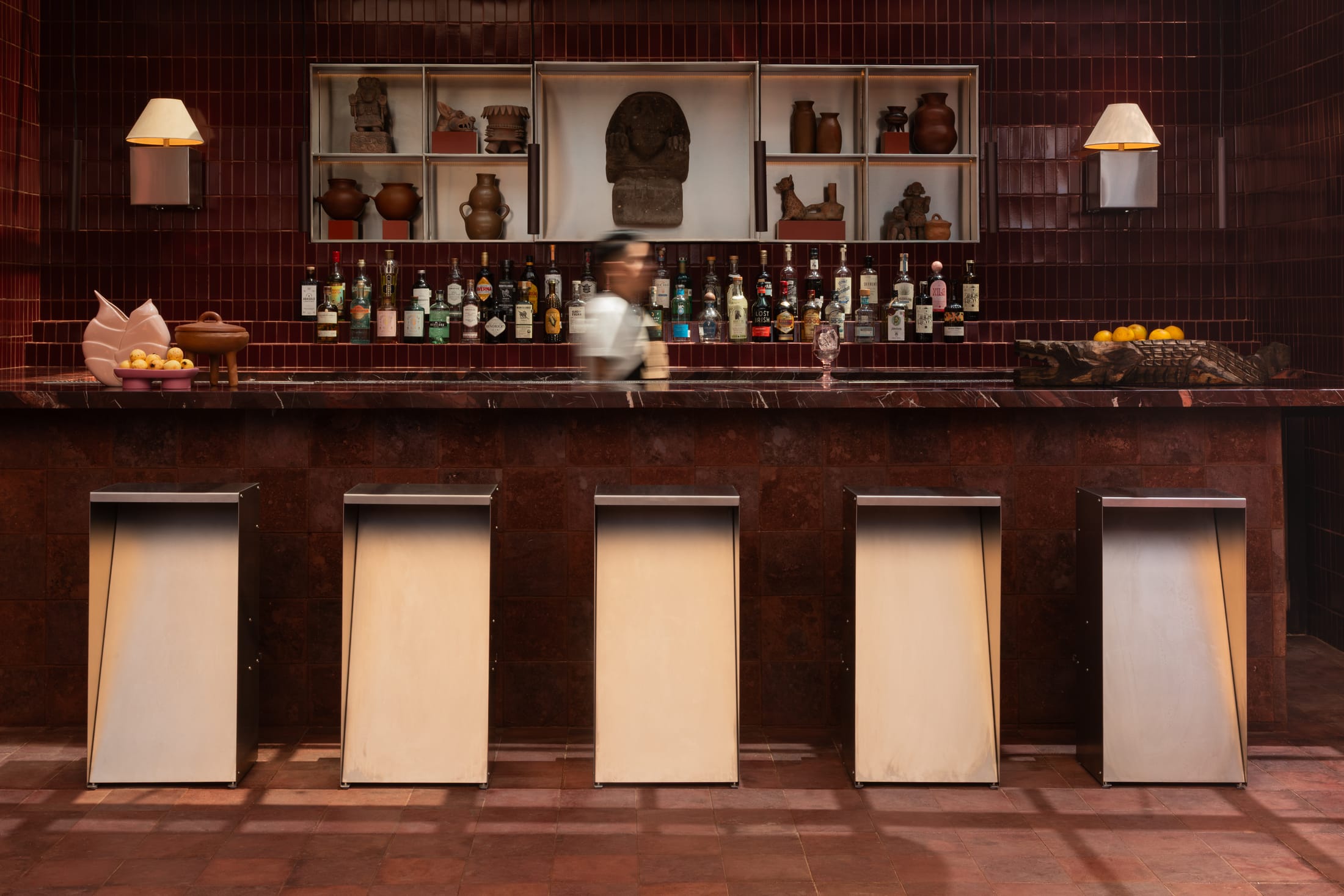
- Gleaming Brass: Used in light fixtures and structural accents, brass provides a sharp, metallic contrast to the matte, irregular surface of the stone.
- Wine-Colored Mosaics: These tiles echo the deep hues of the volcanic rock while adding a layer of sophisticated shimmer.
- Illuminated Panels: Soft lighting filters through textured surfaces, mimicking the glow of molten lava or the soft light of a setting sun against a canyon wall.
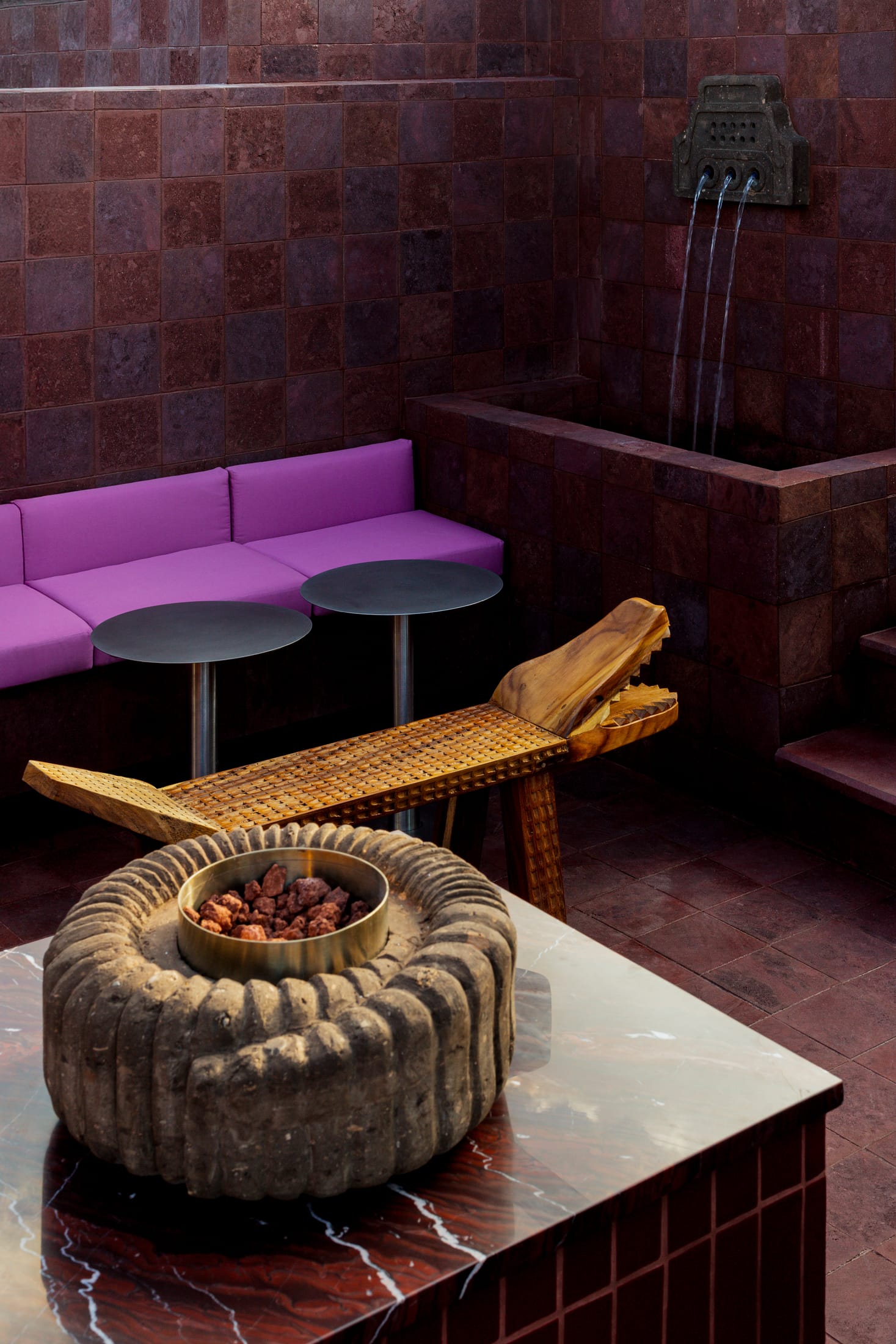
This juxtaposition creates a space that feels both "designed" and "unearthed." There are also deliberate nods to the divine feminine beyond Tonantzin; for instance, the integration of water features and specific lighting schemes pays homage to Chalchiuhtlicue, the goddess of water, lakes, and streams, ensuring that all natural elements are represented.
Living History: Sculptural Furniture and Pre-Columbian Artifacts
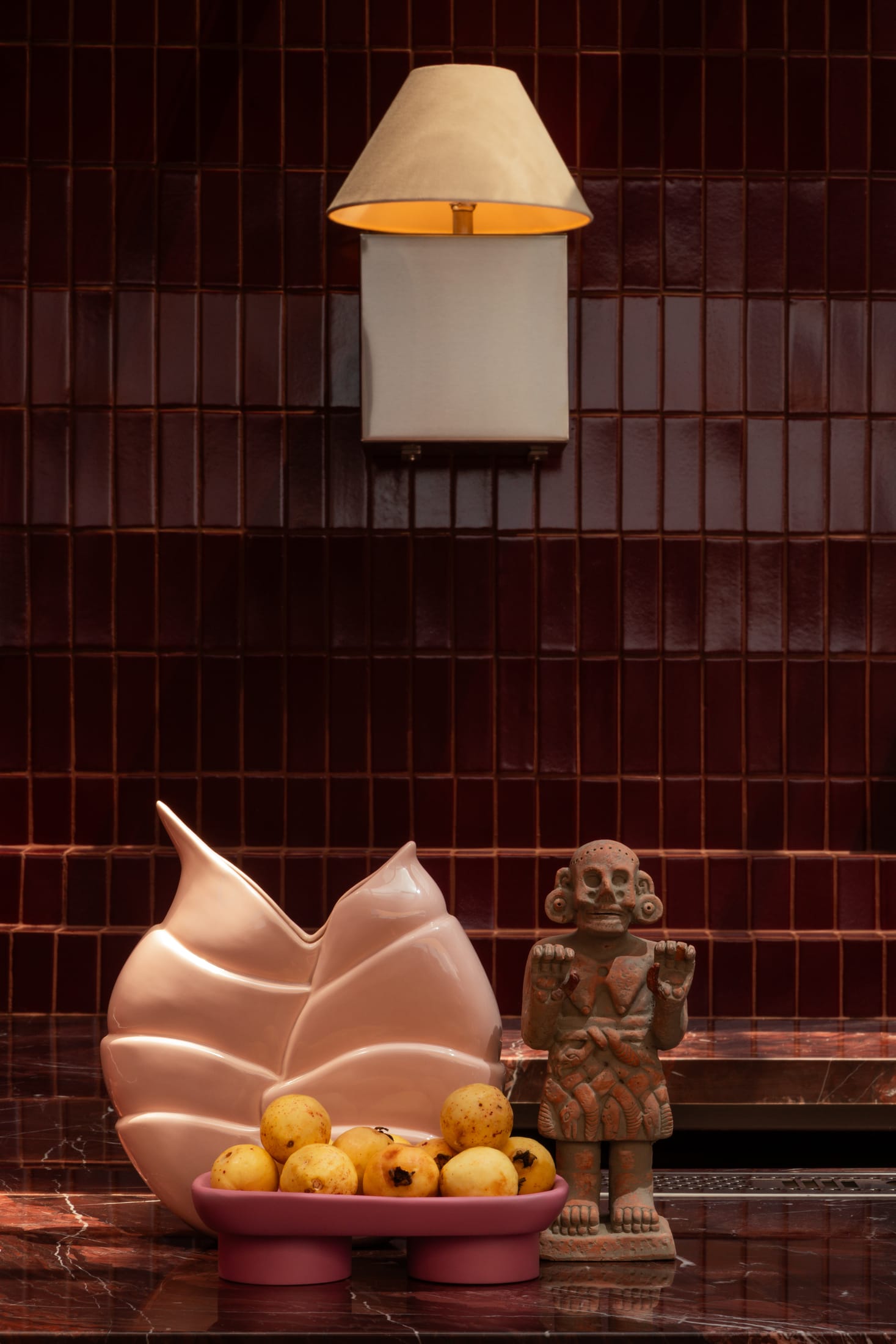
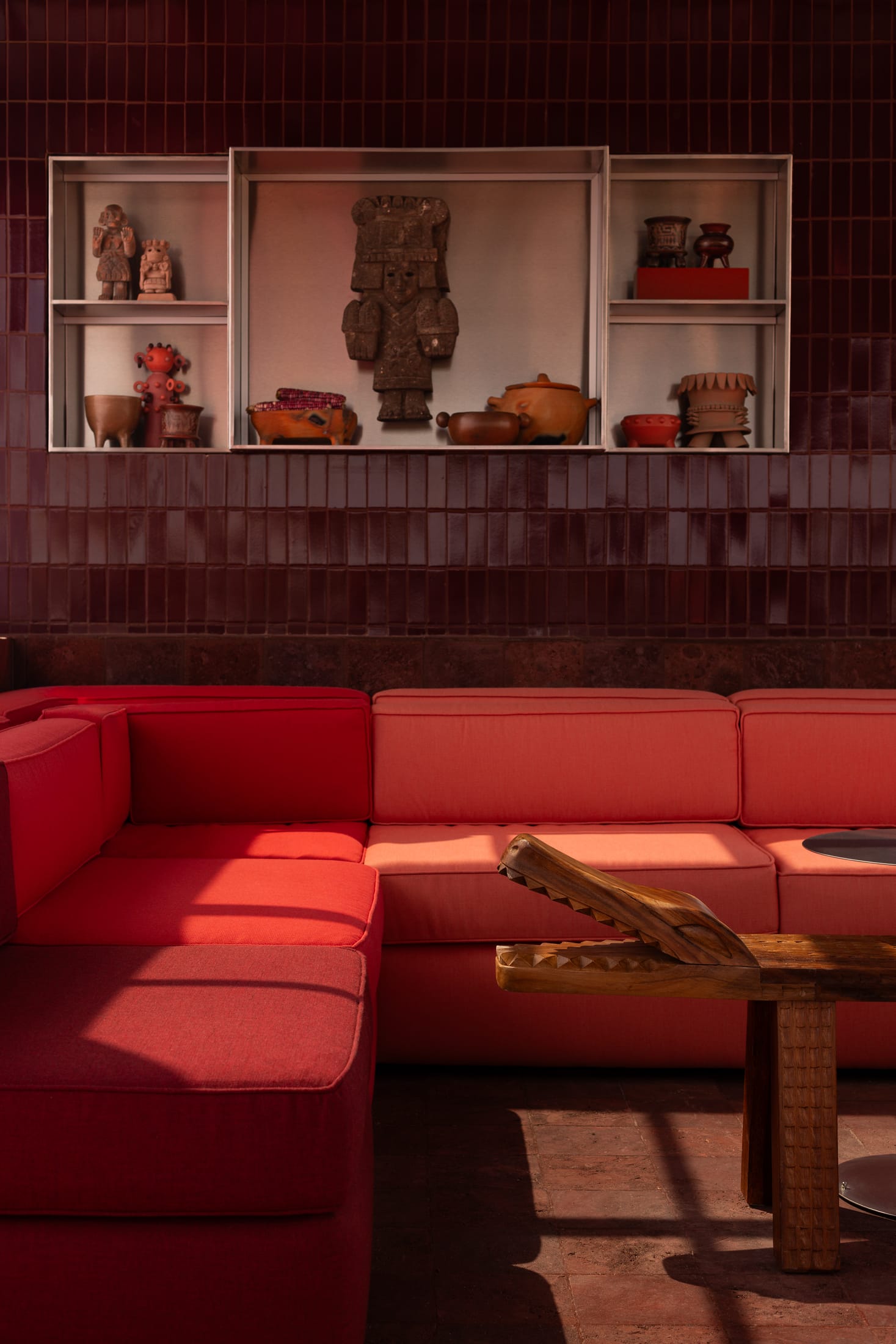
Tonana blurs the line between a hospitality venue and a curated gallery. The bar shelving isn't just for spirits; it integrates a collection of over 15 authentic pre-Columbian vessels and artifacts. These pieces serve as a silent dialogue with the past, reminding patrons that while they are enjoying a modern cocktail, they are standing on layers of civilization.
The furniture follows this narrative of "Living History." Take the Cipactli Seating, for example. These custom sculptural pieces are inspired by the primordial crocodile-earth creature from Aztec creation myths. The furniture doesn't just sit in the room; it emerges from it, mirroring the organic shapes of the volcanic stone.
Even the cocktail menu at Tonana is a piece of the design puzzle. It features healing infusions that honor ancestral healer-women and botanical wisdom, using ingredients that might have been found in a goddess’s garden centuries ago. It is a holistic approach to design where the material, the myth, and the menu are inseparable.
Beyond Tonana: The Versatile Power of Volcanic Stone
For the home decorator or the interior enthusiast, the lessons from Tonana are invaluable. You don't need a 270-square-meter rooftop to harness the power of volcanic stone. In modern residential contexts, volcanic stone is gaining traction for both its aesthetic and functional properties:
| Feature | Performance & Application |
|---|---|
| Durability | Naturally resistant to high temperatures, making it ideal for kitchen islands or outdoor fire pits. |
| Texture | Provides a "biophilic" connection to nature, perfect for feature walls in bathrooms or entryways. |
| Energy | Many believe volcanic stone carries the "fire" of the earth, promoting vitality and grounding energy in a home. |
| Versatility | Beyond architecture, it is used in high-end cookware for heat retention and in skincare as a natural exfoliant. |
Whether it's a small basalt vessel on a coffee table or a Tezontle-inspired backsplash, the "Tonana effect" is about finding beauty in the raw, the ancient, and the imperfect.
FAQ
Why is Tezontle so common in Mexican architecture? Tezontle is indigenous to the volcanic regions of Mexico. Its popularity stems from its unique properties: it is lightweight (due to its porosity), strong, and has excellent thermal insulation properties. Historically, its deep red color also held spiritual significance for pre-Columbian civilizations.
Can I use volcanic stone in my own home renovation? Absolutely. Volcanic stone (like basalt or Tezontle) is excellent for high-traffic areas or spaces exposed to heat. It is a popular choice for fireplace surrounds, outdoor patios, and even as a textured wall finish in modern bathrooms to create a spa-like, grounded atmosphere.
What is the best way to clean volcanic stone surfaces? Because volcanic stone is porous, it can absorb liquids if not properly sealed. For daily cleaning, use a pH-neutral cleaner and a soft brush. Avoid acidic cleaners (like vinegar or lemon) which can damage the stone’s natural minerals. If used in a kitchen or bar setting, ensure it is treated with a high-quality impregnating sealer.