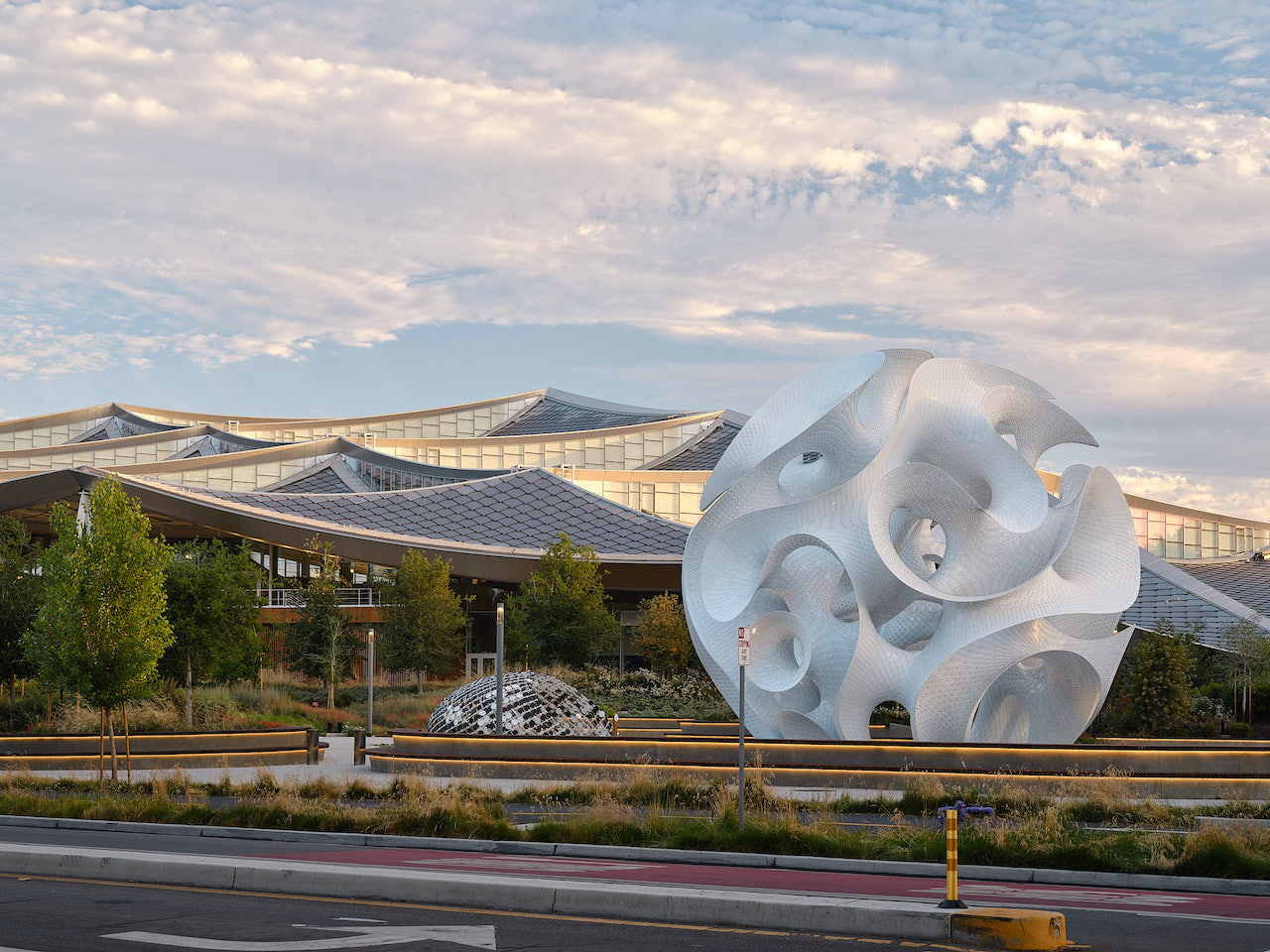
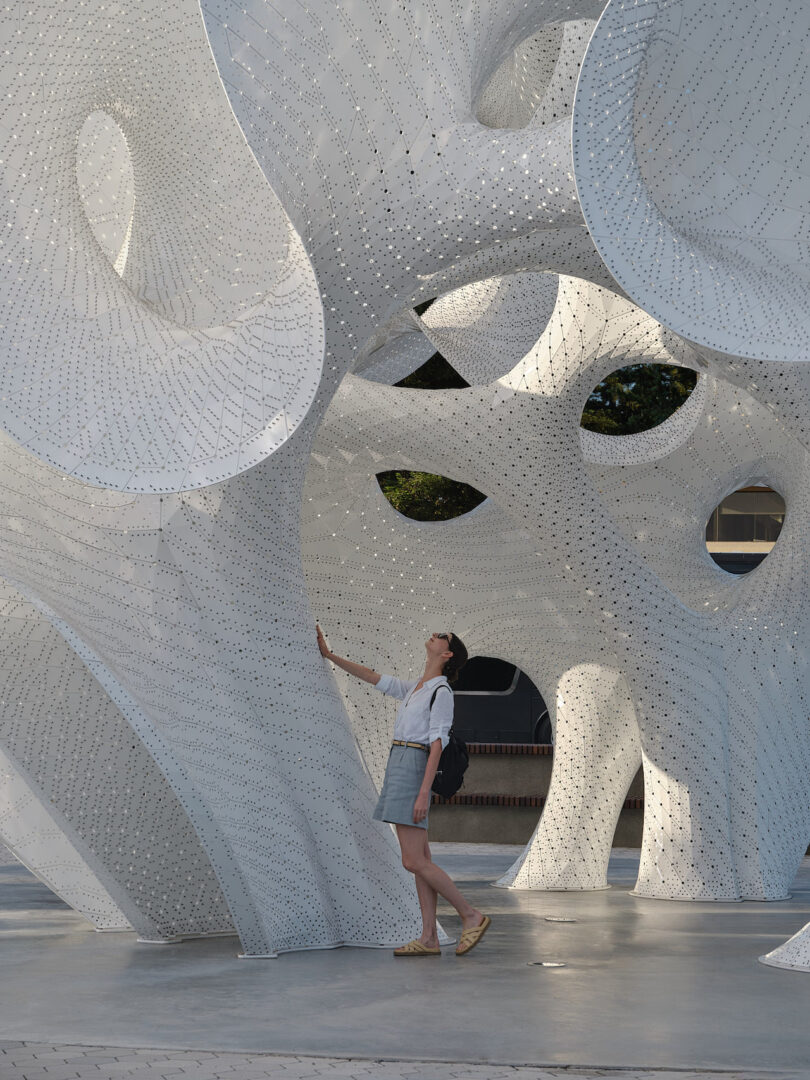
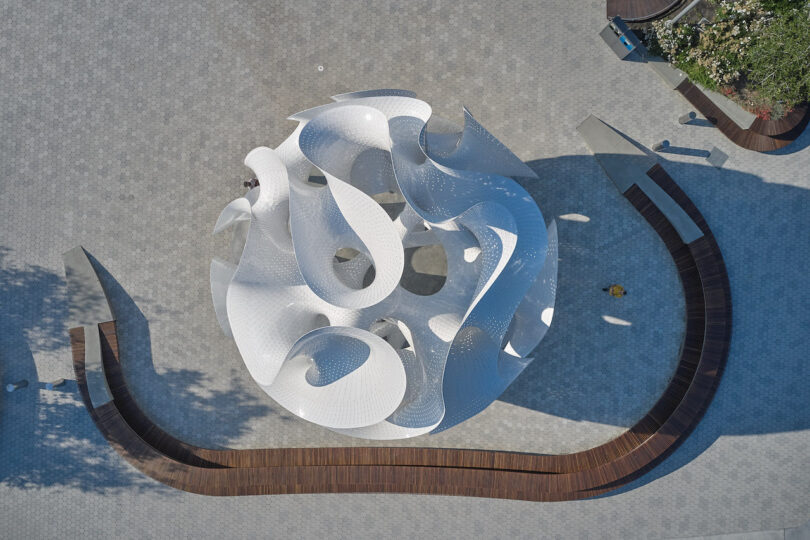
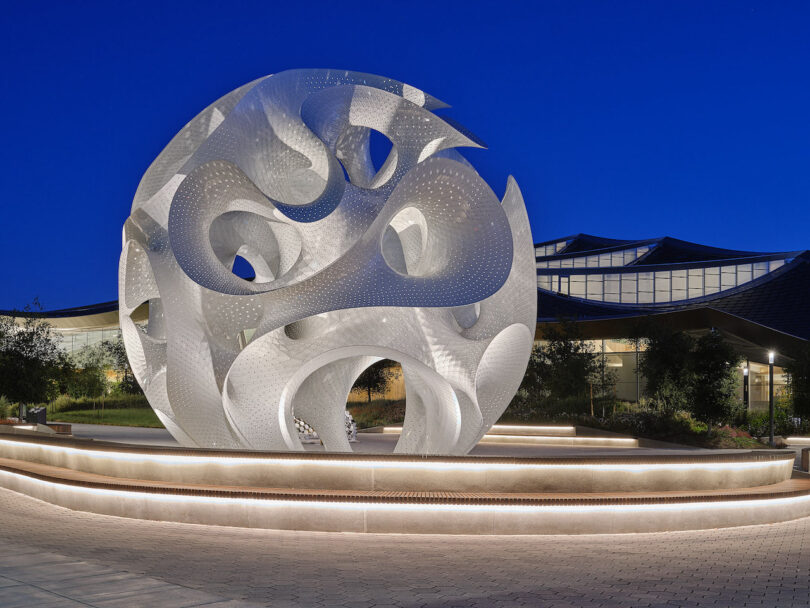
Walking into Google’s Charleston East campus in Mountain View feels less like entering a corporate headquarters and more like stepping into a high-functioning ecosystem. Amidst the sweeping "dragonscale" solar canopy of the main building stands a structure that defies traditional architectural categorization: The Orb. This isn't just another office installation; it is a 10-meter tall, 26-meter wide architectural pavilion that serves as a physical manifestation of Google’s ethos. Designed by Marc Fornes of THEVERYMANY, the Orb is a "living algorithm"—a structure born from computational logic that provides a profound blueprint for the workspace of 2026.
As an editor focused on the intersection of design and modern living, I see the Orb as more than an engineering feat. It represents a shift in how we conceive "workpoints." It moves us away from the sterile, modular cubicles of the past and toward environments that foster serendipity, sensory relief, and creative friction. To understand why this structure is the ultimate inspiration for the next generation of office design, we must look at how it blends high-level mathematics with the human need for beauty and connection.
The Anatomy of an Architectural Marvel
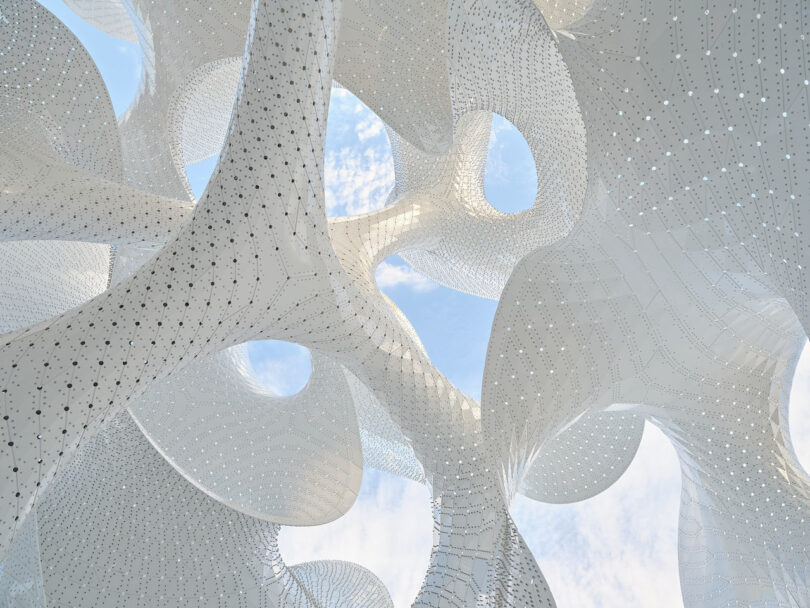
The collaboration between Google and Marc Fornes / THEVERYMANY resulted in a structure that challenges our understanding of material strength. At its core, the Orb is a masterclass in computational design—a process where algorithms dictate form based on structural requirements and aesthetic intent. Unlike traditional buildings that rely on heavy internal framing, the Orb is 100% self-supporting.
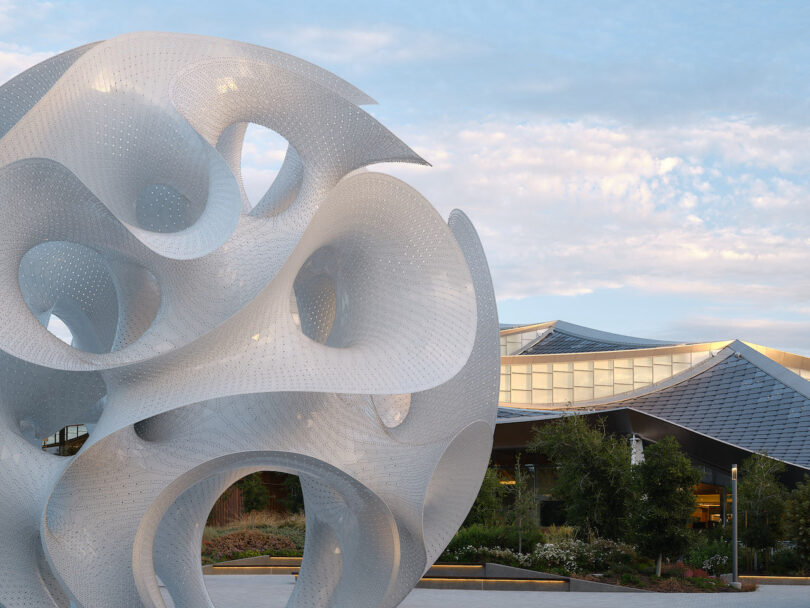
The technical specifications are nothing short of breathtaking. The structure’s "skin" is composed of ultra-thin 3mm aluminum. To achieve structural integrity at a 26-meter width with such thin material, the assembly utilizes a record-breaking density of hardware.
| Feature | Specification |
|---|---|
| Material | 3mm Ultra-thin Aluminum |
| Height / Width | 10 Meters / 26 Meters |
| Components | 6,441 Unique Aluminum Pieces |
| Fasteners | 217,000+ Rivets |
| Assembly Density | 8,300+ Rivets per linear meter of span |
| Structural Logic | Computational Stress-Load Distribution |
This "engineering-first" approach allows the Orb to remain lightweight yet incredibly durable. By utilizing 6,441 unique pieces, the design avoids the redundancy of mass-manufactured parts, ensuring that every gram of aluminum serves a specific structural purpose. This represents a significant reduction in material weight compared to traditional corporate installations, signaling a move toward "lean" architecture where sustainability is baked into the geometry itself.
The 2026 Workspace Vision: Why the Orb is the Ultimate Blueprint
Looking toward 2026, the office is no longer a destination for "tasks"—those can be done from a home office or a coffee shop. The office must now be a destination for experiences. The Google Campus Orb highlights three critical shifts in workspace design:
1. Biophilic Design 2.0
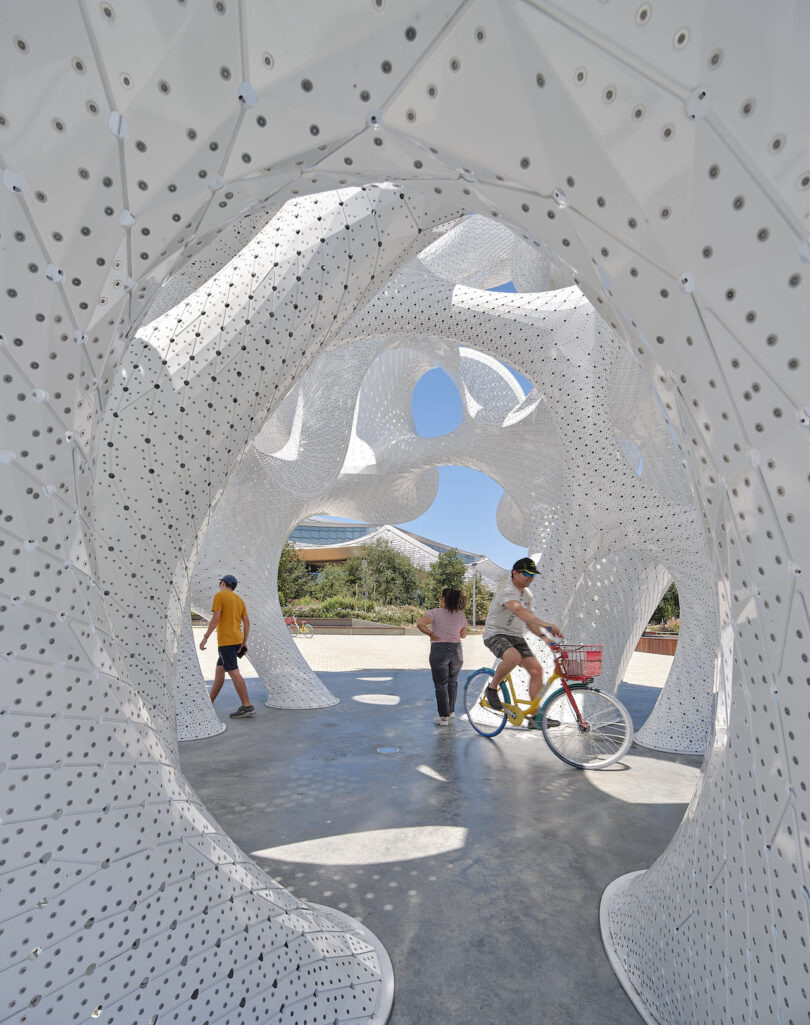
We have long known that plants in the office improve well-being. However, "Biophilic 2.0" goes deeper, incorporating organic forms and natural light patterns into the architecture itself. The Orb’s perforated shell doesn't just look "natural"; it mimics the "dappled light" effect of a forest canopy. As the sun moves across the California sky, the interior of the Orb transforms, creating a dynamic environment that reconnects employees with the passage of time—a crucial element for circadian health in a high-tech world.
2. The Rise of the 'Third Space'
The Orb functions as a quintessential "Third Space"—an area that is neither a formal desk nor a traditional breakroom. It is a zone of "Workspitality," where the comfort of a lounge meets the productivity of a studio. By providing a destination that is visually and spatially distinct from the rest of the campus, Google encourages spontaneous interaction. It is in these "in-between" spaces that the most innovative ideas are often born, away from the pressure of a formal meeting room.
3. Acoustic and Sensory Relief
Modern open-plan offices are notorious for their acoustic challenges. The Orb solves this through geometry. The curved, perforated surfaces break up sound waves, creating a "hush" inside the structure even when the surrounding campus is bustling. It provides a sensory retreat—a place for deep focus or quiet reflection—without the claustrophobia of a soundproof "pod."
Lessons for Modern Office Design
While few companies have the budget of Google, the principles embodied by the Orb are remarkably scalable. If you are redesigning a workspace for 2026, consider these takeaways:
- Flexibility & Modularity: Move away from fixed walls. Take inspiration from the Orb’s assembly of unique parts to create reconfigurable furniture systems that can grow and change with your team.
- Invisible Technology: Integration is key. Just as the Orb’s strength is "baked into" its skin, technology should be an invisible layer—smart lighting and airflow systems that adjust like a living organism to the number of people in the room.
- Sustainability as an Aesthetic: Use materials that do more with less. The Orb’s 3mm aluminum skin proves that you don't need bulk for strength. Choose low-material-weight solutions that showcase their structural logic.
Expert Tip: When implementing "Third Spaces," focus on the transition. The path leading to a space like the Orb should signal a mental shift—use changes in flooring texture or lighting levels to tell the brain it's time to move from "execution mode" to "creative mode."
Implementing the Inspiration: Designing Your 2026 Hub
To bring the "Orb Spirit" into a more traditional office, the focus should shift from "Desks" to "Workpoints." A workpoint is any location where a person can be productive, whether it's a standing ledge with a view, a curved acoustic sofa, or a "Maker Zone."
The Maker Zone Concept: Inspired by the computational art of the Orb, these zones are equipped with the tools for physical and digital prototyping. They are high-energy areas characterized by raw materials, communal tables, and bright, adjustable lighting. By designating a specific area for innovation, you protect the "quiet zones" while giving the team permission to be messy and creative.
Workplace Evolution Comparison
| Feature | Traditional Office (2010s) | The 2026 Hub (Inspired by Google) |
|---|---|---|
| Primary Unit | The Assigned Desk | The Fluid Workpoint |
| Design Focus | Efficiency & Density | Well-being & Creative Friction |
| Materiality | Synthetic & Heavy | Organic, Recyclable & Ultra-light |
| Technology | Desktop-centric | Ecosystem-integrated / Mobile |
| Light | Uniform Fluorescent | Dappled & Circadian-responsive |
As we look toward the future, the office becomes more than just a place to process data; it becomes a luminous landmark for innovation. The Google Campus Orb is a beacon, showing us that when we stop designing for "employees" and start designing for "humans," the result is nothing short of art.
FAQ
Q: How does the Orb contribute to Google’s sustainability goals? A: The Orb utilizes ultra-thin 3mm aluminum, which significantly reduces the total material weight of the structure compared to traditional building methods. Its 100% self-supporting design eliminates the need for internal steel or concrete supports, and the aluminum itself is highly recyclable, aligning with circular economy principles.
Q: Can this type of computational architecture be used in smaller offices? A: Absolutely. While the scale of the Orb is massive, the principle of "computational stress-load distribution" can be applied to smaller elements like acoustic ceiling baffles, modular room dividers, or custom furniture. It’s about using data to create more efficient and beautiful forms.
Q: What is the primary function of the Orb for Google employees? A: It serves as a "Third Space"—a destination for spontaneous meetings, quiet focus, and sensory relief. It is designed to break the monotony of the standard workspace and provide a stimulating environment that encourages creative thinking.
Conclusion
The Google Campus Orb is a testament to what happens when architecture moves beyond the grid. By embracing the complexity of a "living algorithm," Marc Fornes and Google have created a space that is structurally radical yet deeply human. For those of us looking to define the 2026 workspace, the lessons are clear: prioritize sensory experience, leverage technology for material efficiency, and never underestimate the power of a "third space" to spark the next big idea.
In the world of interior design, the Orb reminds us that our environments should be as dynamic and intelligent as the people who inhabit them. It’s time to move beyond the cubicle and step into the algorithm.