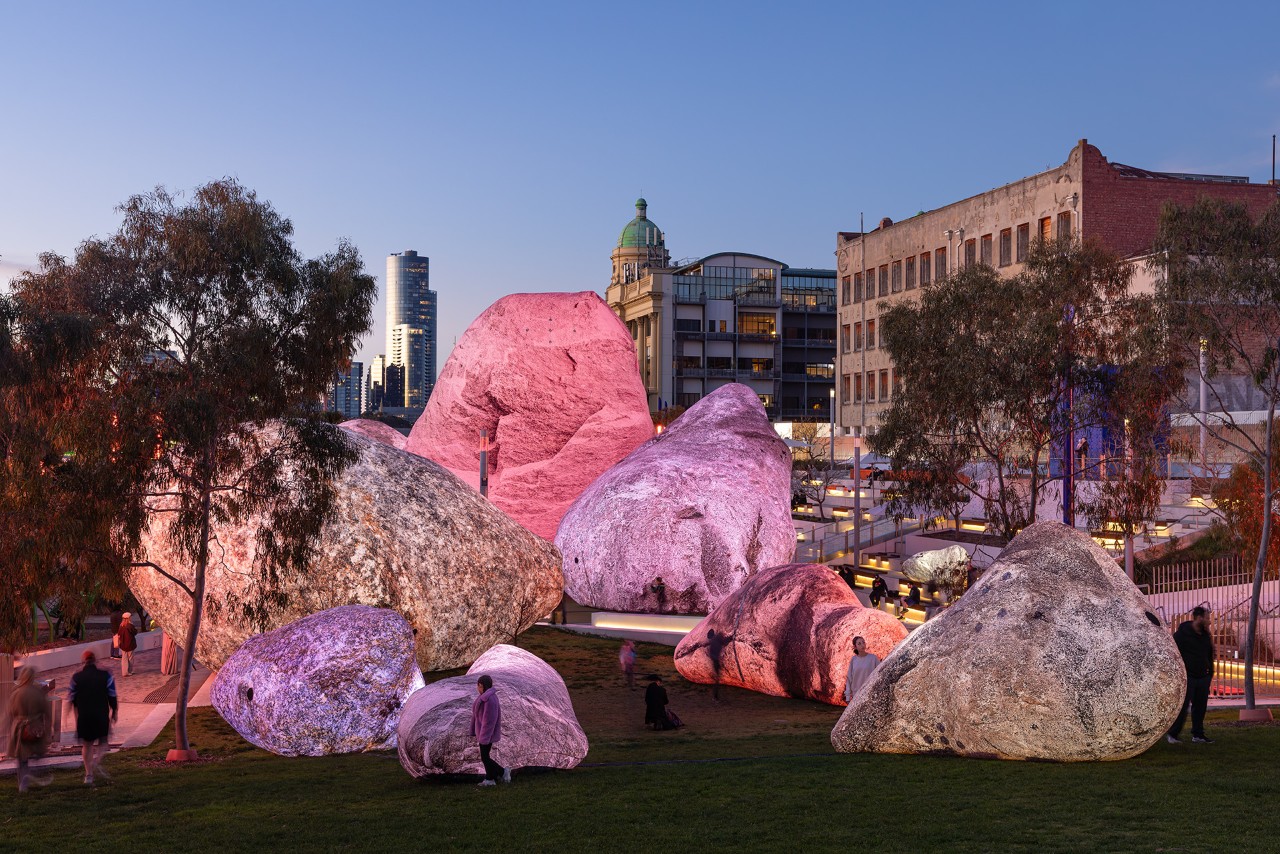
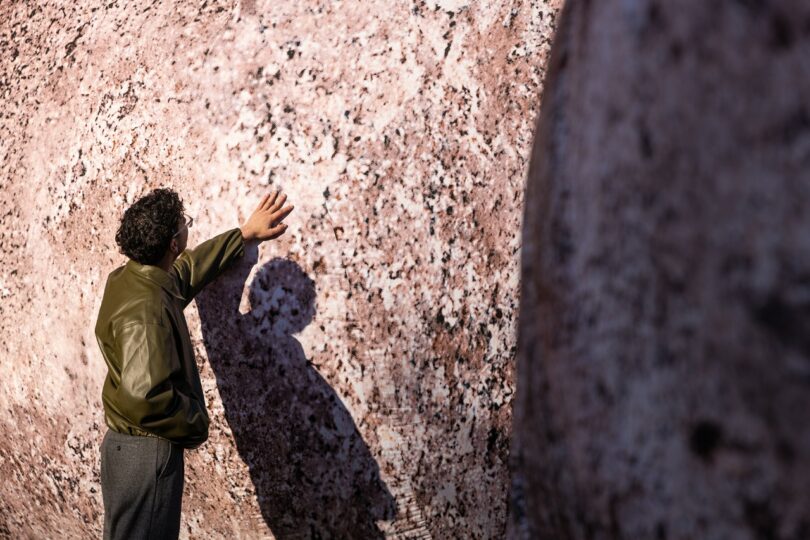
From a distance, it looks like a city square has sprouted a mountain range overnight. Massive, lichen-covered boulders appear to have crashed through the pavement, arranged with the deliberate, meditative precision of an ancient Japanese rock garden. But as you approach, the paradox begins. There is no heavy machinery, no cracked concrete, and none of the dust associated with monumental masonry. When you reach out to touch one of these towering monoliths—some stretching 30 feet into the air—the cold hardness of granite is replaced by a soft, yielding surface.
This is the "Touch Test," and it is the moment the illusion breaks, revealing one of the most provocative shifts in modern urbanism. These are not stones; they are air.
As cities grapple with the need for more green space and interactive environments, the traditional model of heavy, permanent construction is being challenged. Inflatable rock gardens, like the groundbreaking Iwagumi Air Scape by the design studio ENESS, represent a new frontier where sustainability, technology, and art converge to solve the "weighty" problems of the modern metropolis.
What is an Inflatable Rock Garden?
At its core, an inflatable rock garden is a temporary urban installation consisting of lightweight, air-filled structures textured to look like natural stone. While the concept of "inflatables" might conjure images of bouncy castles or cheap lawn ornaments, these installations are high-precision engineering feats.
The most prominent example, the Iwagumi Air Scape, features 16 monumental rocks that reach up to 30 feet in length. Despite their appearance of immobility and geological age, these structures are entirely weightless in the context of urban engineering. They utilize high-resolution digital printing on durable, weather-resistant textiles to mimic the intricate details of real stone—moss, cracks, and mineral veins—creating an immersive environment that bridges the gap between our digital lives and our physical need for nature.
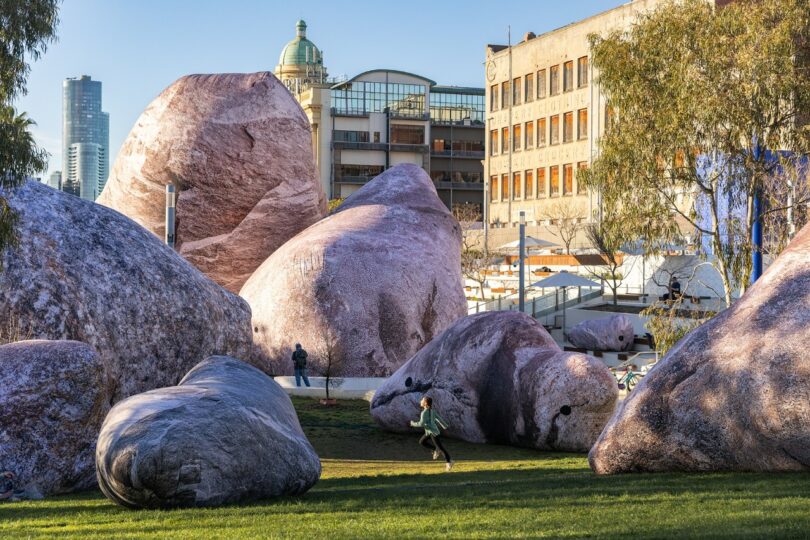
The primary goal of these installations is to foster community interaction. Unlike a traditional museum piece or a "keep off the grass" public monument, these "rocks" are designed to be hugged, leaned on, and explored. They serve as a temporary civic "living room" that can be deployed in the middle of a concrete jungle without a single shovel hitting the ground.
Why Inflatables are Revolutionizing Urban Design
As an editor focused on sustainable living and energy-efficient solutions, I am often skeptical of "pop-up" architecture. Far too often, "temporary" is synonymous with "disposable." However, inflatable landscaping offers a compelling argument for a more pragmatic, low-impact form of urbanism.
Portability and Rapid Deployment
Traditional landscaping projects involve months of planning, heavy construction crews, and significant disruption to city life. An inflatable rock garden can be deployed in a matter of hours. This allows municipalities to activate underutilized civic spaces—like vacant lots or parking squares—instantly. When the event is over, the rocks are deflated, packed into small containers, and transported to the next location with a minimal carbon footprint.
Radical Cost-Efficiency
Public space design is notoriously expensive. Permanent stone installations require deep foundations and expensive materials. Inflatable structures provide a high-impact, low-cost alternative. By utilizing air as the primary "building material," cities can create world-class landscape art at a fraction of the price of traditional masonry.
Immersive Sensory Experiences
Modern inflatable gardens are rarely just visual. They are often integrated with motion-triggered technology. As visitors walk between the rocks, sensors trigger localized soundscapes—the sound of mountain streams, chirping birds, or rustling leaves. This creates a multi-sensory "digital forest" that provides the psychological benefits of nature in environments where real trees might struggle to survive.
The Sustainability Breakthrough: Engineering Nature
The most significant advantage of inflatable public art is the dramatic reduction in structural requirements. From a sustainability perspective, we must look at the "embodied energy" of our public spaces—the total energy required to extract, process, transport, and install materials.
Traditional stone landscaping is incredibly resource-intensive. Shipping tons of granite across the country is an ecological nightmare. In contrast, inflatable landscaping solutions can reduce structural weight requirements by over 99% compared to traditional masonry.
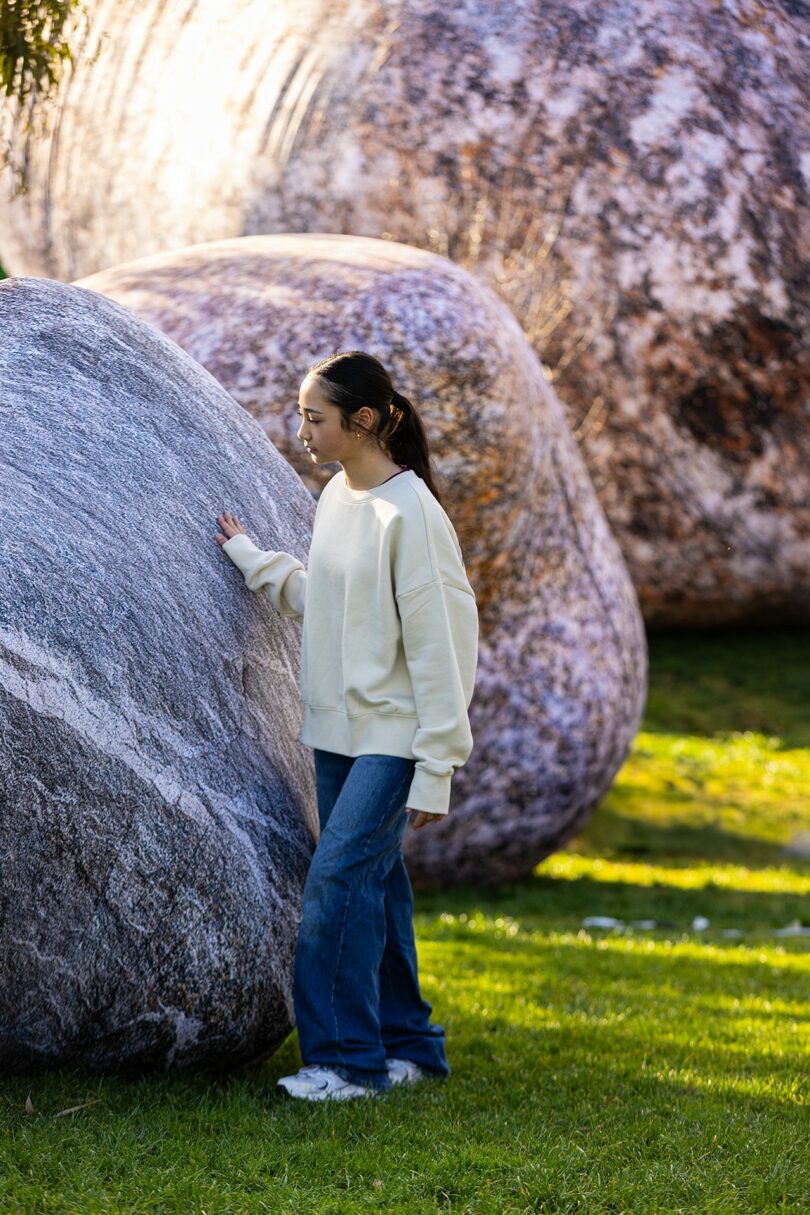
This weight reduction opens up a world of possibilities for "weight-sensitive" urban surfaces. Many city rooftops, underground parking garage lids, and aging plazas cannot support the weight of thousands of tons of real rock and soil. Inflatable gardens make complex, nature-inspired designs viable in places where they were previously physically impossible.
Comparison: Traditional Masonry vs. Inflatable Rock Gardens
| Feature | Traditional Stone Landscape | Inflatable Rock Garden |
|---|---|---|
| Weight | Thousands of Tons | Minimal (Under 1% of Stone) |
| Installation Time | Months | 4–8 Hours |
| Foundation Needed | Deep Concrete Footings | None (Surface Mounted) |
| Portability | Permanent / Non-Portable | Highly Portable (Fits in a Van) |
| Cost | $$$$$ (High Material/Labor) | $ (Low Impact/High Reuse) |
| Environmental Impact | High Extraction & Transport | Low Impact / Reusable Poly-Textiles |
"Nature is the ultimate designer. By using technology to replicate its forms, we aren't just creating a display; we are reminding urban dwellers of their connection to the earth in a language they understand: the language of the future." — Nimrod Weis, ENESS Founder.
Bridging the Digital and Physical: The Technology of Iwagumi
The Iwagumi Air Scape isn't just a collection of balloons; it is a sophisticated marriage of ancient aesthetics and modern technology. The term "Iwagumi" refers to the Japanese art of rock arrangement in aquascaping and gardens, where stones are placed to represent mountains, rivers, and the flow of the natural world.
Through high-resolution digital printing, designers can replicate the specific textures of aged Japanese stones. This technology allows for a level of detail that "fakes" the brain into believing in the weight of the objects until the moment of physical contact.
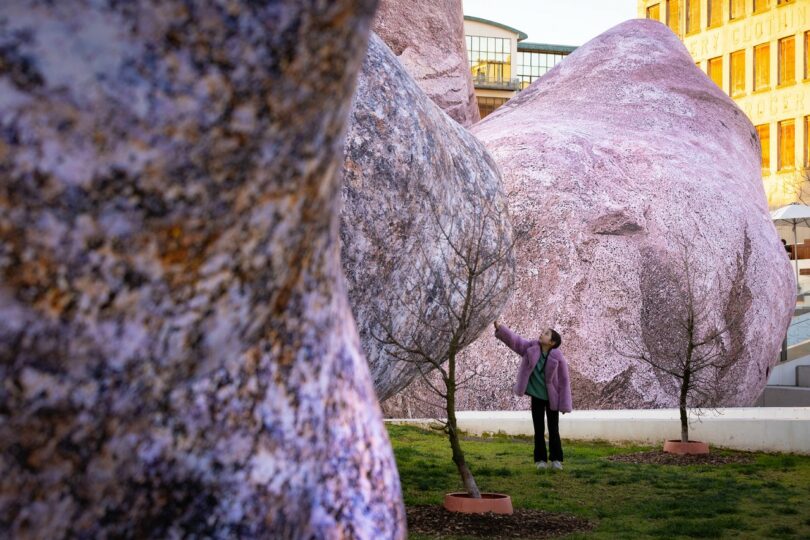
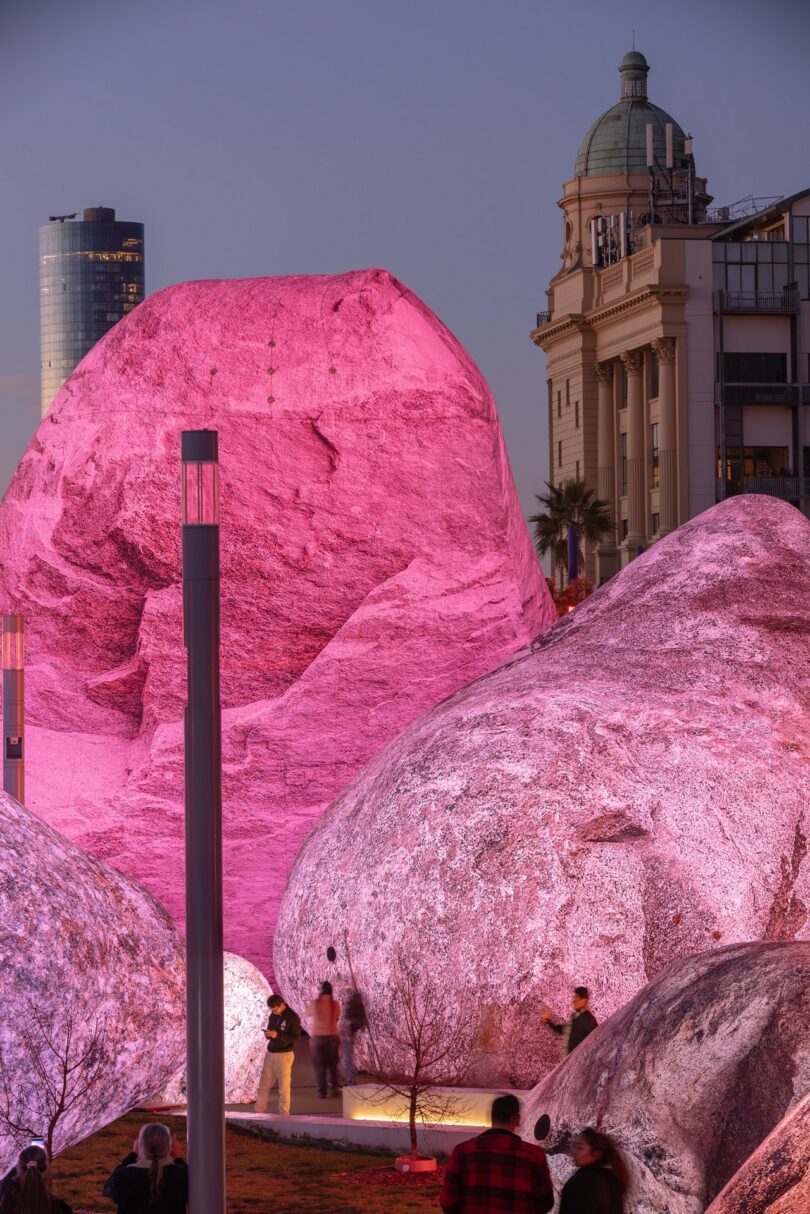
When the sun sets, the installation undergoes a digital transformation. Internal LED systems illuminate the rocks from within, turning the naturalistic "boulders" into glowing, bioluminescent sculptures. This nighttime transition uses energy-efficient lighting to create an "otherworldly" atmosphere, proving that public spaces can be safe, well-lit, and artistically vibrant simultaneously.
Case Study: From Melbourne to the World
The global potential of this design was first proven at Melbourne’s Prahran Square. What was once a functional but somewhat sterile urban plaza was transformed into a bustling mountain range. Children climbed the soft surfaces, office workers ate lunch leaning against the "granite," and tourists were baffled by the weightless giants.
The installation proved that you don't need a hundred-year plan to make a city feel more human. By using 16 rocks and a series of air blowers, Melbourne created a world-class destination in a single afternoon. Following its success in Australia, the installation is slated for a global tour, bringing its weightless nature to Spain and beyond.
FAQ
Are inflatable rock gardens durable enough for public use? Yes. These structures are made from heavy-duty, high-tenacity polyester textiles that are resistant to UV rays, rain, and public interaction. While they are soft to the touch, the outer skins are designed to withstand the rigors of thousands of visitors.
How much energy do they use to stay inflated? Modern inflatable installations use high-efficiency, low-decibel blowers. The energy consumption is surprisingly low—often comparable to running a few standard household appliances—and can be easily offset by using renewable energy sources at the installation site.
Can these replace real parks? They are not intended to replace permanent green spaces or biodiversity. Instead, they act as "urban acupuncture"—targeted, low-impact interventions that provide psychological relief and community connection in areas where permanent parks are not feasible.
Conclusion: The Path Forward
The future of public space design isn't just about what we build, but how we build it. As our cities become denser and our climate more precarious, we need solutions that are flexible, low-impact, and high-joy.
Inflatable rock gardens like the Iwagumi Air Scape show us that we can have the grandeur of the natural world without the environmental and financial toll of traditional construction. They remind us that sometimes, the best way to move forward is to lighten the load—literally. By embracing these "weightless" solutions, we can transform our concrete jungles into spaces of wonder, one breath of air at a time.