In many ways, our modern homes are historical ghosts. We attempt to lead fluid, digital, and eco-conscious lives within floor plans designed for the rigid hierarchies of the mid-20th century. For those of us committed to sustainable living, the challenge is clear: how do we adapt these "compartmentalized" spaces into efficient, breathing environments without tearing down the history of our cities?
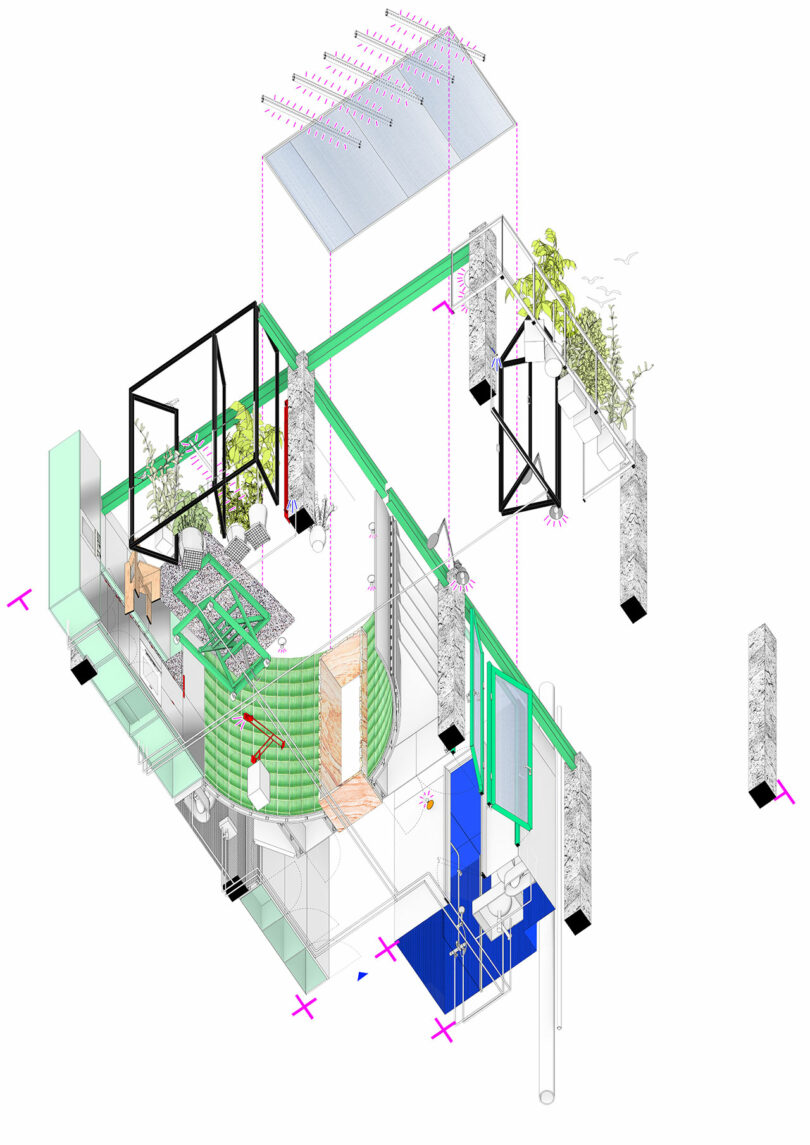
The answer lies in a radical rethinking of the domestic interior. The Unplanned Domestic Prototype, a visionary project by architect Ismael Medina Manzano, offers more than just a renovation; it provides a blueprint for the future of urban density. Located in an 861-square-foot apartment in San Sebastián, Spain, this prototype replaces rigid 1960s layouts with a fluid, multi-functional environment. By consolidating utilities into a central curved ceramic core and utilizing mobile furniture, the project redefines modern domesticity, proving that sustainability and high-end design can coexist in the smallest of footprints.
The San Sebastián Case Study: Reclaiming 861 Square Feet
To understand the brilliance of the Unplanned Domestic Prototype, we must first look at what it replaced. The original structure was a product of the 1966 Stabilization Plan in Spain—an era characterized by standardized, "rational" housing intended for the traditional nuclear family. These apartments were divided into small, dark cells: a kitchen, a dining room, and several isolated bedrooms separated by long, lightless corridors.
In our current era, these rigid boundaries are an obstacle to energy efficiency and social well-being. Ismael Medina Manzano’s intervention strips away these internal walls to create a singular, open ecosystem. The transformation is not merely aesthetic; it is measurable. By transitioning from a compartmentalized model to an open-prototype model, the project achieves a 25% improvement in natural light penetration and internal air circulation. This is a crucial metric for sustainable living, as it significantly reduces the need for artificial lighting and mechanical cooling.
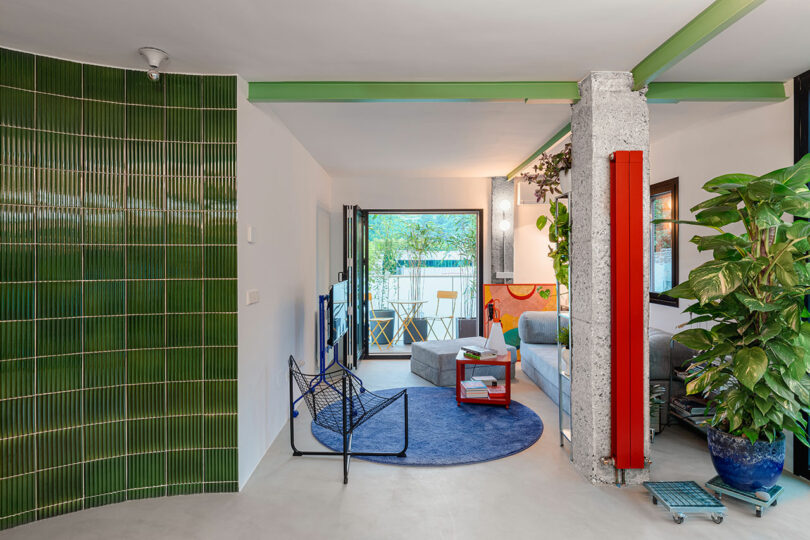
When we open up a floor plan, we aren't just gaining visual space; we are allowing the home to breathe. The removal of thermal barriers allows for cross-ventilation, a passive cooling technique that we often overlook in modern urban renovations. In San Sebastián’s maritime climate, this shift is the difference between a stuffy apartment and a self-regulating sanctuary.
The Central Hub: The Curved Ceramic Wall
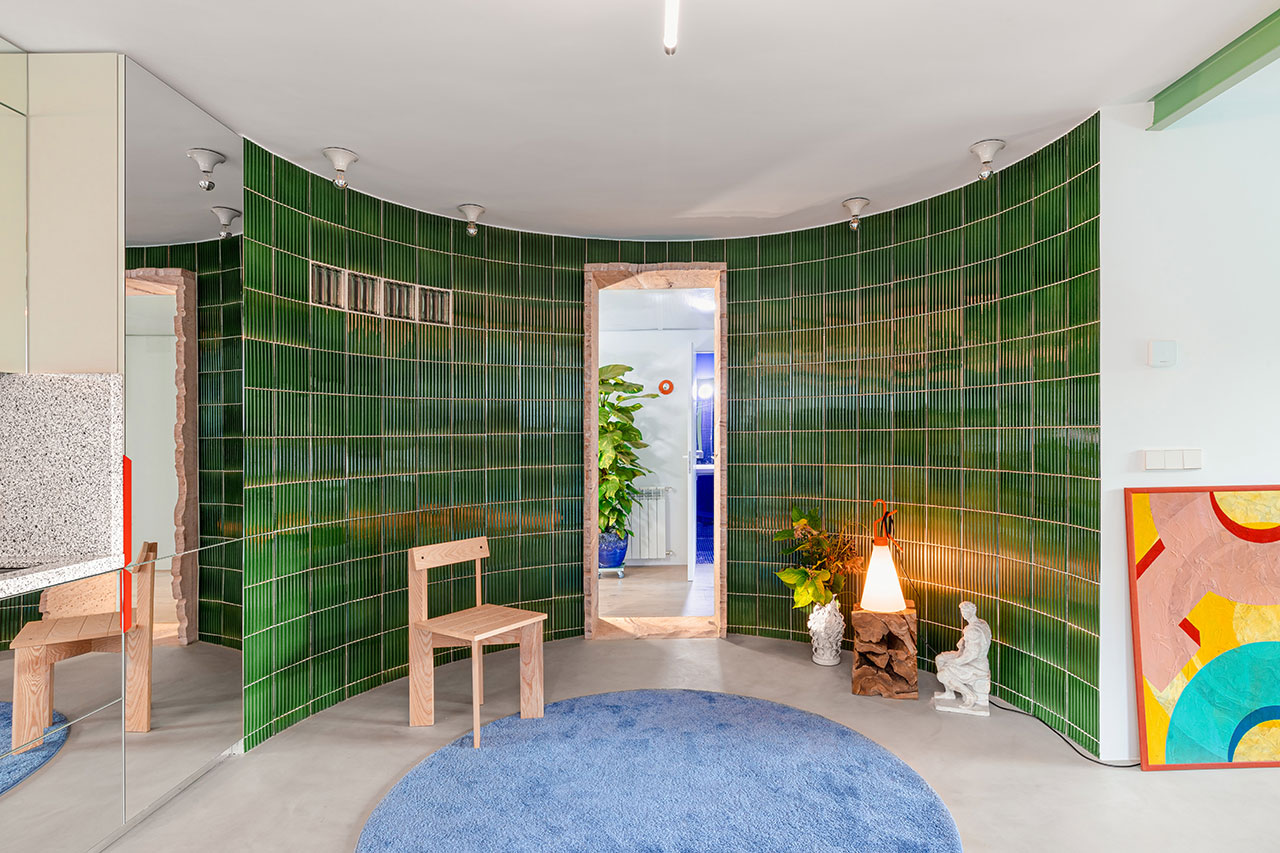
At the heart of this revolution is a single architectural element: the green glazed ceramic core. In traditional design, storage, plumbing, and pantries are tucked away into different corners of the home, wasting precious square footage on "transition zones" like hallways.
The Unplanned Domestic Prototype solves this by consolidating all essential utilities into a central, curved hub. This ceramic wall serves as the apartment’s "engine room," housing the kitchen pantry, laundry facilities, and extensive storage.
"Efficiency in a small space isn't about having less; it's about making what you have work harder. The central core functions like a Swiss Army knife for the home." — Lucas Reed
By consolidating these essentials into the curved core, the project increases the open living area by approximately 40% within the same 861-square-foot footprint. This architectural prototype redefines domesticity by integrating this central ceramic wall as a multi-functional hub for both storage and social interaction. It creates a "centrifugal" living experience where daily life orbits around a functional masterpiece.
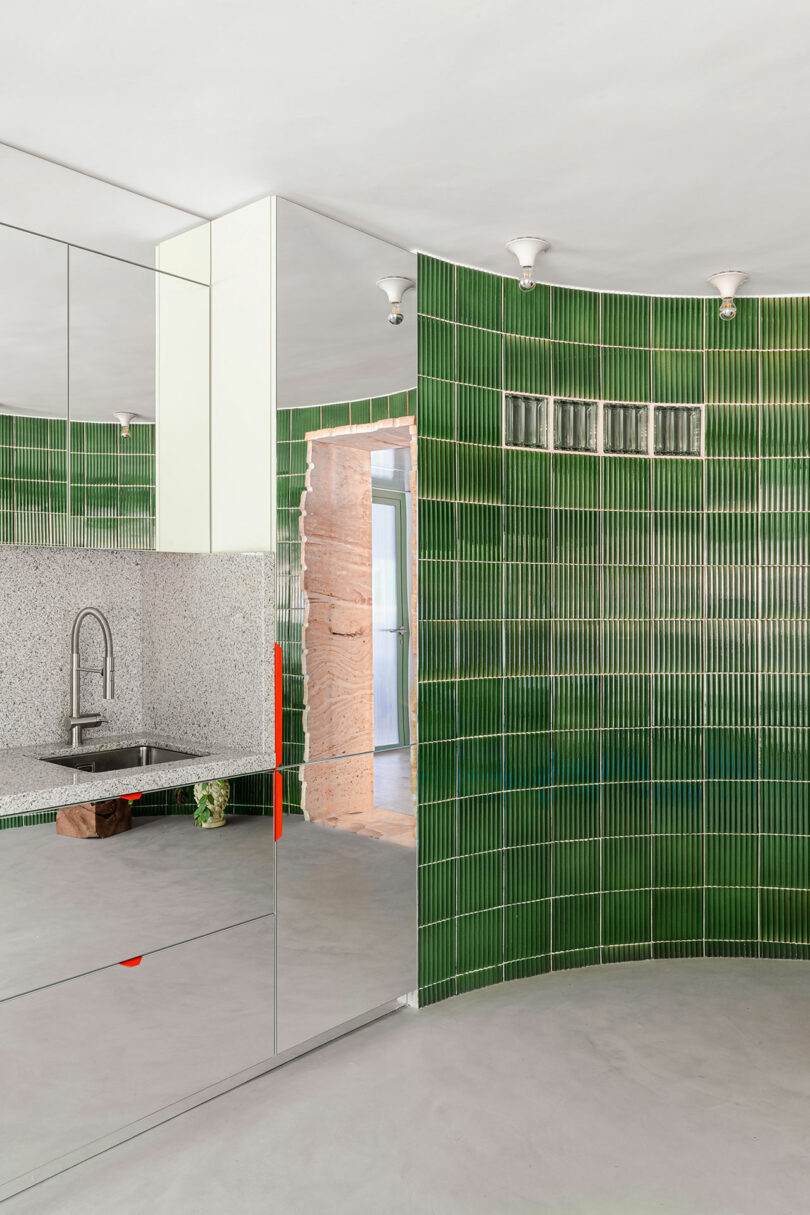
The choice of glazed ceramic is both a nod to traditional Spanish craftsmanship and a forward-thinking choice for indoor air quality. Glazed tiles are non-porous, easy to clean without harsh chemicals, and provide a thermal mass that helps stabilize indoor temperatures.
Materiality and Local Soul: Sustainability in Focus
As an editor focused on sustainable materials, what strikes me most about Manzano’s work is the dialogue between the synthetic and the organic. We often see modern renovations that rely heavily on imported, high-carbon materials. The Unplanned Domestic Prototype takes a different path.
Architect Ismael Medina Manzano utilizes deeply sustainable practices, incorporating:
- Reclaimed tree roots: Used as sculptural elements and functional supports, bringing the "outside in."
- Recycled metals: Employed in the framework of the mobile units and shelving.
- Locally sourced sandstone: A direct connection to San Sebastián’s regional geological history.
This juxtaposition of the high-gloss green ceramic with the raw, matte texture of local sandstone creates a "tactile luxury" that doesn't cost the earth. By sourcing materials locally, the project minimizes the carbon footprint associated with transportation and supports regional economies.
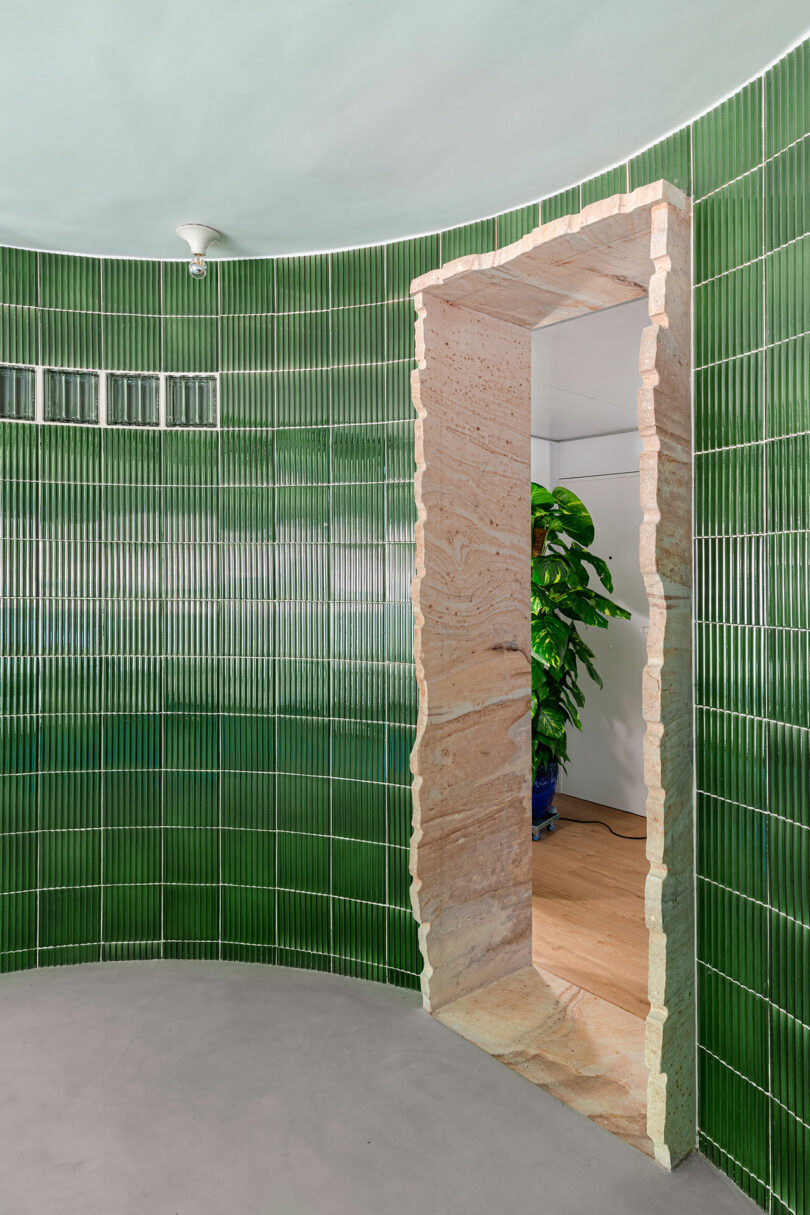
The design philosophy here is clear: sustainability shouldn't look like a compromise. It should look like an evolution. The use of reclaimed tree roots, for instance, isn't just about "eco-decor." It represents the integration of biological life into the sterile urban environment, a concept we at Sustainable Living champion as essential for mental well-being.
The 'Orbiting' Kitchen: A Model for Adaptable Social Spaces
Perhaps the most ingenious feature of the prototype is the "orbiting" kitchen. In a standard apartment, the kitchen island is a heavy, static block that dictates how you move. In the Unplanned Domestic Prototype, the kitchen island is a mobile granite block that can be moved throughout the space.
This flexibility allows the apartment to transform based on the user's needs:
- Preparation Mode: The island stays near the ceramic core for easy access to the pantry.
- Social Mode: The island moves to the center of the room, allowing guests to gather around the "fire" (or in this case, the cooktop).
- Expansive Mode: The island is pushed aside to create a wide-open gallery space for exercise, work, or large gatherings.
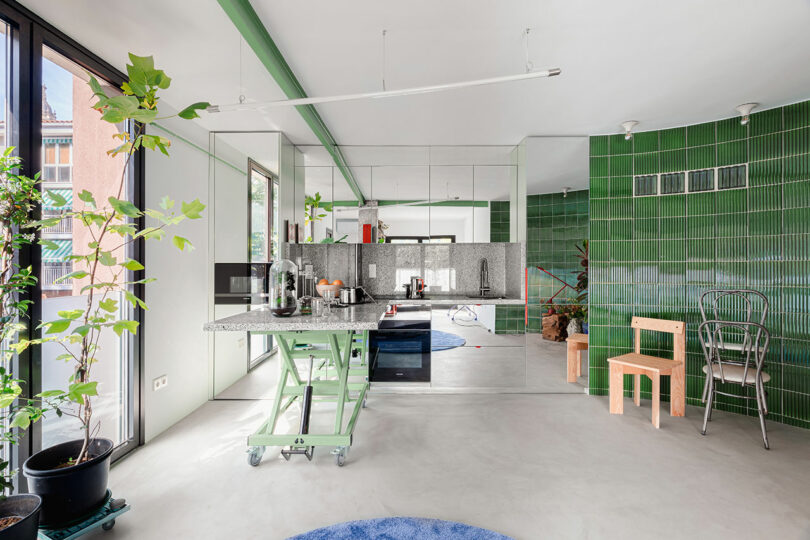
This "mobile furniture" philosophy is a direct hit against the waste of modern consumerism. When a space can adapt to multiple functions, we no longer need larger homes or extra rooms that sit empty 90% of the time. We can do more with less.
A Broader Trend: The 2026 Forecast for Urban Living
We are seeing a global shift toward this kind of "flexible maximalism." As we look toward 2026, urban living will be defined by three pillars: adaptability, tactile luxury, and adaptive reuse.
The Unplanned Domestic Prototype aligns perfectly with these emerging trends. We are moving away from the "smart home" being just about gadgets and toward the "intelligent home" being about structural flexibility. Other innovations, such as vertical forests and micro-apartments in cities like Tokyo and New York, are following a similar logic: if the city is growing denser, our internal environments must become smarter.
At a Glance: The Evolutionary Leap
| Feature | 1960s Standardized Model | Unplanned Domestic Prototype |
|---|---|---|
| Spatial Logic | Compartmentalized / Rigid | Fluid / Open-Prototype |
| Natural Light | Limited (Blocked by walls) | Enhanced (+25% Penetration) |
| Open Space | ~50% (due to corridors/walls) | ~90% (Consolidated Core) |
| Utility Hub | Dispersed (Inefficient) | Centralized Ceramic Core |
| Mobility | Static Furniture | Orbiting/Mobile Elements |
Adaptive reuse—the practice of taking an old structure and giving it a new, more efficient life—is the single most sustainable thing we can do in architecture. Manzano’s project shows that we don't need to demolish the past to build a sustainable future; we simply need to rethink the "plan."
Conclusion: The Apartment as a Living Ecosystem
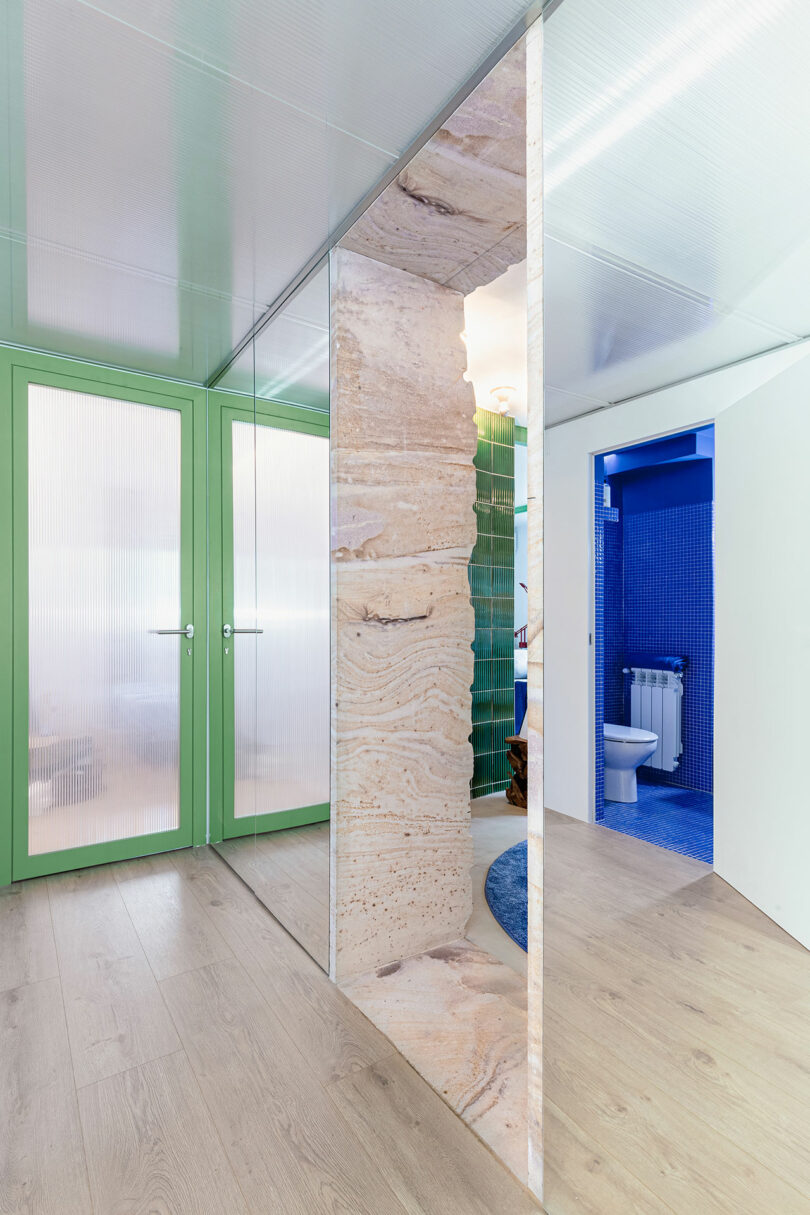
We are entering an era where we must stop "inhabiting" our homes as passive occupants and start "engaging" with them as active parts of our personal ecosystem. The Unplanned Domestic Prototype isn't just a renovation in San Sebastián; it’s a manifesto for the 21st-century renter and homeowner alike.
Flexible design is no longer a luxury. As urban populations rise and energy costs fluctuate, the ability to maximize natural light, facilitate airflow, and adapt a small space for multiple uses becomes a necessity. By embracing materials that honor our geological past and designs that anticipate our flexible future, we can create homes that are as resilient as they are beautiful.
FAQ
Q: How does a "prototype" differ from a standard renovation? A: A standard renovation usually updates finishes within existing walls. A prototype, like Ismael Medina Manzano’s, rethinks the structural logic of how a space functions, creating a model that can be applied to other similar 20th-century apartment layouts.
Q: Is flexible furniture like a mobile granite island practical for a regular home? A: Absolutely. While it requires high-quality casters and thoughtful floor leveling, mobile furniture allows a single room to serve as a kitchen, office, and living room, which is the ultimate space-saving strategy for urban dwellers.
Q: Are glazed ceramic walls expensive to install? A: While the upfront cost of high-quality ceramic can be higher than drywall, the long-term benefits include zero maintenance, improved thermal mass, and a significant increase in the property’s value due to the bespoke design and durability.