Quick Facts
- Location: 76 Charlotte Street, Fitzrovia, London.
- Project Name: Downstairs at dMFK.
- Size: 2,000-square-foot subterranean multipurpose hub.
- Capacity: 16 dedicated workstations within a flexible layout.
- Key Innovation: First London installation of SonaSpray Eco+ (recycled newspaper acoustic ceiling).
- Sustainability Highlight: Use of castor bean resin flooring and custom Thames flint terrazzo.
In the heart of London’s Fitzrovia, beneath the rhythmic pavement hum of Charlotte Street, lies a masterclass in subterranean transformation. For years, the 2,000-square-foot basement at number 76 served as a windowless, forgotten post-production studio and storeroom—a space defined by shadows and the architectural "gloom" typical of historic London basements. Today, however, dMFK Architects has reimagined this cavity as "Downstairs at dMFK," a vibrant, light-filled sanctuary that functions as a high-performance office, an event space, and a revolutionary "living sample library." By prioritizing light-reflective surfaces and radical material sustainability, the firm has turned a site-specific constraint into an opportunity for industry-leading innovation.
1. Illuminating the Subterranean: The Architecture of Light
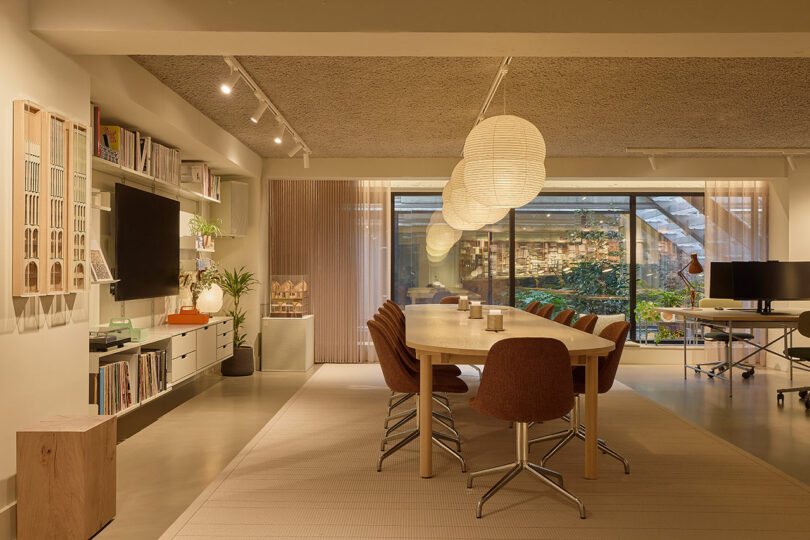
The primary challenge of any basement conversion is the psychological and physical lack of natural light. To solve this, dMFK didn't just add lamps; they engineered a sense of atmospheric depth. The centerpiece of this strategy is a lushly planted, mirrored lightwell situated at the rear of the floorplate. By using floor-to-ceiling glazing and strategically placed mirrors, the architects created an "illusion of extension," making the workspace feel as though it stretches infinitely into a secret garden rather than stopping at a foundation wall.
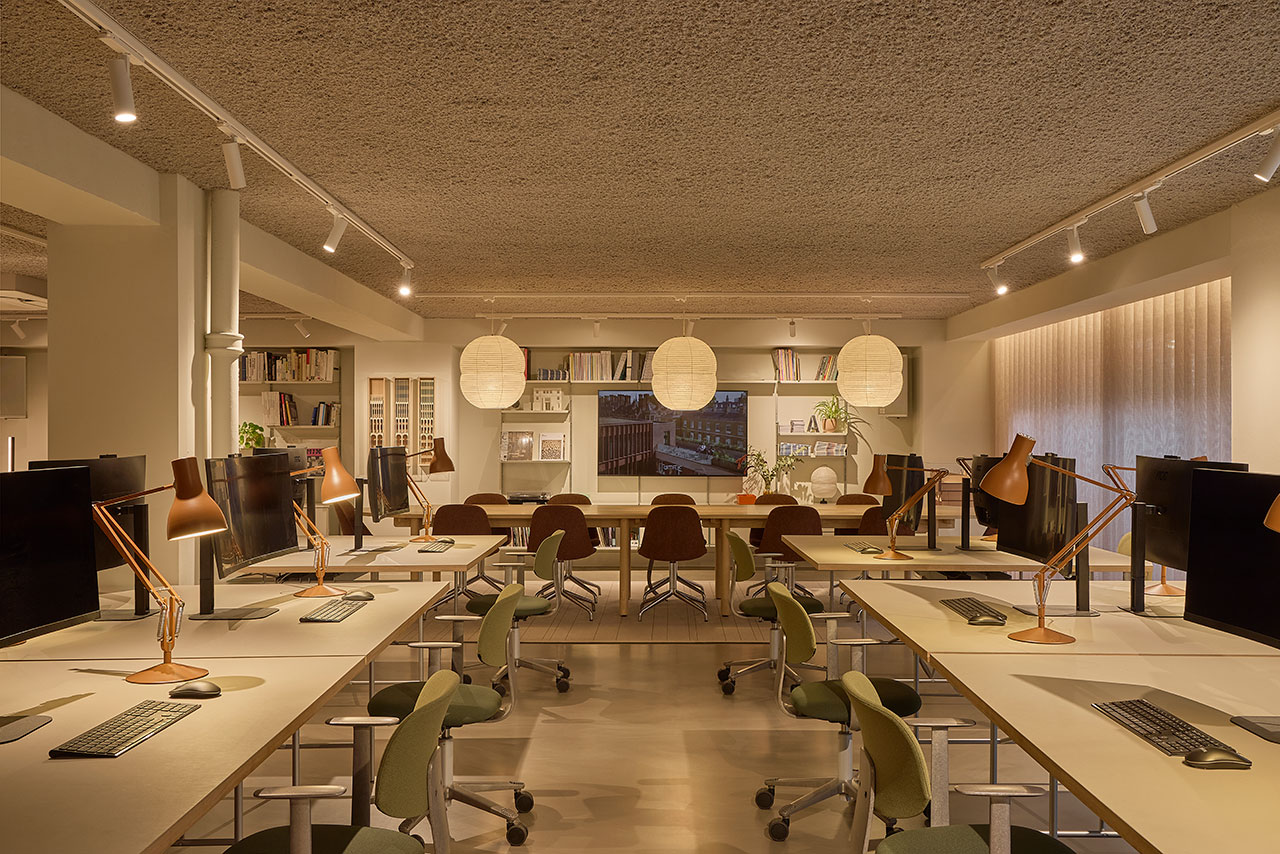
Beyond the lightwell, the lighting strategy is layered to mimic the nuances of daylight. The team combined industrial track lighting with flexible task lamps, allowing the 16 workstations to remain functional regardless of the weather above. To eliminate the "cave effect," the interior palette leans heavily on light-colored finishes and pale woods, which bounce photons across the room.
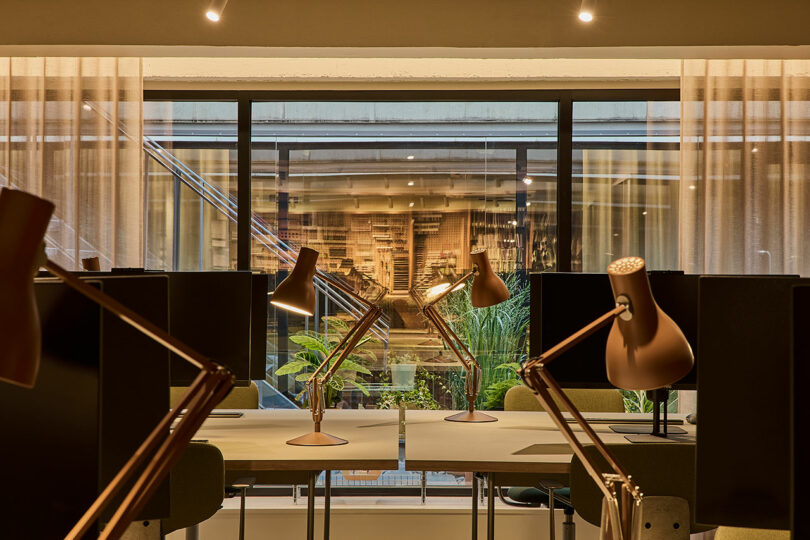
The transition from the street level to the basement is equally intentional. A new, sculptural staircase draws visitors down, signaling a shift from the urban chaos of London into a refined, quiet retreat. The result is a space that doesn't just feel "bright for a basement," but genuinely airy and connected to the natural world.
2. The Living Sample Library: Testing Radical Sustainability
Downstairs at dMFK is more than an office; it is a 2,000-square-foot "materials lab" where the firm tests the ecological boundaries of modern design. Rather than specifying materials from a catalog, the architects used their own headquarters as a testing ground for experimental finishes. This "living library" allows clients and designers to see how sustainable materials perform under daily wear and tear.
One of the most significant technical achievements is the ceiling. The project features the first London installation of SonaSpray Eco+ by Oscar Acoustics. This acoustic spray-on finish is manufactured from recycled newspapers, providing exceptional sound dampening while diverting waste from landfills. It gives the ceiling a soft, textured appearance that contrasts beautifully with the industrial bones of the building.
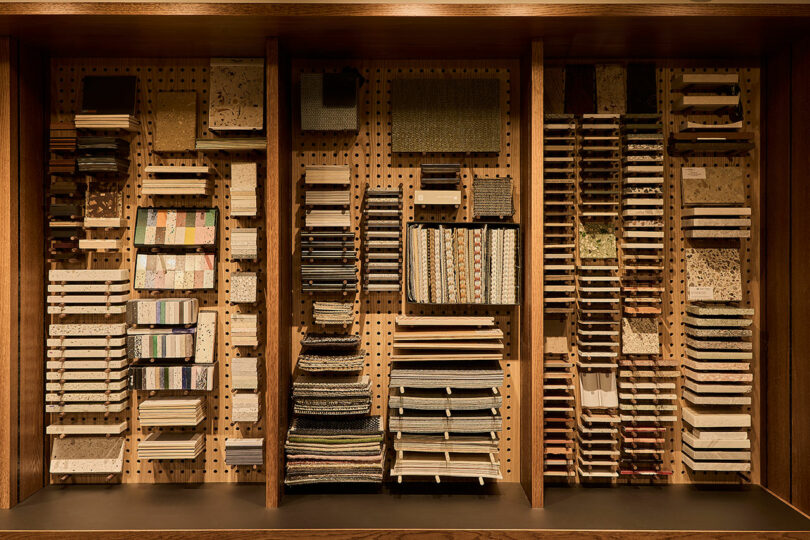
The flooring is equally innovative. dMFK specified a resin floor by Sphere8, which utilizes a sustainable castor bean oil base instead of traditional petroleum-based polymers. To add visual interest and recycled content, the resin is seeded with plastic chippings salvaged from industrial waste.
Sustainable Material Specifications
| Material Component | Brand/Supplier | Sustainable Innovation |
|---|---|---|
| Acoustic Ceiling | Oscar Acoustics (SonaSpray Eco+) | Manufactured from recycled newspapers; zero VOCs. |
| Resin Flooring | Sphere8 | Castor bean resin base with recycled plastic chippings. |
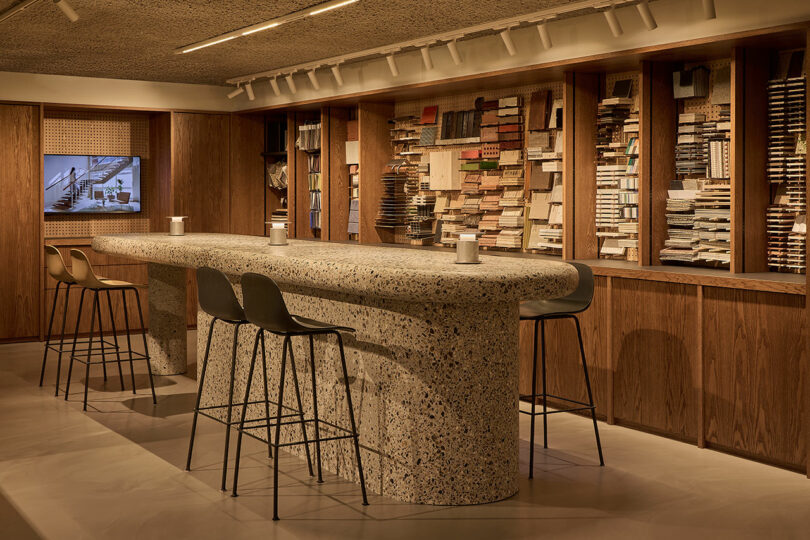
| Bespoke Bar | Custom dMFK Design | Thames flint terrazzo using calcium sulfoaluminate binder. |
| Wall Paneling | The Collective | Fluted panels made from recycled PET felt. |
A standout feature is the custom bar and kitchenette area, which showcases a bespoke Thames flint terrazzo. Unlike standard terrazzo that relies on high-carbon cement, this surface uses a calcium sulfoaluminate (CSA) binder and incorporates recycled aluminum by-products. It is a tactile reminder that "industrial" doesn't have to mean "unsustainable."
3. Versatility by Design: 16 Workstations and Beyond
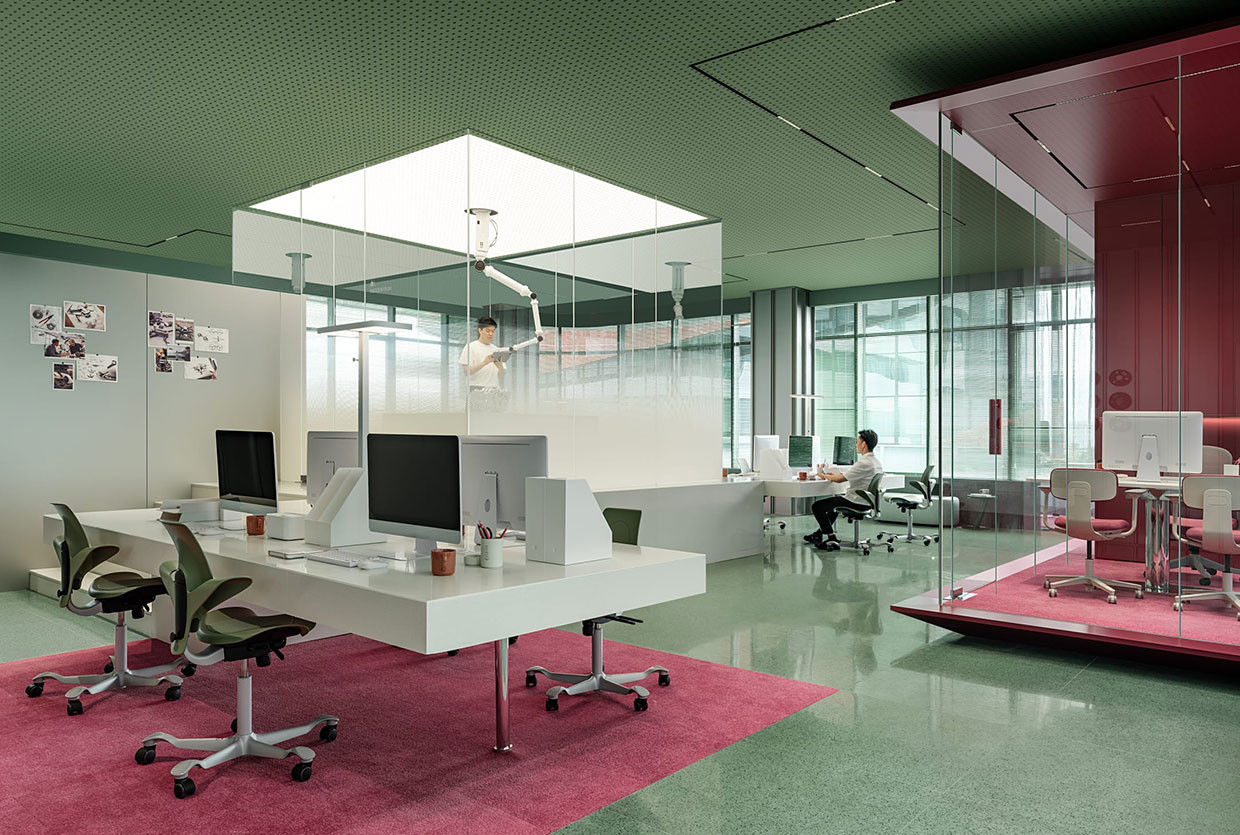
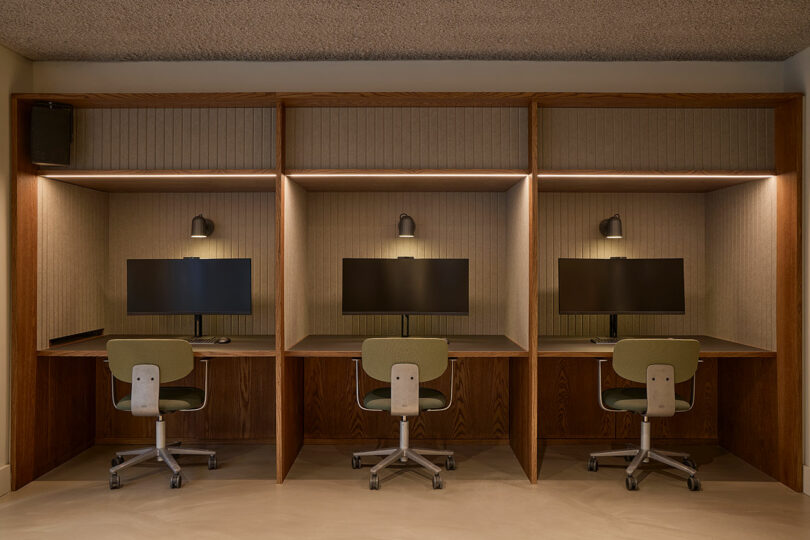
The modern workspace must be a chameleon, and dMFK has leaned into this requirement with a highly flexible floor plan. The 16 dedicated workstations are clustered to encourage collaboration, but the space is designed to be cleared in minutes. Central to this flexibility is the ash wood furniture by the Finnish brand Nikari. The large communal tables are designed to collapse or be rearranged, transforming the workspace into a gallery for screenings, talks, or industry gatherings.
Acoustic performance is critical in a multipurpose basement. To prevent the "echo chamber" effect common in subterranean spaces, the designers created a "soft envelope" using:
- The Collective's fluted acoustic wall panels.
- Kvadrat’s Divina fabric, used for privacy curtains and focus booths.
- Custom-built cabinetry that doubles as sound diffusion.
"We wanted to prove that a workspace could be both highly technical and incredibly soft. By focusing on the acoustic and tactile qualities of our materials, we've created an environment where people actually want to linger, not just work." — dMFK Design Philosophy
Integrating high-end technology was also a priority. The studio features a reused d&b Audiotechnik sound system, ensuring that the space is as ready for a professional architectural keynote as it is for an evening social event.
4. Curated Comfort: The Rotating 'Living Room' Concept
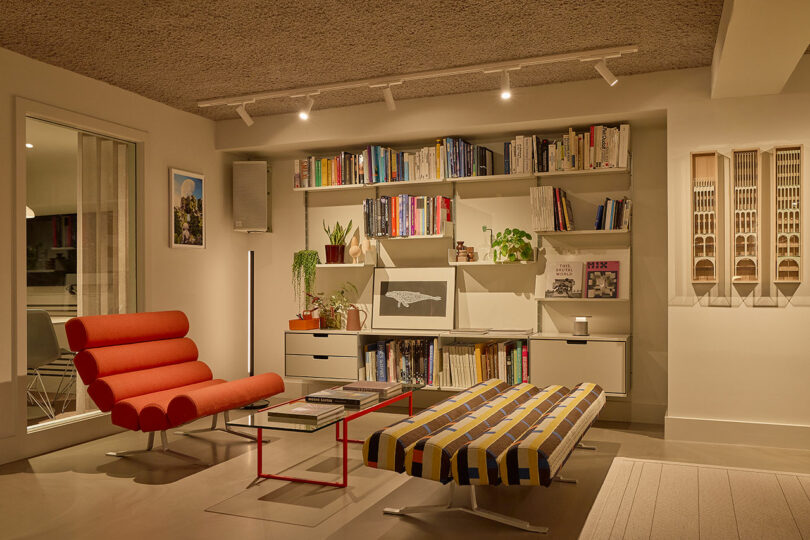
To bridge the gap between a professional office and a hospitality-focused lounge, dMFK partnered with the renowned furniture specialists twentytwentyone. This collaboration introduces a quarterly rotating furniture display, turning the office into a curated gallery of iconic craft.
This "living room" approach allows the staff and visitors to interact with different design eras and philosophies. For example, a recent rotation featured William Plunkett’s iconic lounge chairs, upholstered in modern textiles inspired by Anni Albers. This constant evolution keeps the energy of the basement workspace fresh and prevents the design from becoming static. It reinforces the idea that an office should be a place of inspiration, not just utility.
5. Lessons for Urban Workspace Conversion
The success of "Downstairs at dMFK" offers a blueprint for how developers and architects can reclaim underutilized urban square footage. As commercial real estate faces new pressures, the "future-proofing" of these spaces relies on three pillars:
- Vendor Collaboration: By working closely with brands like Oscar Acoustics and Sphere8, dMFK ensured that every finish served both an aesthetic and ecological purpose.
- Multipurpose Intent: A space that only serves one function (like "storage") is a wasted asset. By designing for 16 workstations and events, the value of the square footage is quadrupled.
- The Human Element: Natural light and acoustics are not "luxury additions"; they are essential components of productivity and mental well-being in subterranean environments.
Ultimately, dMFK has proven that even the darkest London basement can become a beacon of sustainable, vibrant design. By treating their own office as a living experiment, they haven't just created a place to work—they've created a manifesto for the future of the urban interior.
FAQ
How does dMFK maintain air quality in a windowless basement? The project utilizes a high-specification HVAC system combined with low-VOC (Volatile Organic Compound) materials. The use of SonaSpray Eco+ and castor bean resin ensures that no harmful chemicals are off-gassing into the enclosed environment.
Can the sustainable materials used here be applied to residential projects? Absolutely. While used here in a commercial context, materials like Sphere8 resin flooring and Kvadrat acoustic fabrics are increasingly popular in modern residential renovations to improve thermal comfort and sound control.
Is Downstairs at dMFK open to the public? The space is primarily a private office and materials lab for dMFK Architects and their clients, but it frequently hosts industry events, talks, and design festivals that are open to the wider architectural community.